Cinema

The new Mad Max film is a betrayal of everything that made Fury Road so good

Action films are boring. This isn’t really an opinion, it’s just demonstrably true. Try it for yourself: put on any high-octane, orange-and-teal action movie from the last 15 years and see how long it takes before you start automatically fiddling around with your phone. I can usually make it about five minutes. This is weird. I can deal with all the incredibly sedate cinematic vegetables just fine, but as soon as there are gunfights or chases involved I get distracted. I think I know why. The real betrayal of this Mad Max sequel is that it’s full of talking Action directors know that they’re competing with the sensory equivalent of a crackpipe in every pocket, so they do whatever they can to make their films as attention-grabbing as possible.


Predictable but has a certain French verve: Two Tickets to Greece reviewed

Within the first five minutes of Two Tickets to Greece you know what it is and where it’s going. It’s based on what I call ‘the hate-love formula’ with its in-built guarantee: any two people who can’t stand each other at the outset of a film will have bonded by the end. In this instance it’s a womance featuring two middle-aged women who were inseparable at school but haven’t seen each other for 30 years. One is Blandine who, as an adult, is reserved and buttoned-up, while the other, Magalie, is – gulp – a ‘free spirit’. (Run, Blandine; run like the wind!) But while the film is predictable, it has a certain French verve, excellent performances and doesn’t take it out of you.

Wonderfully special: La chimera reviewed

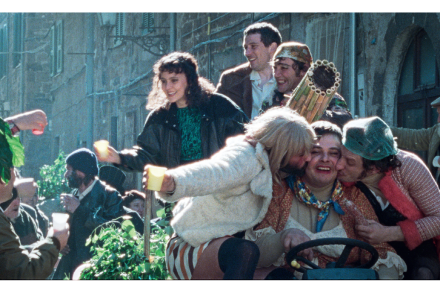
La chimera, which, as in English, means something like ‘the unrealisable dream’, is the latest film from Italian writer/director Alice Rohrwacher (The Wonders, Happy as Lazzaro). Her films are arthouse, in the sense that if you’re in the mood for someone blowing stuff up and escaping by speedboat while enjoying flirtatious repartee with a sexy lady, this probably won’t cut it. But if you’re in the mood for something original and woozy and riotous and wonderfully special, you will be able to fill your boots. Arthur has a kind of superpower that enables him to locate buried loot just by coming over funny It is set in Italy in the 1980s and stars Josh O’Connor as Arthur. Arthur is a tombarolo.

A true popcorn movie: The Fall Guy reviewed

The Fall Guy, starring Emily Blunt and Ryan Gosling, is a gloriously fun, screwball action film that pokes fun at action films and this, I now know, is my favourite kind of action film. I would even venture that it’s the sort of film that’s crying out to be enjoyed with a big old bucket of popcorn. Go wild with the stuff. I promise I won’t hiss or look daggers at you. This is a popcorn movie. It has that spirit – in spades. Does anyone crash backwards through a plate glass window? Of course they do! As a comedy set in the stunt world, it’s one of those Hollywood films that affectionately sends up Hollywood, like Tropic Thunder or Bowfinger.

Tennis romance that doesn’t contain much tennis: Challengers reviewed

It sounds straightforward enough: a tennis romance starring Zendaya, idol of the mid-teen demographic and last seen riding a sandworm in Dune: Part Two. She plays Tashi Duncan, a junior player tipped for greatness, who finds herself in a love triangle with two other juniors: spoilt-but-roguish Patrick (Josh O’Connor) and nice-but-needy Art (Mike Faist). You might anticipate a girl-power version of Richard Loncraine’s Wimbledon (2004), with white skirts fluttering in summer breezes, coy glances at a face in the crowd, and a dramatic climax featuring a net rally in a final-set tie-break. Despite the lengthy game sequences, it’s not a film about tennis But Challengers is a very different kettle of fish.

Should beautiful actors be allowed to play those with plain faces?

Sometimes I Think About Dying is one of those titles you want to shout back at – what? Only sometimes? It is co-produced by, and stars, Daisy Ridley from the Star Wars franchise who, in going from a blockbuster to an interesting independent film, is taking the opposite of the usual career trajectory. Perhaps you can only fight the Dark Lords of the Sith for so long? But it has paid off, as this is an understated little gem. It is directed by Rachel Lambert and written by Stefanie Abel Horowitz, Katy Wright-Mead and Kevin Armento. It’s hard to say what it is exactly. A dour, deadpan romantic comedy probably gets nearest. Ridley stars as the thirtysomething Fran. Fran works in a small office in a small coastal town in Oregon and she is drab.

Better than expected (but my expectations were low): Back to Black reviewed

When the trailer for Sam Taylor-Johnson’s biopic of Amy Winehouse, Back to Black, first landed, her fans were gracious. ‘This,’ they said, ‘is going to be terrific.’ I’m winding you up. They were horrified. It’s too soon, they said. It’s exploitative and trashes her legacy, they concluded, from having watched two minutes of footage. I can only say that, one, fanatical fans are like that whatever you do, and two, this is better than I expected (although my expectations were low). It does seem softened at the edges, and one can never forgive a falling-in-love montage set at London Zoo – ever – butI (mostly) didn’t cringe and it is respectful, if painful.

Why do movies always have to bash the ‘burbs?

Mothers’ Instinct is a psychological thriller starring Anne Hathaway and Jessica Chastain and it is one of those over-ripe, camp melodramas that, back in the day, would have almost certainly starred Joan Crawford and Bette Davis. Or Tippi Hedren and Kim Novak, if we are going to be Hitchcockian about it. Either way, it’s a face-off between two world-class actresses and while it throws plausibility to the winds at the end, it is a delicious ride. And I’ve saved the best news for last: it’s all done and dusted in 95 minutes. Not an ounce of fat here. It is directed by Benoît Delhomme and is a remake of Olivier Masset-Depasse’s 2018 French-language film which, in turn, is an adaptation of the novel by Barbara Abel.

Readers, I welled up! At a cartoon! Robot Dreams reviewed

Robot Dreams is an animated film from the Spanish writer-director Pablo Berger and while it doesn’t have the production values of something by Pixar or Disney or DreamWorks, it will capture your heart. Sweet, charming, deeply moving.... Readers, I welled up! At a cartoon! This is something we need never speak of again. It is based on the graphic novel by Sara Varon and stars absolutely no one, as there are no voices to voice. There is sound but no dialogue, like Mr Bean, although the similarity ends there. It is set in the 1980s in a New York populated by anthropomorphic animals. Hail a taxi and your driver may be a Sikh elephant, or your FedEx delivery guy may be a bull, and look at this warthog washing his car while swinging his big old bottom to mambo music from the radio.

Affecting, heartfelt and cleverly constructed: Monster reviewed

Hirokazu Kore-eda’s Monster is a drama based on misunderstandings, which, when it comes to annoying narratives, is up at the very top, surely. I have been known to throw a shoe at the screen when the plot device stops anyone uttering the few words that will clear everything up in one minute flat, allowing us all to go home. (This afflicts 96 per cent of romcoms, I would estimate.) But Kore-eda, who has films such as Shoplifters on his CV – and also Broker and Like Father, Like Son, among other wonderfully human dramas – can get away with it and does. The upshot is that this affecting, heartfelt, cleverly constructed tale didn’t make me want to throw anything at the screen.

John Galliano shows the cancelled can be uncancelled

Kevin Macdonald’s documentary High & Low: John Galliano charts the highs and (spectacular) low of the British fashion designer who was fired as creative director of Dior after a number of anti-Semitic tirades came to light. I went into the cinema wanting to hear what Galliano had to say about it all. Why Jews, John? Why not Buddhists? What was going on? But the film never properly gets to the bottom of it. (‘I have no memory of that’ is his favourite reply.) As to whether the ‘cancelled’ can be ‘uncancelled’, there is a clear answer: yes. He is now riding high and appears to have been forgiven by the fashion world. But whether he’s been forgiven by me is another matter entirely.

It should be boring – but it never is: Perfect Days reviewed

Wim Wenders’s Perfect Days is a film about a Tokyo public toilet cleaner and if the gentle, meditative narrative doesn’t grab you, the toilets almost certainly will. (Trust me. They’re incredible.) It stars Koji Yakusho and, as much as it is set in Tokyo, it is also set on Yakusho’s face, which is so expressive and open that it’s capable of conveying depths of emotion even when in repose. It could be boring, this film, except it’s impossible to get bored of that face. And Wenders knows what he has and rarely strays from it. It stars Koji Yakusho and, as much as it is set in Tokyo, it is also set on Yakusho’s face Yakusho plays Hirayama, a middle-aged man who says very little – barely a word for the first 40 minutes. He lets his face do the talking.

Sensuous, languorous, soothing and rich: The Taste of Things reviewed

The Taste of Things, which is this year’s French entry for best international film at the Oscars, is a gastro-film but it is not of the ‘Angry Male Chef’ genre. It’s not Boiling Point or The Menu or The Bear. It is not stressful or adrenaline-filled. No one swears or screams ‘Yes, chef!’ Instead, it is sensuous, languorous, soothing and as rich and deep as (I now know) a consommé should be. It will also force you to reappraise vol-au-vents which, in the right, tenderly loving hands, need not be the mean little bullety things that were served here in the seventies. (My mother, I remember, bought them frozen from Bejam. But only for special occasions.

An endurance test that I constantly failed: Occupied City reviewed

Occupied City is Steve McQueen’s meditative essay on Amsterdam during Nazi occupation, with a running time of four hours and 22 minutes. There is no archive footage. There are no witness testimonies. It’s not The Sorrow and the Pity. It is not half-a-Shoah. Instead, this visits 130 addresses and details what happened there between 1940 and 1945 while showing the building or space as it is today. It should have its own power – what ghosts reside here? What was life like for the Jews who were deported from this square and perished at Auschwitz? – but I watched it from home via a link, as I had Covid, and after the first hour started to wonder: if I die will it be from the virus? Or the boredom? After the first hour I started to wonder: if I die, will it be from Covid?

It’ll haunt you forever: The Zone of Interest reviewed

I don’t know if it’s a Jewish thing, but I’m certainly always bracing myself for the latest Holocaust film. There have been some horribly dim ones, such as The Reader or The Boy in the Striped Pyjamas, both of which invite you to sympathise with the perpetrators and you know what? I won’t if it’s all the same to you. (Don’t get me started on Schindler’s List; we’ll be here forever.) But Jonathan Glazer’s The Zone of Interest dispenses with the usual conventions. There is no humanising or even dehumanising. There is no pretence at insight. It was what it was; look at how ordinary these mass murderers were. Treated like this, it’s somehow more horrifying and terrifying than Nazis stomping all over the place being evil.

Mesmerising: All of Us Strangers reviewed

Andrew Haigh’s All of Us Strangers is an aching tale of grief, loss and loneliness starring Andrew Scott and Paul Mescal, so I probably don’t need to tell you the acting is off the scale but I will anyway: the acting is off the scale. Scott, in particular, infuses his character with such vulnerability that you’ll want to reach into the screen and comfort him. And while it does feature ghosts, don’t let that put you off. They’re the doable kind rather than the walking-through-walls, ‘wooOOO-wooOOO’ kind. (Huge relief all round.) Haigh makes complex, intimate, single-protagonist films (Weekend, 45 Years, Lean on Pete) and this is no exception.

Sincere, heartfelt, true: The Holdovers reviewed

The first thing to say about Alexander Payne’s latest, The Holdovers, is that it’s not so much an inspirational teacher film as an uninspirational teacher film. You should know that before attending the cinema otherwise you might sit throughout in the brace position, fearing it could go all Dead Poets Society at any moment. It doesn’t. No one plunders Tennyson for motivational slogans even once. Instead, it feels sincere, heartfelt, true. You may even come away wishing  you’d had an uninspirational teacher when you were at school. The year is 1970 and it’s filmed as if it had been made in 1970 with static on the soundtrack, desaturated colours and retro titles.

Poor Things is weird and wonderful – but not so weird I had to Google it afterwards

I’ve heard a few people say that, based on the trailer, Yorgos Lanthimos’s latest film, Poor Things, looks too weird for their tastes. To be honest, the trailer made me think this ‘gender-bending Frankenstein’, as it’s being sold, looked too weird for my tastes. But let’s be brave. It is Lanthimos after all (The Lobster, The Favourite), and it is the wonderful Emma Stone, whom we are always here for, so let’s not be too afraid. It is weird, no doubt. But it is the sort of weird we can do. And not so weird that I had to Google it afterwards. It has a simple narrative – a journey of self-discovery – that’s not a headscratcher at all. (I saw Studio Ghibli’s The Boy and the Heron over Christmas and I’ve been scratching my head ever since.

It’ll make you cry despite being very ordinary: One Life reviewed

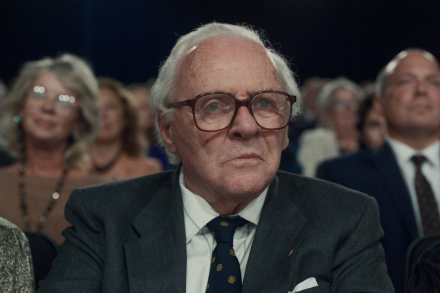
One Life is the story of Nicholas Winton (Anthony Hopkins), the British stockbroker who arranged the Kindertransport that saved hundreds of children from almost certain death in the Holocaust and be warned: you will need one tissue, if not two – maybe 12. Which isn’t to say it’s a great film. It’s fine, in its workmanlike way. But the story is so inherently powerful and moving and there is so much goodness and decency at work it will set you off. Take a whole box of tissues if you want to play it safe and would rather not deploy your sleeve. Hopkins’s performance is quiet, patient, masterly and as understated as the man himself Directed by James Hawes with a screenplay by Lucinda Coxon and Nick Drake, the film opens in 1988 with Winton’s appearance on That’s Life.