Cinema

Disappointed of north London

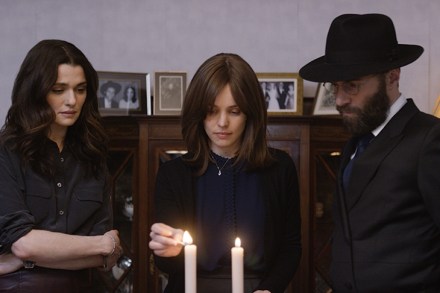
Disobedience is an adaptation of Naomi Alderman’s novel about forbidden, lesbian love in orthodox Jewish north London, starring Rachel Weisz and Rachel McAdams and I so wanted to root for the film and its characters. Go for it, women! Smash the patriarchy that says you must always be the object of sexual desire and never the subject! I’ll put you up, if needs be. I have a spare bedroom and it’s all yours! But while this should be a searing, Brokeback Mountain-style drama about love, longing and repression it just plods along, often clumsily. I didn’t root or not root as in the end it was impossible to much care. The film opens in London with a rabbi (Anton Lesser) giving a sermon in a synagogue before dropping dead.
Stealing beauty | 22 November 2018

The major releases this week are Robin Hood, as a big Hollywood retelling, and The Girl in the Spider’s Web, a reboot of the Stieg Larsson thriller franchise starring Claire Foy. But the film you want to see, even if you may not know it yet, is Hirokazu Koreeda’s Shoplifters. This is a film with no set pieces or major plot twists but it is wholly absorbing and it will steal your heart. (Among other things. There is a lot of stealing.) It won the Palme d’Or at Cannes and is the latest from the Japanese filmmaker who mostly turns his camera on to families (After the Storm, Our Little Sister, Nobody Knows, Like Father, Like Son). However, his family dramas are distinct from most family dramas as they do not suffer from a surfeit of drama. Or sentimentality.

You’ve lost me

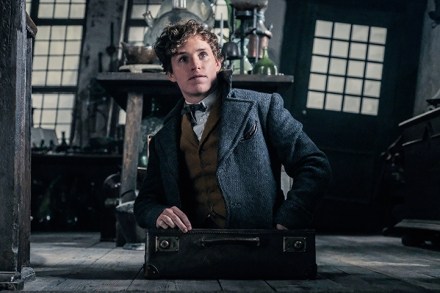
Fantastic Beasts: The Crimes of Grindelwald is the sequel to the Harry Potter prequel Fantastic Beasts and Where to Find Them, and either J.K. Rowling’s plots are now so labyrinthine she makes your average John le Carré look like Noddy, or I failed to put in sufficient homework, or it’s a plain mess. Whichever, I hadn’t a clue what was happening most of the time. I like the whole Potter industry well enough, but I can’t say I’m a superfan. I don’t even have an opinion on whether Dumbledore is gay or not, which is the surest sign of non-superfandom. But while a film should cater to those in the know, it should also be open to all, surely.

A cut above

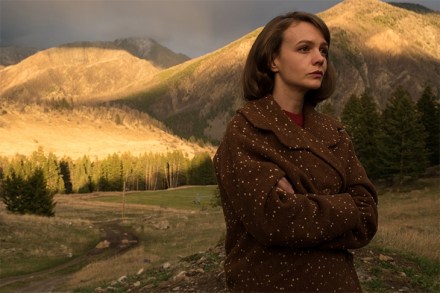
Wildlife is an adaptation of the 1990 novel by Richard Ford about a family coming apart at the seams, and while cinema is full of families coming apart at the seams this one is a cut above. It is exquisite and riveting. It pays proper attention to its characters. And it is brilliantly acted. According to recent figures, the chances of Carey Mulligan ever turning in a duff performance are 0.0 per cent but she still wholly outdoes herself here. This is the directorial debut of actor Paul Dano, who worked on the script with his partner, Zoe Kazan, for several years.

Men behaving badly | 1 November 2018

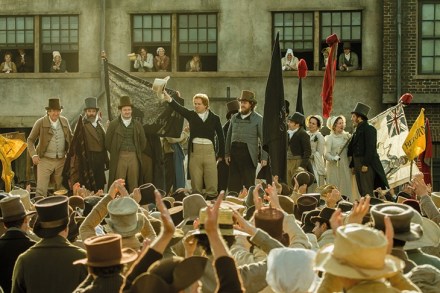
Mike Leigh’s Peterloo is one of those films where you keep waiting for it to get good, and waiting and waiting. It’s Mike Leigh; it’s bound to get good soon. But it never does. It’s essentially two hours of men shouting at each other, followed by a burst of violence. I sincerely wish it were otherwise, but there you are. This is the story of the Peterloo Massacre (16 August 1819), when government-backed cavalry charged a peaceable crowd of around 60,000 who had gathered in St Peter’s Field, Manchester, to demand universal suffrage. Fifteen were killed and hundreds more injured, including women and children. The film has been getting it in the neck from some quarters ever since the project was announced.

Drag Queen

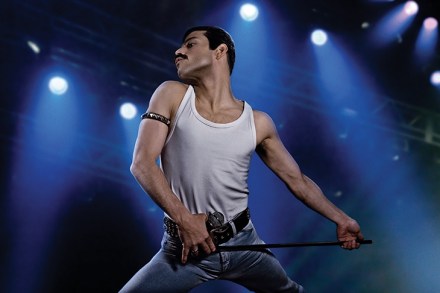
There is a moment in Bohemian Rhapsody when the screen swims with print. The reviews for Queen’s epic new single are in, and they unanimously denounce the song as a vacuous and bloated irrelevance. This feels like a brazen hostage to fortune for a biopic whose botched gestation saw writers, stars and directors roll on and off the project for a decade. But then Queen were always bomb-proof. The script we finally have before us is by Anthony McCarten, who specialises in rewriting the lives of difficult Brits. See also Darkest Hour and The Theory of Everything, whose lead actors both won Oscars. Lightning will probably not strike thrice for Rami Malek.

Man bites man

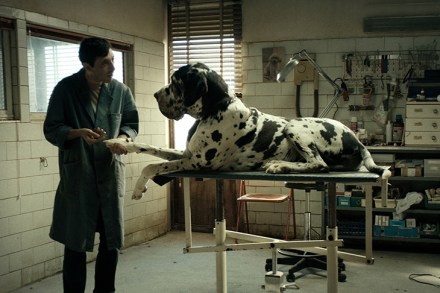
Matteo Garrone’s Dogman, which is Italy’s entry for the foreign language Oscar next year, is bleak, unflinching, oppressive, masculine (very), violent (shockingly) and basically everything you’d expect me to hate. Except I didn’t. It is out of the ordinary. It has a magical central performance. It is tense, as you wait for the little man to face down the big man, if he does. Plus there are lots of lovely dogs, which always helps, and none are harmed. Aside, that is, from the yapping chihuahua thrown into a freezer to shut it up. So there is that, too.

Hollow man

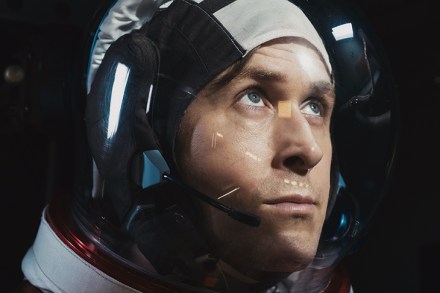
Damien Chazelle’s First Man is a biographical drama that follows Neil Armstrong in the decade leading up to the Apollo 11 mission to land a man on the moon (1969), but while it’s strong on mission, and technically dazzling, it’s weak on biography. Who was Armstrong the person? What made him hell-bent on such peril? Did he fear never returning? As portrayed here, he’s essentially yet another strong, detached, emotionally unavailable man of few words, so this is a set-piece action film at heart. A Mission Possible, if you like. Unlike Chazelle’s previous two hits (Whiplash, La La Land), the director himself did not write the screenplay. Instead, it’s been adapted by Josh Singer from James R. Hansen’s book on Armstrong.

Gaga over Gaga

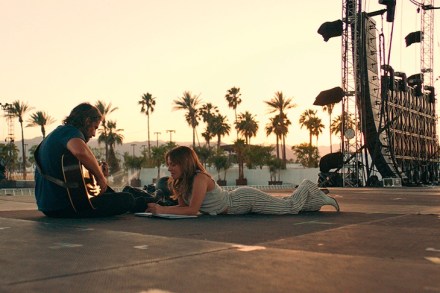
This version of A Star Is Born, starring Bradley Cooper and Lady Gaga, is the fourth iteration (Janet Gaynor and Frederic March, 1937; Judy Garland and James Mason, 1954; Barbra Streisand and Kris Kristofferson, 1976). So it’s a remake of a remake of a remake and overly familiar, you would think. Oh God, not another fella who can’t take it when her career eclipses his, boo hoo. Would a reboot with the genders flipped but the age gap preserved ever get made? Not a hope, is the short answer. But, but, but… I did cry, and Lady Gaga is truly sensational, fabulous, a revelation. I had no idea. Cooper directs, and also co-wrote, but it is her film, and one must hope that he can suck that up. Bradley, don’t go and do anything stupid, you hear?

Close encounter | 27 September 2018

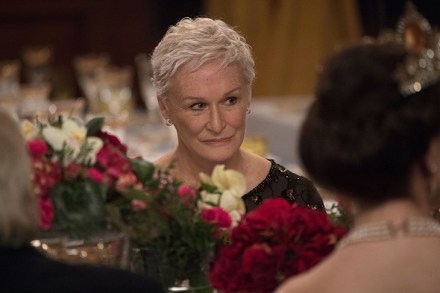
The Wife is an adaptation of the Meg Wolitzer novel (2003) and stars Glenn Close. Her performance is better than the film, but it’s such a magnificent performance that it more than carries the day. She is stunning. Close plays Joan Castleman, wife of Joe Castleman (Jonathan Pryce), a literary giant who has always been lionised, and for reasons we’ll discover she is simmering with rage. We’ve seen Close do rage before, but this time the rage is multilayered, nuanced, subtly restrained. No bunnies are boiled, in other words, although having said that, if I were Joan, I’d have boiled Joe’s bunny and whatever else was to hand, like his head. But that could just be me.

A matter of life and death | 20 September 2018

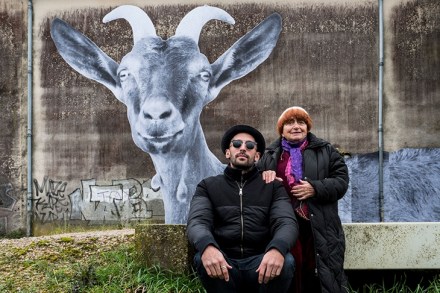
Faces Places is a documentary directed by Agnès Varda in collaboration with JR, the famous Parisian photographer and muralist (although, if you’re as shallow as I am, your first thought may also have been: how is this possible now that Larry Hagman is dead?). The pair visit small towns in France, meeting ordinary people, taking their photograph, blowing the photographs up huge, and pasting them outdoors on buildings and barns and trains. It sounds arty-farty, and I suppose it is, but it is also a mesmerising meditation on lives lived, friendship, ageing and mortality. Plus it throws in this fact for good measure: Jean-Luc Godard can be a total bastard. I didn’t see that coming, I must say.

Full of Eastern promise

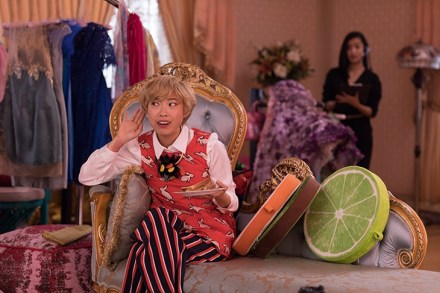
The cast and producer of Crazy Rich Asians were present at the screening I attended and said a few words to kick us off. At this point the film — the first with an Asian-American principal cast since The Joy Luck Club in 1993 — had been number one in America for three weeks, so they talked about a ‘cultural shift’ and how this was ‘as much a movement as a movie’. I confess, a lump came to my throat along with a tear to my eye, which is odd, given I’m usually such a hard-hearted old trout. It’s now difficult to know what to say next, but the safest thing has to be: while I’m pleased the film exists, and we should all be pleased this film exists, it is still only an average romcom.

Sensation seeking

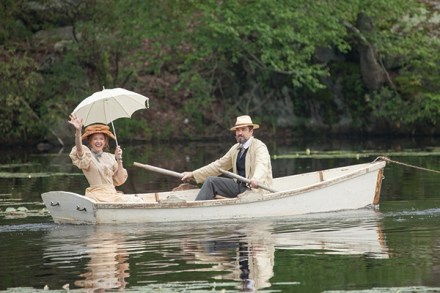
This adaptation of Anton Chekhov’s play is handsomely mounted, as they say, and features a stellar cast (including Annette Bening, Elisabeth Moss and Saoirse Ronan), but it won’t be setting the world alight. It is not a waste of 90 minutes, and Bening is superb, as if you even needed me to tell you that. But it doesn’t especially distinguish itself otherwise and I kept waiting for it to deliver emotionally. I waited and waited and waited, but no, nothing. The film is, of course, set on a country estate just outside Moscow, because if it weren’t set on a country estate just outside Moscow it plainly wouldn’t be Chekhov.

Opportunity lost

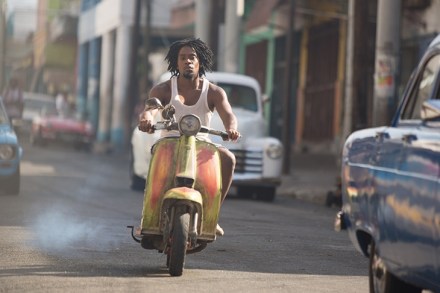
Yardie is Idris Elba’s first film as a director and what I have to say isn’t what I wanted to say at all. I love Elba and wanted this to be terrific. I wanted him to be as good from behind as he is from the front, so to speak. I wanted this to absolutely smash it as a narrative about the Jamaican-British experience as there have been so few. But, alas, it is a disappointment. It is patchy. It’s not paced excitingly. The characters are insufficiently drawn. And I struggled with the thick Jamaican patois, I must confess. I was often muddled, yet whether it was due to that or the plot was muddled anyway, I cannot say for sure. This is based on Victory Headley’s cult novel, first published in 1992, and is set in Jamaica and then London in the early 1980s.

Trapped in McEwan world

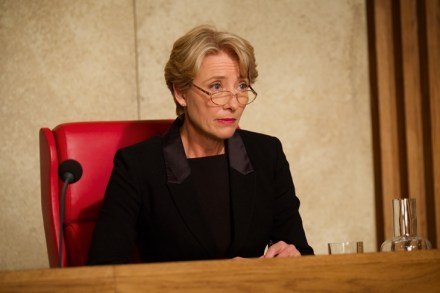
The Children Act is the third Ian McEwan film adaptation in 18 months (after The Child in Time and On Chesil Beach), and if you’re minded to think no amount of Ian McEwan is too much Ian McEwan then you are wrong. This is very Ian McEwan: tasteful, restrained, high-minded, controlled. Once, fine. Twice, fine. But by the third time you will want to take all that tasteful, high-minded, controlled restraint and put a rocket under it. Or at least I did. Directed by Richard Eyre, and adapted by McEwan, the film stars Emma Thompson, who is outstanding, and will keep you gripped to the extent that you can be gripped. She plays Fiona Maye, a judge in the family courts with a to-do list that will make your to-do list crumple up in shame.

An artist’s eye

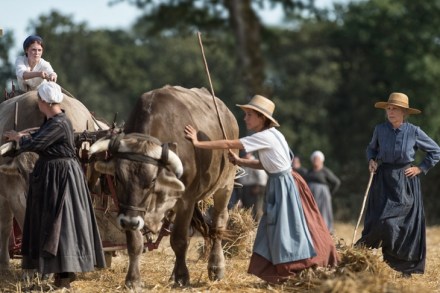
There are moments in The Guardians when you can imagine you’re in the wrong art form. Time stills, the frame all but freezes, and the film seems to have taken a left turn into an exhibition of fetching French landscapes and interiors from the early 20th century. The camera hovers over the harrowed earth, admires the sturdy sunlit front of a farmhouse, lingers thoughtfully on a face. The running time of 138 minutes could easily have been slashed to 100 by a heartless editor. But this is un film de Xavier Beauvois, a specialist in painterly exactitude. The writer-director’s greatest success came in 2010 with Of Gods and Men. This, too, had some of the trappings of a major box-office turn-off.

Barking mad | 9 August 2018

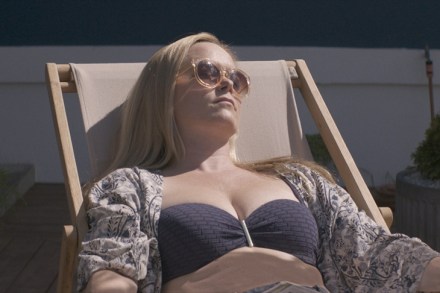
Every so often there’s a news story in which neighbours quarrel over rampaging leylandii. The police are summoned, the case reaches the court, and whole lives are consumed by inextinguishable hatred. These nuclear tiffs are a Middle England staple. A boundary dispute is a border dispute writ small. Other European nations have watched their negotiable frontiers move around like a boundary rope on a cricket pitch. Surrounded by sea, we don’t have that in our DNA. And maybe Icelanders don’t either. Under the Tree is a social comedy from Iceland in which the eponymous tree sits in the more southerly of two abutting gardens. The shade it casts thwarts the sun worship of Eybjorg (Selma Bjornsdottir). Hang on, sunbathing in Iceland?

Ebbsfleet or bust

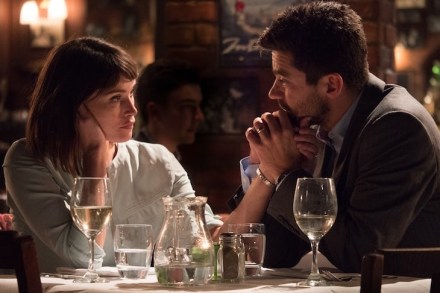
Dominic Savage had an early start. In Barry Lyndon (1975), Stanley Kubrick’s sprawling take on Thackeray, he played a prepubescent toff called Bullingdon blessed with a blond pudding-basin crop. By the time Savage started making his own films in the early Noughties, the hair had vanished, and so had any of Kubrick’s civilising varnish. For television Savage made a loose trilogy of dramas which plummeted circle by circle into a pit of social deprivation. His subjects were teenage parenthood (Nice Girl), underage drug use and prostitution (When I Was 12), and suicide in a young offenders’ nick (Out of Control). These cheerless vignettes felt all the more raw because his untried young performers ad-libbed without a script.

Keeping the faith | 26 July 2018

For many years I would chat genially with our local Jehovah, Stephen, who came door-to-door every few months or so, always hopeful that one day I would let Jesus into my life. (Will he babysit, I would always ask. Will he pair socks? Will he interrupt me during dinner LIKE YOU?) Then I actually read one of the Watchtower magazines he always left behind and discovered that if your husband is violent and beating you then you need to ask yourself: am I being a sufficiently loving wife? Next time Stephen appeared he was doing his rounds with a teenage girl so I looked her in the eye and said: ‘If a man beats a woman, it isn’t and can never be her fault.’ And that was the last I saw of Stephen. (Not strictly true, in fact, as he’s often hanging around the bus stop.

Streep show

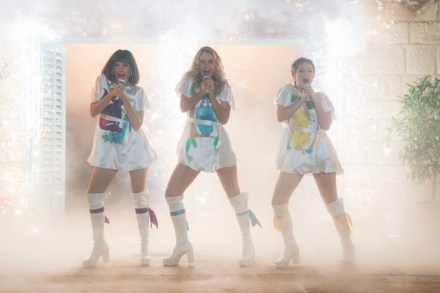
Mamma Mia! Here We Go Again aims to do what it says on the can. That is, be Mamma Mia, going again. But while many of the elements are the same as in the original —beautiful Greek island scenery; the actors frolicking among local folk and falling off boats; the knowing cheesiness; Pierce Brosnan singing his little heart out (alas) —you will be asking: where the hell is Meryl Streep? She’s on the poster but there’s no sign and no sign and no sign until, finally, at about 100 minutes in, she makes an appearance, and is wonderful. You do get Cher in an extended cameo, which is thrilling, but that doesn’t happen until about 90 minutes in. As the film has a running time of 114 minutes, this means that it’s only the last chunk that is worth seeing.