Any other business

Wrecking the Brexit talks won’t help our fishermen

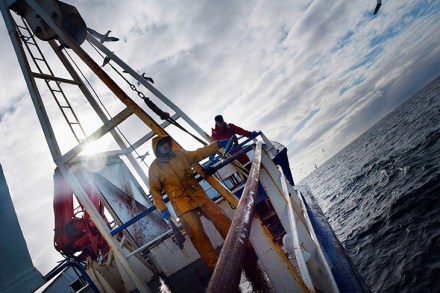
‘Every country has a political problem with its fishermen,’ wrote Peter Walker, the Conservative minister who negotiated the first effective EU-UK fishing deal in 1983. ‘Everyone sympathises with the tough life they lead. They all want to take as much fish as they can.’ And here’s Michel Barnier, still speaking as the EU’s chief Brexit negotiator in Dublin last week despite rumours he’s about to be sidelined: ‘Without a long-term, fair and sustainable solution on fisheries, there will simply be no new economic partnership with the UK.’ Those quotes encapsulate the bizarre fact that an industry which contributes just £1.

Now get off your sofa to help save the arts

Along, cold weekend brought a haul of business news more bad than good. The worst was from aero-engine maker Rolls-Royce, which announced a £5.4 billion half-year loss — adverse currency movements plus a collapse in new orders and engine-repair work — and warned that in the ‘plausible downside scenario’ of an extended slump in global aviation, the company might cease to be a ‘going concern’. That’s a horrendous prospect for what’s left of British engineering. And unlike recent losses on a similar scale at BP, there’s no consolation in terms of long-term repositioning of the business: in short, the fewer jets flying, the grimmer Rolls’s future.

Zoom falling: has the video-call novelty worn off?

A takeover battle for BT would bring much-needed excitement to the City — as well as a major political row. The privatised telecoms giant that rarely pleases its customers and regulators has seen its shares fall by four-fifths since late 2015. While many other tech-related stocks have rebounded, BT’s price is still down where it was when the market plunged in February — lockdown having interfered with BT Openreach’s broadband installation programme, slashed new orders from business customers and even knocked out the fixtures that might have been shown on BT Sport’s television channels. On top of all that, there’s a gaping hole in the pension fund.

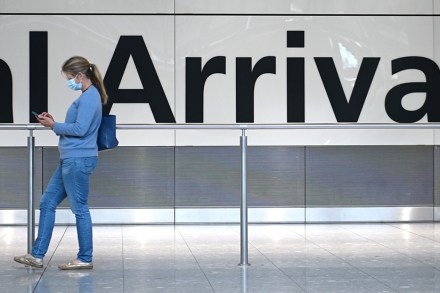
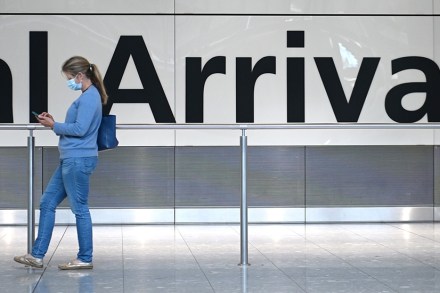
Has Downing Street calculated the real cost of quarantine?

Doing the math, as the Americans say, became this column’s theme after I abandoned another planned trip to France. Seven days in the Dordogne (where last week’s Covid infection rate was just 2.9 cases per 100,000) would have cost me 14 days lockup on return, so I spent the weekend doing arithmetic instead. As I tried to calculate the real cost of what I have called ‘kneejerk quarantine rules driven by focus-group fear’, my notebook began to resemble a rogue Ofqual algorithm — but here’s the simplified version. Let’s start with the 600,000 Britons reportedly caught by the quarantine returning from Spain last month and the 150,000-plus in France who missed last Saturday’s 4 a.m. deadline.

The battle to tackle excess boardroom pay may already be won

At a low moment in late March, I suggested that all large companies should consider temporary cuts in executive salaries ‘both as a gesture of immediate solidarity and as a move to avert a longer-term backlash against wealth, privilege and the pillars of capitalism’. Latest research from the Chartered Institute of Personnel and Development and the High Pay Centre reveals that 36 of the FTSE 100 list of top companies followed my advice, most commonly with a 20 per cent salary cut for the chief executive but no reduction to the long-term incentive schemes that make up half of total boardroom pay. The High Pay Centre, which hates high pay, clearly doesn’t think that’s enough of a sacrifice.

In defence of Amazon

We should take heart from BP’s £5.1 billion second-quarter loss, accompanied by a halving of its dividend. What’s good about that? Nothing — except that the loss reflects a write-down of the value of oil and gas assets that shifts the company to a more realistic footing for an extended period of low oil prices and reduced demand, indicating resilience rather than impending doom. In recent times, BP has lived through Deepwater Horizon, history’s most politicised oil-rig disaster, and extricated itself from TNK-BP, history’s nastiest Russian joint-venture. It operated when oil was below $20 a barrel in 2001 and when it hit $147 in 2008. It has plans to achieve net zero carbon by 2050.

Will retail giants outsmart the online sales tax?

When I worked in the Malaysian capital of Kuala Lumpur long ago, my office looked across Jalan Tun Razak, a boulevard named in honour of the country’s second prime minister and ‘father of development’. This week his son Najib Razak, its sixth prime minister (2009-2018), was convicted of charges relating to the disappearance of $4.5 billion from a sovereign wealth fund called 1MDB which he once controlled. More trials await, but 1MDB may go down not only as the world’s biggest corruption scandal but also the most vulgar — proceeds that might have helped Malaysia’s poor having been frittered on private jets, penthouses, parties in Las Vegas and the financing of The Wolf of Wall Street.

Is it too late to jump on the gold bandwagon?

The price of gold has been rising since the earliest virus reports from China in December. Adherents regard it as a hedge against inflation, bad government, economic turmoil, weak currencies and negative real returns on financial alternatives, all of which are present threats. For pessimists, this week’s headlines — above-inflation pay rises for 900,000 UK public-sector workers, the EU’s €750 billion debt-fuelled recovery package, the WHO’s report of 260,000 new Covid cases in a single day — all represent arguments for this ultimate safe-haven holding. Too late to jump on the bandwagon?

We’ll never know whether Huawei is still listening

This column has been banging on about the peculiar nature of Huawei, the Chinese telecoms giant, ever since its expanded presence in the UK won what I described as ‘grateful applause from David Cameron’ back in 2012. I have deployed everything from serious intelligence sources to laborious knock-knock jokes (‘Huawei who?’ ‘Who are we kidding, prime minister? We don’t need to knock on your front door when we’ve already got a backdoor device in the Downing Street switchboard’) to make my point that the proliferation of Huawei kit in UK telecoms networks represented an obvious but unquantifiable security risk.

A bailout for the arts is good – but reopening would have been better

The government’s £1.57 billion lifeline for the cultural sector was bigger than most practitioners were expecting — and drew a chorus of approval from arts panjandrums lined up to offer quotes on the end of the DCMS press release. A nifty media exercise, then, and a smart deployment of the Hank Paulson ‘big number’: when the US treasury secretary unveiled his $700 billion bailout package in 2008, a staffer admitted the number had been pulled out of the air simply because it sounded huge.

Why Boris Johnson’s ‘New Deal’ won’t save us

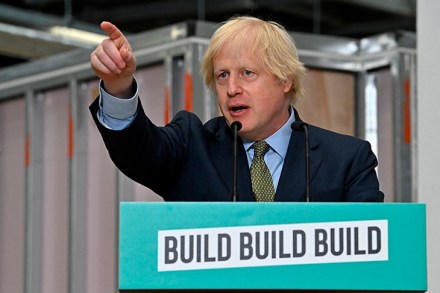
John Maynard Keynes looks down and smiles, recalling his own perhaps too-often quoted remark that ‘when the facts change, I change my mind’. Boris Johnson’s £5 billion ‘New Deal’ of school and hospital projects to stimulate the pandemic-torn economy is pure Keynes, as well as a conscious reference to Franklin Roosevelt. And like the totality of the Treasury response to Covid, it represents a 180-degree change of mind from the modern Conservative belief in squashing state spending while letting the private sector drive. But in dire circumstances, most commentators accept it’s right to park ideology and try anything that looks like it might work.

Tinkering with VAT won’t make us trust the government

Should Chancellor Rishi Sunak cut VAT as an emergency stimulus to the consumer economy? When Labour’s Alistair Darling made a 2.5 per cent £12 billion cut after the 2008 crash, I called it ‘an unconvincing and expensive gambit’, on the basis that shoppers would barely notice and that ‘far more significant will be the general level of confidence as it is affected by business failures and job losses… and the general grimness of global economic news’. The same applies today only more so, given that inflation is dormant, households’ pent-up spending power has in many cases been boosted by lockdown and the top VAT-cut winner would likely be Amazon. By all means relax Sunday trading laws and restrictions on outdoor food and drink service.

Is there anywhere visitors will be welcome this summer?

Do stock markets foretell the future while politicians fudge and economists mumble? No: share prices collectively have a life of their own — driven by herd mentality, weight of money and the available range of investment choices — which indicates little more than the simple fact that what goes up must one day come down and vice versa. Both the FTSE100 and America’s S&P500 indices lost a third of their value between late February when the pandemic began to look serious and a month later when the rate of virus transmission was at its height. So far, so logical. But since then, both have sustained rallies that defy all public and corporate pessimism. Now, just as shops and factories are reopening, both markets look ‘overbought’ and wobbly again.

Who would want to come to Britain for a holiday now?

All logic suggests that the 14-day quarantine for arrivals from abroad really is, as Michael O’Leary of Ryanair put it, ‘a political stunt’. The best explanation is that it was conceived in Downing Street — with minimal consultation, unless someone rang Armando Iannucci, writer of The Thick of It — as a sop to focus-group xenophobia and parental anxiety, as well as a show of grip after the Dominic Cummings debacle. Its absurdity is highlighted by news that the West Indies cricket squad is now quarantined, while 122 high-goal polo players were reported to have beaten the deadline by slipping in last Saturday on a charter flight from Buenos Aires via the Covid cauldron that is São Paulo in Brazil.

Our theatres are dark – and in danger

Car showrooms are open again: some dealerships, with a hint of forgivable hyperbole, report a surge of pent-up demand. And after building only 197 new cars this April, compared with 71,000 in April 2019, car factories are returning to production — even if under new safety rules that will slash productivity for the duration and accelerate the shift to job-eliminating robotics for the longer term. But still the Daily Telegraph offers an uplifting glimpse of Land Rover’s Solihull plant emerging from hibernation: ‘At 5 a.m., as the first shift came in, every production manager was out in the car park to greet returning staff.

Bailing out businesses looks inevitable – but it’s not all bad

Should the government be prepared to take equity stakes in major companies that will struggle to survive the current crisis? That’s a question already on the table in relation to Jaguar Land Rover and Tata Steel, and likely to arise for British Airways, aero engine maker Rolls-Royce and others. We’re told Chancellor Rishi Sunak is working on a plan, called Project Birch, to bail out ‘viable companies which have exhausted all options’ and whose collapse would ‘disproportionately harm the economy’. That means large-scale loan support first, with conversion to equity as a last resort — and to some pundits it smacks of the 1970s interventionism that left swathes of under-performing British industry addicted to state subsidy.

Rico Back’s departure is a first-class opportunity for Royal Mail

The Royal Mail worker who rang my bell to deliver an Amazon package on Friday was wearing a glittery ball gown because she and her colleagues were fundraising for local hospitals: ‘Two thousand quid so far,’ she said cheerily as she accepted my donation and thanks. But if I had asked her what she thought of the performance of her ultimate boss Rico Back — chief executive of Royal Mail until his sudden departure after less than two years in the job — I suspect she might not even have recognised his name, so remote has this German-born, Swiss-resident big shot been from the front line of his organisation’s role in keeping us all in touch with each other during the lockdown.

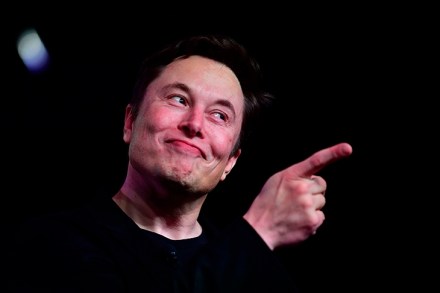
It’s mavericks like Elon Musk who’ll get us through this crisis

This month’s most significant corporate deal attracted less attention than it might have done in normal times, crowded out by grim news elsewhere. It is the proposed £31 billion merger of O2 and Virgin Media to create a telecoms giant with 46 million customers. Following BT’s 2016 acquisition of the mobile operator EE, further ‘convergence’ in the sector had been expected, but the mid-lockdown timing was spun as a vote of confidence in the UK, described as ‘one of the most attractive markets on Earth’ by José María Alvarez--Pallete, chief executive of Telefónica of Spain, which owns O2. Investment of £10 billion in the new group’s mobile, broadband and television platforms is promised over the next five years.

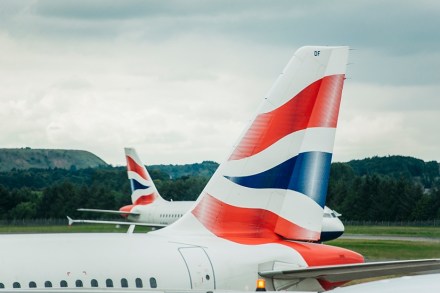
Now is not the time to throw money at airlines

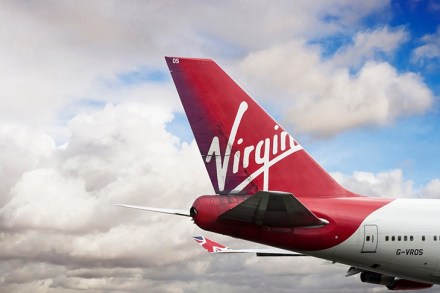
British Airways warns of 12,000 redundancies. Ryanair announces 3,000 job losses as ‘a minimum to survive the next 12 months’; Virgin Atlantic adds 3,000 more. The aero engine makers Rolls-Royce and GE talk of more than 20,000 job losses between them. Of all the sectors hard hit by pandemic, aviation is one whose prospects look blighted as far as the horizon. What should governments do about it? Global trade will return to pre-crisis levels, but business travel may never do so: why would companies bear the risk and expense when video-conferencing is so cheap and efficient? Even if vaccines against Covid-19 are available by next year, international travel will be constrained by fear of the next virus.

Rishi Sunak must stick to his guns

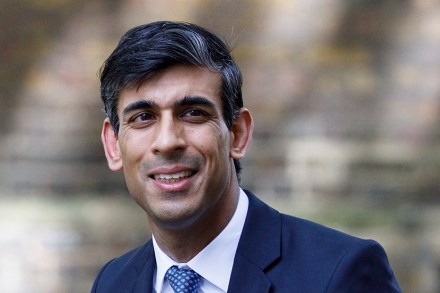
Was the Chancellor wrong to guarantee only 80 per cent, rather than 100, of ‘coronavirus business interruption loans’ to keep small- to medium-sized companies afloat? Rishi Sunak’s announcement this week of fully guaranteed micro-loans for the smallest companies seeking to borrow up to £50,000 was reported as a partial climbdown in the face of pressure from the CBI and many of his own MPs to do away with the on-risk slice of the larger scheme, which provides loans of up to £5 million through 40 accredited banks — but which many would-be borrowers have claimed is a bureaucratic nightmare. Readers certainly confirm that picture.