Life

Life

The language of the victimhood war

Language is used in a weird way in the victimhood war, where those who see themselves without agency bravely speak their truth to power. Their truth cannot be negated merely by examining the evidence, for it derives from lived experience. The powerful are axiomatically guilty, and must be called out for their behavior, or behaviors, as the new usage puts it. They must then own or take ownership of the issue. The Duke and Duchess of Sussex found themselves victims without agency in the racist world of the royal family. During their interview with Oprah Winfrey, they spoke of conversations between the Duke and a member of the family about their unborn son Archie and what color his skin might be.

own
exhortation

The exhortative tradition in America

G.K. Chesterton observed after his return to England from a lecture tour in the United States that America is a nation with the soul of a church. That is hardly surprising, the northernmost of the original thirteen colonies having been established by a fervently religious sect. All religions are exhortative by nature, none more so than the sectarian ones which have a solid history of being noisier in this respect than the established churches, partly, I suppose, because one encourages the burning of witches in louder tones than one solicits a bigger collection plate for the relief of the victims of territorial rebellion in Ethiopia. It is true that the first generation of Puritans in Massachusetts were a more dignified lot than many of their successors.

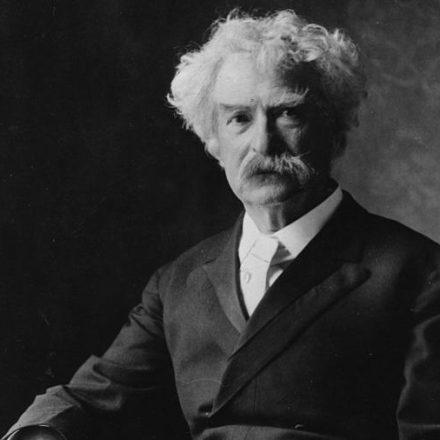
Mark Twain in Buffalo

“Irreverence is the champion of liberty and its only sure defense,” wrote Mark Twain in an age before irreverence became a hanging, or at least exiling, offense. Perhaps the more apt aphorism today belongs to Edward Abbey: “The distrust of wit is the beginning of tyranny.” (The distrust of half-wit, I suppose, is the beginning of a TV critic.) Mark Twain would be hopelessly out of favor with both wings of the modern duopoly. Militaristic Republicans would scorn Twain for his skepticism of empire and mockery of world-saving cant. (He was a supporter of the Anti-Imperialist League and proposed that the stars and stripes be replaced by the skull and crossbones.

twain
New Year's Eve

Did the culture wars kill the New Year’s Eve party?

It’s hard to celebrate New Year’s Eve when, if like me, you don’t drink, you don’t do drugs, you don’t have sex with skanky strangers in sleazy toilets anymore — and you like to be in bed by 9 p.m. My ex-wife used to complain that she was married to a man who wanted to go to bed at nine on New Year’s Eve. The bit she left out from this tale of woe was that I wanted to go to bed with her and celebrate with cold martinis (I still drank back then), hot sex and yummy food. Isn’t that a better way to see out the year than a party full of drunk strangers desperately trying to make whoopee? The answer for most of my friends and most of London too is: no. They have this compulsion to celebrate and get very anxious about not having a party to go to on the big night.

Staten my preference

The Margarita, the divey bar facing an equally divey pizza joint in the Staten Island Ferry Terminal, is a special place. For one, it’s where a middle-aged African-American lesbian bought me a drink — the only instance I can recall from decades of drinking that a woman has offered to buy me a drink before I got her one. Given her preference for fuller Latino ladies over lanky white men — which she emphasized through photos on her phone — my new acquaintance clearly didn’t have an agenda behind that drink for me. We just got talking and she did that New Yorker thing of embracing companionship and the moment.

staten