Books and Arts

Books and Arts

How progressive politics ruined Canadian literature

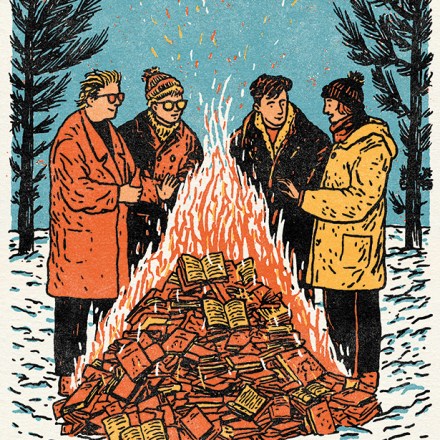
Canada is back, baby. Since Mark Carney’s election as Prime Minister in April last year, he’s projected an image of brawny, swaggering capability – another silverback statesman in a new, multilateral world. He’s tussled with Trump over tariffs; hobnobbed with autocrats including Xi Jinping and Narendra Modi and strongly criticized the US attack on Iran. In fact, the anger that many Canadians seem to feel at their cousins across the border is startling – on a recent trip to the Yukon, I found almost every public toilet tagged with “Trump Tower” graffiti. This newfound assertiveness is surprising. Canada, as the South Park movie astutely pointed out in 1999, is the eternal scapegoat of international politics.
canadian literature
boston

How Boston became the cradle of American children’s literature

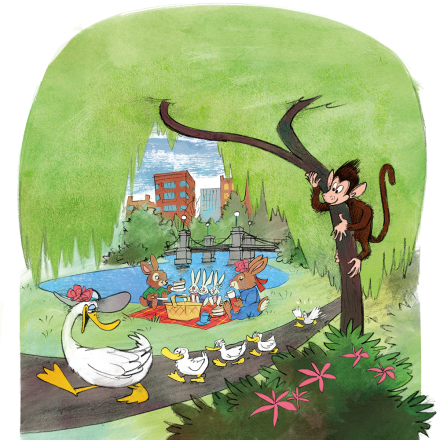
It was Labor Day in Boston and the bronze ducklings in the city’s Public Garden were each wearing a fluffy autumnal scarf. Nobody seems quite sure who dresses them, but at various points they have worn party hats, festive knitwear and hot pink. When the Tartan Army arrived for the World Cup earlier this year, Mrs. Mallard and her ducklings – Jack, Kack, Lack, Mack, Nack, Ouack, Pack and Quack – were forced to endure miniature traffic cones and saltires. The sculpture was created by Nancy Schön in 1987 to celebrate Robert McCloskey’s 1941 children’s book, Make Way for Ducklings. In 1990, former Soviet first lady Raisa Gorbachev visited Boston and admired the statue.

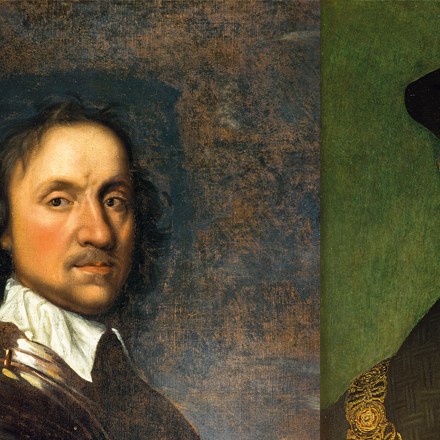
United by ambition: the ruthless rapacity of England’s two famous Cromwells

In the early years of the English Civil War John Milton turned his mind from the poetic arts and committed himself to writing some of the most searing pamphlet polemics of the 1640s. With the nation convulsed by violence, he set about finding causal explanations for the revolutionary ferment, and saw its roots in the 1530s and the unfinished nature of the Protestant Reformation. Only by completing the work of Reformation, Milton thought, would the English come closer to God and lasting peace. Such arguments had domestic as well as national urgency for Milton, much in need of peace himself, as he tried to extricate himself from his stupendously misguided marriage to Mary Powell, half his age and from a royalist family.

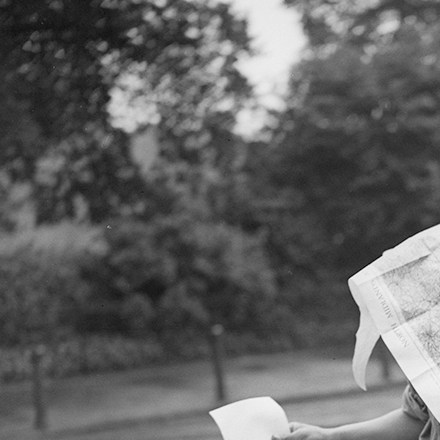
Around Britain with a theodolite: a celebration of the Ordnance Survey maps

It took six years, starting in the summer of 1784, for the Board of Ordnance to establish the baseline of its triangulation of Great Britain. First they used wooden poles, then glass tubes. After much clearing of furze bushes and anthills, the baseline ran for more than five miles from Hounslow Heath to Hampton Poor House. The maps of England and Wales were complete by 1870. Scotland had to wait until 1887. The delay was rumored to have been caused by the superintendent’s concern that surveyors would get in the way of the late summer deerstalking. As a wing of the military, the Ordnance Survey had extraordinary powers. The Surveyors’ Act of 1841 allowed it to trudge, clamber, squelch, measure and interrogate wherever necessary.

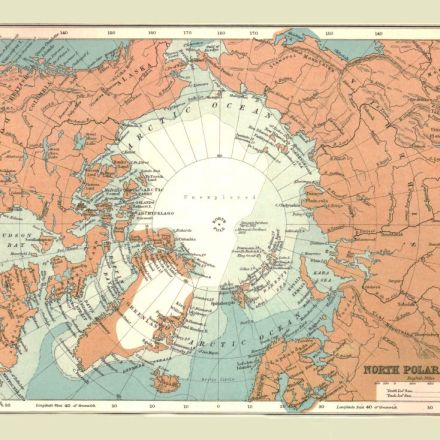
Madness, mutiny and murder in the Canadian Arctic

The elegant, charismatic and narcissistic explorer Vilhjalmur Stefansson wasn’t the average adventurer that Alaska attracted in 1912. When he arrived in Seattle from the Gold Rush port of Nome, he told journalists that he had discovered “a lost tribe of whites” in the uncharted High Arctic. He also sold politicians the vision of an undiscovered land rich in gold, raw metals and oil that, only nine years after the Wright Brothers’ first flight, would soon be covered with airfields. The Canadian government quickly offered Stefansson unlimited resources to lead an expedition back to the High Arctic. His objective was to claim what may have been the greatest geopolitical prize for Canada and the British Empire: the mysterious continent at the top of the world.

‘I think the best revenge is indifference’: Salman Rushdie interviewed

“I probably got one or two seconds look at him before he delivered the first blow,” recalls Sir Salman Rushdie. For the next 27 seconds, on August 12, 2022, the man whom Rushdie will refer to only as A. (“for asinine,” he explains) tried to kill the writer on the stage of the Chautauqua Institution in upstate New York. A. slashed through the tendons of Rushdie’s right hand, cut his thigh, stomach and chest, incised a gaping wound in his neck and finally stabbed him in the right eye.

The genius of Sherlock & Co.

The podcast audio-drama Sherlock & Co. is an updated version of Sir Arthur Conan Doyle’s stories in which the great detective is neurodivergent and gay, Dr. Watson is a millennial who preaches against ethnic stereotyping, Lestrade is a woman who speaks with a Caribbean twang, and the society gossip Langdale Pike has morphed into a drag queen. Throw in the fact that it’s produced by Gary Lineker’s Goalhanger and you might imagine that we’re talking about a woke brew designed to repel conservative Holmesians like me. Actually, Sherlock & Co. is my favorite podcast ever. I love it almost as much as Conan Doyle’s ur-text and infinitely more than the BBC’s Sherlock, which began well but then disappeared up its smug backside.

carmen

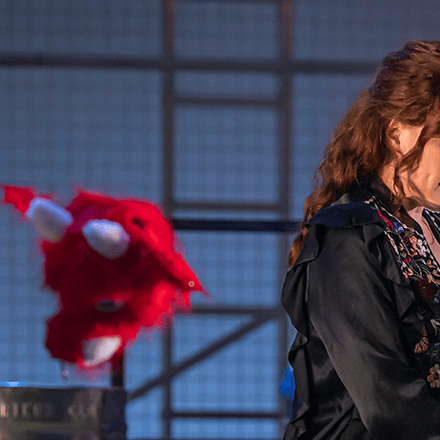
When will I see a Carmen set in 19th-century Seville?

No critic sets out to be a reactionary, even though it’s much easier that way. There’s no real satisfaction in rejecting novelty on sight; no joy in measuring a living performance against your record collection and coming down, every time, in favor of the dead Nazi. I get that. Still, it’s a plain fact that in three decades of regular opera-going, I have never – not once – seen a live production of Carmen that locates the action in 19th-century Seville. Or one that centers the visual elements – mantillas, sunshine, picture-postcard Spanishness – that directors tell us (and how they tell us!) have become such clichés.