Life

Life

Spain’s caminos come calling

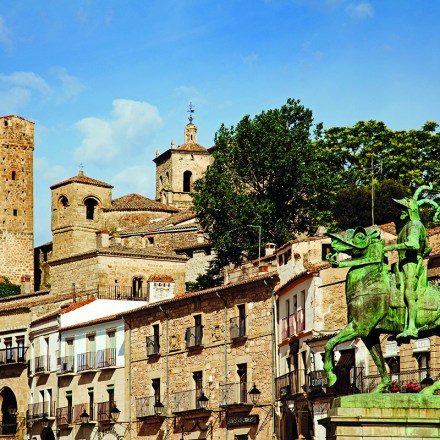
I haven’t come close to dying of thirst in Texas, where I live. In Spain’s little-known Extremadura, however, I found the odds increasing. Wandering through wide-open scrubland in hundred-degree temperatures, my only company was lots of Spanish bulls, unfazed by the blistering heat as I sweated my heart out. The population of Extremadura has been sparse since the Muslim occupation, but there are plenty of cattle. As I headed north from Seville on the Via de la Plata, the latest leg of my extended Camino de Santiago pilgrimage crisscrossing the Iberian Peninsula, Extremadura struck me as remarkably like Texas ranching country.

spain
anglosphere

The slumber of the Anglosphere

The countries we call Anglo-Saxon (Great Britain, the Commonwealth and the United States) have been known for centuries for their ability to govern themselves democratically, peacefully and efficiently. In the twenty-first century they have been doing less well. Britain and America are both in dreadful straits politically, economically and socially. The implosion of Boris Johnson and the search for a satisfactory successor have revealed the leadership of the Tory Party as a hapless and embarrassing collection of mediocrities devoid of coherent ideas. Across the Atlantic, one of the two major parties is a gerontocracy at the top and a gang of urban guerrillas with Molotov cocktails at its base.

Keeping Syracuse time

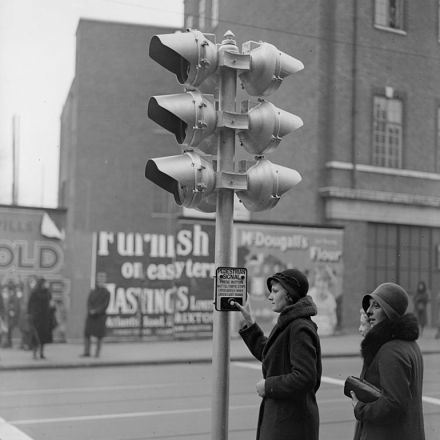
I have my flaws, but I do know how to treat a lady. Five years ago, for our thirtieth anniversary, I took my wife to a nineteenth-century mental hospital. (We didn’t check in.) This year, to celebrate her birthday, I showed her a traffic light — and as a lagniappe, we gandered at a clock, too. It’s not quite as quotidian as it sounds. Well, maybe it is, but now that I’ve got you on the line, let me tell you why we drove two hours to Syracuse, the Salt City, to inspect a pair of everyday sights. First, the light. In 1925 or thereabouts, the city of Syracuse installed a traffic signal with green on top and red on bottom in the Irish neighborhood of Tipperary Hill. This was done at the behest of an alderman surnamed Ryan. A proud Paddy politico, apparently.

Syracuse
self-promotion

How I learned to stop worrying and love self-promotion

I have a new book coming out this month and it’s called Jack and Me: How Not To Live After Loss. Not long ago, I would have been too embarrassed to give my book such an obvious plug as that. But that was the old, reticent, self-deprecating me who didn’t feel comfortable engaged in acts of blatant self-promotion. Now that me is dead. Meet the new me: the shameless, self-promoting media slut that I’m trying to become. It’s hard to believe that there was a time in London society when the pursuit of publicity and self-promotion was considered rather vulgar and regarded as an American practice that no classy English person — especially an English writer — would ever stoop to. (Of course, they did it all the time.

Trapping gators in the Everglades

When the mugginess of a northeastern summer begins to oppress your spirits, there’s only one thing to do: convince yourself the grass is greener — or safer, at least — on your side by heading to a place where people have it even worse. For me, that was the edge of the Everglades in August, where not only does standing outside for more than a minute challenge the fortitude of your every pore, but an alarming number of the residents want to kill you. Invasive cane toads ooze sticky white goo that’s lethal to pets and highly toxic to humans. Venomous rattlesnakes slither undetected through dense vegetation. There are even black bears — who knew bears lived in Florida? — that can be troublesome.

alligator
seaplane

A seaplane out of Manhattan

In the awfulness of LaGuardia Airport, the small 1939 Marine Air Terminal stands out as a reminder of earlier and better days. Today it is arguably the oldest American airport terminal in operation. Shuttered for decades, the building was resurrected by the Pan Am Shuttle in the 1980s, then the Eastern Shuttle, then the Delta Shuttle, and most recently JetBlue. Here was a terminal made for commercial aviation before the age of the “airbus.” You might miss the Daily Planet details of the main hall if you only pass through the side door. Designed by William Delano of Delano & Aldrich, the terminal connects the classicism of the Beaux-Arts with the thrust of Art Deco.