Books & Arts

Books and Arts

Heidi Swanson, the whole food revolutionary

Heidi Swanson started her vegetarian food blog, 101 Cookbooks, in 2003. At the time, the Atkins Diet was sweeping the nation, even as schoolchildren still learned the carb-heavy Food Pyramid. It would take another year for a landmark study to link high-fructose corn syrup to the obesity epidemic, and another fifteen for the FDA to ban trans fats. Back then, granola was for tree-huggers, like organic produce, Whole Foods Markets and the Pacific Northwest. Times have changed. These days, everyone outside the Lion Diet community agrees that a plant-based diet is best, preferably free of hormones and artificial sweeteners. 101 Cookbooks is still active and popular, if less countercultural than at its inception.


Swanson
carrington

The surreal life of Leonora Carrington

"It’s the belief that nothing is ordinary, that everything in life is extraordinary. And being old is no more, no less, extraordinary than being young.” When the artist and writer Leonora Carrington was asked in 2006 what “Surrealism” meant to her, this was her reply. It was a remarkably frank statement from an artist who had, at other points in her career, declared that she “was never a Surrealist,” even memorably asserting that the Surrealist link between women (the femme-enfant) and the muse was “bullshit.” Perhaps it owes its frankness to the interviewer: sitting across the kitchen in Carrington’s house in Mexico City was her cousin, the journalist and author Joanna Moorhead.

What the Old Masters can teach us about contemporary life

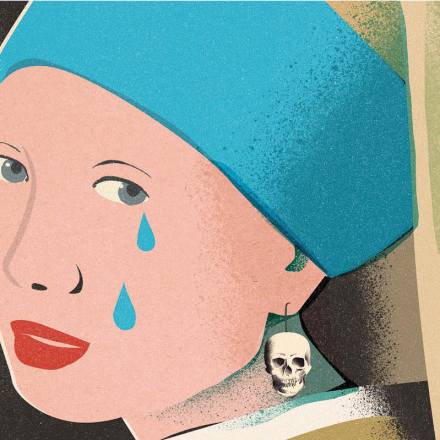
The seventeenth-century Dutch painter Johannes Vermeer is certainly having a moment, thanks to the enormous popularity of the retrospective of his work that concluded at the Rijksmuseum in June. Demand to see the gathering-together of twenty-eight of the thirty-seven currently known paintings by the Old Master far outstripped supply; the show sold out within two days of opening, and scalpers were allegedly reselling tickets online for hundreds, even thousands, of dollars. It’s certainly not difficult to understand why people would flock to see Vermeer’s work, thanks to his beautiful brushwork and sensitively lit compositions.

old masters
Oscar

Taking in Good Night, Oscar and New York, New York

Mental illness is horrifying and hilarious, like politics or killer clowns. And unlike those two subjects, it can be staged without tackiness or gimmicks. King Lear’s all the more tragic for losing his marbles and out-fooling the Fool. I was nevertheless surprised to see a show exploit the premise as heartily as Good Night, Oscar does, for laughs and gasps alike. The new play about the mid-century pianist, actor, comedian, and all-around firecracker Oscar Levant gets more mileage out of old-school “mental-health struggles” — alcoholism, drug addiction, schizophrenia, OCD, wifebeating, electroshock therapy — in a taut hundred minutes than Dr. Phil could in a whole season.

The history of a Britney Spears masterpiece

The year was 2007. The Bush administration was launching bombs in the Middle East, the economy was collapsing and pop songstress Britney Spears was standing in a recording booth at Sony’s New York City office. As Spears waited to lay down vocals, producers Ezekiel Lewis and Christian “Bloodshy” Karlsson discussed the latter’s condo in Bangkok, Thailand. “Oh, Thailand,” Spears said, according to Lewis’s recollection. “Why don’t we go and do the songs in Thailand? Let’s go to Thailand. I have the plane coming tonight.” Lewis looked across the studio at Karlsson and mouthed, “What the fuck? Is she serious?” She was dead serious. “Well, why don’t we get this one down first, and then maybe let’s think about it tomorrow?” he said.

spears
war

Men at War examines homosexuality among World War Two soldiers

As a little boy, Luke Turner, like so many other little boys, was fascinated by World War Two. He used to spend hours carefully making Airfix models of warplanes, and his favorite haunt was the Royal Air Force Museum in Hendon, a suburb of North London. Men at War, his second book, is an attempt to explore and explain both this interest and his own sexuality (he is bisexual, with a female partner), in response to what he sees as the dominant, jingoistic attitude propagated via general British cultural discourse. He claims that we do not see those who fought as individuals, but as clipped, heroic avatars, like Captain Sir Tom Moore, who raised millions of pounds for NHS charities during the lockdowns: dignified, silent, brave.

The troubled relationship between Mussolini and his son-in-law

Like those of his wartime ally Joseph Goebbels, the diaries of the Italian fascist foreign minister Count Galeazzo Ciano (1903-44) have proved a mainstay of academic research into the frequently banal inner workings of the Axis dictatorships. Both men were entirely aware of their journals’ historical and commercial value. In 1937, Goebbels struck a lucrative deal with Max Amman, the Nazi Party publisher, for the release of his warped musings on race and politics twenty years after his death, which in the event came sooner than he might have imagined. Ciano in turn used his diaries to barter unsuccessfully for his life when arrested on charges of treason.

ciano
Moore

Lorrie Moore explores the thin veil between life and death

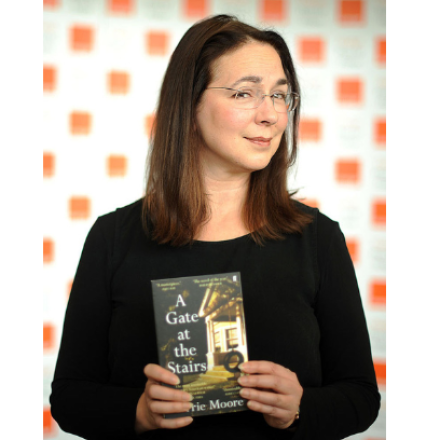
Very few of us could evade accusations of pretension if we quoted Faulkner in everyday conversation. The characters conjured up in Lorrie Moore’s fiction are granted an exception, though not always solely by virtue of their earnestness. In her novel I Am Homeless If This Is Not My Home, which traces a journey toward a final burial in the American South, allusion to As I Lay Dying is particularly apt. Moore has made a name for herself as one of America’s masters of the short story, with her inimitable style on display ever since her first work of fiction, “Raspberries,” was published in 1977. In this, her first novel for fourteen years, she once again wields her wordplay playfully and powerfully, striking a balance between levity and gravity.

Lady Caroline Lamb and the frantic bed-hopping between the great houses of England

“Mad, bad and dangerous to know.” That’s the line Lady Caroline Lamb (1785-1828) is known for — her brilliant, pithy verdict on her lover Lord Byron. Her other great claim to fame — her marriage to Viscount Melbourne, twice prime minister — was marginal from a historical point of view: she died, aged only forty-two, her health shattered by drink and laudanum, before Melbourne became PM; before he became Lord Melbourne, in fact — he succeeded to the title after her death. But, still, as Lady Antonia Fraser reveals in her gripping biography, Lady Caroline Lamb: A Free Spirit, she was a remarkable woman, possessed of exceptional charm, as was Byron.

Caroline
orwell

Why is George Orwell so difficult to pin down?

Outside Broadcasting House, the BBC’s main center in London, is an imposing, eight-foot-high statue of a man. He leans over slightly, as if to accost passersby, and holds a cigarette. A sign behind him declares, “If liberty means anything at all, it means the right to tell people what they do not want to hear.” The man is the author and critic George Orwell and the statue was intended as a permanent commemoration of his writings and values, as well as his short-lived stint at the BBC during World War Two.

The great late Yeats

The 1923 Nobel Prize in Literature was awarded to William Butler Yeats “for his always inspired poetry, which in a highly artistic form gives expression to the spirit of a whole nation.” Informed of the prize late on the night of November 14 by the editor of the Irish Times, the fifty-eight-year-old Yeats and his wife George sat up taking telephone calls and telegrams for a couple of hours. Then, according to Yeats’s sister Lily, the couple went down to the kitchen and cooked some sausages before going to bed. The next day, the Yeatses went out and began spending some of the check Yeats would receive in December.

yeats