Previous magazine Next magazine

Latest issue

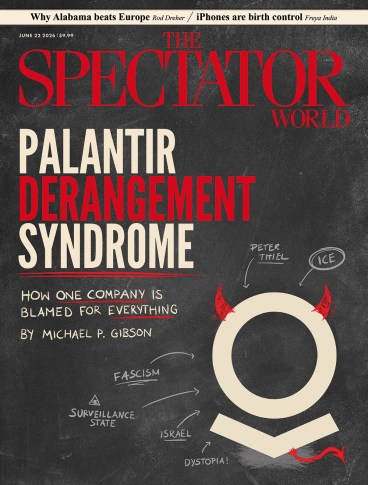
Palantir Derangement Syndrome

Browse past issues

Books & Arts

Books and Arts

The Sun Also Rises is still a great American novel

To pinpoint the precise moment Ernest Hemingway came up with the idea for his first novel, The Sun Also Rises, which is celebrating its centenary this year, is not difficult. All we have to do is follow the trail back to Pamplona. In 1925, after a cold winter in Paris, a 25-year-old Hemingway was keen to return to the San Fermín bullfighting festival in the Basque town of Pamplona, near the northern coast of Spain. He had yet to make his mark as a writer, although he was surrounded by some of the heavyweights of expatriate literature: Ezra Pound, F. Scott Fitzgerald, Gertrude Stein and Ford Madox Ford, all of whom believed Hem had a future as a novelist.

Not all portrayals of Sherlock Holmes hit the mark

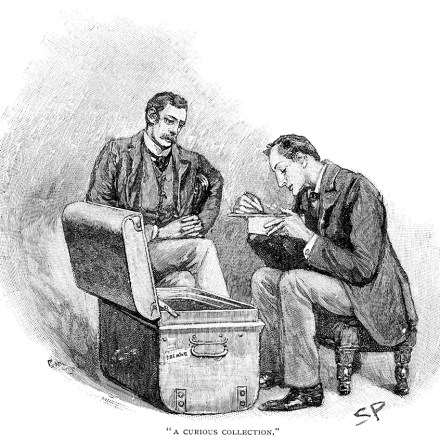
A great literary character, like a gemstone, has many facets. Sherlock Holmes looks different depending on where the light hits him: reasoning machine or bohemian creative, misogynist or white knight, disciplined professional or (in Dr. Watson’s words) “self-poisoner by cocaine and tobacco.” Film adaptations, of which there are no end, pick and choose their angles. Purists rush to tell us which onscreen Holmeses are valid and which travesty Arthur Conan Doyle’s creation. Occasionally the purists themselves betray Holmes, who had more going on than they recall. As for me, I’m purer than the purists. But when it comes to onscreen Sherlocks, I’m one big soft spot. Even by my liberal standards, Amazon’s recent streaming series Young Sherlock fails.

Wham! How George Michael shot to stardom straight from school

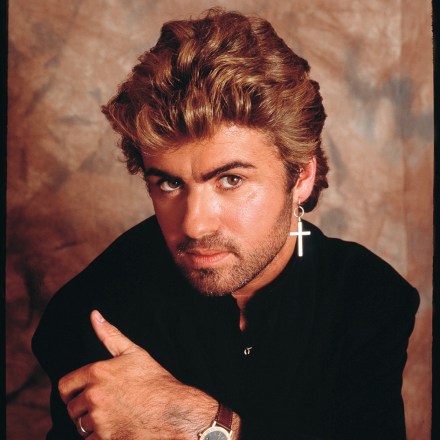
It turns out that the writer Sathnam Sanghera, “the boy with the topknot,” has been a besotted George Michael fan since the age of eight, when he started listening to his older sisters’ Wham! records. This was an unusual thing to be as a Sikh growing up in Wolverhampton and it got him teased at school. But he stuck with it. So when a friend suggested that he write something fun to compensate for the years of heavy historical research he’d put into his excellent book Empireland, he decided to set off on a sort of pilgrimage in search of his dead hero. First stop was Mondial Cars, a showroom in Northwood, north London, which used to be the Bel Air restaurant, where the teenage Michael worked as a DJ.

fairy tales

The importance of fairy tales in testing times

In the realm of magic and imagination, human nature can be better understood than in the world of our everyday lives: “The best of our tales do not lie or die.” It is a bold claim, which the folklorist Jack Zipes explores across continents and class in a series of essays. He guides the reader from the origin of oral storytelling, through medieval writings, to 17th-century literary salons and finally to today’s cinema screens. In the course of this journey, he focuses on the specific genre of the “wonder tale,” in which “those who are naive and simple are able to succeed because they are untainted and can recognize the wondrous signs... They have not been spoiled by conventionalism, power or rationalism.

Will robots simply bore us to extinction?

A few years ago, when ChatGPT and Claude were beginning to take off, some tech leaders seemed to develop a curious interest in oceanography. Consider, for instance, Microsoft CEO Satya Nadella’s suggestion in 2023 that AI ought to be compared to a “tidal wave”; or Mustafa Suleyman’s book on AI, The Coming Wave (2024), in which the DeepMind cofounder talks urgently about an “impending deluge” (while repeatedly warning us that the “wave is coming,” and, even more alarmingly, “the coming wave really is coming.”) It didn’t take long for the analogy to spread. The IMF’s Kristalina Georgieva would liken the technology to a “tsunami hitting the labor market.

The art of resurrecting forgotten artists

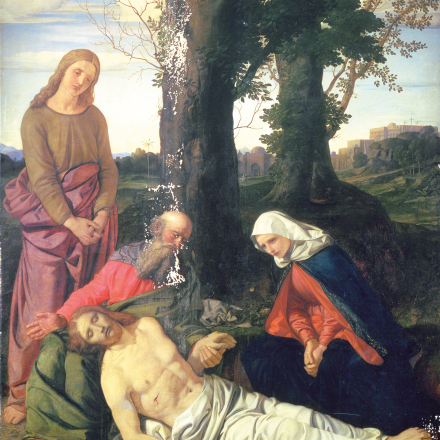
A retired priest in North Wales once told me that after the war he had been asked by Billy Butlin to buy 19th-century paintings for the holiday-camp chapels, because they were going cheap. One he bought, for 49 guineas in 1947, was William Dyce’s 1835 “Lamentation of the Dead Christ.” In 1983, after the Butlin’s chapels had closed, it made a handy £125,000 at auction, when it was bought by Aberdeen Art Gallery. As late as 1962, Lord Leighton’s great “Flaming June” (1895) was sold for £50. Today? Millions. Talk about “the bubble reputation.” The pattern of artistic fame followed by subsequent obscurity has been repeated through the centuries.

Michelle Terry is ferocious in Brecht’s simplistic tutorial

Bertolt Brecht’s classic, Mother Courage, is about a female war profiteer who drags a wagon of supplies through no man’s land and sells them to bedraggled soldiers. During the story, she loses both her children and she discovers that war is not as marvelous as she previously thought. This spiritual journey evidently mattered to Brecht, who was born in 1898 in Augsburg, and who greeted the outbreak of World War One with enthusiasm only to become disillusioned by the mechanized slaughter of the trenches. His play is aimed at wrong-headed militaristic numbskulls who believe that war is good rather than bad. If you already hold pacifist views, you may find his tutorial a little simplistic.

boroughs

Why I’m increasingly drawn to optimistic sci-fi

You know you’re getting old when you see Geena Davis from Thelma & Louise cast as a granny sex symbol and Alfred Molina as a character so elderly you’re supposed to believe that he could drop at any time. This is one of the running gags of The Boroughs, a sci-fi/monster series set in an upmarket, Stepford Wives-esque desert retirement village, and clearly aimed at aging farts like I very nearly am who imagine themselves to be much younger and groovier than they now are. “Don’t worry, wrinkly kids,” the series reassures us. “By the time you hit your seventies you’ll be taking more drugs and having more sex – even crazy, orgy sex [note to squeamish viewers: this scene takes place off camera] – than ever before.

None of McCartney’s new songs will trouble his setlist for long

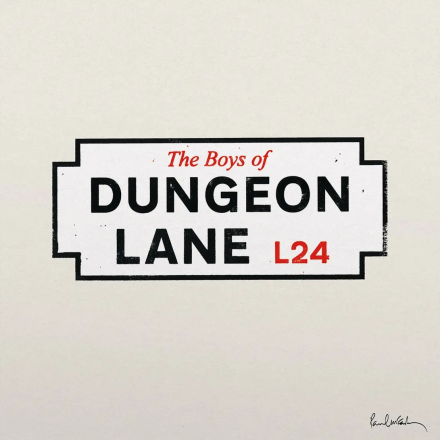
On May 30, 1966, the Beatles released “Paperback Writer” – a fortnight after “Paint It Black” by the Rolling Stones and only days before Bob Dylan released “I Want You” as a single. Paul Simon wrote and recorded (with Art Garfunkel) “A Hazy Shade of Winter” not long after. Yes, yes, what bliss it was in that dawn etc. But anyone predicting back then that, 60 years later, all four artists would still be releasing new music and touring to large and appreciative audiences would have been laughed clean out of the Bag O’Nails. Even when glossy monthly music magazines such as Q started appearing in the 1980s, 40 was regarded as the dark side of the moon for the foundational pop stars of the 1960s.

paul mccartney

Bond makes a great video game

Grade: A– He may not know how to make a drinkable martini, but James Bond makes a great videogame. GoldenEye on the Nintendo 64 was the first, but there’s always been potential there for more. After all, the character has all the stuff that the medium excels at. He has car chases, he fights, he shoots people, he blows things up and he appeals strongly to adolescent boys. In 007: First Light, he gets ample opportunity to do all those things, sometimes in very quick succession. Our man here is not yet a wintry Daniel Craig, a suave Sean Connery or a campy Roger Moore: when we first encounter him in the mandatory pre-credits sequence he’s not even a spy.