Books & Arts

Books and Arts

There’s more to Pamela Anderson than Playboy and sex tapes

Pamela Anderson cites Joseph Campbell’s The Hero with a Thousand Faces as the template for her memoir, Love, Pamela. The pop literary critic’s analysis of mythical heroes famously inspired George Lucas’s Star Wars. As Lucas deconstructs the heroes of western literature, Anderson dismantles the banal Madonna/whore template that has dominated tabloid coverage of her life. Unfortunately, Anderson supplants one boring motif with an even more tedious one: the archetype of the celebutante victim.

Pamela
picasso

Drinking with Picasso

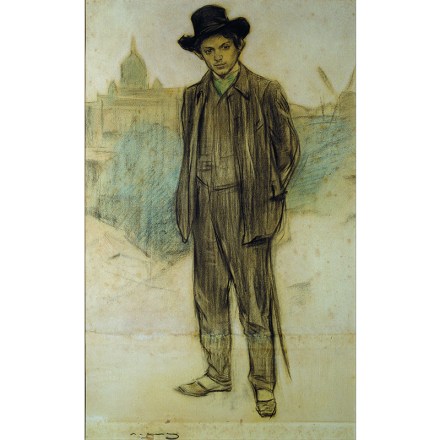
In February 1900, a critically acclaimed art exhibition went up at a Barcelona café called Els Quatre Gats. It was neither the first nor the last show mounted at the establishment, a popular drinking spot for avant-garde artists, writers and others. It was, however, the very first solo outing for one of the café’s regular patrons: a brash nineteen-year-old local art student named Pablo Ruiz Picasso. It has now been fifty years since Picasso died, on April 8, 1973, and even as that anniversary is being commemorated worldwide with new exhibitions and publications, he has never really faded from public consciousness. His art and even personal objects associated with him are avidly collected, and he continues to inspire filmmakers, musicians and other artists.

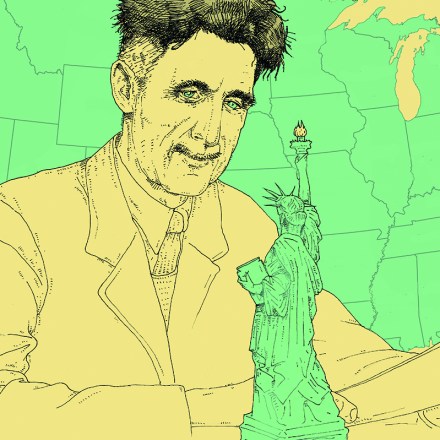
How America influenced George Orwell

Some of the most tantalizing pieces of George Orwell’s journalism are the reviews written on the hoof, filed against deadlines, sent straight to the typewriter while World War Two raged above his head. One of them is a round-up of four reprinted dystopian novels supplied to the weekly magazine Time and Tide in July 1940, shortly after the fall of France. (Today, it’s rarely reissued and barely available outside the stout bindings of volume XII of Orwell: The Complete Works.) The four books are Jack London’s The Iron Heel (1908), H.G. Wells’s When the Sleeper Wakes (1910), Aldous Huxley’s Brave New World (1932) and Ernest Bramah’s The Secret of the League (1907).

orwell
sex

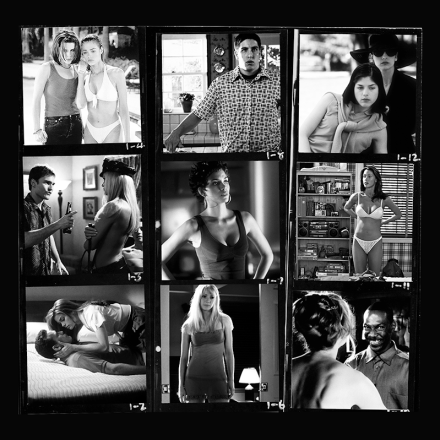
Why were 2000s movies so hypersexual?

Even though the endless debate about sex scenes in movies recurs every three or four months, it remains fixed. Nothing ever moves forward; nothing more is understood; no one’s perspective is shifted. Dug in on both sides of an argument that remains black and white, people refuse to move. Maybe one day they’ll be able to talk in Technicolor, but for now, some are distressed by erotic cinema and others are desperate for more of it. Stellar home-video labels like Severin, Arrow and Vinegar Syndrome continue to provide high-definition discs of genre films full of naked women and bloody bodies. But if Tom Cruise is the only real movie star left, the world won’t get more than a chaste kiss (maybe) from modern American cinema.

A stripped back Doll’s House on Broadway

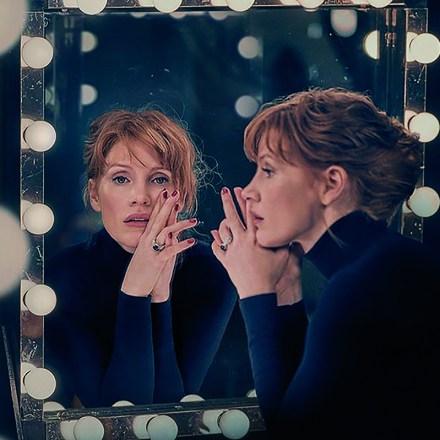
The difference between a divorce and a funeral seems lost on the director Jamie Lloyd; ditto for bird cages and prisons and, in the end, Henrik Ibsen’s A Doll’s House (1879) and a sanatorium. Lloyd’s new, minimalist production on Broadway is so stripped of ornament, so unremittingly rote, that this reviewer nearly handed his valuables to an usher and asked for a padded room. At the play’s close, the director has the embattled housewife, Jessica Chastain’s Nora Helmer, make her defiant exit through the back wall of the theater upstage; a garage door opens and she strides onto the rain-soaked pavement, probably to be harassed by tweakers or shoved into oncoming traffic. Peals of laughter erupted in the audience — here was our chance!

doll's house
harper outback noir

The quiet rise of Outback Noir

No Australian woman has ever won the Booker Prize — and yet in the stylish genre called Outback Noir, women reign supreme. Of these, the queen is Jane Harper. Her 2016 debut, The Dry (successfully filmed with Eric Bana), marked the start of a new kind of detective fiction that has gained an international following. Some of this may be due to the way we love this version of Down Under. Forget about Sydney, Melbourne or Perth. Portraits of small societies where embattled individuals get swallowed up by the big bad bush, parched or flooded, give an apocalyptic, Mad Max edge to a distinctly Australian setting. Arthur W.

Andrey Kurkov brings clarity to the Ukraine invasion

"War and books are incompatible,” decided Andrey Kurkov, one month into Putin’s war against Ukraine. Reading his Diary of an Invasion, it’s not hard to see why he thinks so. Homes are evacuated; air raid sirens go off day and night. You get shelled. There is a never-ending cascade of bad news: about friends, about war crimes, about the possibility of nuclear catastrophe. The loss of luxuries. No tonic water, no whiskey-and-soda. There isn’t much time to think. Kurkov’s book came to the attention of the West when it was published in the UK last September. Since then, it has emerged as one of the first serious works of literature to come out of Ukraine since the invasion.

kurkov
karluk

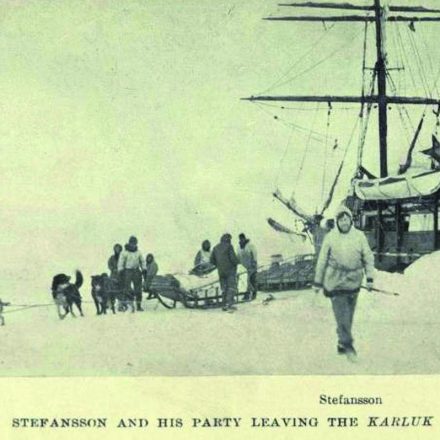
Shipwrecks, amputations and polar-bear attacks: the doomed voyage of the Karluk

The heroic age of polar exploration gave birth to epics as grand and as harsh as the landscapes in which they unfolded. And, as in all the best epics, their protagonists are often of interest not only for what they do, but also for who they are, or, in the case of the Arctic adventurer — “explorer” is too confining a word — Vilhjalmur Stefansson (1879-1962), who they pretend to be. Stefansson is the “villain” of Buddy Levy’s Empire of Ice and Stone: The Disastrous and Heroic Voyage of the Karluk, a tale that reads like an unusually grim, remarkably gripping Edwardian imperial yarn.