Books & Arts

Books and Arts

The literary appeal of the English upper classes

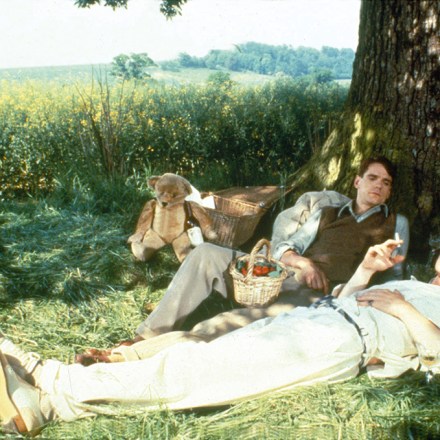
“However British you are, I am more British still,” said the American expatriate novelist Henry James, explaining his fascination with all things aristocratic and Anglo. It’s a type of fascination that’s only gathered steam over the years. A grand representative of the establishment, Lady Anne Glenconner, sold thousands of copies of her first book, Lady in Waiting, in the US, and recently discovered that her (admittedly predominantly homosexual) American fanbase has taken to throwing Lady Glenconner-themed costume parties. Meanwhile, Carla Kaplan, whose biography of Jessica “Decca” Mitford, Troublemaker, went on sale at the end of last year, discovered that Decca, known as “the Queen of the Muckrakers,” has a manic following among cowboys and long-haul truckers.
bowie

The many David Bowies

Alexander Larman is the author of a biography of John Wilmot, Earl of Rochester, and of Byron’s Women. Reading Larman’s new biography of David Bowie, one gets the sense that this could have been the end of a trilogy, given all three men’s talent and excesses. In fact, Bowie once considered playing Byron in a movie. Larman’s focus in Lazarus is on Bowie’s career from the end of the 1980s through to his final works: the musical Lazarus and the album Blackstar, the artist’s last gift to his fans, released on his 69th birthday – two days before his death from liver cancer in 2016.

Carl Jung, the man behind the psychobabble

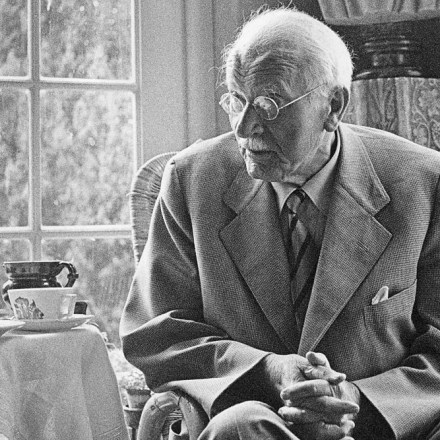
A surefire way to alienate people is to talk about the dream you had last night. In polite society, we’re generally told nobody cares about the goings-on of our subconscious and that it’s probably best to keep quiet. Nothing, then, quite prepares one for the oneiric delights to be found in Jung’s Life and Work, a new edition of the collected interviews between Professor Carl Gustav Jung, the renowned Swiss psychiatrist and founder of modern analytic psychology, and his former student, Aniela Jaffé. The tone is set in the very first interview, where Jung recalls a childhood dream involving a gigantic “erect phallus” reaching “almost to the ceiling” equipped with an all-seeing eye and seated on a plush golden throne.

carl jung

Inside the Murdoch family fallout

Terrific scripts, marvelous acting and glamorous locales – plus that haunting theme song – made HBO’s Succession superlative television. The show also took the sheen off being a billionaire. Who among us, watching Logan Roy (a barely veiled stand-in for media mogul Rupert Murdoch) mess with his children’s psyches, didn’t think “Isn’t it perilous to be quite so loaded?” Journalist Gabriel Sherman’s new book prompts a similar, aversive recoil. Every family has squabbles, but the Murdochs have fallen out with shocking animosity. Though it’s hyperbolic to claim, as the author does, that the struggle for control of News Corp broke the world, his gruesomely detailed account reveals how shattering the battles have been to those who fought them.

Ann Lee deserves better than her biopic

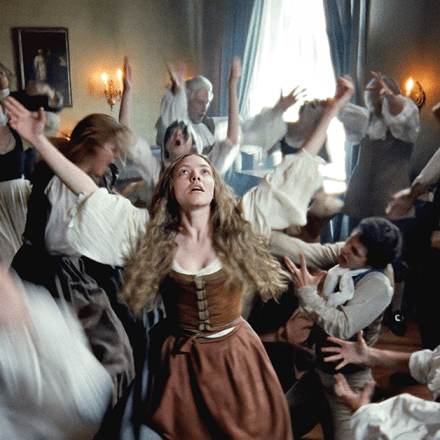
Ann Lee was a sharp-tongued woman from the back streets of 18th-­century Manchester who joined a maverick Protestant sect that became known as the Shakers, or “Shaking Quakers.” In fact their shaking was the least of it: they howled, gurned and gibbered while flirting with the notion that God would return to Earth in the form of a woman. All sexual activity, even between man and wife, was forbidden. Ann then had a series of visions that, according to subsequent Shaker accounts, identified her as the “woman clothed with the sun” whose appearance in the Book of Revelation heralds the end of the world. In 1774, “Mother Ann” and a small band of faithful emigrated to America.

ann lee shakers
Taxi Driver

Why does Taxi Driver still resonate?

Even if you haven’t seen the movie, you probably know the macabre legacy of Martin Scorsese’s early masterpiece Taxi Driver. Released 50 years ago this month, the tale of the eponymous cabbie Travis Bickle, played by Robert De Niro, still has something potent to say about what can happen when a brooding loner finds himself adrift amid the menace and jammed chaos of New York’s streets with a .44 Magnum for company. Perhaps one of the reasons Taxi Driver resonates with so many people is because of this human void that lies at its center. At one time or another, we’ve all felt as alone as Travis Bickle.

Marilyn Monroe, poetic muse

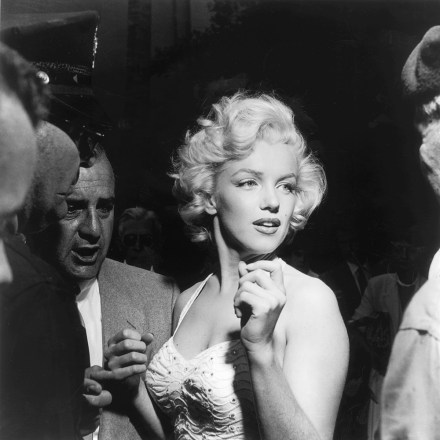
The year 1959 was a particularly productive but especially depressing year for Sylvia Plath. She toured the length of America, attended a series of stimulating literary seminars and wrote some of her most beloved verse. While outwardly active and energetic, her diary reveals she was struggling all the time to sustain her few fleeting fits of happiness. One entry in October describes a vivid dream she had, in which Marilyn Monroe appeared as a kind of fairy godmother. Monroe gave Plath a manicure and promised her a “new, flowering life,” before wishing her well and inviting the troubled poet over for Christmas. The image of Monroe clearly consoled her. Plath was hardly the only poet to be mesmerized by Monroe’s outward magnificence and fascinated by her perturbing private tragedies.

The auteur Eugène Atget

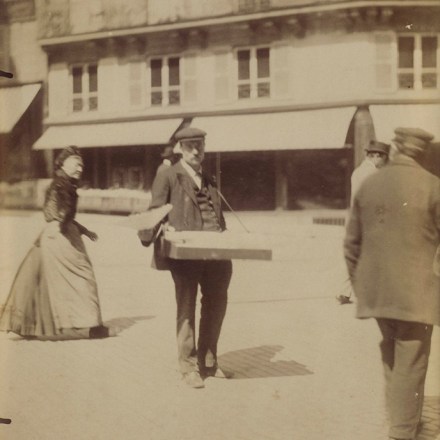
Few connoisseurs of the image are unfamiliar with the great French photographer Eugène Atget (1857-1927). But his name is, unfortunately, unfamiliar to the lay person. This is a shame: his gloriously detailed, sharply focused black-and-white images of late 19th- and early 20th-century Paris evocatively conjure the shadows and lights of the boulevards, parks and alleyways of the Belle Époque. His astonishing close-ups of finely crafted architectural details are as striking as his sometimes surreal views of storefront windows and food-stall displays. Whether training his bulky large-format view camera on scenes interior or exterior, he reveals an aesthetic sensibility exquisitely sensitive to the world around him.