Books & Arts

Books and Arts

Crazed and confused

Perhaps you’ve noticed that America isn’t holding it together very well. Every airplane seems to have a middle-aged man throwing a temper tantrum about his facemask, every state house has some woman with artificial hair coloring and too much facial filler screaming about some imagined threat to “the children,” and every time I think I have found a normal person on Twitter it only takes twenty seconds of browsing their timeline to find a post that compares the Covid-19 vaccine to the Holocaust. It would be easy to dismiss this as just a particularly nasty lull in our collective sanity, but it’s time to be real. We have always been like this. Our nation wasn’t founded when the Mayflower arrived at Plymouth Rock, as they taught us in kindergarten.

hysteria
Macbeth

Witches brew

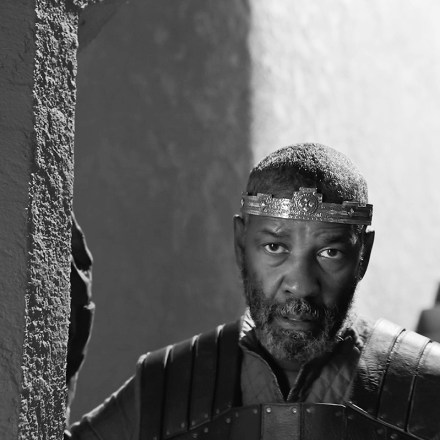
Since its initial publication in the legendary 1623 First Folio, Shakespeare’s Macbeth — one of the Bard’s late tragedies, and among his greatest — has been reimagined in countless ways. By the late seventeenth century, it had already been updated by Sir William Davenant to meet changing tastes. It was supposedly restored (though still thoroughly altered) by David Garrick in the eighteenth; and it was further “cleaned up” by Thomas Bowdler (which gave us the term ‘bowdlerized’) for his Family Shakespeare collection in the nineteenth century, an era that also brought us Verdi’s enthralling operatic version.

Naples and nurture

The climactic scene in the Italian director Paolo Sorrentino’s latest film, The Hand of God, finds the teenaged Sorrentino stand-in, Fabietto, being verbally attacked by an aging director named Capuano, the seaside at their backs. At this point in the film, the young Fabietto (Filippo Scotti), a sullen mama’s boy searching for meaning, has suffered an immense tragedy and is looking for answers. Enter the wise man. The scene, like many in The Hand of God, is on the nose and borders on the melodramatic, but when Capuano (Ciro Capano) yells “how does this city not inspire you?” at Fabietto, he reveals the film’s emotional core. The Hand of God, like Sorrentino’s previous work, is highly stylized and aesthetically beautiful — a true visual feast.

hand of god
company

Swing for me

Lots of folks go to swingers’ parties; fewer go by accident. I achieved this distinction, once — and in my defense, I will plead only that my ignorance of the situation was so extreme, my credulity so extensive, that it took my asking one couple, in complete earnest, the most hilarious and incidentally incisive questions a person in my situation could ask — “How did you two meet?” and “How do you know the host?” — in order to set the record straight. To the first, the one said that the other’s husband had introduced them. The answer to the second was the old chestnut about “college roommates,” et voilà! At parties nowadays, I just ask people what they do for work.

Going Greco-Roman in Boston

In a way it felt like a walk around campus on graduation day: one last stroll through the Museum of Fine Arts, Boston before the mayor’s medically nonsensical, legally dubious, morally atrocious mandates force museums, restaurants, gyms and more to oblige entrants to prove that they’re vaccinated against Covid-19. I could comply, but I will not. “There’s nothing more American than coming together to ensure we’re taking care of each other,” said our unctuous new mayor in her typical passive-aggressive fashion. Perhaps, but there’s nothing less American than commanding such sentiments from City Hall and punishing us who see through the ruses of power. The commencement, then, was that of a new relationship between your reporter and his adopted city’s art holdings.

Boston
Carnegie

Carnegie plus one

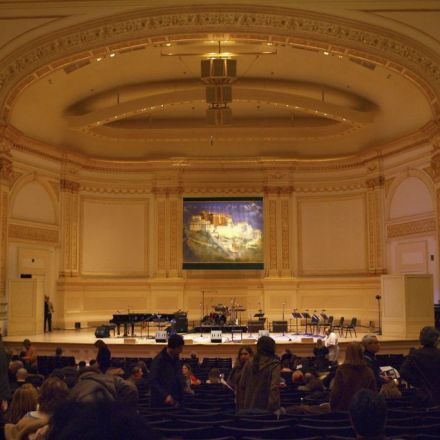
"A cable channel... but for classical music! It could be called ‘The Carnegie Hall Channel.’” I was on a beam reach to Eatons Neck about a quarter-century ago when a young man named Lawrence Perelman made this blustery pronouncement. We were Bill Buckley’s guests for an overnight sail across Long Island Sound. My first thought was: good luck with that. My second thought was no one wants to watch classical music on television. PBS’s Great Performances? More like lesser performances. With pixels the size of Cheez-Its and tin-can soundtracks, the experience was nothing like the real thing. But Perelman, an impresario who became an advisor to classical artists and institutions, as well as a friend, kept waving his baton long after we returned to Stamford.

Precarious and thrilling

"Those trees are blue — I never saw a blue tree in Vermont,” a collector once argued to Milton Avery when looking at one of his New England forest scenes from 1945. The reticent artist parried: “That one was done in New Hampshire.” “Blue Trees,” the painting in question, is classic Avery (1885-1965): logically nonsensical but improbably believable, forcing us to re-question language’s tenuous hold on the slippery wonders of color. It’s also one of the standout examples included in a new retrospective of the American painter, set to open at the Wadsworth Atheneum Museum of Art (Hartford, Connecticut) on March 5, the middle leg of a three-venue tour.

Avery
Sibelius

Sibelius speaks

When it comes to music in the classical era, central Europe — or, to put it is where most of the action has taken place. Haydn, Mozart, Beethoven, Schubert and Brahms are, in a sense, the Big Five, commanding the limelight, with the likes of Mendelssohn and Mahler bringing up the rear. But if geography has somehow played a key role in the development of modern classical music, then another region has been gradually nudging its way into view. Names from northern Europe such as Kalevi Aho, Leif Segerstam, Per Nørgård and Vagn Holmboe must figure prominently in any tally of leading composers who have expanded the boundaries of musical expression.Take Holmboe’s brilliantly imaginative Concerto No. 11 for trumpet and orchestra.

I’m a Latinx person of letters

A development has reshaped the world of letters. The literary universe is no longer a boys’ club but the playground of woke Brooklyn ladies who’ve swallowed up editorships and literary-agent gigs. The results continue to be predictable: a constant bombardment of books from elite white women about the travails of neurotic Brooklyn ladies, and victim narratives about brown suffering. The fetishization of people of color has come to define the woke relationship with so-called marginalized communities. Virtually every literary book — except for those based in Brooklyn — details the struggles of a victimized minority. The Booker Prize longlist or the National Book Award finalists will annually bombard you with weepy tales of generational POC suffering.

poc
hemingway

For whom the bell tolls

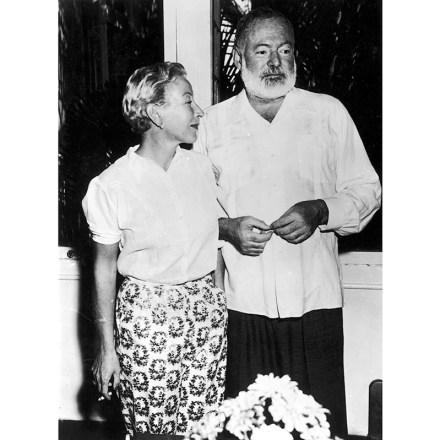
Close your eyes and imagine you’re married to Ernest Hemingway. Now, imagine it twice as bad, and you’ll be approaching the life story of Mary Welsh Hemingway. Hemingway was married four times: to Hadley Richardson in 1921, to Pauline Pfeiffer in 1927, to Martha Gellhorn in 1940 and to Mary Welsh in 1946. In every swap, he divorced his current wife for her successor. Mary wrote her own memoir, How It Was, after Hemingway’s death in 1961. Now Timothy Christian has written a well-researched and intensely detailed look at the life of a fascinating woman who became the steward of Hemingway’s literary estate and reputation long before he died. Mary Welsh was born in 1908 and raised in rural Minnesota.

Our enemy’s enemy

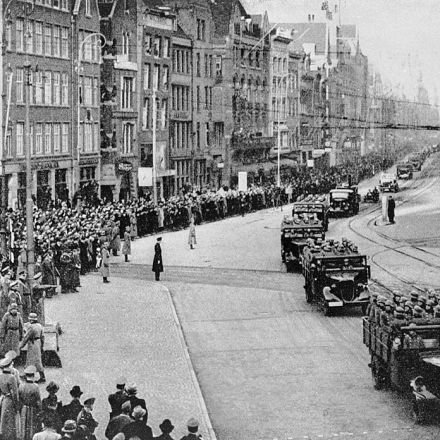
After Nazi Germany attacked the USSR, Winston Churchill had no qualms about entering into an alliance with Stalin, whose regime he understood all too well: “If Hitler invaded Hell, I would make at least a favorable reference to the Devil in the House of Commons.” Similar thinking does much to explain the enlistment of former (and not so former) Nazis by the Western allies in intelligence work against the Soviets after 1945. With the Red Army in the heart of Europe, co-opting suitably qualified veterans of the fallen Reich — some of whom had very dirty hands indeed — made some sense, according to that Churchillian logic, but mainly when those selected were anti-Communist and now aligned with a democratic Germany.

fugitives
russian

Fall and decline

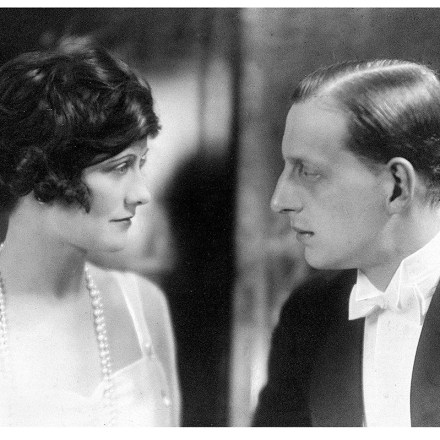
In December 1921, a twenty-two-year-old Ernest Hemingway, then the European correspondent for the Toronto Star, came across the oddest group of immigrants in history — the White Russians who had fled the Bolshevik Revolution. “Paris is full of Russians,” Hemingway told his readers. “They are drifting along in Paris in a childish sort of hopefulness that things will somehow be all right, which is quite charming when you first encounter it and rather maddening after a few months. No one knows just how they live, except by selling off jewels and gold ornaments and family heirlooms that they brought with them to France.” Hemingway neatly summarized the meat of this gripping latest book by Helen Rappaport, the author of The Romanov Sisters and Caught in the Revolution.

A gay fandango

Usually, it’s poets who chance their arm with a novel. Rare is the established novelist who switches to verse. This could be because, while poetry is technically daunting with its rhyme and meter, the novel is apparently the easiest of all forms, without even the conventions and directions of the most basic screenplay. In the nineteenth century, Thomas Love Peacock was the most successful poet to turn to fiction, but in our own times poet-novelists rank among the most talented: Sylvia Plath, Ben Lerner, Vikram Seth, Craig Raine, Grace Nichols. Now, after half a century of writing superb novels, the English author Paul Bailey, well into his eighties, is publishing his second book of poems.

Bailey