Spectator Life

Spectator Life

An intelligent mix of culture, style, travel, food and property, as well as where to go and what to see.

How to pour the perfect whisky highball

Once a staple of clubs and bars, the whisky and soda spent the latter-half of the 20th century on the wrong side of fashion. The popularity of clear spirits coupled with a curious belief that mixing whisky is a near-criminal act saw the serve relegated to the back bench. At least that was the case in Britain – in Japan, the humble highball became a religion. The bracing combination of fruity, flavoursome whisky combined with lots of ice and freezing cold soda water is served up and down the country. It’s meticulously assembled by bartenders in high-end cocktail bars, it’s served on draught in rowdy Izakaya, and sold in vending machines in train stations.

How to spice up winter soup

There are few things as good as soup for comfort and warmth. Though, with the very notable exception of Heinz tomato, I find ready-made soups invariably dull. The fresh counter ones are even worse than the tinned: bland, gloopy, surprisingly calorific and expensive for what is, after all, liquid food. When it comes to soup, I go for one of two approaches. When I need instant warmth and salty satisfaction I’ll have a mug of broth— Bovril beef tea, miso soup from a sachet, or even just a crumbled veggie stock cube in boiling water. And when I want a real meal, something nutritious and filling, I’ll make a proper blended soup.

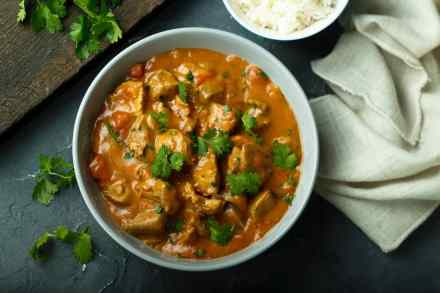
Recipe: Chicken Marbella

What is it about retro food? I don’t mean nostalgic food, from school dinner favourites to your grandmother’s signature dishes. I mean food you’ve probably never even tried. Thoroughly old-fashioned dishes that nevertheless light up your culinary imagination — or at least mine. I’m talking devilled eggs. Prawn cocktail. Beef stroganoff. Perhaps it’s because many of these recipes hail from the golden age of dinner parties. They speak of glamour, excess, a touch of kitsch, all washed down with a snowball. These are dishes that should be accompanied by shoulder pads and strong opinions about the royal wedding. Following a long period in which it was illegal to hold a dinner party, I crave retro food more than ever.

With Laurie Woolever

29 min listen

Laurie Woolever is a writer and editor, and for nearly a decade worked as the assistant to the late author, TV host and producer Anthony Bourdain. On the podcast, she talks to Lara and Liv about tending to garden peas from the age of four, finishing co-writing a book with Bourdain after he passed away, and finding comfort at a local bakery during the pandemic.

The secret to making egg-fried rice

Getting a takeaway doesn’t quite mean what it used to. The choice used to be between a pizza, ‘an Indian’ or ‘a Chinese’, and was reserved as a Friday night treat, to be eaten out the box while flopped on the sofa watching Cilla Black’s Blind Date. Nowadays one is as likely to order a truffle risotto as a Pizza Hut combo deal. Furthermore, many millennials and Gen Z-ers seem to have no qualms ordering takeaway several times a week, carefully transposing the slow-cooked beef Massaman curry onto bone china so they can pretend (to themselves or their Instagram followers) that it’s home-cooked – honest. But all these new trends give the old-school takeaway options a somewhat nostalgic appeal.

No Christmas turkey? No problem

According to recent reports, we might be looking down the sharp end of a turkey-less Christmas. Kate Martin of the Traditional Farm Fresh Turkey Association has warned that a lack of European farmhands means that Britain could be facing a turkey shortage this December. Turkeys have been synonymous with British Christmas dinners since the Victorian era; what do we do without them? For many, this won’t be too much of a loss: a lot of people actively dislike turkey (although they dislike it even more when you tell them that’s just because they’re not cooking it properly). I confess, I’m a turkey evangelist: I love turkey. I think it’s juicy and full of flavour, and makes fantastic leftovers.

Apple Charlotte: a thoroughly regal pudding

It’s not terribly surprising that the apple Charlotte is often mistakenly attributed to French chef Marie Antoine Carême; the so-called first celebrity chef is credited with inventing everything from the chef’s tall toque hat to the taxonomic arrangement of sauces, via creating an entirely new system of dining and service. Some of these have more credence than others; the Charlotte, however, does not have Carême to thank. The first recipe for an apple Charlotte appears in 1802 in at a time when Carême was still an apprentice, in The Art of Cookery Made Easy and Refined by John Mollard. In fact, the apple charlotte comes from British shores, and it was likely named after George III’s wife, Charlotte.

London’s best new dining spots

The last 18 months saw the closure of many old favourites from the London dining scene, which makes the efforts of those willing to roll the dice on a new opening all the more admirable. Here's where you should snap up a table in the coming months: Kudu Grill – Nunhead Kudu Collective, the small group helmed by Amy Corbin and chef Patrick Williams, has moved into a former pub near Peckham Rye. In addition to giving the old boozer a new look, they’ve installed an impressive wood burning grill in the kitchen in an effort to bring South African braai to South London. Put simply, braai is South African barbecuing informed by the various food cultures that have swept through that part of the world over the years.

Chicken forestière: a deeply autumnal dish

I have always been a bit of a stew-pusher; it tends to be my answer to any of life’s dilemmas, culinary or otherwise. Friends coming round? Stew. Cold and dark outside? Stew. Feeling sad? Stew. To be honest, it doesn’t matter whether or not the weather demands it, I am always in the mood for stew. I’d eat mince and dumplings in June, a slow-cooked sticky oxtail ragu in high Summer. But once Autumn arrives, and my obsession is legitimised by the cold and the dark evenings, there’s no stopping me. In our household, it’s casseroles from now until Spring. I struggle to think of something more comforting and cosy than a big, generous dish of braised meat, tender vegetables and a beautiful sauce arriving at the table.

How to make Bhanda – the Indian-African fusion dish ideal for autumn

African politicians often have a playful turn of phrase. The former president of Zambia, Levy Mwanawasa, was dubbed 'the cabbage' by his political opponents. There is nothing to suggest that the founding president of Malawi, Hastings Banda, was called 'the kidney bean' by the political opposition but he could’ve been. For banda/bhanda is the word for the kidney bean in the Malawian language of chichewa. Many culinary cultures vaunt their prowess with the kidney bean; it is of course a prized ingredient in Mexican and Cajun cuisine too. But prepared in the Indian-African manner, as a spicy curry-like stew and served with basmati rice ('bhat', in the Gujarati language of western India), it is wonderful: as warming and satisfying as a chilli, and perfect autumnal food.

The problem with dining on gold

When I was young, I watched a television show about a man who, possessed of the spirit of greed, ate gold and died. I recognised hubris then, and I recognise it now. In a country filled with foodbanks people are hungry to eat gold, which is, in food standard circles at least, called something less miraculous: E-175. E-175 usually comes in flakes, leaves or powder. It has no nutritional value. It passes through you, though of that there is no evidence on Instagram, which is a shame. They should really follow through. E-175 is big on Instagram, which is the engine of the fashion for eating gold. It is an entirely visual thing.

Carbonnade à la Flamande: give your stew a Flemish makeover

‘Casseroles,’ Julia Child wrote to her long-term penpal Avi DeVotos, ‘I even hate the name, as it always implies to me some god awful mess.’ On this, Julia and I are in full agreement: I have a real problem with the word ‘casserole’. And ‘stew’ for that matter. Both of them sound so unappetising, so school dinners. But Child and I are also aligned in our hypocrisy, because actually, deep down, I love a casserole, as long as you call it anything else. Like me, despite her vocal opposition to the casserole, Child loved bourguignons and carbonnades, coq au vin and poulet poele à l'estragon, and wrote about them with enthusiasm and appetite. Of course, all of these are casseroles, just with fancy (or specific) names.

With Grizelda

24 min listen

Grizelda is an award-winning cartoonist for publications including The Spectator, the New Statesman and Private Eye. She was Pocket Cartoonist of the Year in 2018. On the podcast, she tells Lara and Liv about her brother's infamous cooking, how she comes up with ideas for cartoons, and why she only knows four recipes.

Forget London – why foodies are flocking to the North

If you only read restaurant reviews, you might be forgiven for thinking that the North is a culinary wasteland: despite a few intrepid reviewers venturing further than the Watford gap, restaurant reviewing remains firmly London-centric. But there is life (and culinary prowess) beyond the outer zones of the London underground. Last month Moor Hall in Lancashire was named ‘National Restaurant of the Year’ at the prestigious Estrella Dam National Restaurant Awards. When it comes to the top spot, this is nothing new: Moor Hall has retained the top spot since 2019, when the last awards took place.

Where to dine in Hackney

Hackney’s rise in the 2000s from dangerous and affordable to cool, cooler and coolest eventually made it a kind of Chelsea of east London, with the expensive housing – house prices have grown 281 per cent between 2001 – and glamorous dining establishments to match. It may have become a magnet for Fullham exiles but Hackney never quite lost its aura of cool, and its transformation into one of the priciest areas of London has come not with a dumbing down but with the refinement of a distinctive, creative dazzle. The payoff? A proliferation of yummy, interesting restaurants.

The trick to making blackberry pie

There are some fruits which, while lovely cooked, are probably at their best fresh: nectarines and peaches, raspberries, mango. But blackberries, as delightful as they are eaten fresh from the bush mid-forage, come alive when cooked. As you heat blackberries, and they break down and give up their juices, begin to smell like violets and wine. They become more complex, perfumed; their sweet-sour flavour is softened into something more elegant, even more irresistible than when fresh. Normally in a pie, those beautiful juices are a cause for concern. They’re a one-way ticket to a soggy bottom, something we try to avoid with careful blind-baking, or pre-cooking, or layering the base with something like ground almonds to soak up any liquid.

How to make an authentic paella

The UK has something of a reputation for butchering those classic European dishes on which entire cultures seem to be founded. Think spaghetti carbonara creamy enough to make an Italian weep or the kind of rubbery, watery beef bourguignon that is the culinary equivalent of our grizzly, grey weather to any self-respecting Frenchman or woman. But perhaps no dish is more maligned or widely miscooked than Paella. Certainly, we’re not helped in this respect by our celebrity chefs. And the usual suspects are at it again – Jamie Oliver reportedly received death threats for adding chorizo to his version and Gordon Ramsay followed suit, eliciting a similar reaction.

The return of the milk round

How do you help the environment and improve your quality of life? Why, buy milk in bottles. Some of us can remember them – foil topped, left outside the door, washed, then returned…a virtuous cycle which worked because it made practical sense. Life went downhill when the milk industry was deregulated in the 1990s and milk turned up in plastic cartons, homogenised and in supermarkets, and so it has remained, until quite recently. But the rattle of the milk van is returning to the streets in parts of London and elsewhere…things, folks, are looking up. It was one of the great advances in human civilisation when we developed lactose to enable us to digest milk.

The wine bars every Londoner should know about

A funny thing happened in lockdown. Bars shut but they seeded a growing crop of bottle shops that, since freedom has been declared have either turned back into, or become, bars in their own right. And now that we can, there is pure pleasure in twisting bottles around in the light, mulling labels and wine lists first hand instead of squinting at them online. There is also a comforting intimacy to wine bars that sits at odds with the clatter of a pub: an air of sophistication, even if you have no idea what the sommelier is talking about.

French toast: an easy-peasy bougie brunch

A rose by any other name may smell as sweet, but somehow, eggy bread just doesn’t hold the same appeal as French toast, does it? The latter has become a bougie brunch dish, while the former languishes in second-hand student cookbooks. At heart, they’re the same thing: slightly stale bread soaked in an egg-based custard, then fried. Whatever pretensions French toast may have (and however delicious it might be), its origins are a cheap dish that improves and extends the life of stale bread with just a couple of eggs and a knob of butter.

With Ed Balls

18 min listen

Ed Balls is an acclaimed broadcaster, writer, economist, professor and former politician who served as shadow chancellor from 2011 to 2015. On the podcast, he tells Lara and Liv about the importance of Sunday lunches growing up, his long history of making bespoke children's birthday cakes and the times he turned his campaign team into a makeshift kitchen staff. All this and more is documented in his new book Appetite, out now.

Curry can be guilt-free (if you know how to make it)

Two of the misconceptions surrounding curry that it consistently struggles to shrug off are one, that it is unhealthy, and two, that it is difficult to make at home. I’ve always found both perplexing. Turks and Persians must be similarly bemused given the reputation of their archetypal food, the kebab. Yes the late night version, carved from a rotating trunk of greasy lamb with a mini chainsaw and then covered in garlic mayo, is a calorific car crash. But kebab as it was meant to be – meat simply grilled over charcoal and served with rice and salad – is perfectly healthy every day food. And yes a curry house korma is fattening, even before you add in the three poppadoms and pints.

Jam Roly Poly: why it’s time to revive this retro pudding

More than new pencil cases, name tapes, and the smell of school halls, back to school season always makes me think of proper puddings. There’s a category of pudding that seems reserved for properly old cookbooks, a handful of old-fashioned pubs, and dinner ladies. Spotted dick, cornflake tart, and jam roly poly. Perhaps its ubiquity at school lunches accounts for its ghoulish alias: dead man’s leg or dead man’s arm. School children have a taste for the macabre, but to be fair to them when the pudding is unwrapped and before it is sliced, it does look fairly uninspiring, and not a hundred miles away from a pallid limb. This probably wasn’t helped by the fact that, before baking parchment and foil were widespread, the pudding would be steamed in a shirtsleeve.

The rise of British gin

Any avid gin drinker will know that botanicals are all the rage at the moment. From juniper to orange peel to lavender, the ingredients list on the backs of bottles are getting more elaborate by the day, and seemingly more exotic. But what may come as a surprise is the growing number of distillers who are sourcing all of their ingredients in Britain. Tom Warner was one of the first distillers to incorporate homegrown botanicals into gin - a craze that has now taken off across the market.

How to make the perfect Spritz

Ten years ago, the United Kingdom was largely unaware of the Spritz and its bittersweet charms. The Negroni was gaining popularity in our bars, a European import that dovetailed nicely with a general levelling-up of our national cocktail programme. But most of the Aperol in these parts was gathering dust in last generation’s Italian restaurants. This all changed when some canny marketing spend by Aperol’s owner, the drinks titan Gruppo Campari, put bright orange deckchairs and branded glassware in cities up-and-down the country. In just a few years, we became a nation of Spritz drinkers – captivated by the light, appetite stimulating, low-ABV afternooner to such an extent that it’s come to overshadow homegrown favourites like Pimm’s.

French connection: how to make cherry clafoutis

My daydreams at the moment follow a predictable theme. I am on holiday somewhere balmy, with a carafe of cold white wine in front of me. Someone handsome has just brought me a large bowl of salted crisps, unbidden but very welcome, and the greatest responsibility I have is finishing the book that I’m reading. The reality has been a little more prosaic. I am at my Manchester dining table, nursing a cold cup of tea, as the rain falls so heavily it’s like sitting in a drum. I’m sure I’m not alone: changing rules, quarantines, vaccination certificates, or simply the sheer weight of anxiety mean that the majority of us have spent this summer in the UK. I would give my eye teeth for a proper holiday. If I could choose, I’d be in France.

Britain’s best Art Deco restaurants

What do you picture when you hear the term Art Deco? Fantastical ideas of Baz Lehrman’s Great Gatsby, gilded brasseries and de facto extravagance  fail to capture the pastiche of styles making up this early 20thcentury movement. Somehow, what was once a collective word for the artistic expressions that followed Art Nouveau has morphed into a dizzying, dancing circus troupe of hairbands, flapper dresses and sidecars. In Britain, the lasting legacy of the movement has been in our architecture.

The surprising history of Garibaldi biscuits

I’m not sure that many people would choose the unassuming garibaldi as their favourite biscuit. Garibaldis aren’t flashy: there’s no luxury chocolate, no pretty, brightly-coloured icing, no fancy-pants shapes. They aren’t squidgy, trendy cookies, or wholesome buttery shortbread. In fact, they’re often called squashed-fly biscuits because the currants baked into the dough resemble, well, squashed flies. And yet, they persist. Garibaldi biscuits have stuck around for 150 years, outseeing fads and fickle consumers, keeping their place on supermarket shelves for longer than almost any other biscuit. The biscuits have an unlikely namesake: Giuseppe Garibaldi, an Italian General, who fought for Italian unification.

With Charlie Stebbings

41 min listen

Charlie Stebbings is an acclaimed food director and photographer. On the podcast, he talks to Lara and Liv about photographing M&S's melt in the middle chocolate puddings, treating himself to baked beans and red wine and measuring mayonnaise from a syringe.