Spectator Life

Spectator Life

An intelligent mix of culture, style, travel, food and property, as well as where to go and what to see.

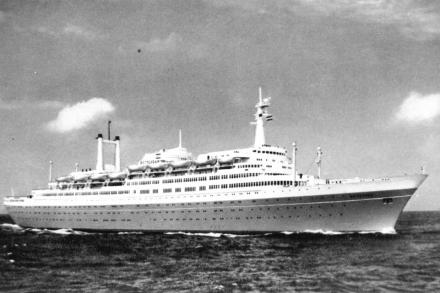
A Cuban Missile Crisis spent on the Atlantic

It is a common thing we have all experienced to be true: events that forever fix themselves in our memory of a certain place. Call it the “I’ll never forget where I was on December 7, 1941 or September 11, 2001” syndrome. On the Sunday Japan attacked Pearl Harbor, my father was on a train passing through western Pennsylvania after a job interview in New York City; he preserved a copy of the Pittsburgh paper to prove it. On the morning of September 11, I was breakfasting at home, awaiting my driver for Dulles International Airport; due to fly that day, I did not.

In Ottawa, where junkies and technocrats collide

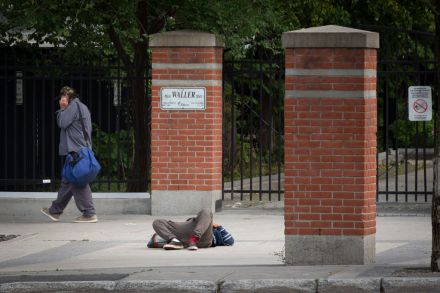
I got out of the taxi in front of my hotel in lower town Ottawa and was immediately accosted by a homeless junkie looking for a donation to the cause. It was a Sunday evening, well after sunset, and not quite the greeting I had hoped for upon arrival in Canada’s leafy capital. The smell of pot was in the air, a lot of it — there was a cannabis store across the street, and another around the corner. After checking in and dropping off my bags, I went in search of a late dinner. A two-block journey to a trendy tap house with a wide selection of craft beers witnessed another half-dozen, very animated homeless people. One, eyes closed, was dancing in the middle of the sidewalk, his arms flailing in the air, oblivious to everyone and everything around him (mind the lamppost!).

A seaplane out of Manhattan

In the awfulness of LaGuardia Airport, the small 1939 Marine Air Terminal stands out as a reminder of earlier and better days. Today it is arguably the oldest American airport terminal in operation. Shuttered for decades, the building was resurrected by the Pan Am Shuttle in the 1980s, then the Eastern Shuttle, then the Delta Shuttle, and most recently JetBlue. Here was a terminal made for commercial aviation before the age of the “airbus.” You might miss the Daily Planet details of the main hall if you only pass through the side door. Designed by William Delano of Delano & Aldrich, the terminal connects the classicism of the Beaux-Arts with the thrust of Art Deco.

seaplane
alligator

Trapping gators in the Everglades

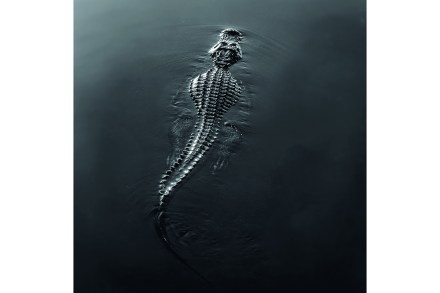
When the mugginess of a northeastern summer begins to oppress your spirits, there’s only one thing to do: convince yourself the grass is greener — or safer, at least — on your side by heading to a place where people have it even worse. For me, that was the edge of the Everglades in August, where not only does standing outside for more than a minute challenge the fortitude of your every pore, but an alarming number of the residents want to kill you. Invasive cane toads ooze sticky white goo that’s lethal to pets and highly toxic to humans. Venomous rattlesnakes slither undetected through dense vegetation. There are even black bears — who knew bears lived in Florida? — that can be troublesome.

Spain’s caminos come calling

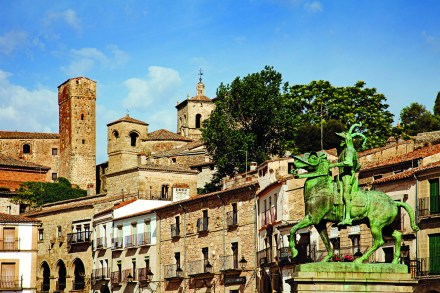
I haven’t come close to dying of thirst in Texas, where I live. In Spain’s little-known Extremadura, however, I found the odds increasing. Wandering through wide-open scrubland in hundred-degree temperatures, my only company was lots of Spanish bulls, unfazed by the blistering heat as I sweated my heart out. The population of Extremadura has been sparse since the Muslim occupation, but there are plenty of cattle. As I headed north from Seville on the Via de la Plata, the latest leg of my extended Camino de Santiago pilgrimage crisscrossing the Iberian Peninsula, Extremadura struck me as remarkably like Texas ranching country.

spain

No one does hurricanes like Florida Man

“DO NOT shoot weapons [at] #Irma,” the sheriff’s office of Pasco County, Florida, posted when Hurricane Irma approached our free state’s Atlantic coastline in 2017. “You won’t make it turn around [and] it will have very dangerous side effects.” The danger of stray bullets was all too clear to those who failed to detect the sarcasm behind 22-year-old Ryon Edwards’s mock Facebook event, “Shoot at Hurricane Irma,” which appeared to invite his fellow Floridians to open fire on the storm. Edwards’s message, “Let’s show Irma that we will shoot first,” attracted over 86,000 responses. Most were funny pictures and memes mocking the #FloridaMan stereotype.

An armed society is a polite society

Recently, early one morning at my sprawling estate in Swampland, Mississippi (a census non-designated place), I saw a bare-chested man walking across my back lawn beneath my office window. He wore a headband light, which gave him a semi-official appearance, but if he was working in some professional capacity, I reckoned, he’d be wearing a shirt. So I strolled out to the back deck and paused at the iron rail fence that surrounds it, connecting it to our guest house. Just beyond is an open outdoor shower that we use to clean off dogs and swamp muck. In it, with the water running was the bare-chested man — only now he was bare all over. I said, “Hey, buddy, what the heck are you doing?

From Moscow to Kyiv and back again

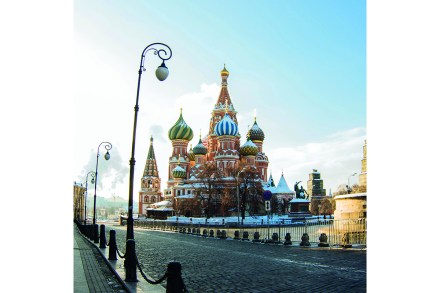
During the best of times, I left New York for gonzo journalism in Moscow; and during the worst of times, I fled a jingoistic wartime Moscow for the post-Covid euphoria of a resurgent New York City. My life in a sense has come full circle: I left New York for Russia in my freewheeling, bohemian twenties in search of future adventure and returned in my fifties when the rose-tinted dreams of the future that fueled Russia’s hedonistic capital were snuffed out in a murderous rage. That rage of a crumbling empire also engulfed lovely Ukraine in flames, battering its gorgeous capital Kyiv, where I had spent a blissful decade. With two of the three cities that I had called home caught up in a fratricidal zero-sum war, New York is once again King of the Hill.

Moscow
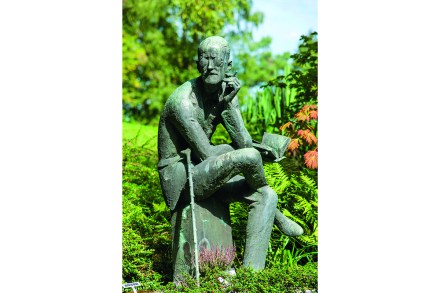
Joyce

A Joycean odyssey

In retrospect I should have done it the other way round. When I mapped out the walk from my elegant Zurich hotel it looked to be about twenty minutes. What I failed to spy was the topography — and soon I was climbing a pretty serious hill through a high-end residential neighborhood. It was hot. I soldiered on, obviously appearing to the unamused Swiss on the sidewalk a weird and confused American, huffing and puffing and smoking. Then the little mountain plateaued into a blind road, a ball field and across from it the cemetery. Now it was just a matter of finding his grave. No writer, possibly no person I have never met, has occupied as much time in my mind as James Joyce. I first read Portrait of the Artist as a Young Man at fifteen.

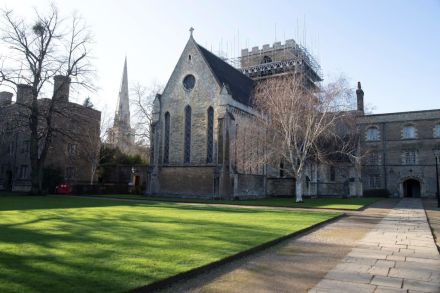
‘Oxford or Cambridge?’: the vacation edition

"Oxford or Cambridge?" No, it isn’t just shorthand for which of Britain’s most famous universities you attended — or were rejected from. It’s also a question about your taste in weekend vacation spots. Oxford is an urban, bustling city, full of multiculturalism, wide-eyed gangs of tourists and a literary heritage that’s long since tipped over into cliché. Think Alice in Wonderland, C.S. Lewis, J.R.R. Tolkien, even — God help us — Harry Potter, claimed for posterity because of its use of Christ Church as a filming location. But its Eastern cousin — decidedly not Cambridge, Massachusetts — is a very different proposition.

Them dog days

I grew up in a northeastern state, and when I moved to Washington, there were plenty of culture shocks I had to get used to. The Metro seemed like a revelation, a magical train that whisked you under the White House and the National Mall (this was back when DC public transportation actually worked). Less appealing were the crime notices slapped about my neighborhood: I saw one once — I'm not making this up — that reported a real-life nunchuck attack. But the biggest shock of all was, and still is, the heat. Where I grew up, a 100-degree day was an event. That's all the more so because my parents didn't have so much as a window air conditioner until I was around ten years old. In the frozen reaches of Up North, this was a perfectly normal way to live.

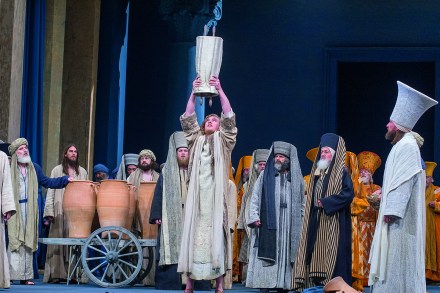
Christ stopped at Oberammergau

Getting there was penitential. The coach from my home in Bad Ischl, Austria, to Salzburg stopped a hundred times, to let on women in dirndls carrying shopping baskets. The train to Munich was subject to delays, messing up subsequent connections. The S-Bahn linking Ostbahnhof with a place called Pasing suffered a derailment, so I had to struggle backwards to the Hauptbahnhof, only to discover my alternative train to Murnau was canceled, then reinstated on a distant platform, resulting in mass confusion. (The Germans are bewildered very easily when things stop going to plan.) At Murnau there was a long wait for the two-carriage shunter service to Unterammergau, outside Oberammergau, where it was by now pitch dark and pouring with rain.

passion
mayan

My encounters with the Mayans

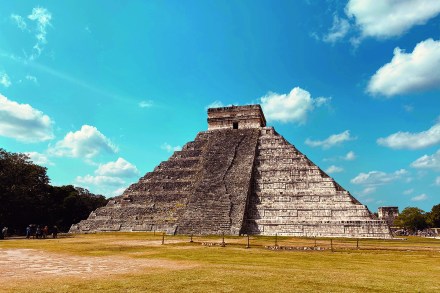
I met a traveler from an antique land...” Visiting the Mayan ruins in Yucatán, it’s hard not to think of Shelley’s immortal “Ozymandias.” Proud though it once was, little remains of that extraordinary civilization. I began my encounter with the Maya at Chichen Itza. Gazing up at the spectacular faceted pyramid which dominates the complex, I tried to imagine myself back a thousand years, negotiating the precipitous staircase that leads straight up the sheer face to the chamber at the top. I wondered at the ballpark, as big as a football field, and the domed observatory and labyrinthine temples and studied the intricate carvings which scrolled across walls and pillars and stelae.

Slowly roasting in heatwave Britain

Manchester, England Making plans for a European city break this summer? Seeking somewhere with centuries of history and culture, fine wine and, above all, sweltering temperatures? There’ll always be Rome, Barcelona, Athens — but chances are you haven’t considered Manchester, the northern English industrial powerhouse that inspired Karl Marx to write The Communist Manifesto and gave the world the Smiths, Joy Division and Oasis (you know, the ones who wrote “Wonderwall”).

heatwave britain

Bogotá in full bloom

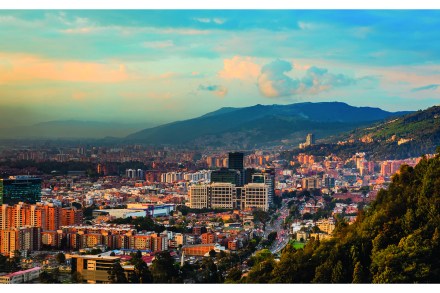
Everyone comes to Bogotá looking for something. It’s always been that way. A thousand years ago, indigenous traders traveled to the markets in the Bogotá savanna to barter with the Muisca and exchange gold, emeralds, salt and cotton. The Spaniards arrived five centuries later in search of the treasures of conquest and the mythical city of gold that now lends its name to the international airport: El Dorado. The great revolutionary Simón Bolívar came in search of the capital of his South America republic Gran Colombia and to liberate the continent from Spanish rule. I didn’t know what I was looking for when I first arrived in Bogotá.

Bogotá
Paducah

The pride of Paducah

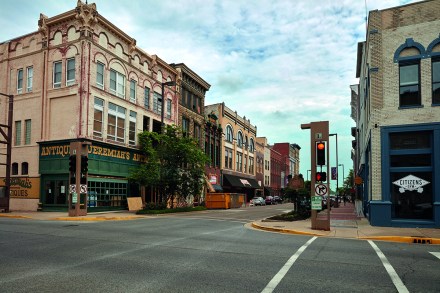
Twice daily, a small jet plane leaves Chicago O’Hare, flies just west of the confluence of the Tennessee and Ohio rivers and touches down at Barkley Regional Airport. Passengers are escorted across the tarmac into the tiny two-gate terminal and mill about while they wait for the exceedingly slow baggage claim. If you’re lucky, the kindly older woman at the rental car desk upgrades your SUV to a pick-up truck. Step outside for a smoke while you wait, and the local policeman offers you a chat rather than a hassle. Eventually, your patience is rewarded, your bags are loaded up and you get to head out and explore the largest city in the Jackson Purchase region.

Celebrating the Fourth in free Florida

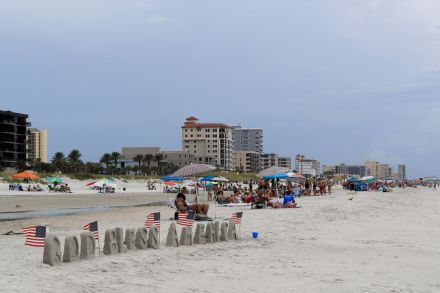
For the first time in my adult life, I left Washington, DC for the Fourth of July holiday. Apparently this is a very popular move: locals usually prefer to escape the concrete jungle in favor of sunny shores, winding rivers, or, well, anywhere but here. Not me. Party hopping around the nation's capital before settling in at a secret spot away from all of the tourists to watch fireworks on the National Mall makes this one of my favorite days of the year. However, driven by both a desire to visit family and check out what everyone was raving about in our July magazine, this year I hopped on a southbound plane to the Sunshine State. The weekend took me from Tampa to Sarasota to Naples, experiencing all of the weird and wonderful that Florida has to offer.

The secret to exploring Istanbul

Two weeks before Covid began to hit Europe, I stood in the Basilica Cistern beneath Istanbul, steadily getting dripped on. Built during the reign of the Emperor Justinian I in 532, just before another deadly pandemic — the plague of Justinian — the cistern lies beneath Istanbul’s tourist hotspot, and despite it being damp, dark and having stands of 007 merchandise at its entrance and exit, it is one of the most enchanting places in a city that has captivated its visitors for over a thousand years. "If the Earth were a single state," Napoleon once pronounced, "Istanbul would be its capital," and upon visiting you begin to understand why.

istanbul

Following the seam of the Iron Curtain

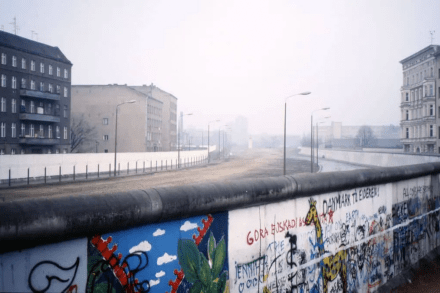
Just before the pandemic, I spent several months traveling through Europe, from the north of Norway to Istanbul and beyond to Azerbaijan. I saw unforgettable sights: the endless daylight of the Arctic summer; the vast Hammershus castle on the Danish island of Bornholm; Vienna’s ornate Prunksaal library; and the sandy beaches of Corfu. But the focus of my journey was precisely those things that most travelers to these places often ignore. I was following the route of the Iron Curtain. My aim was to visit every part of that old great divide, all the places where NATO once abutted the Warsaw Pact, where overwhelming military might stood constantly primed for apocalypse.

In defense of Northern Virginia

Last month, Spectator World contributor Casey Chalk wrote an article for the Abbeville Institute about the suburbanization of Northern Virginia, and specifically about real estate developer John T. “Til” Hazel Jr., whose projects in the 1970s and '80s considerably defined Virginia’s portion of the DC suburbs. “Tysons Corner, Fair Lakes, Franklin Farm, Burke Centre, and Fairfax Station, if you’ve heard of them, all owe their current existence as prominent residential or commercial zones to Hazel,” writes Chalk. He goes on to argue, as many do of Northern Virginia, that for all its diversity and proximity to a major city, the region lacks a core or center, as well as the sense of neighborliness and community that once thrived in the area’s smaller-town agricultural days.

On the spot along the Outer Banks

Most likely we experience it first as children, on summer vacation or a school trip: the sensation that something really important from a long time ago happened right here, on this very spot. Visits to our national monuments still stir the same old feeling, but, as I am long past childhood, a question arises that did not then. How is it that by stepping literally onto the spot, we step out of our own heads and into the past? The conventional wisdom for the past half-century or so has been that historic sites demand explanation or, in professional jargon, interpretation.

outer banks
Paris

Paris match

“If you wish to meet intellectual frauds in quantity,” V.S. Naipaul once said, “go to Paris.” After two years of pandemic-induced shutdowns and travel bans — some of them instituted, it seemed at times, with the sole purpose of harrying visitors from Britain — it was oddly satisfying, rather than irritating, to be assailed once again by the sciolistic outpourings of aspiring novelists. On mild spring evenings, the Left Bank echoed with the chatter of students and veterans of the creative writing mills of North America. Paris, finally, was emerging from the thickets of depression and terror occasioned by disease, ennui and patrols of gendarmes hunting for delinquents out for a walk.

The island that time forgot

James Eskridge cuts a defiant figure as he rides around Tangier Island on his motorbike. The weathered, garrulous water man known to all as “Ooker” is the mayor, spokesman and public face of one of America’s most endangered communities. Buffeted by rising sea levels and relentless erosion, Tangier is not so slowly sinking into the shallow waters of the Chesapeake Bay, threatening its ancient community of crab-hunting, God-fearing, Cornish-sounding fishermen with extinction. The Chesapeake, site of the first British settlements in America, has some of the highest relative sea rise on the planet. If Tangier disappears beneath its waves, America will lose a living link to its pre-revolutionary past.

tangier
Lincoln

Lincoln’s hideaway

I hope Abraham Lincoln rests in peace. He got little of it as president. What solace he did find often came during stays in what today is known as President Lincoln’s Cottage, a thirty-four-room Gothic Revival home three miles north of the White House. This little-known site is where he, his wife Mary and son Tad lived for thirteen months during summers and falls from 1862 to 1864 — key periods when he wrote the Emancipation Proclamation, when the Battle of Gettysburg was fought, and when he was struggling to win reelection. Lincoln escaped to this 300-acre hideaway, the former home of a banker set on a wooded breezy plateau, to flee the heat — and the White House. His son Willie had died there of typhoid at just eleven, shortly before his first stay.

Who killed Dicky?

Local chief Panta wore a government-issue khaki uniform with epaulettes, beret and swagger stick. On a pleasant stroll to our farm springs, he observed how plenty of blood had been spilled over this water. We sat on the glassy-smooth black rocks around the water pools and the chief retold for me a story more infamous in its day than the Happy Valley tale of Lord Erroll’s murder, but now completely forgotten. Welshman Dicky Powys, from a family of authors and philosophers and cousin of our ranching neighbor Gilfrid, arrived in Kenya in 1931 to farm. Young Dicky learned the local Maasai vernacular fluently and got on with everybody. His employer had rented pasture in Laikipia around our springs for a vast flock of sheep and Dicky pitched camp here.

dicky
Athens

Souvlaki with graffiti

I’m drawn to sketchiness but even by my sketchy-drawn standards, the state of Athens is deflating. The cradle of Western civilization now appears to be the graffiti capital of the Western world. The luridly colored scrawls are everywhere; Greek grannies air their carpets over balconies marred by multicolored tags and swirls. The Parthenon temple still looks mighty grand atop the ancient Acropolis citadel, but down in the modern city a lot of people look hard-up and downtrodden: lined faces, permanent frowns, hastened aging, disheveled clothes. Wandering through central Athens, I passed two shuttered shops set back from the street. About twenty homeless people lounged in the alcove, amicably passing round substances to smoke and ingest.

Back to Bangalore

India’s fast-growing population now stands at 1.38 billion, just shy of China’s ginormous 1.4 billion. China’s population is rapidly aging, so it’s only a matter of time before a youthful India —average age twenty-nine to China’s thirty-seven — overtakes its communist neighbor and becomes the most populous nation on the planet. I left India as a child, and just spent two months in Bangalore, selling some ancestral property. Bangalore is India’s booming tech hub and Silicon Valley; most major American tech companies, including Facebook, Google, Amazon and Microsoft have opened large offices there to manage their back-end operations.

india

Blowing my mind in the Electric Forest

Rothbury, Michigan exists in a similarly strange duality to the small towns of Woodstock in New York and Glastonbury in Somerset on the other side of the Atlantic. It is a village of little consequence once you separate it from the famous music festival associated with it. But when the electronic dance music (EDM) extravaganza Electric Forest happens, Rothbury — 432 inhabitants, according to the 2010 Census — gets its annual day in the sun. The hatchet-faced Michigan state troopers, standing to mark the turnoff from the main road through the village toward the festival didn’t return our eager waves from the car. But the smoldering opprobrium of The Man was soon forgotten amid the fields and woodlands of the Double JJ Resort that braves hosting the festival.

electric
iraq

Return to Iraq

The land around Erbil, the capital city of the Kurdistan region of northern Iraq, is mostly beige, flat and seemingly endless. The mountain has seen a lot of action. The terror group ISIS remains dug in around it and the Kurdish peshmerga, with whom I recently spent time, continue to battle against them. Iraq. Two syllables, almost two decades of conflict. When people think of Iraq they think of several things: the disastrous 2003 war, oil (like all Arab countries in the popular imagination), ISIS and, if they’re a bit older, the mustachioed features of Saddam Hussein that stood, in the early years of this century, for the type of dictator painted as the West’s greatest threat. I think of all those things, too. But they’re leavened by something else: family.