Spectator Life

Spectator Life

An intelligent mix of culture, style, travel, food and property, as well as where to go and what to see.

Drama at Lord’s: Stumped is a treat for cricket fans

So farewell to cricket’s The Hundred tournament, or what seemed by the end to be beefy South Africans in ‘Butterkist’ shirts belting sixes over cow corner off some fairly inoffensive county seamers. Does anyone remember a single result? Or really have any loyalty? Fine, have it as a marketing exercise to raise a few quid for the game, but there aren’t enough great players. It felt a bit like some upgraded pub cricket – and it’s going to be with us for years. What could be massively more significant for the game in the long term is over the Atlantic, where the former England star Liam Plunkett is one of many former players attached to a new £100 million plan for a professional T20 league in America next summer, in six big cities.
I fancy Emma Raducanu’s chances at Flushing Meadows

British tennis fans famously only acknowledge the sport exists for a couple of weeks in the middle of summer in SW19. But they ought to think about changing the habit of a lifetime over the next couple of weeks, as Emma Raducanu prepares to defend her US Open title at Flushing Meadows. It’s been a dizzying year for Bromley’s best. Her journey from star-struck ingenue when she went to New York a year ago to her arrival back there this week as the champion and the face of a thousand magazine covers must have felt like a rocket ride to the Milky Way. But now she has to prove herself all over again. Since winning the US Open a year ago at just 18, she has failed to win another singles title and has won just 12 matches out of 28 on the WTA tour.

What Richard Thompson can do for English cricket

Well alleluia, English cricket doesn’t seem able to put a foot wrong these days. After hitting three cherries with Rob Key, Brendon McCullum and Ben ‘Bazball’ Stokes, they may well have struck the jackpot with the appointment of Richard Thompson, the Surrey chairman, to take over as head of the English Cricket Board, something this column has long advocated. Thompson has plenty going for him: uniquely perhaps among the game’s administrators he is both traditional and forward thinking. Traditional enough to have realised the Texan conman ‘Sir’ Allen Stanford, with his million-quid pile of money on the Lord’s outfield, was a wrong-un.

Why Falklanders are the ones to watch at the Commonwealth Games

Stanley, Falkland Islands I’m not saying the Falklands is a tiny place, but last month, over the course of just a few hours, I had my hair cut by one international athlete and then my passport processed by another. Soon-to-be international athletes, anyway. They’re both part of the Islands’ team for this year’s Commonwealth Games, which is taking place in Birmingham this week. The Falklands has despatched 16 competitors across four sports: badminton, table tennis, cycling and bowls. For many participants, this is their first Commonwealth Games. For some, thanks largely to Covid, it will be their debut international appearance.

I’ve seen the future of motor racing, and it’s quiet

Are petrolheads’ days numbered? I only ask because having just been introduced to the quiet, petrol-less world of Formula E, I’m rather taken by it. Apart from anything else, part of the fun of spectating is making your feelings heard, which isn’t easy against the 130 decibels generated by F1 engines. The Formula E world championship arrives in London’s Docklands this weekend, weaving in and out of the ExCeL for races 13 and 14 of the season. That’s ‘E’ as in electric and plainly non-fossil fuel motoring is the future, though how soon isn’t clear. Formula E people think single-seat racing is a good way to promote it, and once you see a race you have to agree.

The only thing stopping Nick Kyrgios is himself

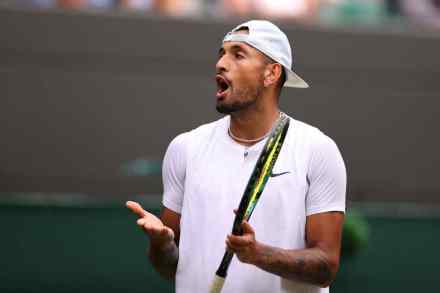
It’s hard to watch Nick Kyrgios for long without the sense he wants the world to know he considers everything beneath him. Clearly, journalists are beneath him and he treats them with open contempt at every opportunity, but so too are the officials he abuses, the opponents he mocks and even tennis itself. 'I don’t really like the sport of tennis that much. I don’t love it', he has stated publicly, claiming instead that his real affection is for basketball. To say Kyrgios has failed to realise his talent for tennis is one of sport’s great understatements, and something he seems to accept. 'I thought my ship had sailed,' he said this week about the prospect of ever winning a Slam.

The glorious return of the England cricket team

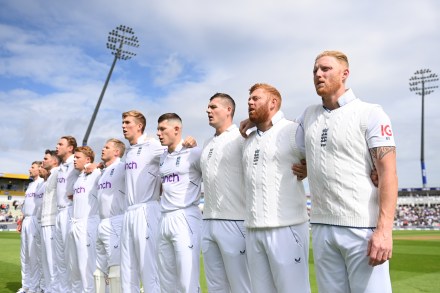
Let civilisation fall apart if it must. I no longer care. The England men’s cricket team is suddenly playing with such swaggering magnificence that everything else – endless culture wars, inflation, even the threat of hypersonically delivered nuclear annihilation from Russia – pales into insignificance. I just want to watch my heroes – Ben Stokes, Joe Root and the rest – play the game I love like deities. If Putin is going to press the big red button then so be it. As the temperature rises to a million degrees celsius here in Putney, I will console myself that at least I witnessed Jonny Bairstow’s transcendentally perfect innings at Trent Bridge earlier this month. We deserve this, don’t we? We England cricket fans who over many decades have suffered so much.

Why I fancy Emma Raducanu’s chances of winning Wimbledon

I just stuck £15 on Emma Raducanu to win Wimbledon at 22/1 — and I think you should too. I’m no tennis expert, far from it, but I’ve a reasonable sports betting record and like many others I’ve watched Emma with patriotic enthusiasm over the last two years. It’s quite easy to see when she’s hitting form. And, in her victory last night over Alison van Uytvanck, we saw that raw and ridiculous talent that propelled her towards the US Open title last year coming back. Raducanu is a hot streak player — and her hottest streak yet came in America last year, when she just started blasting her way past various high quality opponents to become the first singles qualifier in the Open Era to win a grand slam. Emma struggles with nerves, famously.

Should Wimbledon ditch its all-white dress code?

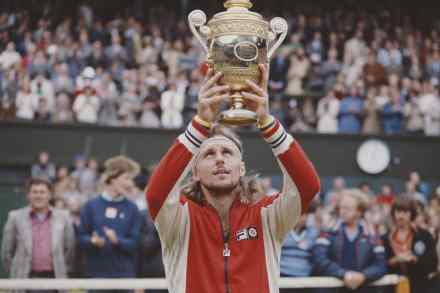
As this year’s Wimbledon Championships will demonstrate, tennis has moved on a bit in the past half-century: rackets are no longer wooden, ‘Hawkeye’ settles the ‘You cannot be serious’ moments and the winner of the ‘gentlemen’s singles’ competition will trouser £1.7m (compared with the measly £5,000 Stan Smith took home in 1972). But what happened to those great outfits from the days of Smith, Bjorn Borg, John McEnroe and Jimmy Connors? The striped shirts, the short shorts, the groovy track tops. Where did all the style go? The answer dates back to the late 1990s when the organising committee tightened-up the dress code, side-lining the previous protocol requiring clothing worn on court to be ‘predominantly white’ in favour of a ’90 per cent’ rule.

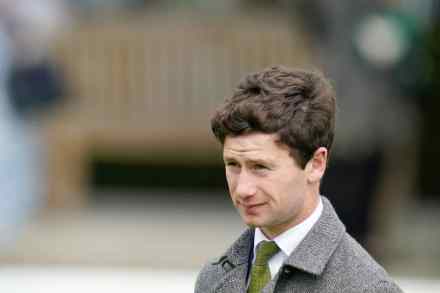
‘I’d ride out probably still drunk’: an interview with champion jockey Oisín Murphy

Oisin Murphy is seen as a bad boy of flat racing. He’s one of the best riders in the world but he keeps getting into trouble. He’s been banned from racing for 14 months for breaching coronovirus protocols by going to Mykonos and he failed two alcohol tests last year.  Oisin is now taking some time, as he puts it, to reflect. This year he’s at Royal Ascot without his riding boots for the first time in his career.  I find him in the Parade Ring. A horse obsessive, he immediately starts talking me through the details as the jockeys begin to mount.

Why the English love lazy sports

Once upon a time, when the fingerprints on the Wimbledon trophy were more or less exclusively British, you could win in SW19 whilst wearing trousers. Even a tie if you go back far enough. But then, back in those days, tennis was a no-sweat sport. Well, perhaps a drop or two, but essentially there was much less of it around than today, when sweatbands, perspiration and frequent towelling off are part of a fetishised display of effort and strain – one that’s often accompanied by verbal ejaculations of sometimes rather alarming severity. I’m sure I’m not the only one who’s been forced to mute Wimbledon at times because of the repetitive baseline grunting. But it wasn’t always this way.

A new era of Welsh football has begun

As Britain toasted seven decades of the Queen’s reign outside Buckingham Palace, the Welsh basked in their 1600-year survival. Dafydd Iwan, the republican nationalist folk singer, bellowed Yma O Hyd around the Cardiff City Stadium as Wales took on Ukraine in their World Cup qualifier. A simple title – We’re Still Here – makes you want to weep and, then, fight.  What was once a marginal protest tune, composed at the height of Thatcherism after Wales rejected devolution in 1979, is now an apt anthem for spurring on Welsh footballers. Until recent years they were not a celebrated or well-known species but Gareth Bale, Aaron Ramsey and Joe Allen have changed all that.

The truth about Three Lions

During last year’s European Championship, England football fans switched, for some reason, from ‘Three Lions’ to ‘Sweet Caroline’ by Neil Diamond (‘so good, so good, so good’). If anything can make them switch back it’s the Football Association, who this week said they were thinking of dropping the Baddiel and Skinner anthem as England’s official song, because it could be seen as ‘arrogant’. Football fans are like children, and as any parent could have told the F.A., if you want to make sure someone does something then just tell them not to do it. The F.A. quickly had to issue a statement confirming there were no plans to change. David Baddiel himself feels the F.A. have long disliked the song.

The glorious return of the Grand National crowd

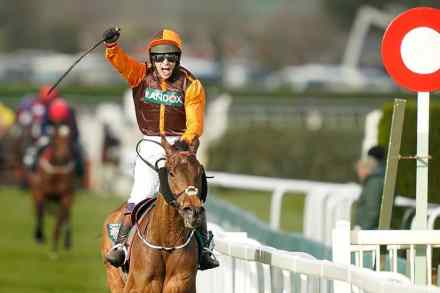
How wonderful after three years to have the crowds back to enjoy the glorious concoction of skill, bravery, razzmatazz and tear-jerking emotion Aintree’s Grand National meeting always provides. Having begun my working life on the Liverpool Daily Post in the days when developers’ greed nearly destroyed this national treasure, I relish my annual pilgrimage. Competition is almost as hot as at the Cheltenham Festival but somehow it comes without the angst. ‘You feel like it’s a party,’ said trainer Dan Skelton. ‘You are part of a carnival. I don’t drink but those who do tell me that they do that well here too.’ ‘Cheltenham is about pressure,’ said Grand National-winning trainer Gordon Elliott. ‘Aintree is more relaxed.

Why the Welsh are turning their backs on rugby

In the space of a few days last month, two games were held a mile apart in Cardiff. The first was the concluding episode of the Six Nations tournament, the second a crucial World Cup football qualifier. Beyond jubilation and disappointment, the occasions exposed the gulf between the two most popular sports in Wales: the former highlighting the crisis of datedness that has engulfed rugby, the latter demonstrating why football has gone on to reflect a more confident, vibrant and relevant Welsh identity. The age-old debate of what is Wales’ national sport has never been so easy to settle.