Spectator Life

Spectator Life

An intelligent mix of culture, style, travel, food and property, as well as where to go and what to see.

How to negotiate on a house

With Rishi Sunak announcing plans for a Stamp Duty holiday extension and floating the policy of 95 per cent mortgages, the boom in house sales looks set to continue apace. So, in an increasingly competitive market, what's the secret to securing the best possible price on a house? Firstly, your relationship with the agent is key, even as the buyer. Despite the fact that most agents are paid by the seller estate agents form their primary relationships with buyers. If you want to live in a certain area find the best negotiator - the person you think can persuade a seller to accept your price. And don't be afraid to badger them. They may not work for you but the squeaky wheel always gets the oil. They want the deal as much as you do.

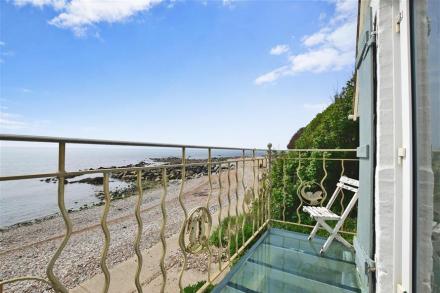
Is now the time to buy a coastal bolthole?

It's hard to believe we're heading towards the pandemic's first anniversary. The economy has had a torrid time. But if there's one area that has surprised us all with its buoyancy it is the property market. Ever since the first lockdown, there has been a flurry of activity at a time when a market crash was predicted. So, what is going on and should you hop on the bandwagon? The Office for National Statistics reported that UK house prices rose by 8.5 per cent over the year to December 2020. That growth wasn’t in city centres which have, at best, been largely stagnant. Instead it was driven by properties out of town and particularly in rural areas and on the coast near to major conurbations.

Will the new Help to Buy scheme help anyone?

As Mark Twain didn’t quite say, there are only three certain things in life: death, taxes and yet another government-backed bung for the housing market. The latest instalment is the 2021 to 2023 Help to Buy scheme, which carries on the theme of offering subsidised loans to first-time buyers – and only first-time buyers. Here’s what is on offer—from April. Buyers can take out a loan of between five and 20 per cent of the purchase price of a new home (or up to 40 per cent in London). There is a cap on the property price on which the loans are available varies from region to region, ranging from £186,100 in the North East to £600,000 in London.

Are house prices about to fall?

A pattern seems to have emerged in the latter stages of the Covid crisis: Keir Starmer gets wind of discussions within government of possible new lockdown restrictions and calls for them to be implemented immediately – just to make it look as if he is ahead of the curve and the government behind it. We should take seriously, then, Sir Keir’s call for the housing market to be closed down for the duration of the lockdown. At present, in contrast to the first lockdown, it is still permissible for property viewings to take place, and thus for homes to be bought and sold. Yet as increasing numbers of buyers are already finding, for them the housing market has already closed down.

Where to search for property in 2021

Did anyone get their predictions for the 2020 property market right? I suspect not. We’d barely heard of Covid back in January last year and, if we had, we would have probably written off the housing market for half a decade. But look at property now. Prices are up 5 per cent on average and so too is the volume of sales: £62 billion of extra transactions according to Zoopla compared to 2019. And that's despite the economic hit we've experienced over the last year. I’d suggest the upward trajectory will continue, albeit with a few wobbles. This market movement is being driven by macro factors, not local ones. Low interest rates and economic optimism surrounding a 2021 vaccine could mean continued growth.

The perils of shared ownership

Fancy buying half a flat, paying 100 per cent of the maintenance and the cost of putting right a developer’s shoddy work? Therein lies the great scandal at the heart of shared ownership, the government scheme which BBC Panorama exposed last week but which I others were writing about over a decade ago. Shared ownership has allowed developers to put fancy price tags on properties which they might otherwise struggle to sell The concept sits at the heart of government efforts to increase the rate of home-ownership. Look around at the prices of London flats, compare them with average London salaries and you wonder how anyone can get on the housing ladder any more. But they do – sort of – thanks to shared ownership.

What virtual property viewings don’t show you

I’ve never worked out why anyone would want to buy an outfit over the internet without first seeing it in the flesh and trying it on. I know my wife does it all the time — although the constant piles of parcels by the door, full of stuff waiting to be sent back whence it came, pays testament to drawbacks of buying things sight unseen. Then again, a suit or a dress is only a suit or a dress. I would rather buy clothes online than I would a five-storey townhouse. But maybe I’m a bit of an old stick-in-the-mud. There are some buyers, it seems, who are only too happy to buy blind.

10 myths about moving to the country

Why, Sir, you find no man, at all intellectual, who is willing to leave London. No, Sir, when a man is tired of London, he is tired of life; for there is in London all that life can afford.— Samuel Johnson Samuel Johnson made this remark in 1777 to one of his friends who lived in the wilds of Scotland. Covid, the internet and cars hadn’t happened at the time. But he did have a point. Many office workers have been told they are unlikely to return to their places of work this side of Christmas. And when you do return, it is likely that home working could be on the cards at least one if not two days a week. If that’s the case, do you really need to live in a central city area?

Is now the time to invest in buy to let?

Buy to let remains a popular investment option for Brits, despite being the subject of major reform over the last three years. Government legislation since 2017 has been increasingly hostile towards buy-to-let owners but could the aftermath of the pandemic prompt a change? Figures from 2018 show that the Private Rented Sector [PRS] provides homes for over a fifth of the population, that’s more than 4.7m households, making it bigger than the Social Sector and it’s doubled since 2002.

The great escape: where to buy property after lockdown

The latest research from Deutsche Bank suggests that a dramatic shift in working patterns is on the way. 57 per cent of the 450 financial workers surveyed expect to be working from home between 1 and 3 days a week once the pandemic has passed. Covid-19 has not only disrupted our lives in the short term but is changing our longterm mindset. So, what does that mean for the property market? If you think it’s back to business as usual, you’ll need to redefine usual before you proceed. Our new reality now affords office workers the opportunity to live further away from their place of work, which in turn brings the prospect of more space.

No place but home: how Covid will change the property market

It took a trip to the Land of Oz to make Dorothy value her home. For the rest of us, it took a global pandemic. During the past two months, our residence — whether that be a mortgage-free house or shared rental flat — has become our entire world: office, restaurant, cinema, gym and shelter, all rolled into one. If we didn’t know the ins and outs of our quarters before, we do now. Many people have developed a more personal understanding of a market that has played a vital role in shaping the British economy for decades. Housing costs in Britain are some of the highest in the world, more than quadrupling since the 1970s.

When will the property market start moving again?

For those looking to buy or sell houses, lockdown has put many of the best laid plans on hold. Since lockdown was imposed on the 23rd March, the property market has entered into a period of suspended animation. We don’t know when lockdown will end, nor what the financial and economic collateral damage will be for the UK economy and we certainly don’t know what the ‘new normal’ will be or how long it will have to go on for. So, what do we know? Financial markets, although initially taking fright, have recovered somewhat. Falls of between 10 and 15 per cent across indexes around the world with markets seeming to have stabilised. At least for now.

House buyers should be poised for the aftermath of Covid-19

It’s easy to look with doom and gloom at the Coronavirus situation and imagine that this could be the death knell for the property market. Why would you make the biggest investment in your life at a time of great economic uncertainty? Furthermore, the government has requested that the market effectively shut down while we fight this pandemic. In the short term, will there be disruption and pressure on pricing? Yes. In the longer term, is the market doomed? I am going to stick my neck on the line and say that property is set for a strong recovery. Before the pandemic struck there was a shortage of supply and an increase in demand for good property. That dynamic has not changed.

Why stamp duty could and should be cut

Given that the government is running a £40 billion deficit, is determined to increase spending on infrastructure and will not be facing an election for another five years, no-one should get their hopes up too much for tax cuts in the Budget. Indeed, most of the talk has been of possible rises. But if any tax is going to be cut it is likely to be Stamp Duty on property purchases, at least those made by owner-occupiers at the lower end of the market. No tax has been jacked up quite so much over the past two decades. When Gordon Brown started as Chancellor buyers paid a flat one per cent of the value of the property they were buying. Now there are progressive bands, as well as a three per cent surcharge for second or investment properties.

Where to buy property in London

With prices in many parts of the city already beginning to fall, buying in London is a minefield. Striking a balance between liveability and getting a good return on investment is the trick we should all be aiming to pull off. Afterall, buy somewhere that’s already got too many tattooed men selling flat whites and you’ll end up paying the price later when you realise values in the neighbourhood have topped out. Equally, buy somewhere that’s cheap, but far below the radar for cool hunters and you could end up with the same problem. We’ve picked out some areas in the north, east, south and west of the city that have that perfect trade off between up and coming property prices and great liveability.

The six best commuter villages close to London

Staring into a stranger’s armpit on a rush-hour tube train can often lead to thoughts of moving to a tiny village. We imagine that, there, we might find the space to be ourselves. As a description of Louis de Bernieres’ fictional Surrey village, Notwithstanding, reads: it is a place where, “a lady dresses in plus fours and shoots squirrels, a retired general gives up wearing clothes altogether… and people think it quite natural to confide in a spider that lives in a potting shed.” Perhaps it’s just me, but as a Londoner, that all sounds rather liberating. In the interests of bucolic fantasies, we’ve put together a list of commuter villages near the capital.

How would Labour’s proposed tax grab affect your home?

At first glance you could be forgiven for thinking that Labour’s publication ‘Land for the Many’ is a set of policy ideas that solves the housing crisis. Increasing the supply of affordable housing and freeing up land to build, improving access to existing stock and transparency sounds fair, right? Yet tucked away inside the report, you’ll find a range of measures that could pull the market as we know it to pieces; it’s the most radical sets of property proposals since the mass building plan after the Second World War. The report’s editor, George Monbiot, has not thought through the unintended consequences of the proposals. Just one example and perhaps the most damaging is the desire to reduce land prices.