Spectator Life

Spectator Life

An intelligent mix of culture, style, travel, food and property, as well as where to go and what to see.

We’re all high-schoolers now

This article is in The Spectator’s February 2020 US edition. Subscribe here. Political tribalism is high school all over again. I moved every year and a half growing up, and one of the many side effects was that I became deeply distrustful of groups. I went to 10 schools in 12 years — three of them in eighth grade. It was hell. I was always the outsider. If I was acknowledged at all, it was as ‘new girl’ and, once they got to know me a bit better, ‘Bitchit’ or, my personal favorite, ‘Birdshit’. I went to schools in rich suburbs where I was ‘poor’ and schools in inner cities where I was the minority.

high-schoolers

Academics are trying to get my paper retracted — and some of them haven’t even read it

‘You’re about to learn why people generally avoid fucking with me.’ Thus spake Nietzsche scholar and Macquarie University philosophy professor Mark Alfano in a tweet directed at me.I’ll start from the beginning. In late December I published a paper in the academic journal Philosophical Psychology defending the study of race differences in intelligence. This topic arouses strong emotions. But I am a philosopher, and the job of philosophers is to confront issues dispassionately, guided only by reason and evidence. This activity may lead us to question orthodoxies and challenge taboos, but that is what philosophy is all about. Or at least it’s supposed to be.

nathan cofnas philosophers

French women do get fat

This article is in The Spectator’s January 2020 US edition. Subscribe here.Paris ‘And please meet Alice, who has brought industrial cheese,’ said our Parisian host as she introduced me to the other dinner guests. Imagine my despair! I had failed her, not to mention her guests, on the sacrosanct fromage. A fate worse than death. Food is a national obsession for the French. The couple throwing the party presented us with a three-course meal, all made from scratch using seasonal produce from the local market. To think that I almost brought a six-pack of beer.

french women

Back in the USSR

A perfect summer day in the wild woods west of Moscow. Around us, slender birch saplings lean together, lean apart, like elegant dancers swaying to the music of the wind. Buckets in hand, Dmitri Denisovich and I walk between shimmering streaks of brightness and patches of shade, collecting mushrooms. Every Russian knows the names of at least a dozen forest mushrooms. Adults and children alike are said to be able to follow their rich musty fragrances into the darkest glades, recognizing the tastiest, rarest and most poisonous fungi. ‘Lisichki!’ cries Dmitri, spotting a cluster of yellow ‘little vixen’ chanterelles. ‘My favorite.’ In eastern Europe, all the food is on the table; in the West, it’s all in the cupboard.

russian food
canceled cancel culture

So you’ve been canceled. Here’s how to fight back

In April 2017, a group of students at Dartmouth College met with Dr David Bucci to complain about sexual harassment in the department of psychological and brain sciences that he chaired. The allegations didn’t sound particularly grave — none of the students complained of rape, for instance — but Dr Bucci flagged it up with the Title IX office even so. It was that office’s responsibility to follow up sexual harassment complaints and it duly did, suspending three professors and mounting several investigations. You can imagine Dr Bucci’s surprise, therefore, when seven female students named him in a lawsuit they filed against Dartmouth 19 months later, accusing him of ignoring the original complaint.

sarah lawrence college higher education

A new mob at Sarah Lawrence College

Last year, a progressive student mob came for my job and the faculty and administrators of Sarah Lawrence College did not support me. This week, a student mob again encircled my office — this time because they craved viewpoint diversity.The media portrays America’s students as overwhelmingly ‘woke’ activists obsessed with social justice protests. In reality, Gen Z college students look far more positive. America’s students are intellectually curious, and they want more from college, than is offered by the progressive monoculture encouraged by some professors and many administrators.

Standing up to eat is the new line in dining in DC

This article is in The Spectator’s January 2020 US edition. Subscribe here. Going into Spoken English, you feel a little like Henry Hill taking the back entrance to the Copa in Goodfellas. Wander into the Line Hotel, past the check-in, take a right past the elevators and enter the kitchen. It works best if you’re with someone you need to impress. Unfortunately, this time I’m with a Spectator editor. The Line is one of DC’s newest and hippest boutique hotels. That’s another way of saying it’s slightly less boring than the Hilton about five blocks away.

standing

Who invented the hamburger?

The hamburger is the perfect meal in the hand, eaten by workers on their lunch breaks, or by families who cannot afford fancy restaurants. It is the great comestible leveler, suitable alike for suburban barbecues and the front steps of tenement houses. The staple food of American democracy yields cheeseburgers, baconburgers, franchise brands, and drive-in outlets with total annual sales of five billion units. The precise origins of the patty, however, remain opaque. Nobody knows for certain who first thought of cooking a patty of minced beef and serving it inside a fresh-baked bun. The earliest use of the name was for an 11-cent dish, the ‘Hamburger steak’, served at a New York restaurant, Delmonico’s, in 1873. There is no mention of buns or relish.

hamburger
americans syria

After the Americans

This article is in The Spectator’s January 2020 US edition. Subscribe here.Malkef, northern Syria I’m sitting under an olive tree about a mile from the front with ‘Agir’, a Kurdish soldier from the Syrian Democratic Forces (SDF). The sharp cracks and dull rumbles of fighting make their way to us over dusty farmland; the shade protects us from the scorching mid-morning sun and omnipresent Turkish drones. Agir tells me how the Turkish-backed Free Syrian Army (FSA) can’t fight — at least, compared with the Islamic State (Isis). Agir fought Isis with American backing for years in Syria. Sometimes, he says, Isis soldiers would tie foam cushioning to their feet, sneak up to your position in the moonlight and slit your throat.

2019 was not a good year for freedom of speech

This article is in The Spectator’s January 2020 US edition. Subscribe here. ‘Crisis? What crisis?’ That’s often the response of complacent academics when people like me draw attention to the erosion of free speech on campus. For instance, Lee C. Bollinger, the president of Columbia University, wrote an essay for the Atlantic last June entitled ‘Free Speech on Campus is Doing Just Fine, Thank You.’ But is everything rosy in the groves of academe? I thought I’d take this opportunity to look back on the year gone by and see if 2019 was a good or bad one for intellectual freedom in American higher education.

freedom
food cart

In the cart of the city

This article is in The Spectator’s January 2020 US edition. Subscribe here.New York City It’s the Sunday before Memorial Day outside the Metropolitan Museum of Art and the street is filling up with families. Navy servicemen and women stop for a friendly word and a photo. But a tragedy is happening here and there’s nothing anyone seems able to do about it. Elizabeth Rossi, a retired disabled Marine veteran in her early forties, runs a hot-dog stall outside the museum. She served in Operation Iraqi Freedom. ‘On my first day we were bombed; you never forget that,’ she says. Her father, Dan, also a disabled vet, runs the van next door. But they feel that they have been rejected by the city of New York and the world around them.

Bowl food: childhood memories have inspired a new craze for cookie dough

This article is in The Spectator’s December 2019 US edition. Subscribe here. In Greenwich Village, one block south of Washington Square Park, stands the flagship store of DŌ, ‘New York City’s first ever cookie dough scoop shop’. Opened in 2017 by an American designer with fond childhood memories of baking with her mother, DŌ is now so popular that it requires a special line policy, as in: ‘SINGLE FILE so that pedestrians can still use the sidewalk.’ Often, a line of hundreds of customers can be seen snaking around the block, eagerly awaiting tubs and cones of its buttery, sugary (and uncooked) batter.

cookie dough

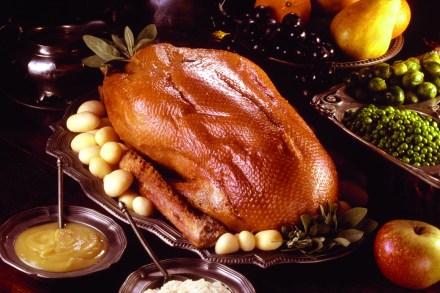
For duck’s sake: New York’s foie gras ban is classic political posturing

This article is in The Spectator’s December 2019 US edition. Subscribe here. Drown the Yquem and bury the Burgundy! Cover up the caviar! Abscond with the escargot, and for good measure lock away the langoustines! The class war is coming to New York City. On October 30, the city council, taking a break from doing nothing about the homeless and the garbage, passed a law prohibiting the sale of foie gras — fattened duck or goose liver — beginning in 2022. Of the 51 members, 42 voted in favor and 30 signed on as co-sponsors.

duck foie gras

My wild Key West

This article is in The Spectator’s December 2019 US edition. Subscribe here. Key West was originally called Cayo Hueso (Bone Island in Spanish) either for its bleached limestone rock or because the Calusa Indians used it as a burial ground. The first European here was Spain’s Ponce de León in 1521, on his spiritual quest for the Fountain of Youth. Lt Cmdr Matthew Perry planted the American flag on March 25, 1822. By the 1880s, Key West was the richest town in Florida. I first came on a Greyhound in November 1977. I knew no one. An American boyfriend in London had talked about breakfasting with fishermen, and of the Southern writer who was his mentor.

key west

The real reason for college food fights

This article is in The Spectator’s December 2019 US edition. Subscribe here. Oberlin College hit the headlines earlier this year when it lost a high-profile lawsuit against a small business. Staff and students at the liberal arts college had accused a bakery in the local town of racism and organized a boycott after an employee caught an African American student shoplifting. The owners of the bakery sued the university for defamation, infliction of emotional distress and tortious interference. Turned out, the store’s employees were completely color-blind when it came to stopping people stealing — of the 40 shoplifters arrested in the previous five years, 32 were white — and the jury found with the plaintiffs.

Transparent spirit: craft distilling has come to Washington DC big time

This article is in The Spectator’s December 2019 US edition. Subscribe here. A white cross once rested over the door of the windowless warehouse at 1135 Okie St NE in Washington, DC. Residents seeking a reprieve from the street gangs and drugs that plagued the Ivy City neighborhood would huddle on the second floor and listen to the holy men of Old Ship of Zion Baptist Mission Church preach deliverance. Deliverance came. Crime plummeted. The violence and poverty along H Street gave way to Zagat-rated restaurants, organic markets and boutique bars. The closest thing you’ll see to weapons now in Ivy City is at Kick Axe, a new watering hole offering flannel-clad Capitol Hill staffers the opportunity to have a drink and, well, throw axes at wooden boards.

distilling spirit

How to converse with know-it-alls

What does flushing the toilet have to do with reducing political extremism? This isn’t a weird joke. There’s a bizarre connection here, studied by behavioral researchers. It relates understanding our ignorance to moderating extreme views.By way of entry, you have probably heard of the Dunning-Kruger effect, the phenomenon of incompetence that’s too incompetent to recognize itself. When people have very little exposure to a subject, their confidence in their own opinions about it becomes dramatically inflated. If, for example, a plane crashes in controversial circumstances, many people on Twitter magically become aeronautical engineers and air-traffic control 'experts' in about five minutes.

unread library

Everyone’s climbing aboard the Beyond Meat gravy train

This article is in The Spectator’s November 2019 US edition. Subscribe here. It’s summer in Wokeville, California, and the denizens congregate in their backyards, popping open craft beers and passing around kelp-flavored rice chips as the Beyond Meat burgers sizzle on the solar-powered grill. As Brad Paisley would say, it’s just another American Saturday night. Er. Wait. Not sure I caught that right. Backyards, yes. Craft beer, yes. Rice chips, well, OK. But did you say Beyond Meat? I am sorry to report this, dear residents of Everywhere Else, but yes, that’s what’s cooking in Wokeville these days.

beyond meat

California drinking: forgive them their granola

This article is in The Spectator’s November 2019 US edition. Subscribe here. Cyril Connolly famously opined that every young man of spirit wants to do two things: start a magazine and start a chicken farm. That’s about half right, I think. It would have been more accurate if he had included a true, if often unspoken, heart’s desire: to be a wine critic. Do you know anyone — anyone you still speak to, I mean — who hasn’t wanted to be one? Every Sunday, my family and I participate in an august ceremony that extols a beneficent God through whose ministrations we accept the gift of vinum...fructum vitis et operis manuum hominum: ‘wine… fruit of the vine and the work of human hands’.

pax mahle california

The ‘Russians’ of Brighton Beach

This article is in The Spectator’s November 2019 US edition. Subscribe here. At the very southern tip of Brooklyn, far from the hip avocado cafés and right before you hit the sea, there sits the neighborhood of Brighton Beach. Nicknamed ‘Little Odessa’ after the waterfront city in Ukraine, the area is home to primarily Russian-speaking immigrants from the former Soviet Union. It’s a jumble of identity. The immigrants are mostly Jews from Ukraine, hence the nickname, but also Russia, Belarus and the other Soviet republics. So what to call these people in America? In Russia, in Ukraine, in Belarus, our identity cards never described us as Russian, Ukrainian, Belarusian. We were just Evrei, Jews.

brighton beach russians
transracial

Finally, the transracial community are gaining recognition

Since 2012 I have publicly identified as Wrongskin. To those ignorant of the term, this means I was born white but I identify as black. I'd kept my race dysphoria a secret for many years but it had become increasingly difficult to hide. Being the transcendental trailblazer I am, I decided to come out and challenge the bigotry of cisrace people. Predictably enough at the time, it was regarded as nonsensical and I was strongly ridiculed. Today however, transracial individuals are finally being ‘seen'.According to the UK’s Telegraph, the Universities and Colleges Union (a British trade union in further and higher education) have stated that regardless of skin tone, people should be able to identify as black.

A journalism lesson from Northwestern

Student journalists at Northwestern University apologized for doing journalism on Sunday.In response to complaints by student activists over their coverage of Jeff Sessions’s recent visit to campus, the staff of the Daily Northwestern apologized for causing ‘harm’ to their fellow students in a recent editorial. Among their supposed transgressions, the reporters posted pictures of protesters to social media, which was ‘retraumatizing and invasive’, and committed an ‘invasion of privacy’ by contacting students for interviews.Why apologize for standard journalistic procedures? The editors offered this reasoning: ‘We feel that covering traumatic events requires a different response than many other stories.

Northwestern University

Ben Shapiro and the extreme nonsense of the horseshoe theory

I wrote last week that Catholic nationalist ‘groypers’ were beating the likes of Charlie Kirk and Ben Shapiro at their own debate nerd game. Shapiro tried to return fire on Thursday. His speech at Stanford University was aimed directly at the ‘alt-right.’ I agreed with much of what he said, about the immorality of equating skin color with moral worth and of jokes about the nature of the Holocaust. Shapiro made a good point in saying that ‘irony’ can be a weaselly rhetorical maneuver inasmuch as it allows people to express contentious opinions with the escape clause of insincerity. But Shapiro's speech had serious weaknesses in style and content. Firstly, he refused to name anyone that he was referring to.

ben shapiro

Craft brewing’s Midwest comeback

This article is in The Spectator’s November 2019 US edition. Subscribe here. ‘No food or drink has evolved as much as beer in the past 15 years,’ says J. Ryan Stradal when we meet for a drink at the Beer Grotto, in Ann Arbor, Michigan. The author of the New York Times bestselling debut Kitchens of the Great Midwest is in the middle of his Midwest book tour. His latest novel, The Lager Queen of Minnesota, is a multi-generational saga that starts with two sisters, a stolen inheritance and a dream of making the best beer in Minnesota. It’s a family story told through beer goggles, which charts the evolution of Midwestern brewing from the 1960s to the present day.

craft

Nostalgia sells — but you have to get it right

This article is in The Spectator’s November 2019 US edition. Subscribe here. People don’t believe me when I tell them we created Hendrick’s Gin 20 years ago — mostly because the bottle looks like it’s been on the market for more like a century. Over the course of those 20 years, we’ve gone from an unusual little gin to a global brand. We sell more than one million cases a year. The secret is nostalgia. Most of the products we design at Quaker City Mercantile, the creative agency I run in Philadelphia, are known as ‘nostalgia’ brands. Nostalgia can be a powerful thing, but it’s not as easy as slapping a faux-vintage label on and calling it a day. Any nostalgic design has to come from an inherent truth about the brand.

hendrick's nostalgia

Why are young people so left-wing?

This article is in The Spectator’s November 2019 US edition. Subscribe here. The French economist Thomas Piketty, who made his name with Capital in the Twenty-First Century (2013), has another book out next year called Capital and Ideology in which he looks at changing patterns of voting behavior in Britain, France and America. One of his findings is that, until quite recently, the more educated voters were, the more likely they were to vote for right-of-center parties. Now, the opposite is true. Which might explain why Donald Trump declared at the height of the 2016 presidential election: ‘I love the poorly educated.’ Piketty has already published a paper about this and the data he’s accumulated is eye-catching.

left-wing

Pasta, like all good things, should come to an end

Olive Garden’s ‘Never Ending Pasta’ promotion, I’ve come to believe, is an accelerationist ploy. For about $11, you can engorge yourself with your pasta of choice, paired with your selection of a sauce, many of which catch the American eye with the adjective ‘creamy’ or ‘five cheese.’ Authenticity is an afterthought in the fever dream that is ersatz ethnic dining in endless proportions. And with $100 and a bit of luck, you could have purchased a ‘Never Ending Pasta’ pass — the 24,000 winners of this pass can indulge in the creamiest pasta with the crispiest toppings for nine weeks, unlimited. They can eat their weight in pasta without ever having to see the bottom of their ceramic dish staring back at them.

pasta

Where are world leaders educated?

This article is in The Spectator’s October 2019 US edition. Subscribe here. Leading minds Where are world leaders educated? According to an analysis by the UK-based Higher Education Policy Institute, the US has just overtaken Britain in the number of world leaders educated at the country’s universities. — 62 world leaders (monarchs, presidents or prime ministers) were educated at US universities. — 59 were educated at UK universities. — Two years ago, the respective figures were 57 and 58. — 40 current world leaders were educated in France, 10 in Russia and 9 in Australia. The burning question Is climate change making wildfires worse? Acres burned in US wildfires: 1928 43.54m 1938 33.81m 1948 16.56m 1958 3.28m 1968 4.

leaders
mikhaila peterson carnivore

The trouble with the Petersons’ ‘carnivore diet’

One of the odder statements of Canadian self-help supremo Jordan Peterson is that his health problems have made him so sensitive to food and drink that when he drank some apple cider he did not sleep for 25 days straight. This, if true, would mean that he had doubled the record for the longest time of constant sleep deprivation. Insomnia? It happens. Cider-induced insomnia? Perhaps. Cider-induced sleeplessness that would make the inmates of Guantanamo Bay look well-rested? I can believe he thinks it happened but I can’t believe it happened.Peterson adopted an all-beef diet on the advice of his daughter, Mikhaila, who had been following a similar meat-based diet in what she claims was a successful attempt to treat her chronic auto-immune problems.