Latest from Coffee House

Latest from Coffee House

All the latest analysis of the day's news and stories

The sugared-almond theory of economic consequence

From our UK edition

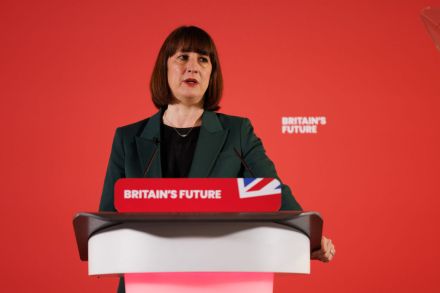
Let me ease you gently into a big and boring-sounding word for a small dishonesty that today corrupts the language of politics. Doubtless we shall be encountering it (though never by name) in Rachel Reeves’s looming Budget. If you step away from levying the new taxes you must then cut the goodies they were to pay for But we’ll start at my mother’s knee. I was five, and she was teaching me reading: an activity I viewed with displeasure. I did, however, like sugar-coated almonds – very much. So Mum undertook to give me one sugar-coated almond for every chapter I read aloud to her from my First Reading Book.
Morgan McSweeney is the new Peter Mandelson

From our UK edition

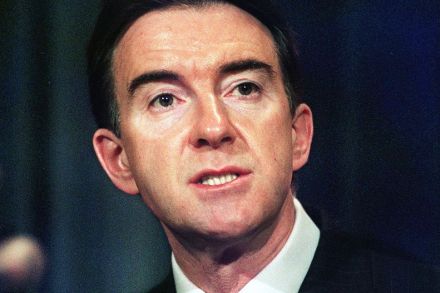
It’s an iron law of politics that when the staffer becomes the story they have to go. Dominic Cummings had to leave Boris Johnson, and Theresa May’s joint chiefs Fiona Hill and Nick Timothy both took the blame for the disastrous 2017 election result. The reshuffle resolves a perplexing political question Lobby journalists leaving Liverpool at the end of Labour conference had concluded that Sue Gray would have to leave the role of as chief of staff to Keir Starmer. Yet her resignation yesterday came as a surprise. This is of a piece with Starmer’s leadership – he doesn’t brief his intentions in advance, but he can often be swift and ruthless. The appointment of Morgan McSweeney as chief of staff is a recognition and a resolution.

Who’d be an MP now?

From our UK edition

Sir Keir Starmer offered a sausage to fortune when he let Lord Alli bankroll half the cabinet. One’s heart does not bleed for those ministers assailed for taking his gifts in cash and kind. They have spent the last few years being mercilessly sanctimonious. But their plight does confirm that being a Member of Parliament has become an ever more disagreeable life and is therefore pursued by people ever less representative of the population. The traditional compensation for MPs’ relatively low salaries was a) some freedom to earn money elsewhere and b) respect. Both have dramatically diminished. Deference meant, for example, that few dared disturb their MP at home at a weekend. Now constituents literally ring them up and demand they unblock their drains (I have been witness to this).

Wes Streeting is convincing, but where’s his plan?

From our UK edition

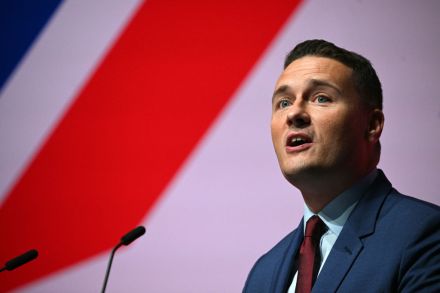
This Labour conference has largely been about Keir Starmer and his ministers making the argument for what they are doing, rather than giving any details of how they plan to achieve it. Wes Streeting’s speech to the hall in Liverpool this morning fitted that pattern. He didn’t announce anything new. Instead, he set out quite how big the challenge was, and made the argument for what Labour planned to do. He told members: We can only deliver recovery through reform. Without action on prevention, the NHS will be overwhelmed. Without reform to services, we’ll end up putting in more cash for poorer results. That’s the choice. Reform or die. We choose reform.

Keir Starmer needs to sell his government

From our UK edition

Keir Starmer has his big speech today at Labour conference and, like Rachel Reeves’s offering yesterday, the Prime Minister plans to strike an upbeat tone while warning he can’t offer ‘false hope’. He will tell the hall in Liverpool that there’s ‘light at the end of the tunnel’ if the government takes ‘tough decisions now’.  He will talk about his project of ‘national renewal’, saying: The politics of national renewal are collective. They involve a shared struggle. A project that says, to everyone, this will be tough in the short term, but in the long term, it’s the right thing to do for our country.

Is Scottish Labour really back?

From our UK edition

Labour’s first conference from government in 14 years might not be taking place against an ideal backdrop, with the Prime Minister and other ministers under scrutiny for accepting designer clobber and other goodies from party donors, but there is an unlikely glimmer of hope in the form of Anas Sarwar. Unlikely, that is, because Sarwar is leader of Scottish Labour and for almost a decade that great clunking juggernaut of electoral inevitability had sputtered to a halt and begun to rust. Reduced to just one seat north of the border and in a distant third place at Holyrood, the Scottish party had become an ominous lesson in how thoroughly Labour could be sidelined by a populist rival. There were times when serious Labour people wondered if the party would ever see majority government again.

What ‘rot’ is Keir Starmer talking about?

From our UK edition

With the elections over, it might be time to reflect on what Sir Keir Starmer means by ‘rot’ in the ‘foundations of this country’. What foundations are those? Political? In the democracy (‘citizen-power’) invented by the Greeks, men over the age of 18 meeting in assembly took all decisions that our politicians take today and, aged over 30, all decisions in the courts. It lasted for 180 years (508-322 bc), but did not survive, being characterised as ‘the rule of the poor, looting the rich’.  The Romans invented republicanism (‘the people’s property’). The Senate, drawn from the elites, both made the laws and occupied the various official positions – legal, financial, military etc. – of government.

The culture wars are far from over 

From our UK edition

It’s only been a month since the new Culture Secretary, Lisa Nandy, declared that the ‘era of culture wars is over’. Yet this morning the Daily Telegraph reports that teachers in training courses will be taught to challenge ‘whiteness’ in lessons, to ensure future educators are ‘anti-racist’. The guidance in question has emerged from universities, rather than from the government itself – specifically from the National Education Union in England (and funded by Newcastle University) and from ten universities north of the border who have endorsed an ‘anti-racism framework’ drawn up by the Scottish Council of Deans of Education.

How serious is the Starmer sleaze row?

From our UK edition

Another week, another accusation of sleaze in relation to the Labour party. After initially winning some plaudits over the summer recess for his handling of the riots, the new Prime Minister is now fighting fire on several fronts – from growing unrest over the Treasury decision to limit the winter fuel allowance to questions over the wisdom of the party’s approach to settling trade union pay disputes. But the most striking of the criticisms is the ongoing standards row. In opposition, Starmer regularly promised to ‘clean up’ politics and launch a ‘total crackdown on cronyism’. This pledge makes up a chunk of Labour’s election manifesto with the promise of a new ‘Ethics and Integrity commission’.

Labour’s outrageous attack on academic free speech

From our UK edition

In an extraordinary outburst, a government source has described the new Higher Education (Freedom of Speech) Act, introduced by the Conservatives, as a ‘hate-speech charter’. This is an outrageous distortion of the new laws that aim to guarantee free speech within universities. The best that can be said about that phrase is that, so long as we retain free speech, people are free to describe it that way. But doing so raises worrying doubts about what the new government thinks free speech means.   Universities have a special role in the promotion of free speech. They are, or should be, places where those teaching and those taught can try out ideas, some of which may on closer examination turn out to be misconceived.

The myth of Britain’s fleeing non-doms

From our UK edition

According to popular imagination, the skies over Britain have been full these past few months of fleets of private jets carrying their non-dom owners to fiscally safer climes. According to your point of view, this has either rid the country of parasites or denied us investment and trickle-down wealth. Two glossy reports pumped out by financial companies in the past month seemed to promote the idea and were immediately leapt upon by those who oppose the abolition of non-dom status. First, there was the UBS Global Wealth Report 2024, which predicted that the number of dollar millionaires living in Britain will plunge by 17 per cent between 2023 and 2028.

Labour’s union problem

From our UK edition

Less than two months in, one aspect of Keir Starmer’s government is becoming clear. This administration is closer to the trade unions than any we have had in the past 45 years. It is not just that the government has ceded readily to wage demands from teachers (a 5.5 per cent rise this year), junior doctors (22 per cent over two years) and train drivers (15 per cent over three years) – it has done so without seeking any agreement to changes in working practices. Given the abysmal productivity record of the public sector in recent years, especially since the pandemic, this is a remarkable omission. The government’s failure to represent tax-payers’ interests in these pay awards serves as an invitation for further unreasonable demands.

Labour goes to war with the Nimbys

From our UK edition

13 min listen

Over the weekend we have had some news on Labour’s housing policy. The Times have splashed on the news that in order to meet their pledge to build 1.5 million houses by 2030, councils will be given the power to buy up green belt land. Will this actually get Britain building?  Elsewhere, the Tory leadership race continues to trundle along with Kemi Badenoch giving her first interview. Is she the candidate that Labour fear most?  James Heale speaks to Fraser Nelson and Liam Halligan.  Produced by Oscar Edmondson.

How safe do you feel boarding a Boeing?

From our UK edition

‘They knocked down our old house in three hours,’ says a friend who has embarked on what he says is a conventional rebuild, nothing Grand Designs about it, on the south coast. ‘But it’s taking forever to get planning permission for the new one. They want reports on everything, from bats to highway impacts: you’d think we’re trying to build a whole huge housing estate.’ And if you do happen to be in the business of building whole huge housing estates, you’ll be eager to know whether Rachel Reeves’s reforms and ‘mandatory targets’ – aimed at delivering 1.5 million new homes in this parliament – will put rockets under the planning system or run straight into a brick wall of nimbyism, exacerbated by lack of capacity and adverse market forces.

The secret diary of Sue Gray

From our UK edition

Once we entered Downing Street a No. 10 protocol adviser took Vic upstairs to show her the facilities in the private flat. ‘That sofa’s gotta go,’ said her ladyship. ‘So has Simon Case,’ I said. The protocol officer was shocked. ‘So new, and almost without a stain,’ he protested. More than can be said for the Cabinet Secretary. For the first few hours it was easy to keep the Prime Minister busy with congratulatory calls from world leaders. He was fine once we reminded him not to shout at them like an Englishman addressing foreigners. Emmanuel Macron was overfamiliar, Giorgia Meloni tearful – it seems she had a hot pash for Rishi Sunak – and the chap from Reykjavik went all glacial (Icelandic speciality) when we refused to talk about fish quotas.

Full text: I’ll govern ‘unburdened by doctrine’

From our UK edition

I have just returned from Buckingham Palace, where I accepted an invitation from His Majesty the King to form the next government of this great nation. I want to thank the outgoing prime minister, Rishi Sunak. His achievement as the first British-Asian prime minister of our country – the extra effort that that will have required should not be underestimated by anyone, and we pay tribute to that today. And we also recognise the dedication and hard work he brought to his leadership. But now our country has voted decisively for change, for national renewal and a return of politics to public service.

Why should Putin be allowed to keep seized Russian assets?

From our UK edition

The seizure of enemy treasure, formerly known as plunder and pillage, is an ancient tool of war. Though still practised in the world’s nastiest conflict zones, it’s a tricky business within a rules-based international order. The G7’s agreement to lend $50 billion to Ukraine – using income from $300 billion of frozen Russian assets to cover interest and repayments on the loan – is a vivid case in point. And some would say, a lily-livered half-measure. The key feature of the deal is that it does not actually claim ownership of Russian loot – which however ill-gotten is mostly held in EU banks in the form of western government bonds. It merely diverts interest payments due on the bonds from the issuing governments.

How Keir Starmer plans to rule through the courts

From our UK edition

Never mind Labour’s promise not to raise income tax, national insurance or VAT – the party will soon be jacking up taxes for everyone. That sums up the Conservatives’ attack line for this election campaign. But in focusing almost wholly on tax, the Tories are missing what threatens to become the real theme of a Keir Starmer government: the eclipse of elected politicians and the continued draining away of power to the courts. The Labour leader effectively decriminalised assisted dying in 2009, before he was even an MP According to polls, Labour is heading for a majority of more than 200. That in itself would clip the wings of the House of Commons.

Have you had the school gate VAT chat?

From our UK edition

Another day closer to the general election and I’m at my daughter’s prep school in Oxfordshire. As has come to be the norm, I’m having a ‘VAT chat’ with a fellow mother. Of course, we’ve known about Labour’s plan for months. It will lead to a likely 20 per cent rise in private-school fees. Recently, however, these VAT chats have intensified and become louder. ‘To think that other parents would vote Labour given what’s coming enrages me,’ a friend says I begin with my usual opening gambit. ‘Isn’t it awful?’ I say, trying to convey my real sense of desperation that I will have to take my daughter out of the school that she loves, that our way of life is for the chopping block.

Bury the Canaletto, now

From our UK edition

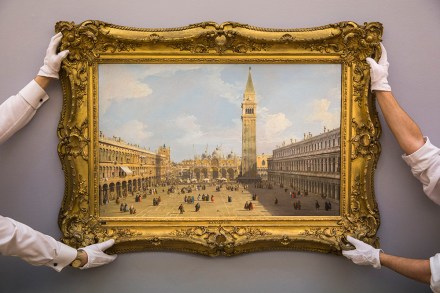
I’m not on the guest list for the Duke of Westminster’s wedding, but I wish him luck anyway. Mind you, the young seventh duke – Hughie to his friends – hardly needs more luck than has already come his way in the form of the £10 billion Grosvenor property empire in London and elsewhere. When the playboy second duke known as ‘Bend’Or’ died in 1953, Pimlico had to be sold to pay record death duties. But the Grosvenor family has taken a firmer grip on tax planning since then, their fortune multiplying despite the dukedom passing through three cousins to reach the father of today’s incumbent, who inherited via reportedly tax-proof trusts in 2016 and should have little to fear from a Labour regime. In other stately drawing rooms, however, teacups are rattling.

Labour’s plans to rewrite the National Curriculum

From our UK edition

Michael Gove’s decision to stand down in this election was a reminder that the one really bright spot in the past 14 years was the education reforms he steered through between 2010 and 2014. These policies were vindicated in the most recent PISA (Programme for International Student Assessment) survey, which showed England climbing the OECD’s international league table and outperforming Scotland, Wales and Northern Ireland. In maths, England rose from 17th place in 2018 to 11th in 2022, whereas Scotland, significantly above England in 2010, fell below the OECD average. I was involved in the most successful of these reforms, the free schools programme.

Private schools can’t complain about Labour’s VAT raid

From our UK edition

Of course Labour’s policy of charging VAT on private school fees is all about throwing a bit of red meat to those in the party who are motivated by class envy. Why otherwise expend so much political effort on a policy which in the opinion of the Institute of Fiscal Studies will only raise £1.6 billion a year? And that, of course, is mere guesswork. No-one really knows how the parents of private school pupils will really behave when whacked with a 20 per cent uplift in fees. Even if parents don’t withdraw pupils immediately, many might be tempted to do so at the end of prep school – and it will certainly impact on the decisions of parents whose children haven’t yet reached school age.

Why is Rachel Reeves so proud of working at the Bank of England? 

From our UK edition

We don’t know much about what taxes she will impose. Nor do we have many clues as to how she will boost growth, or find the money to improve public services. Still, not to worry. It turns out that we can, at least according to her feed on X, trust the shadow chancellor Rachel Reeves to ‘run the economy’ for a very simple reason. She used to work at the Bank of England, and apparently they know about that kind of stuff over there. There is just one problem. In reality the Bank is not as brilliant as Reeves seems to think it is – and it is questionable, to put it mildly, if working for it really qualifies you for anything. For anyone wondering if the Labour government is likely to improve the UK’s dismal economic outlook, Reeves had some reassuring words this weekend.

Why it’s time to vote Labour

From our UK edition

Most people don’t belong to a political tribe. They vote pragmatically. When an election comes round, they ask themselves how well the party in power has performed in government and try to decide whether it looks likely to improve their living standards in the future. In next month’s general election, millions of pragmatic middle-of-the-road voters, who have supported the Conservatives in every election since 2010, will be wondering whether the party deserves their support yet again in 2024. The current team at the top of the Labour party are serious people of integrity and ability. For nearly 20 years I was a member of the Conservative tribe.

Inside Labour’s fight with the unions

From our UK edition

By the end of the year, Britain may be one of the few countries in the democratic world where the right is losing. In America, Donald Trump is the favourite to win. Ahead of next month’s European Parliament elections, momentum is with Germany’s AfD, Marine Le Pen’s National Rally and Austria’s Freedom party. Migration is the most pertinent issue pushing Europe rightwards, but many voters are also turning to insurgent right-wing parties as a rebellion against the cost of net-zero policies. Labour sees an electoral benefit in sticking to its green energy plans to stop voters defecting to the Greens In the UK, the future of green scepticism looks somewhat different.

The deluge: Rishi Sunak’s election gamble

From our UK edition

‘Only a Conservative government, led by me, will not put our hard-earned economic stability at risk,’ said Rishi Sunak as he announced a general election on the steps of Downing Street in the pouring rain. Upon these words, the Labour anthem ‘Things Can Only Get Better’ boomed out from the street. The din made the rest of his speech nearly inaudible. His suit jacket went from wet to soaking. ‘It’s bizarre,’ said one former minister. ‘How are we supposed to trust No. 10’s judgment when no one in the group even knows what an umbrella is?

Can Starmer and Reeves add some fizz to the economy?

From our UK edition

If the 0.6 per cent first-quarter GDP uplift reported by the Office for National Statistics is sustained for the rest of this year, Rishi Sunak will be able to claim – as he waves goodbye – that he and Jeremy Hunt have succeeded against their naysayers in dragging the UK economy from pandemic depths back to the level of ‘trend growth’, around 2.5 per cent per annum, that used to be thought of as normal. That’s spookily in line (as is the path of inflation) with Ken Clarke’s achievement as Tory chancellor in 1996 ahead of the election that swept Blair and Brown to power the following May.

How violent are prisons?

From our UK edition

Name calling Springwatch presenter Gillian Burke says she finds it ‘jarring’ to call animals by their English names, preferring Swahili. Some popular Swahili translations: – Elephant: tembo/ndovu – Giraffe: twiga – Lion: simba – Hyena: fisi – Hippopotamus: hippopotamus – I’m fed up of paying for a TV licence: Nimechoka kulipa leseni ya TV Full Marx A Labour politician named Karl Peter Marx Wardlow was elected as a councillor in Stockport. The fondness for left-wing parents to name their children after their political heroes is most obvious in Keir Starmer – his first name is also shared with Keir Mather, who won the Selby and Ainsty by-election for Labour last year.

Can Ben Houchen save Rishi Sunak?

From our UK edition

12 min listen

Tomorrow, voters go to the polls for the last set of local elections in this parliament, alongside 11 mayoral elections in England, 37 police and crime commissioner elections in England and Wales plus the London Assembly elections. Could Ben Houchen, Tees Valley Mayor, help turn Rishi Sunak's fortunes around? You can read James Heale's assessment of the key battlegrounds here.  Also on the podcast, a look at rumours that Labour are in talks to water down their employment policies.  Lucy Dunn speaks to James Heale and John McTernan, former adviser to Tony Blair.

Has Angela Rayner redeemed herself?

From our UK edition

10 min listen

With Rishi Sunak and Keir Starmer away, Oliver Dowden and Angela Rayner stepped in for PMQs today. Questions quickly turned to the long running row about Rayner's tax affairs. Did she redeem herself?    Also, the prime minister has announced further UK military spending, confirming it will rise to 2.5% of national income by 2030. Does the move cause problems for Keir Starmer?  Katy Balls speaks to James Heale and Isabel Hardman.  Produced by Megan McElroy.

Why do MPs send nude pictures of themselves?

From our UK edition

Adam Dyster has gone to work for the shadow Defra secretary Steve Reed. I admit this is not an appointment which would normally trouble the political scorers, but it is a straw in the wind. Mr Dyster was, until recently, the adviser to both the chairman and the director-general of the National Trust. As Zewditu Gebreyohanes points out in her new pamphlet, ‘National Distrust: the end of democracy in the National Trust’, it was against the interest of the Trust that Mr Dyster advised both, since it blurred the necessary governance difference between the trustees and the management. Mr Dyster was previously, in the Jeremy Corbyn era, the national organiser of Labour’s environment campaign, influencing, he says, the party’s general 2017 election manifesto.

How much trouble is Angela Rayner in?

From our UK edition

10 min listen

Angela Rayner has faced fresh allegations related to her taxes. Keir Starmer and other MPs in the shadow cabinet have come to her defence. Could these accusations jeopardise her position as shadow deputy Prime Minister? Also on the podcast, what are Richard Tice's plans for Reform? Natasha Feroze speaks to Katy Balls and James Heale.

Inside Sue Gray’s Labour party

From our UK edition

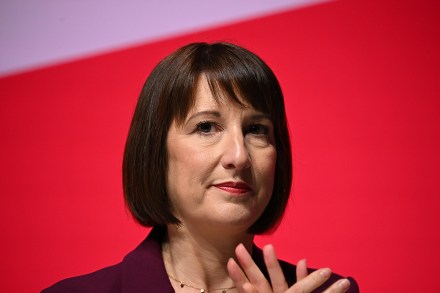
At 8.30 a.m. each morning, Keir Starmer holds a meeting with his inner circle to go over the business of the day. Once, these meetings were mainly filled with unelected aides, but now they are attended by senior shadow ministers, such as Labour’s campaign co-ordinator and Blairite old-timer Pat McFadden or the shadow cabinet office minister and Brown-ite Jonathan Ashworth. Starmer’s deputy, Angela Rayner, may drop in too. If Rachel Reeves can’t make it, one of her shadow treasury aides goes in her place. The new setup is one of the many measures Sue Gray has brought in since she was appointed Starmer’s chief of staff a year ago. Her aim is to strengthen ties between the Labour leader and his shadow cabinet.

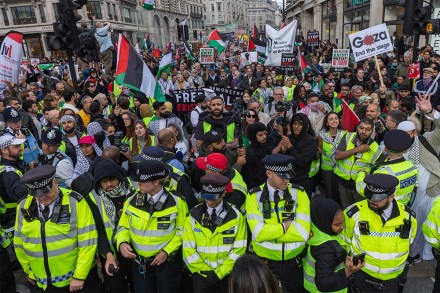
Letters: policing pro-Palestinian rallies isn’t an exact science

From our UK edition

Call for common justice Sir: Rod Liddle’s piece on the true desires of Palestinians was rare in its acceptance of the complexity of aspiration (‘What Hamas promised its electorate’, 28 October). People cleave to those who stand for their best hopes. They voted for Hamas. Rod ends saying only Israeli Arabs in his experience did not loathe Jews. Why would they? Presumably being the right side of the ‘peace’ wall, they had no fear of losing their birthright to illegal settlers acting in defiance of UN resolutions with official acquiescence. If the Israeli rule of law could have extended to the occupied West Bank Arabs, then there would be no indefensible double standard. It is clearly a missed opportunity and did not need a ‘two state solution’, just common justice and sense.