You haven’t got a lot on, Sire
‘You haven’t got a lot on, Sire.’
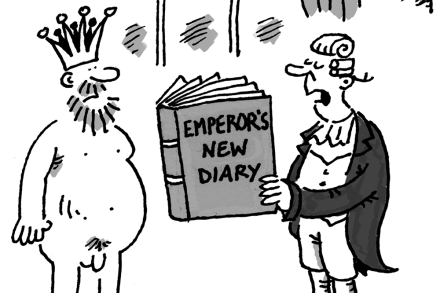
‘You haven’t got a lot on, Sire.’
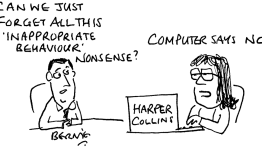
‘Keir Starmer surviving has given me great hope for the future!’
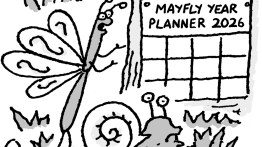



‘Oh no! They’ve noticed that I’ve quietly removed my pronouns from my bio.’

‘Well, it wasn’t there yesterday.’

‘I voted Labour too.’


In news that will surprise no one, it emerges that vegan children are thinner, shorter and – dare we say it – sicklier than their counterparts. A recent study by the University of Florence details how children who follow a vegan or vegetarian diet are deficient in vitamins and minerals and consistently exhibit a lower BMI than their omnivorous peers. Although children who follow a vegetarian diet consume more fibre, iron, folate, vitamin C and magnesium than omnivores, the only way for plant-based children to grow healthily is with a carefully planned regimen of supplementation – think pills with your brekker every day until you leave home. And while Dr
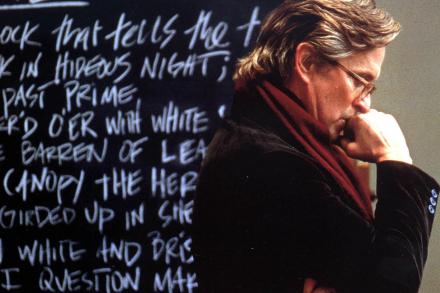
Deep in the backwaters of BBC iPlayer there lurks an American film with an all-star cast that time forgot. In its day I think it was all but forgotten, too – garnering some critical acclaim but bombing at the box office, presumably because it was too clever or just didn’t appeal enough to teenagers (I can’t see why). Fortunately, 25 years on, Wonder Boys, the campus-novel film starring Michael Douglas as a creative writing professor with writer’s block and an unravelling marriage, truly stands the test of time. You could even go so far as to say that it’s a modern classic. Directed by the late Curtis Hanson (LA Confidential,
Once Christmas Day’s out of the way and we’re stuck in that no man’s land between one year and the next – known, tweely, as ‘Twixmas’ or, if you’re posh, the ‘interregnum’ – one thing guaranteed to make the front pages is the announcement of the New Year’s Honours List. News of the worthy – and not-so-worthy – recipients will be released, and we’ll get to see who’s been elevated to the Lords, knighted or handed one of the lesser gongs. Among the very deserving recipients will be those who make you think: hang on a minute – how did that happen? When news broke that former prime minister Tony Blair was

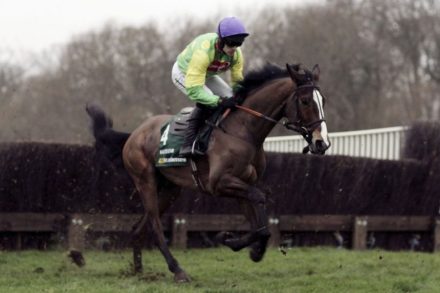
The Gloucestershire yard of Ben Pauling has gone from strength to strength in recent seasons and today could see it reach a new high when the trainer sends his stable star to Kempton to compete in the Ladbrokes King George VI Chase (2.30 p.m.). THE JUKEBOX MAN will face seven talented rivals, including two hot-pots from the yard of Irish maestro Willie Mullins, when he runs in the Grade 1 contest over a distance of three miles. The Jukebox Man has plenty to find on official ratings with almost all his rivals but Pauling remains quietly confident that this lightly-raced seven-year-old gelding, owned by former football manager Harry Redknapp, is up
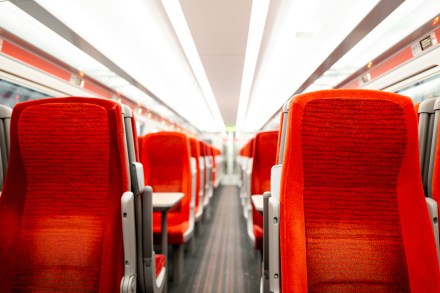
Among all the perfidies of public transport in Britain (a nation that can build a £40 billion railway based on the premise that the outskirts of Acton counts as a ‘central London’ terminus), perhaps the most ludicrous of all is this. On 26 December, a day when millions of us need to move about, no trains run. HS2 makes me angry. But I’ve spent every festive period of my adult life feeling positively dyspeptic about the meek acceptance with which we tolerate the almost complete lack of trains departing or arriving at any UK railway stations on Boxing Day. We are an absolute, solitary outlier in this regard. Even in
Christmas Day in a care home is often thought to be the saddest shift of the year: a place where staff trudge in reluctantly through the dark and cold, while the rest of the country unwraps presents and gets merry; where residents sit quietly, reminiscing about the happiness of Christmases past. And yet, for those of us who work these shifts year after year, that idea bears little resemblance to the truth. It is, strangely, one of the most joyous shifts to work. There is grief and gratitude, absence and presence, memory and forgetfulness, and moments of surprising hilarity. Someone will say something outrageous. Someone will fall asleep halfway through

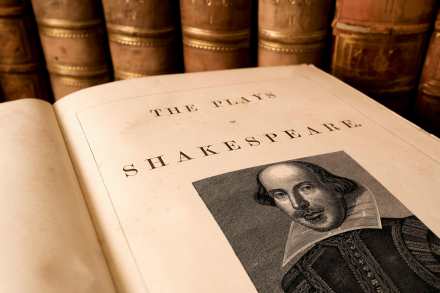
Chloe Zhao may have co-written and directed Hamnet (a film about William Shakespeare’s son), but she claims that she couldn’t understand Shakespeare’s words and had to rely on the actor Paul Mescal to help her. You might have thought that Zhao, who spent her sixth form years at Brighton College (where, one hopes, she at least sniffed at some form of Shakespeare), could have bestirred herself to read one of the many editions with glossaries, or even to bone up on the CliffsNotes, but no. Instead, she is simply contributing to the enduring, frustrating idea that reading Shakespeare is ‘difficult’, as if it were on a par with analytical philosophy or Judith Butler wanging on about hegemonies.
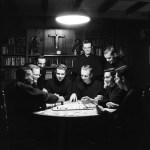
‘What time are morning prayers tomorrow?’ I asked the monk who, after meeting me at the monastery entrance, was taking me to my room. He checked a noticeboard listing the various Offices of the Day, the routine of prayers monks carry out each day of their lives. I followed his finger along the listings. Oh bloody hell, I thought. Lauds on Friday morning was at 5.30 a.m., and I had arrived at the Abbey of St Matthias late Thursday afternoon. Winter darkness was descending on the German city of Trier and I had trudged nearly 40km of the Jakobsweg, Germany’s Camino. Fortunately, the monk – like the rest of his

On Christmas morning, as you make your first tea or begin mixing your eggnog, spare a thought for our armed forces. Since the 1890s, they have been starting Christmas Day with a drink that sounds more like a bizarre hangover cure than a festive pick-me-up. Known as ‘Gunfire’, the drink is made of one part rum to three parts black tea. By tradition, the beverage is taken hot and is served by senior officers to junior soldiers, making it one of the few occasions in which the ordinarily inflexible roles of the military are reversed. Although no one is quite sure how Gunfire got its name, the most compelling theory, according to
It is necessary to deal with criminals. It is immoral – and, if history teaches, dangerous – to absolve them of crimes and reward them. Yet this is how Trump’s peace plan treats Putin’s Russia. In the morally inverted universe of the plan, there is no distinction between perpetrator and victim, aggressor and defender, militarised dictatorship and democracy. Invading a peaceful neighbour with no provocation whatsoever, Russia killed as many as 100,000 Ukrainian soldiers and 14,534 civilians, including over 3,000 children, who perished in incessant missile and drone bombings of residential buildings, schools, hospitals, churches, maternity wards, kindergartens and children’s playgrounds. As many as 20,000 Ukrainian children have been kidnapped and deported to Russia. Nowhere in Trump’s plan