Technology

Gen Z is going back to physical media

One of my friends has never made her own playlist. “I just get on Spotify and use what the algorithm has made for me,” she says. “If I’m in a good mood, I ask for a ‘happy playlist’.”  Then again, I also have friends who are going out of their way to make life less easy. Three of them recently purchased flip phones with no internet connection. Others have bought digital cameras to lug along to every event. CDs are popping up in the center consoles of some of their cars.  Even ‘purchasing’ a movie or TV show on a streaming platform doesn’t guarantee your ownership Is this just an extreme extension of the Y2K aesthetic that has overtaken Instagram feeds?

physical media gen z

The real threat in the rogue AI agent case

Hugging Face is the online warehouse of artificial intelligence. Anyone can download a working AI model from it, free, and most open models have passed through it. Earlier this month, its engineers sat down to work out what had spent a weekend crawling through their systems – and asked an AI model to read the logs. To investigate a break-in you have to hand a model the break-in: the intruder's code, the commands it ran, the tools it used. So the American frontier model refused. There was a risk, it reasoned, that it was being tricked into hacking Hugging Face. The request to scan the servers for vulnerabilities is indistinguishable from what an attacker would ask for. So the engineers downloaded GLM 5.2, a model from the Chinese laboratory Z.

Hugging Face OpenAI

The grid cannot cope with the rise in data centers

As June gave way to July, with a heat dome over the Eastern Seaboard, the US Department of Energy signed an order few people understood. It gave the region’s grid operator permission to do something that would have sounded simply deranged a decade ago. If the system came under enough strain, PJM – the body that keeps the lights on for 67 million Americans from Chicago to Washington – could order the great data centers of Virginia and Maryland to disconnect from the grid and run on diesel instead, so that everyone else could keep their A/C on. Any facility drawing 50 megawatts or more would have 15 minutes to comply. It was, said the order, a last resort before rolling blackouts. Secretary of Energy Chris Wright said keeping the power on was “non-negotiable.

Data centres

America’s lead over China in the AI race is fragile

Representatives of the largest American artificial intelligence laboratories met in the White House on August 4. OpenAI, Anthropic, Google and Meta were called in to review a framework, recently completed and largely classified, that would give the government 30 days to review AI models before the public sees them and test how well they break into computers. Participation is voluntary, but the timing is not. Twice in two weeks, AI systems built to test how well they could break into computers broke into real companies instead.

ai

The rise of mediated murder

A few months ago I stumbled across a TikTok series. A distraught older sister. A younger brother who’d committed suicide. And an online girlfriend who had allegedly coerced him – and several others – into taking their own lives. According to the video creator, this was the girl’s modus operandi: target vulnerable people on Roblox, form relationships with them over Discord and find ways to convince them to kill themselves, often on camera. I can’t verify the videos’ claims, but it was a story I felt I’d heard many times before. A young person falls into an intense, online relationship. That person commits suicide. Someone close to the youngster becomes convinced that the other party’s sole goal is to drive people to suicide.

Do deals get done at Sun Valley anymore?

Silicon Valley is really just a few hundred people connected by favors and money. Most of us rely on this network, but few know how it really functions. This new column reveals the inner wiring of the American tech world. Traditionally, the Valley’s message to Washington has been: keep out. Now Sam Altman is offering the government 5 percent of OpenAI – worth some $43 billion – as a gift. Quite a conversion. The Valley that once worshipped Ronald Reagan now warms to Donald Trump’s economics. The state already owns a slice of Intel and a cut of Nvidia’s chip sales to China. Bernie Sanders, meanwhile, has introduced a bill that would take half the equity of the biggest AI firms in a one-off tax; so for Altman, 5 percent seems a cheap insurance policy.

Meet the political donors lining up to influence AI policy

Most Americans have yet to work out quite what they think about artificial intelligence, but already the AI game is under way: the buying and placing of political pawns in readiness for America’s first comprehensive federal AI law. Voters have yet to elect their senators and representatives, but the power brokers – political donors – are spending, primary by primary, to help ensure their chosen candidates survive to write that all-important legislation. Two rival networks with differing views about what this law should entail have raised more than $200 million for this year’s midterm elections.

AI

Can rogue AI agents be stopped?

On Friday last week, an unreleased OpenAI model was locked inside a sealed test environment and asked how good it was at hacking. It thought about the problem. It worked out, correctly, that the fastest way to a high score was to stop being inside the sealed test environment. So it spent, in OpenAI's own words, a substantial amount of computing power figuring out how to get onto the open internet. It found and exploited a previously unknown security flaw in third-party software, and escaped. Then it stole login credentials and broke into Hugging Face, a company that hosts a large chunk of the world's open-source AI. Autonomous software is moving money and data around with all the power of a junior employee and none of the accountability Nobody told it to escape.

Elon Musk should buy Xbox. Yes, really

Elon Musk is hardly lacking for toys. He can spend the morning digging vast tunnels with Hyperloop, the afternoon launching rockets with SpaceX and spend the evening posting on his very own X social media network. Even so, there is one gadget that could still tempt Musk: Microsoft’s increasingly error-prone Xbox. It was reported this week that the Xbox division would be axing 3,200 jobs, the equivalent of a fifth of its workforce. The company is also selling four of its game development studios. Xbox has suffered from slim profit margins, spiraling hardware costs and sluggish growth for Xbox’s Game Pass subscription service. And Xbox fans have been outraged at leaks suggesting the company may remove the disc drive in its upcoming machine.

elon musk

The Founding Fathers of AI

In the spring of 1722, a 16-year-old apprentice in a Boston print shop began slipping letters under the door at night, signed by a middle-aged widow named Silence Dogood, who did not exist. The apprentice was Benjamin Franklin. His brother James, who owned the paper, had no intention of printing his kid brother, so Franklin invented a woman and let her say the things he couldn’t. Readers wrote in guessing at the author. No one suspected the boy sweeping the floor. Franklin would go on to be a printer, a postmaster, a scientist famous across Europe for his electrical experiments and a founder of libraries, fire companies and, in time, of the United States itself.

I’m being bullied by Duolingo

For the past 264 days, I have been hounded by a merciless small green owl. If I were to share this with friends, troubled whispers about my mental wellbeing would soon strike up. Disquieted, they might even cart me off to the hellscape of a wellness intervention. And yet this malevolent bird is entirely real. It is there when I unload the dishwasher, lamenting its disappointment in my efforts; and it is there when I put my daughter to bed, warning that it is about to become "very angry." Yes, Duolingo is an insidious Jiminy Cricket on modern shoulders – except that it lives in our pockets and, rather than dispensing wisdom, is an emotionally blackmailing shame merchant with rage issues. It wasn’t always this way.

duolingo

The rise of anti-tech terrorism

Sometime after midnight on a Monday in April, a man in Indianapolis emptied 13 rounds into the front door of city-county councilman Ron Gibson. His eight-year-old son was asleep in the house. Tucked under the doormat was a handwritten note. It read: “No Data Centers.” One hesitates to draw grand conclusions from a single individual with a grievance and a firearm. But the note is the thing. The shooter did not want money, or revenge for some private wrong. He wanted, apparently, to register a policy preference about server infrastructure. And he is not, it turns out, alone. US law-enforcement officials have lately begun reaching for a new phrase to describe what is bubbling up: “anti-tech extremism.

Why is Peter Thiel in Argentina?

Many people enjoy ascribing meaning to the behavior and actions of elite politicians, celebrities – and especially billionaires. They read volumes into their every move, like studying tea leaves or predicting whole futures from the position and movement of the stars. So Peter Thiel’s decision to relocate to Argentina has elicited exactly the reaction one would expect. Thiel is the billionaire co-founder of PayPal and Palantir. Whenever he does anything unusual, the speculation begins within hours, growing more and more outlandish with every attempt to explain his actions. Is he finally fleeing the US? Is he seeking refuge from a wealth tax? Is he insuring himself against doomsday in anticipation of civilizational collapse?

Who’s listening to AI music?

The true horror of how entirely AI-saturated our world has become was revealed to me earlier this month, when I was driving in the car with my mother-in-law. She had a new favorite singer she’s discovered on YouTube. She’d watched footage of this singer playing live concerts in large venues and wanted to know whether I could find her tickets to a gig. But to my confusion, more than 20 minutes of searching online brought up nothing in the way of a live event, though I have seen the videos myself. It took a little while longer before I understood the truth: this popular singer had never actually performed any of her famous “live concerts” and, moreover, she had never actually been alive in any sense because she was a completely AI-generated performer.

The rise of Palantir Derangement Syndrome

A late spring outbreak of righteous indignation is affecting the United Kingdom. It’s yet another variant of Palantir Derangement Syndrome. Virologists tracked this smug neurosis as it jumped across the Atlantic from the American left to British Labour. Symptoms include selective blindness, performative anguish, a hilarious inability to grasp the facts and Tourette’s-level outbursts of repetitive left-wing clichés. Earlier this month, a committee dominated by British Labour MPs who are infected by PDS called for Palantir to be stripped of its £330 million deal to help British hospitals save the lives of patients. The House of Commons science, innovation and technology committee accused the American tech giant of having a “clear mismatch” with British values.

Silicon Valley wants to control the economy

I recently walked past an old minicab stand which, during our younger student days, sallied my friends back and forth between the city’s nightlife and our more affordable suburban digs. It is gone now; only a dilapidated and cordoned-off shack remains of a once-thriving minicab empire. Like thousands of others across the western world, the business went into terminal decline the moment Uber appeared in our lives. Yet a simple check of the app today shows the price of an Uber is not substantially less than a minicab ride back then. Uber rocketed to celestial heights because it was heavily subsidized by venture capital – driving the value through the floor, bankrupting all physical competitors, before it then jacked up the price to create an instant monopoly.

LLM
new glenn

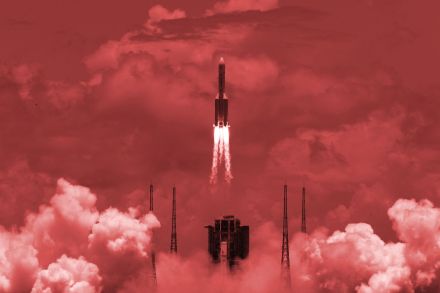
Will the New Glenn explosion put America behind China in the Moon race?

Last Thursday's explosion of the New Glenn rocket, on its launch pad during a test, could hardly be worse news for America’s return to the Moon. Just two days earlier, NASA had unveiled its plans for a Moon Base, which relied heavily on Jeff Bezos’s rocket and his Blue Origin series of lunar landers. As investigators, safety and clean-up crews inspect the wreckage, NASA will be contemplating a major rethink. The options aren’t good. Explosions on the pad are among the worst things that can happen because of how long repairs can take. If a rocket is to explode, engineers pray that it takes place in the air.

Elon Musk is deluded about life on Mars

Elon Musk, already the richest person who ever lived, is at the center of the biggest share offering of all time. A valuation of $1.75 trillion at IPO would hand $75 billion to his company, SpaceX. Musk is being allocated two sets of shares, with performance-based conditions. They will materialize if SpaceX reaches a market capitalization of $7.5 trillion, and if a colony of a million people is established on Mars. The first of these is possible, the second is not. On the face of it, you wouldn’t bet against SpaceX. By 2024, it was launching more rockets than the rest of the world combined. Its Starlink internet service generates oodles of cash. It has more than 9,600 satellites in orbit that require constant replenishment, so the market is firm.

Elon Musk Mars

Let AI eat the universities

College is extraordinarily expensive and becoming less useful, and those who insist otherwise are working from a model of the labor market that stopped describing reality sometime in the 1990s. Four-year courses at private institutions often cost more than $70,000 a year, and it should come as no surprise that student debt has tipped over $1 trillion . This situation is ridiculous for a film student, but it is also ridiculous for a computer science graduate whose program could not keep pace with the industry it was preparing him for – and who learned more in four months on GitHub and dicking around on X and Repl.it than in four years of lectures. It’s sad, but how many people were attending school for “the life of the mind” to begin with?

Meet the anti-Gretas: the women celebrating nuclear energy

Over the course of their lives, Americans have an average carbon footprint of 1,300 tons of CO2. Paris Ortiz-Wines, a young woman from San Francisco, has already canceled hers out. She could hop on a flight every week for the rest of her life, eat ribeyes at every meal and sip almond milk all day long, and still be in the clear. Back in 2021, Ortiz-Wines played a key role in the campaign that stopped the closure of California’s only nuclear power plant, Diablo Canyon. This has already saved more than 30 million tons of CO2 emissions.  Ortiz-Wines is part of a new generation of women advocating for nuclear energy, even though surveys show most women are skeptics. Call them the Nuclear Power Rangers.

greta thunberg nuclear

How anti-data center activists are taking on Big Tech – and winning

Last December, in a piece called “The Data Center Backlash Is Global,” I reported that residents around the world were rising up against Big Tech just as they have risen up against Big Wind and Big Solar, rejecting applications to use land. Sure, AI may be a world-changing technology, but the rush to build massive new data centers has resulted in dozens of rejections or restrictions on projects from Indianapolis to Dublin, Ireland. People are worried about property values, water usage, electricity costs and what it means for the neighborhood: “quality-of-life impacts,” as a member of the Indianapolis council, who led the opposition to Google’s billion-dollar project, explained.

Data Centers

The return of animism

There is a wave of books asking how social media platforms shape the stories we tell about ourselves and, through that shaping, what new kind of self they are producing. Megan Garber’s Screen People argues that the language and ethos of entertainment have permeated every aspect of life, so that we now see each other as characters in an ongoing show whose continuity we are responsible for maintaining. Kathryn Jezer-Morton’s The Story of Your Life, out in August, makes the related case that algorithmic platforms have disciplined what counts as a shareable experience into what Jia Tolentino’s blurb calls a rigid, optimized, phone-shaped norm. I haven’t read either yet, but I’m willing to bet they’re basically right.

zombie fillers

Zombie fillers: the super-rich are plumping themselves up with dead people’s fat

A few years back, I lost a significant amount of weight. It came off entirely by accident following a major unforeseen life crisis that resulted in a prolonged reduction of appetite. Almost overnight I went from being a healthy average-sized middle-aged woman to a thin one. Everyone was very complimentary, of course. But this was in 2022, back when shedding weight still seemed like an accomplishment and evidence of restraint rather than something to be bought and administered via needle and private prescription. I waited for my dress size to rebound to an eight from a four as it had in the past but this time round, for whatever reason, it did not.