Sometime after midnight on a Monday in April, a man in Indianapolis emptied 13 rounds into the front door of city-county councilman Ron Gibson. His eight-year-old son was asleep in the house. Tucked under the doormat was a handwritten note. It read: “No Data Centers.” One hesitates to draw grand conclusions from a single individual with a grievance and a firearm. But the note is the thing. The shooter did not want money, or revenge for some private wrong. He wanted, apparently, to register a policy preference about server infrastructure. And he is not, it turns out, alone.
US law-enforcement officials have lately begun reaching for a new phrase to describe what is bubbling up: “anti-tech extremism.” Two months before the Indianapolis shooting, a man in Illinois was arrested for threatening to murder a developer who was planning a data center near his home, as well as city officials involved in the project. In California, a lawsuit between a developer and a campaign group trying to block construction revealed online comments cheerfully proposing that the developer’s chief executive be dispatched “like Luigi did with the United Healthcare CEO.” For the blessedly unaware, this is a reference to Luigi Mangione, who is accused of murdering Brian Thompson in December 2024 – an act that a disconcertingly large share of the internet treats as a folk triumph.
Tesla has become a national target after Elon Musk attached himself to the Trump administration. The FBI logged arson, gunfire and vandalism against Tesla dealerships, charging stations and showrooms across at least nine states, as well as Molotov cocktail attacks in Oregon and Colorado and the torching of seven charging stations outside Boston. A showroom in Albuquerque was hit with homemade napalm and decorated with the words “Die Tesla Nazi.” The then-attorney general called it domestic terrorism.

Spare a thought for Musk’s nemesis, Sam Altman, too. Days after the Indianapolis incident, a man threw a Molotov cocktail at the OpenAI CEO’s house before proceeding to the company’s headquarters where he planned to, in his own words, “burn down the location and kill anyone inside.” His manifesto, recovered by the authorities, called for the assassination of AI company CEOs and their investors. What unites the man with the rifle in Indianapolis and the masked youth lobbing a gasoline bomb at a charging station? Seemingly nothing, except a general sense of hostility toward tech companies and their owners. This is not a movement with a membership list. It is a mood, and moods are harder to police than organizations. But there are still a few identifiable causes.
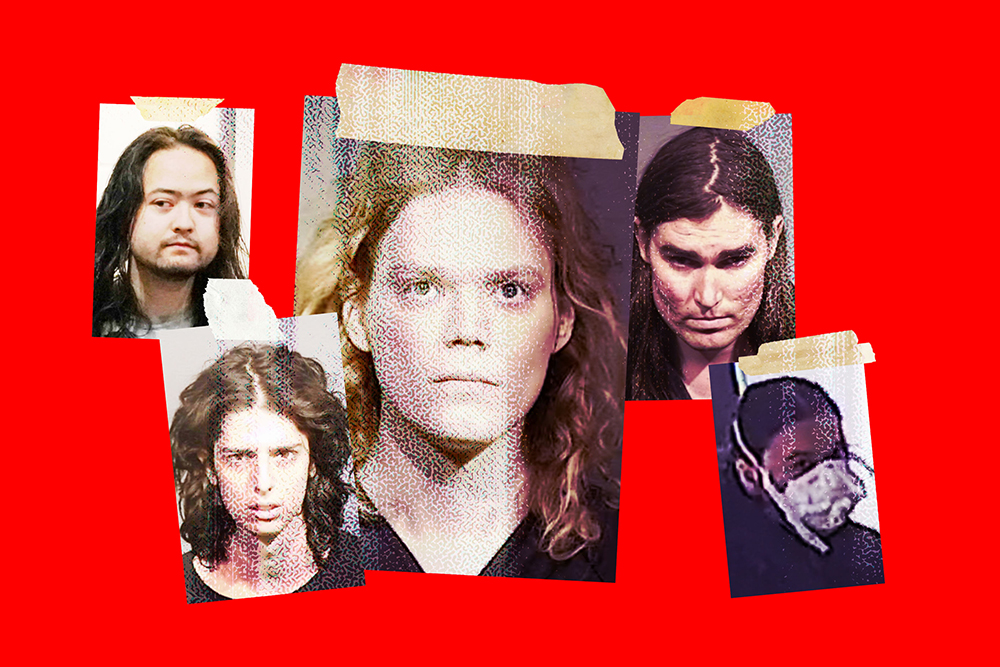
There is, first, the phenomenon of AI doom. The conviction that artificial intelligence is an existential threat to humanity is now respectable enough to be debated in the pages of serious magazines and unhinged enough, at its fringes, to have produced an actual body count. The so-called “Zizians” have been linked to six deaths between 2022 and 2025. They are a splinter cult of Bay Area rationalists who appear to have reasoned their way from “machines may kill us all” to “therefore we may kill.”
The Altman firebomber also appeared convinced that AI-powered doom was nigh. When a worldview holds that a piece of technology might end the species, we must contend with the fact that sincere believers may turn to violence. Apocalyptic logic licenses apocalyptic behavior. Then there is the older, more familiar strain: the leftism that regards the wealthy not as people to be taxed but as people to be punished, and that has discovered in the figure of Mangione a kind of patron saint. In this way of thinking, any sufficiently rich man and any sufficiently large building he owns is fair game. Now there is a wave of anxiety about AI putting millions out of work – and the creation of a much-discussed “permanent underclass.” Nothing radicalizes quite like the belief that a machine has taken your job and a billionaire has pocketed the difference.
But the part of this story that interests me most is the one nobody in polite company wants to name. Not so very long ago, the tech giants were the vanguard of the progressive movement. They were happy to deplatform whomever the left disliked. The activists of the anti-“disinformation” industry advised the trust and safety teams, and the trust and safety teams did as they were advised. It was a cozy arrangement, one that I spent a good chunk of my career documenting and criticizing – although my ire at Silicon Valley’s censors never motivated me to lob a Molotov cocktail at a tech boss.
Law enforcement has begun using a new phrase to describe what is bubbling up: ‘anti-tech extremism’
Then Musk bought Twitter, reopened the doors and the arrangement collapsed. One by one, the other oligarchs – sensing the changing electoral winds and their own commercial interests – followed Musk in showing the disinformation consultants the exit. The fury this provoked among these progressive former censors has been something to behold. At a counter-disinformation jamboree at Cambridge not long ago, one researcher, Robin Berjon, mused aloud that European states might have to “use the military” to force American platforms to get in line. “If you do just regulation,” he explained, “you have to be willing to go all the way up to force.” He then added, with the air of a man remembering he was in public, that he was not suggesting, “We should go and start shooting Google just yet.” Yet.
Mr. Berjon is, I should say, an outlier –not in his sentiment but in his candor. Most of his colleagues would never dream of saying such a thing into a microphone. But the underlying wish – to bring the recalcitrant platforms to heel by whatever means – is now thoroughly mainstream on one side of the aisle. The Center for Countering Digital Hate announced as a goal for 2024 its intention to “kill Musk’s Twitter.”
We have spent the past few years being told that words are violence, that platforms which host the wrong opinions are complicit in harm, that the people who run these platforms are evil technofascists and that their inventions are as dangerous as the atom bomb. We should not be surprised that some individuals will take this to its logical end. Many people truly believe that because tech barons are “evil,” they are a legitimate target. Whose words are causing violence now?
The disinformation researcher who jokes about shooting up Google and the man who shoots up a councilman’s front door are not the same person. But they are drinking, it seems to me, from the same poisoned well – the conviction that the technology industry is not a collection of companies to be regulated or boycotted or simply disliked, but a mortal foe to be destroyed, by any means necessary.





Comments