Society

Why does the Latin mass prevail?

The Pope is visiting Lebanon and Turkey. Will anyone be raising the vexed question of the Latin mass and sacraments with him and asking him exactly why it is so vexed? Though Jesus spoke Aramaic, the New Testament first appeared in Greek in the 1st century ad because that was the common language of the Mediterranean. It remained the language of the liturgy until Pope Damasus I (d. ad 384) invited St Jerome to translate the whole Bible into Latin (the Vulgate: vulgatus, ‘widely used, common’). The Roman empire collapsed in the 5th century ad and local languages started replacing Latin, but the Roman liturgy remained standard in western Europe.

The conservatism of Tom Stoppard

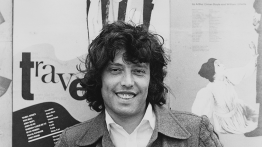
Sir Tom Stoppard, who died last week, never wrote a memoir, but he did sort of speak one. Just over ten years ago, he told me that he and his new wife, Sabrina Guinness, had become tenants of an old rectory in Dorset. I asked him if he would therefore speak as guest of honour at the AGM of the Rectory Society, a fan club for existing and former clergy houses which I invented in 2005. The AGM always takes place in a central London church, and in 2015, the year I invited Tom, it was held in the Queen’s Chapel beside St James’s Palace. Beyond expressing a tepid wish that

An apology to Hope Not Hate and Harry Shukman

In August, The Spectator began to investigate allegations that Harry Shukman, a 33-year-old freelance journalist, had used a fake British passport as part of a two-year undercover investigation into the far-right in Britain which was sponsored by Hope Not Hate. We published an article about this in our 6 September issue titled: ‘Dirty tricks: the sinister tactics of Hope Not Hate.’ As a result of correspondence from their lawyers, we now know the passport was not ‘fake’ at all: the true story is even more interesting. Whatever the technicalities of the deed poll process, the essential question is an ethical one Shukman’s 12-month undercover investigation led to a series of

Why British diplomacy needs the royals

Watching David Dimbleby watching the royal family, I am instantly reminded of the BBC’s other royal David. It is pure Attenborough as he examines the exotic plumage and rituals of rex Windsorianus in its natural habitat. In this week’s first episode of What’s the Monarchy For?, a three-part study of the sovereign for BBC1, Dimbleby examines royal power, engagingly prodding and poking fun at both sides. However, it ends as it starts, with our host still scratching his head. The monarchy is the first thing much of the world thinks about when it thinks about Britain Perhaps we will have an answer by the end of the final episode. For

Portrait of the week: ‘Misleading’ Reeves, trial without jury and Great Yarmouth First

Home What Rachel Reeves, the Chancellor of the Exchequer, told voters about the economy in a special press conference on 4 November was at odds with what the Office for Budget Responsibility had told her, Richard Hughes, its chairman, explained in a letter to the Commons Treasury Committee. Asked directly by Trevor Phillips on Sky if she had lied, Ms Reeves replied: ‘No, of course I didn’t.’ Sir Keir Starmer, the Prime Minister, said: ‘There’s no misleading there.’ Chris Mason, the BBC political editor, concluded: ‘On one specific element of what the Chancellor and the Treasury told us before the Budget, we were misled.’ Mr Hughes then resigned as the

How I bonded with Tom Stoppard over the classics

Many years ago, and well retired, I was working in my study when the phone rang and a voice said: ‘This is Tom Stoppard. David West put me on to you.’ West was professor of Latin at Newcastle University and Tom called him when he had queries about Latin. But he had a question about the ancient Greeks which David could not answer, so he suggested Tom try me. I have no memory of what the question was, but my answer must at least have satisfied him because he continued to throw the odd leg-break my way. To give some idea of his range of interests, on one occasion he

Should a two-bedroom flat worth £2m be called a ‘mansion’? 

Many mansions Does a two-bedroom flat worth £2 million deserve to be called a ‘mansion’? — The word ‘mansion’ is borrowed from the old French mansion, which means any old house. And so it was in English until the 18th century. It also had associations with a home lived in by a priest. — The first instance of ‘mansion’ being used specifically for a grand home was in 1512, according to the OED. In 1865, the word was being applied to lodging houses in Brighton, while the Westminster Gazette in 1893 defined it as a house with a back staircase. By 1901 blocks of flats in London were being called

Meghan's Netflix Christmas special is unendurable

On the Live Aid charity single, ‘Do They Know It’s Christmas’, Bono sings the (somewhat incongruous) line ‘Well tonight, thank God it’s them instead of you’. Although he is referring to starving children dying in poverty rather than well-heeled Americans appearing on television, much the same sentiment applies to the unfortunate ‘special guests’ who have been corralled into the latest (and, presumably, last, unless the ratings pick up dramatically) episode of With Love, Meghan, the Duchess of Sussex’s Netflix-funded wallow in self-regard and vanity. This instalment is festive-themed, and comes with all the joyful élan of a drunken department store Santa placing a lump of coal in a child’s stocking.

Junior doctors are striking for the wrong reason

Oh God, another junior doctor strike. That seems to be the feeling of the country and of the junior doctors I’ve spoken to. Certainly it’s the feeling of the consultants, like myself, who will be covering for them. Why the BMA has called another strike is clear. They haven’t got what they wanted, and their current mandate expires in early January. What is less clear is whether they should be striking at all. During the last strikes I wrote that the majority of juniors weren’t striking chiefly for a pay rise, but because their jobs and prospects of career progression are being allocated to foreign doctors who, data shows, perform

What the Blob doesn’t want you to know about ethnicity and crime

Should the police disclose the ethnicity and background of suspects in high-profile crimes, and how soon should they reveal this information? In the year since the Southport unrest – in which migrant hotels were attacked after online claims the attacker had been an asylum seeker – the British state has had to ask itself this question. While the ethnicity and nationality of criminal suspects were routinely talked about in the 1980s, since the 1999 Macpherson report into ‘institutional racism’ in the Metropolitan Police, with its concerns racial stereotyping, the police have become far more reluctant to do so. When it came to Southport, for days we were only allowed to know that

How will Britain survive without Sally Rooney?

I am not sure there are numbers small enough to capture the net literary loss to Britain of Sally Rooney’s books no longer being published here. Nonetheless, it seems that the would-be criminal bestselling author is banking on the withdrawal of her books and the television based on them being a huge deal – one major enough to shift Home Office policy in favour of Jew-haters at home and abroad. What a heavenly idea: the most politically odious, witless writer in generations being locked up till I’m almost a pensioner Rooney, a keen supporter of Palestine Action, now a proscribed terror group in the UK since breaking into RAF Brize Norton

The day net zero died

Quietly this afternoon, the government’s last remaining hope of achieving net zero by 2050 drained away. BP has abandoned its project to develop a ‘blue’ hydrogen plant on Teesside which was supposed to produce the gas at a rate of 1.2 GW. It is not just a defeat for net zero ambitions but for Ed Miliband personally, given that he had fought hard in cabinet to advance the project while Keir Starmer and business secretary Peter Kyle had favoured using the site for a rival data centre. The data centre is now likely to proceed – an energy-hungry project in place of a green energy one. It is not just

Your Party's implosion almost makes me feel sorry for Corbyn

I’ll fight you if you contradict my assertion that The Producers is the funniest film ever made. It’s celluloid perfection. And the musical – now running in the West End, do go – is almost as wonderful. But what I hadn’t realised until this weekend’s inaugural Your Party conference is that there are some people who take the film’s plot not as a brilliant comic device but as a ‘how to’ guide to running a political party. Despite a meagre 2,000 people attending the conference, they have still managed to find ways to split into a multitude of factions The Producers is about a Broadway impresario who comes up with

Anti-Semitism still lurks in Christianity's shadow

Last year I visited Lincoln for the first time. It’s difficult to resist the elevated beauty and dominant cathedral, but also hard to avoid the plaque inside, full of contrition, explaining the 13th-century blood libel, where local Jews were accused of murdering a child so as to use his blood during their rituals. The result, predictably, was yet another wave of anti-Semitism, and Jews tortured and murdered. Such obscenities would be repeated about Jews throughout mediaeval England until their eventual expulsion in 1290. Yet even after England forcibly removed the Jewish population, the Christian idea of the Jew as an outsider, whose only role in the Biblical story was a

The lost art of the British sex comedy

Today, would have been the 80th birthday of the long-forgotten actress named Mary Millington. Blonde, petite and delicately beautiful, she was the undisputed queen of an equally forgotten genre of cinema – the 1970s British sex comedy. There’s even a blue plaque in Soho celebrating Mary and her most successful film, Come Play With Me. Seamy cinemas in Soho were the natural home for Millington’s films but they were also shown in ABCs and Odeons all over the country. When I was at school, I worked at my local Odeon, which had three screens. Upstairs in screen one, you could see the big new release. Downstairs in screen two, last week’s big new

John Lewis's Christmas decorations are its tackiest yet

John Lewis’s new ‘heirloom splendour’ Christmas range features baubles that mimic a miniature vacuum cleaner, sewing machine, TV – permitted its status in the collection by dint of its bulbous antenna – and a morose-looking pink dog presumably modelled on a Staffordshire figurine. If one were to decorate an entire tree in these monstrosities, it would cost upwards of £300 – that is if you followed the advice of that other seasonal stalwart M&S, which opines: ‘We recommend 40 filler baubles as your base layer, 18 statement pieces and eight collectable ornaments for added wow factor.’ If you were to try to separate your statements from your collectibles, there’s more:

Tom Stoppard was himself to the end

‘Tom Stoppard is dead.’ For anyone who cares for the theatre, the English language, and especially for those of us who knew him, these words are as unthinkable as they are hard to bear. How can such a force of nature, such a generosity of spirit, such a voice of sanity, have fallen silent? And yet he has gone. To the end, his body emaciated by cancer, he was still the old Tom: self-deprecating but full of ideas and plans. He might have one more play inside him, he told me, but his fingers could no longer physically write and dictation somehow stopped the words from flowing. He was cared

Sir Tom Stoppard: ‘I aspire to write for posterity’

Sir Tom Stoppard, the British playwright, died at his home in Dorset yesterday aged 88. In 2019, he gave a rare in-depth interview to Douglas Murray. Sir Tom Stoppard is Britain’s – perhaps the world’s – leading playwright. Born Tomas Straussler in Zlin, Czechoslovakia, in 1937, his family left as the German army moved in. The Strausslers were Jewish. In adulthood he learned that all four of his grandparents were killed by the Nazis. His father was killed by the Japanese on a boat out of Singapore as he tried to rejoin his wife and two sons. In India his mother married again, to an English Army man who gave

Claude Lanzmann would despair of today's Europe

The late Claude Lanzmann, director of the monumental Shoah – the nine-and-a-half hour documentary about the Holocaust, released in 1985 and widely considered the greatest cinematic work on the subject – would have turned 100 this week, a destiny he missed by only eight years, dying in 2018. What would the filmmaker – who devoted almost a decade to his masterpiece, nearly obliterating himself in the process – make of Europe in 2025, a place where idealistic crowds of the young march for Israel’s annihilation, where the words ‘Dirty Jew’ are spray-painted on Parisian walls, and where, in the first six months of 2025, there were a registered 646 anti-Semitic acts