Scotland

The wrath of Nicola Sturgeon

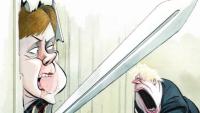
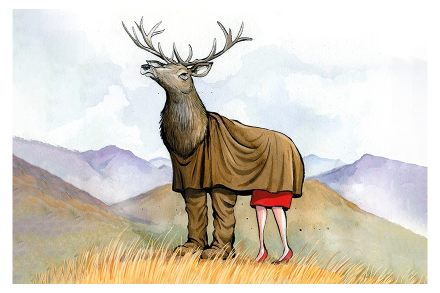
I can’t seem to find the Oracle of Delphi’s complete works. The libraries remain shut and when I go to Google I find the search engine inadequate in the matter of the ‘Complete Pythia’. So I throw the following story out there unsourced in the sure and certain knowledge that next week’s letters page looks set to be a bloodbath for me. Spectator readers are among the most learned readers around, and I know my fate if I relay any of this inaccurately. Nevertheless, here we go. Several years ago an utterance I’m pretty sure came from the Delphic Oracle lodged in my head. A foreign king (I hear you tapping ‘Dear Sir’ as I type) wanted to know whether he should go across the river and invade a neighbouring kingdom.

The great pretender: Nicola Sturgeon’s independence bluff

During the Scottish leaders’ debate, Nicola Sturgeon was asked a rather awkward question: what would she say to voters who want her as First Minister, but who certainly do not want another referendum, especially at such a delicate stage for the country? ‘What are they meant to do if they want you, but don’t want independence?’ she was asked. ‘They should vote for me,’ she replied, ‘safe in the knowledge that getting through this crisis is my priority.’ It’s amazing how quickly priorities can change.

Sturgeon can’t hide the economic costs of Scexit

Might the 2020s be the seismic decade in which the post-war consensus, that liberal democracies do not and should not break apart, is broken? Scotland's First Minister Nicola Sturgeon certainly thinks so. Her lifelong quest to break up Britain must feel closer than ever after winning last week's Holyrood elections. But there are hurdles yet to be cleared. Sturgeon insists on an exact repeat of the process that took place after Alex Salmond won an SNP majority in 2011 – even though she did not manage to replicate his success, achieving instead another minority administration. As in the 2011 to 2014 period, she wants the referendum booked and in the diary before presenting an updated economic case for Scexit. This will not hold.

Salmond’s revenge mission against Sturgeon isn’t over

Alex Salmond recently joked that if he wanted to destroy Nicola Sturgeon, 'that could have been done'. The former first minister clarified this weekend that he had only meant to point out that he hadn't called for her resignation when asked to by the Holyrood committee investigating the Scottish government's handling of allegations against him. But he has quite clearly not reached the end of his plans for revenge against his former protégé. I interviewed Salmond on Times Radio, and he told me that his current 'disagreement' with the First Minister is that she should be getting on with negotiations for independence.

Nine lessons from the elections

Here are the big things I learned from Thursday's elections and their aftermath. 1. The Scottish parliament will vote to hold a referendum on independence for Scotland — but the legislation probably won't be introduced till late 2022. 2. The earliest there would be a referendum would be 2023. 3. Boris Johnson's revealed preference is to persuade the people of Scotland of the merits of remaining within the UK, rather than exploiting the Westminster government's 'reserve power' to veto independence. He wants to avoid what would be widely seen in Scotland as the tyranny of Westminster depriving the Scottish people of a voice on their future. That means a referendum in around three years is likely — which does not mean independence for Scotland is likely. 4.

Westminster must avoid the Sturgeon trap

The challenge for the UK government in the coming months is to make Nicola Sturgeon look like a constitutional obsessive. The SNP wants to frame the situation as Boris Johnson and the Tories denying the people of Scotland a referendum. The election results suggest there is no overwhelming clamour for a second referendum, with no SNP overall majority and the votes split evenly between pro and anti-Union parties. But UK government ministers should avoid giving the SNP the headlines they crave. They should side-step constitutional questions and instead emphasise co-operation on dealing with the after-effects of the pandemic. Ministers should force Sturgeon to make all the running on the second referendum question.

How Douglas Ross proved me wrong

Douglas Ross’s first Holyrood election as Scottish Tory leader ended with the party losing two constituencies but its overall seat tally remaining at 31. The Moray MP was not a hit on the campaign trail. Robotic, shouty, angry — pick your well-worn adjective. He was eviscerated daily by a hostile press and any number of commentators lined up to say all manner of uncharitable things about him. I was one of them. Yet the results are there for all to see. Ross lost the commentariat but won the voters. The electorate had better buck up its ideas sharpish.

The SNP has no mandate for a second referendum

Tom Bradby got them started. On Friday night, the News at Ten anchor opined that ‘if the SNP can assemble a pro-independence majority’, he couldn't see ‘how it would be credible to deny them another referendum’. In fact, ‘it would make an absolute mockery of the principle of democratic devolution’.  We can expect much more of this now that the Scottish Parliament elections are over. While the SNP fell short of a majority, pro-independence parties combined crossed the 65-seat mark thanks to the Scottish Greens, a nationalist party. Nicola Sturgeon says this represents a mandate for another referendum.

How Boris can beat the SNP at their own game

The re-election of a pro-independence majority to the Scottish Parliament shows that the next five years will be dominated by the quest for a second independence referendum. Conventional wisdom is that the Scottish Parliament will pass a Bill legislating for that referendum, daring Westminster to strike it down, making the separatist position more powerful, like a constitutional Obi-Wan Kenobi. This may be how things play out. Another option, of course, is that any interested party could refer the legislation to the courts as being ultra vires. However, it would still present a risk that permission to hold such a referendum would be given, putting Westminster on the back foot once again. But there is a third way: start the independence negotiations.

Can the UK government navigate the SNP’s calls for a second referendum?

The Unionist tactical voting in Scotland makes it tempting to see the country as split down the middle between pro-independence and anti-independence voters. But this is not quite right. There is a good argument that the Scottish electorate is actually split three ways between Unionists, Nationalists and those who aren’t fully decided on the constitutional question. It is this third group who will determine the result of any second referendum. So, the UK government has to have them in mind when thinking about how to handle the inevitable request for a Section 30 order and a second referendum. The first thing to say is that the UK government should ensure Nicola Sturgeon is making the running on this. Headlines such as ‘PM: No new Scottish referendum’ are not helpful.

Will a more female Holyrood make a difference to women’s lives?

The new Scottish Parliament has never looked more female. The number of women MSPs has jumped from 47 to 58 (45 per cent) making it the highest since Holyrood was established. There are veterans of the 1999 parliament, like Labour’s legendary Jackie Baillie, whose stunning victory in Dumbarton may well have helped save the UK. And her wise counsel, honed after 22 years in Holyrood, may well help Anas Sarwar save Scottish Labour. The SNP's Christine Grahame is now the Mother of the House. The effervescent Lorna Slater, co-leader of the Scottish Greens, will bounce into the chamber to take her seat next to Patrick Harvie. And at last, Scotland has two women of colour in Holyrood: the SNP’s Kaukab Stewart and Pam Gosal of the Tories.

Alex Salmond’s comeback disaster

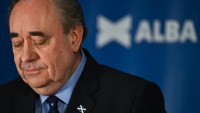
As the dust settles from Scotland’s elections and the war of words heats up over a future referendum, one thing is perfectly clear: Alex Salmond’s Alba party has been a monumental failure. The former First Minister, whose disastrous party launch six weeks ago set the tone for what followed, failed to be elected as one of the seven North East MSPs, despite much talk of ‘gaming’ the list system. The 17 seats in that region were divided between the SNP (9) Conservatives (5) Labour (2) and Green (1).Salmond himself polled just 2.3 per cent of the vote in what was once his mighty heartland, with Alba failing to win a single seat across the country.

Scots, not Boris Johnson, are blocking IndyRef2

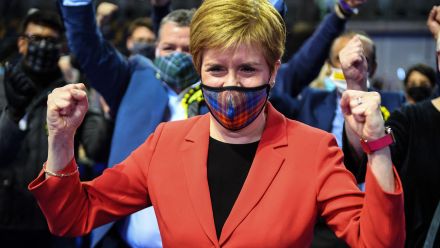
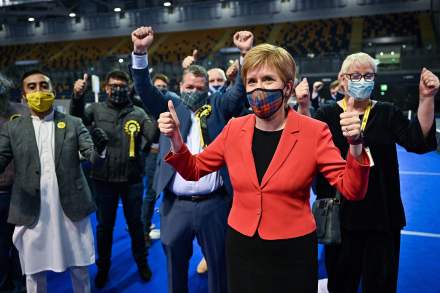
So what does it all mean? The first thing to bear in mind is that more than one thing may be true at the same time. This is, then, both a historic and thumping victory for Nicola Sturgeon and a mild disappointment. Historic because, after 14 years in power, Scottish voters have handed the SNP a fourth consecutive term in office; a modest disappointment because the SNP made little progress on their 2016 performance. Five years ago, Sturgeon lost the majority - albeit this was an accidental majority - she inherited from Alex Salmond and she failed to regain it this week. Doing so would have required everything to fall into place for the nationalists. They would have needed to pick up seats such as Dumbarton, Edinburgh Southern, and Aberdeenshire West to have a real crack at a majority.

Jackie Baillie victory deals blow to SNP majority hopes

It's a funny old business, politics. The SNP's number one target in the Holyrood election was Scotland's most marginal seat, Dumbarton. Held by Labour in 2016 by just 109 votes, the Nationalists put everything into unseating the incumbent Jackie Baillie.  It is no exaggeration to say Baillie is a hate-figure for Scottish nationalism. She is moderate Labour, staunchly pro-Union, pro-Trident (the Clyde Naval Base is in her constituency), and was a member of the Holyrood inquiry, during which she distinguished herself with fierce, forensic questioning of both Nicola Sturgeon and Alex Salmond. For all the damage they have inflicted on Labour in its one-time heartlands of west-central Scotland, the Nationalists have never been able to beat Baillie.

SNP gains from turnout surge in Scotland

You know those elections where some cold comfort can be harvested by the losing side in gains made here and there? The Holyrood vote isn’t one of them. The full results won’t be in until tomorrow but based on what we’ve seen so far, the SNP is home clear and dry. An outright majority seems probable. Labour has already lost East Lothian to the Nationalists and in Dumbarton, Scotland’s most marginal seat, its majority is just 109. Tory-held Ayr has fallen to Nicola Sturgeon’s party while the Conservatives have failed to make gains elsewhere. (They did, however, come within 800 votes of winning Banffshire and Buchan Coast.) There was an eye-popping swing to the SNP in Shetland but the Lib Dems managed to hang on.

Can Sarwar reverse Scottish Labour’s fortunes?

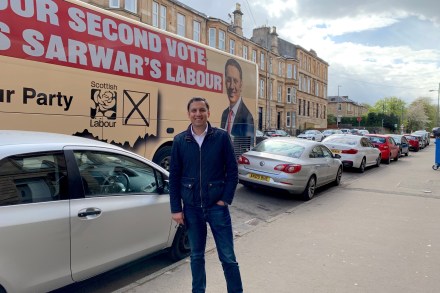
Has Anas Sarwar got what it takes to woo Scottish Labour's lost voters? I joined the recently-elected leader of the party while on the campaign trail in Glasgow and you can read my interview with him in this week's magazine. His analysis is that Labour was in danger of becoming part of the past for many Scottish voters. His solution is to stop talking about the constitution in an attempt to avoid the 'divisive' politics that has dominated the country for years now and to encourage voters to take another look at his party. He told me that the 'big mistake that other political parties are making' is to 'make these elections about the British constitution'. He added: 'Because it's a pandemic election.

A brief guide to Scotland’s 25 political parties

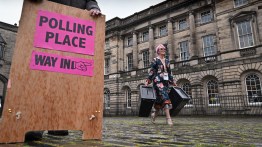
Voters in Scotland have a lively choice of parties in today’s elections to the Holyrood parliament. In all, there are 25 vying for either or both of each elector’s two votes (proportional representation, innit). As a public service and to mitigate confusion, Mr Steerpike offers this explanatory note on the Scottish political landscape. First, there’s the SNP, which is asking electors for both their votes to create a mandate for a second independence referendum. Voters who don’t support a second independence referendum and don’t want to give the SNP a mandate for one should still give the party both their votes. Because... reasons.

Can Anas Sarwar rescue Scottish Labour?

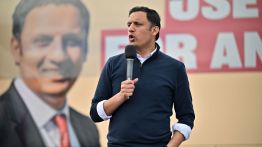
When the Scottish parliament was set up by Tony Blair in 1999, it seemed as if Labour would govern Holyrood for the foreseeable future. The Scottish Tories were a contradiction in terms. Devolution was sold as a device that would kill nationalism ‘stone dead’. Suffice to say, this plan did not quite work. The Scottish National party took power in 2007, the Tories were resurrected as the new opposition and it was Scottish Labour that ended up on the brink of extinction. Now, for the first time in two decades, Scottish Labour is on the up, with a new party leader. Anas Sarwar, 38, was elected in February so has not had long to prepare for the campaign.

Holyrood 2021: Seats to watch out for

Scotland goes to the polls today to vote for 129 members of the Scottish Parliament. Polls forecast victory for the ruling SNP but there are a string of seats where the result last time was close enough to inject some unpredictability into proceedings. SNP targets Dumbarton Incumbent: Jackie Baillie (Labour)  Majority: 109 This is the seat the Nationalists want more than any other. Politically, it is a stubborn west-coast hold-out against the glories of nationalism. Symbolically, it is home to the Clyde Naval Base and the UK’s nuclear deterrent, which the SNP wants to scrap. But perhaps most important of all is the personal dimension.