Scotland

Is Alex Salmond dreaming of a comeback?

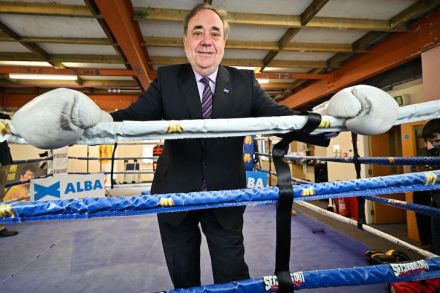
Alex Salmond is hosting a show at the Edinburgh Festival Fringe this week. It’s called ‘The Ayes Have It’ and features special guests such as old mucker David Davis, trusty lieutenant Tasmina Ahmed-Sheikh and former Commons sparring partner John Bercow. SNP notables Kate Forbes and Fergus Ewing are popping up and there will be a guest appearance from former first minister Henry McLeish. Salmond, some suspect, might be dreaming of a political comeback – but is a return realistic? Salmond is probably the only independence supporting politician in Scotland who could mount a show like this without fear of outright ridicule. By contrast, former first minister and festival regular Nicola Sturgeon has just one low key appearance, while Humza Yousaf won’t be participating at all.
Will this Scottish by-election bring down the SNP?

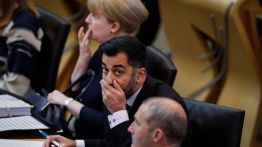
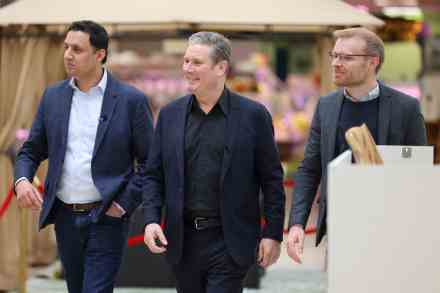
The first by-election in Scotland since the SNP’s change of leadership is a huge test for First Minister Humza Yousaf. If the nationalists lose the seat of Rutherglen and Hamilton West, made vacant when constituents recalled their MP Margaret Ferrier after she broke Covid rules, Yousaf will face difficult questions about his party’s direction of travel. As one nationalist activist puts it: 'The last SNP MP got chucked out in disgrace and Humza’s ratings are still in the minuses, so who’d bet against us losing?' Unlike his predecessor, Nicola Sturgeon — who dominated her party and enjoyed the support of the vast majority of its members — the current First Minister firmly divides opinion among the SNP rank and file.

Why Labour needs a clear victory in this Scottish by-election

The Labour party could hardly ask for better than the Rutherglen and Hamilton West by-election as a means to judge the strength of their resurgence in Scotland. Sitting on the cusp of Greater Glasgow, it is situated in the party's former central belt heartlands — an area once so Labour it was joked that votes for the party were weighed, not counted. The seat was lost in the nationalist landslide of 2015 before Labour quickly won it back in 2017. Though the party lost it again to the nationalists in 2019, it now has an eminently beatable SNP majority of 5,230. Perhaps most importantly, the by-election is taking place because Margaret Ferrier, The SNP victor in both 2015 and 2019, was suspended from the House of Commons after breaking Covid rules.

Where did it go wrong for the Scottish Greens?

Dear oh dear. Things haven’t been going well for for the Green party lately and now they’ve just got a whole lot worse. The Green's first UK parliamentarian and former leader of the Scottish Greens Robin Harper has quit the party, announcing that the Greens have ‘lost the plot’. Mr S wonders how long it took him to notice – has he been living under a rock? In a scathing letter written to his successors ‘after lengthy consideration’, the octogenarian let loose on the party he’s been part of for decades.

Robin Harper is right: the Scottish Greens have ‘lost the plot’

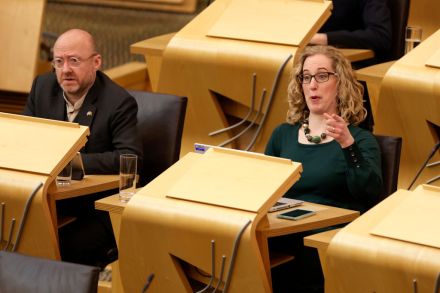
Robin Harper, the first Green parliamentarian elected in the UK, has resigned from the Scottish Greens, saying his former party has ‘lost the plot’. His resignation letter cites ‘serious concerns’ about the party’s handling of trans issues and hopes ‘the Scottish parliament will return to listening mode’ following the Cass and Sandyford reviews into gender identity services for children.  Robin Harper was and remains a man of the decent, outward-looking left, tolerant of disagreement, more interested in cooperating with his opponents than condemning them. He urges ‘a complete overhaul’ of child and adolescent mental health services.

Is Scottish Labour embarrassed by Starmer?

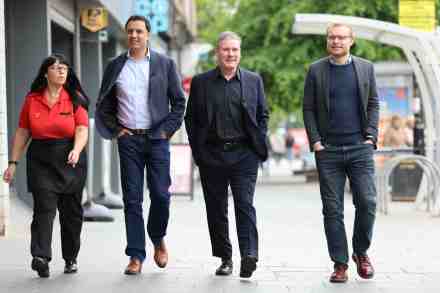
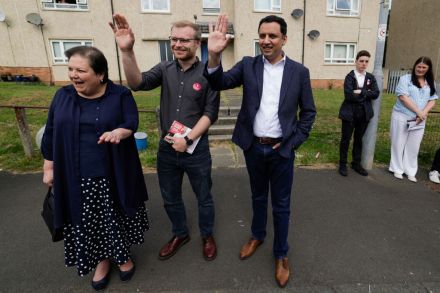
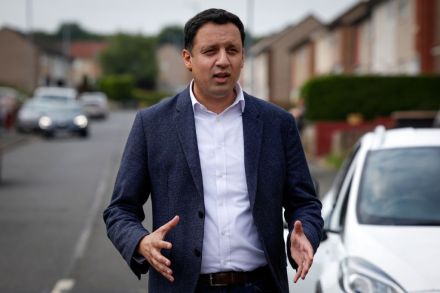
They had balloons, handmade posters and a big red van lit up with ‘Michael Shanks: A Fresh Start’ flashing on the side. The Rutherglen and Hamilton West by-election is Labour’s to lose and don’t they know it. Despite the pressure on the modern studies teacher and now-Labour candidate Michael Shanks, the atmosphere at Labour's by-election launch was relaxed – if the Glaswegian weather miserable. Former SNP MP Margaret Ferrier lost her seat on Tuesday night and constituents will face a second vote in October, a by-election that will bring the SNP and Labour head to head.  Tuesday's result was a small win for Labour – literally.

Why the SNP must cling on in Rutherglen and Hamilton West

They are the words Humza Yousaf has been dreading: Rutherglen and Hamilton West by-election. South Lanarkshire Council confirmed yesterday afternoon that Margaret Ferrier, the incumbent MP, has been recalled by her constituents via petition. Ferrier was elected as an SNP MP but now sits as an independent after admitting that she travelled between London and Scotland on public transport having tested positive for Covid-19. She is currently serving a Commons suspension for these actions.  The by-election will be a major test for the First Minister and a chance to put his nightmare first four months behind him — or extend the agony, if his party loses the seat. Rutherglen and Hamilton West used to be Lanarkshire Labour heartlands, redder than a pillar box.

The Rutherglen and Hamilton West by-election is a big test for Labour

Another week, another by-election. Constituents in Margaret Ferrier’s seat of Rutherglen and Hamilton West have voted for their MP to be removed from her seat after she was suspended from the Commons for 30 days after being convicted of breaking travel rules during lockdown. Following the rule breach, Ferrier was also ousted by the SNP, and has since sat as an independent.  More than 10 per cent of eligible voters signed the recall petition, and a by-election will now follow. Ferrier first won the seat for the SNP in 2015 before Scottish Labour took it back in 2017. In 2019, she reclaimed it, with a majority of 5,000. It means both the SNP and Scottish Labour have an imperative to win the by-election in the Greater Glasgow seat.

SNP face by-election after Margaret Ferrier ousted

Well, well, well. After almost three years of Margaret Ferrier’s Covid breaches coming under the spotlight, the SNP MP has finally been ousted from her seat in Rutherglen and Hamilton West. In the end, 11,896 people in her constituency – 14.7 per cent of eligible voters – physically signed the recall petition to eject her, a little over the 10 per cent needed.

Will regressive alcohol duties destroy Britain’s drinks industry?

What is duty on alcoholic drinks for: to raise revenue or to make us better, more sober people? A close reading of the new duty rates which were announced in the spring budget, but which come into effect today, provide little enlightenment. You can read them for yourself, but here is a summary: On beer or cider less than 3.5 per cent alcohol by volume (ABV) you will pay £9.27 per litre of alcohol in the product. (Wine of that strength would be taxed the same, but it wouldn’t be much of a wine, more a part-fermented grape juice drink.) On beer between 3.5 percent and 8.5 per cent ABV you will pay £21.01 per litre of alcohol. Unless, that is, you are drinking draught beer in a pub, in which case you will pay £19.08 per litre of alcohol.

How did the Scottish Greens end up with so much influence?

There are often complaints that the Scottish parliament lacks the ‘big beasts’ of other European counterparts. It is not a complaint, however, which can reasonably be levelled at Fergus Ewing. Ewing is a giant of Scotland’s independence movement and a giant of Scottish politics. But perhaps the thing which is most interesting about Fergus Ewing is that he is not a socialist. He has that in common with much of the traditional SNP support, and much of the SNP support outside the central belt — but it increasingly marks him out from the Scottish government, led by his very own Scottish National party. Last Wednesday, Ewing appeared on Holyrood Sources, the weekly podcast that I jointly host.

How we could reach net zero without dumping oil

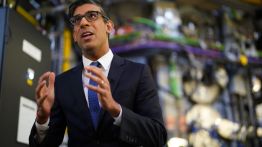
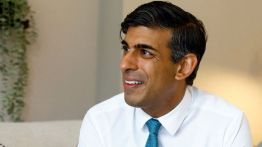
Rishi Sunak has shown no indication that he is considering dumping the government’s legal commitment to achieve net zero by 2050. Nor, so far, has he indicated that he will relax any of the controversial targets for the next decade or so, such as banning new gas boilers or petrol and diesel cars. But his visit to Aberdeenshire today does mark a very sharp change in direction from the government’s green policy in Boris Johnson’s day. Sunak’s policy can be summed up in three words:  Just Continue Oil. For years, government policy has been predicated on the idea that oil and gas are declining, doomed industries and that therefore there is little point in investing or supporting them. Instead, the future lies in renewables.

Listen: Sunak hits back at BBC host over ‘private jet’ jibe

Rishi Sunak is up in Scotland today, hoping to woo voters with his plan to issue hundreds of new oil and gas licences for the North Sea – but it seems the Prime Minister is not making friends with the presenters on BBC Good Morning Scotland. Sunak turned on host Martin Geissler after he asked the PM how he was travelling today. https://www.youtube.com/watch?v=0ukwaQ_wKx8 The PM was not impressed, launching an attack on Geissler, whom he accused of wanting to ban flying: I’ll be flying as I normally would to make the most efficient use of my time.

Humza Yousaf can still turn things around for the SNP. Here’s how

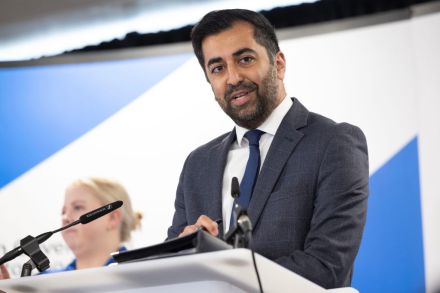
Humza Yousaf’s government is adrift, of that there can be no doubt. The question is how much longer the drift will be allowed to continue before the SNP leader corrects course. In the four months since he replaced Nicola Sturgeon, Yousaf has staggered from one catastrophe to another. The First Minister has seen his predecessor and other senior figures arrested (and released without charge) by police investigating the SNP’s financial affairs. His government’s flagship deposit return scheme has imploded after failing to gain the support of business and Westminster. He has been forced to U-turn on plans to ban fishing in 10 per cent of Scottish waters.

Why is Scotland’s civil service promoting SNP propaganda?

The SNP Scottish government has rolled out its latest paper on independence, this time focused on citizenship. Like others in the series (this is the fifth paper on secession in twelve months) it offers nothing new, goes big on fantasising about a future that won't happen, and is completely removed from the day-to-day needs of Scots. The paper works off the assumption that an independent Scotland will be a member of the European Union. Yet it ignores the obvious economic and potential political impediments to this happening, at least in any reasonable timeframe.

Humza Yousaf looks to the EU and Ireland for citizenship inspiration

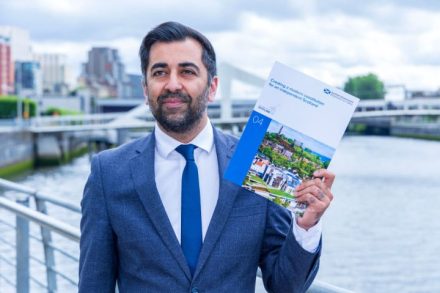
Burgundy passports, dual citizenship and rejoining the EU were a few of the items at the top of Humza Yousaf’s fifth independence paper, published earlier today. The First Minister’s latest independence document in the ‘Building a New Scotland’ series outlines the Scottish government’s proposals for citizenship in an ‘open, inclusive’ and independent Scotland.  Holding a finger up to the UK government over post-Brexit changes, Yousaf’s paper describes how Scottish passports would be a ‘right’ available to Scottish citizens from day one of independence.

Why is the UK so indulgent of Scottish separatism?

Scottish nationalists can sometimes be heard to say the United Kingdom is not a normal country. As evidence, they point to the unelected head of state, absence of a codified constitution and what they see as the dominance of one nation over other, smaller nations within the state. This analysis only underscores the very cultural overlap the SNP tries to downplay — for in their splendid ignorance of the political character of much of the democratic world they echo uncannily those London and university town progressives who delude themselves that the UK’s immigration debate is an insular outlier in an open and tolerant Europe.  It is not normal, in sum, for a sovereign state to facilitate and finance a process intended to separate it from part of its territory.

SNP civil war spreads to Holyrood

Troublemaking isn’t confined these days to the SNP’s Westminster group. It seems that nationalists north of the border have got the bug for insurrection too. Fergus Ewing, SNP MSP for Inverness and Nairn, has revealed that there is a ‘toxic atmosphere amongst the SNP group in Holyrood’ and that he doesn’t think the Nats stand a chance of winning another indyref just now thanks to the party's ‘extremist’ policies. The son of late nationalist legend Winnie Ewing told the Holyrood Sources podcast that things are not all hunky dory in Edinburgh:  The atmosphere in Holyrood is not particularly happy now within the SNP group. There’s many people in the cabinet and the leadership that haven’t uttered a word to me or vice versa for well over a year.

Why the SNP lost its supporters — and how it can win them back again

Since 2011, the SNP has undergone a meteoric rise from underdog to Scotland’s natural party of government. It's a transformation I helped design, through innovating the digital strategy of the party. However eight years of Nicola Sturgeon’s rule has fostered an era of indolence and self-deception over policy and independence. As Humza Yousaf embarks on his 'summer of independence' campaign (which started in Dundee this past weekend), it becomes ever more important to reflect on the stagnation of support for independence. Instead of good governance and progress towards independence, it appears some SNP politicians have relished the trappings of power more than in serving the electorate who put them there.

Labour’s self-ID mess

Scottish Labour lined up behind the SNP’s bungled attempt to reform the Gender Recognition Act last year and in doing so the party set itself firmly against the majority of voters. Around two-thirds of Scots are opposed to the SNP's gender bill, but Labour chose to ignore their views and back the nationalists’ controversial legislation instead. When Scottish Secretary Alister Jack intervened to block reform of the gender bill by Holyrood — on the grounds that changing the law in Scotland would negatively impact on the UK-wide equality act — the Labour party found itself unable to cash in. While the Scottish Tories loudly proclaimed their support for the majority view on self-ID, Labour MSPs preferred not to discuss it at all.