Politics

Read about the latest political news, views and analysis

Peers blighted by Whitehall tech failings

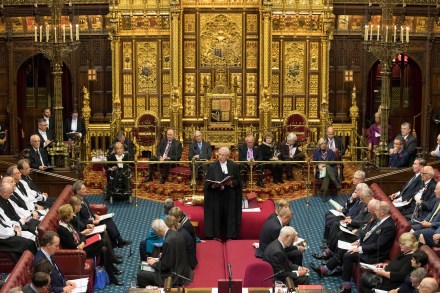
When it comes to technology, it's no secret that our ruling masters in Westminster and Whitehall have had their issues. From the NHS 'supercomputer' to disk files being regularly lost; gross mismanagement of resources to poor cyber security, problems with computers, software and equipment have bedeviled the inhabitants of SW1 for years. And now another venerable name can be added to the list of long-suffering institutions facing such difficulties: the House of Lords. But this being the Upper House – where the average age of membership is 69 –  the technology is decidedly more old school than the newfangled kind of kit coming out of Silicon Valley these days. For the issue that is currently vexing their noble lordships is the parliamentary phone system.
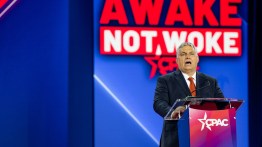
Viktor Orbán’s Texas rodeo

Say what you want about Viktor Orbán, but he gives a good speech. His address on Thursday in Dallas on the opening day of CPAC, the annual jamboree of the American right wing, was wide-ranging, hard-hitting and quite funny. One of his best jokes – paraphrasing Pope Francis – was ‘that Hungary was the official language of heaven because it takes an eternity to learn’. It also happens to be nonsense. Hungarian is recognised as considerably easier to learn than Arabic or Mandarin, but Orbán doesn’t do nuance.

Will there be blackouts this winter?

The debate about energy has, understandably, concentrated on what is going to happen to households bills. The numbers are alarming. The energy price cap is now predicted to peak at £3,649 in April 2023, meaning that the average household bill will be above £3,000 for more than a year. As I say in the Times today, this is going to require a response from whoever is prime minister. As Covid showed, in times of crisis contracts across borders are not always honoured But less attention has been paid to the question of whether there’ll be sufficient energy this autumn and winter. National Grid is suggesting that the UK will avoid blackouts. But it is not hard to see how they could end up taking place.

Is the next PM ready for the coming economic crisis?

13 min listen

The Bank of England's announcement to raise interest rates comes as the UK is predicted to fall into recession this year – with the lowest downturn expected since 2008. Are Rishi Sunak or Liz Truss ready for what's ahead?The two candidates went head-to-head once again last night in the Sky News studios. This time, the audience, made up of Conservative party members, grilled contenders and Kay Burley followed with some hard-hitting questions. By the end, most of the audience were persuaded by Rishi. Could the tide be turning?Katy Balls speaks to James Forysth.Produced by Natasha Feroze.

Starmer’s dreadful day

With Truss and Sunak tearing chunks out of each other, inflation soaring and a cost-of-living crisis looming, you might have thought Labour would have the next election in the bag. But you can always trust the party to pull defeat from the jaws of victory, as the events of the past day have just shown once again. First, Sir Keir Starmer was found guilty of breaching the MPs’ code of conduct by failing to properly register more than £120,000 in land deals, corporate donations and Premier League tickets. He was forced to apologise to parliamentary ethics watchdog Kathryn Stone after the errors were uncovered. This was despite the Labour leader previously declaring that he was 'absolutely confident' that no rules had been broken. Whoops!

Will the Bank of England say sorry?

Months ago I said the Bank of England would face a barrage of criticism and a challenge to its independence for failing to raise interest rates enough last year during the post-Covid economic rebound and then for putting them up big time now as we head into recession. So it has proved. And by the way, this does not mean that Bank independence has failed, or that allowing politicians greater sway over how much and when interests rise, would be better. It probably wouldn’t be. The Bank should stop pleading that its failure to call the inflationary turn early enough is irrelevant Nor does it mean Liz Truss would be right to review the Bank’s mandate, or the target the government obliges it to meet (though there may be a case for this).

Is Putin using a body double?

Ever since his invasion of Ukraine in February, the world’s media has been awash with rumours that Vladimir Putin is seriously – perhaps terminally – ill. There has been constant speculation that the Russian President has cancer, or Parkinson’s Disease, or both. Now Ukraine’s Head of Military Intelligence, Major General Kyrylo Budanov, has thrown another rumour into the swirling mix – claiming on TV that Putin regularly uses one or more body doubles, and may even have been impersonated by one of them at his recent summit meeting in Tehran with Turkey’s President Erdogan. As proof of his theory, Budanov cited the shape of Putin’s ears which he claimed has changed over the years, along with his height.

Who is Sandi Toksvig to lecture Justin Welby about sin?

Has Justin Welby met his match in Sandi Toksvig? The entertainer has sent an open letter to the Archbishop of Canterbury, complaining about his attempts to compromise with African bishops and avoid a showdown at the Lambeth Conference on the issue of same-sex marriage. The gist of it is: ‘Even though I don’t believe in God, I’m rarely going to attend my local church again’. This letter, and the swift reply to it from Justin Welby, tell us quite a lot about the relative standing of the CofE and what we are now supposed to call, as Sandi does, ‘LGBTQ+ people’. St Sandi’s letter to the Cantabrians is a masterpiece of faux-chummy passive-aggression, gratingly twee and self-satisfied.

Don’t grass on your neighbour if they break the hosepipe ban

There's nothing worse than a grass. Or so goes the wisdom expressed in soap operas like EastEnders. Of course, there are worse things than being a grass, but such an overstatement does reflect a common taboo found in many cultures: no one likes a snitch, telltale, narc, informer or sneak. Which is why the news that South East Water is asking its customers in Kent and Sussex to get in touch if they notice a neighbour ignoring a forthcoming hosepipe ban is unlikely to win it many plaudits. The supplier has placed a contact link on its website for people to report on miscreants they see flouting the instructions, inviting people to grass up neighbours they see watering the grass. What a charmless, alienating idea.

Rishi Sunak’s Tory leadership debate boost

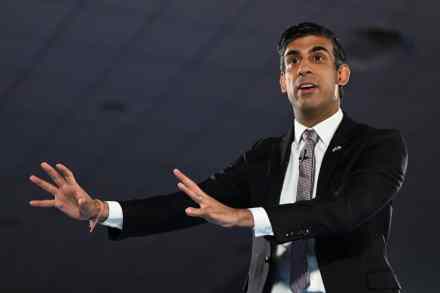
Rishi Sunak gained a boost from last night's Sky News's head-to-head. Despite a difficult week in which Truss has extended her poll lead, the former chancellor succeeded in winning over a majority of the live studio audience of undecided Tory members after battling questions on the economy and whether he had stabbed Boris Johnson in the back. Had this been one of the first debates, it could even be viewed as a moment that could move the dial. But given all the polling suggests Sunak has a mountain to climb to beat Liz Truss – and the ballots drop this week – it's unlikely one media performance is enough to turn the tide. https://www.youtube.com/watch?

Sunak and Truss’s Q&A with Sky – the reaction

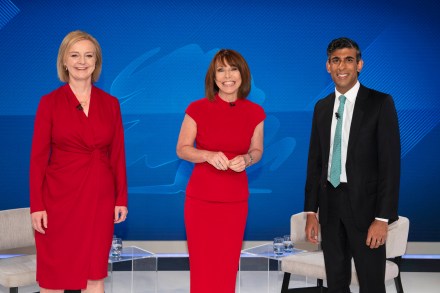
Rishi Sunak and Liz Truss were quizzed by Sky News's Kay Burley and undecided Tory members this evening, with Truss the runaway favourite according to the bookies. Refresh this page for the reaction. 9.30 p.m. – Is this a turning point? Katy Balls writes… Rishi Sunak and Liz Truss faced an audience of undecided Tory members this evening. Both received a grilling. But when the audience were asked who had won them over, the former Chancellor had a big majority of the audience. Now of course, these are the undecided – and all the polling suggests many have already decided in favour of Truss. However, Sunak's team needed something to show the race is closer than the polls suggest. The snap judgment works in their favour. 9.25 p.m.

Does the Bank of England need to be reviewed?

12 min listen

The Bank of England raised its rates by another half per cent today, as it warned that inflation will peak at 13 per cent by the end of this year. The question about the Bank of England's effectiveness arises again – should it have foreseen the inflationary crisis we are in now, and done more about it? Liz Truss has pledged to review the Bank's mandate. Cindy Yu talks to James Forsyth and Katy Balls.Produced by Cindy Yu.

Home Office’s bizarre diversity drive

Having failed to muster enough support for a leadership bid, Priti Patel is currently enjoying what are likely to be her final weeks in charge at the Home Office. The Witham MP has held the post for more than three years but despite her reputation as a hang 'em and flog 'em hardliner, there's precious little sign she's been able to change the prevailing culture in her department. Leaked messages in June showed the extent of internal opposition to Patel's flagship Rwanda scheme. 'Trans inclusive sports day' are still being held and there's a strong push for 'preferred pronouns.' And now Mr S has discovered the latest woke quackery being pushed by Patel's mandarins.

Why is The New York Times so obsessed with loathing Britain?

They’ve done it again in the grey building on 826 Eighth Avenue, New York City, NY, USA. They – the editors of the New York Times – have launched a tumultuous broadside against the most degraded, pathetic, hopeless, rancid, ugly, stupid, ridiculous, doomed and offensively anti-democratic country in the entire world. That is to say, the United Kingdom. This particular fusillade is quite something. Under the shouting headline The Fantasy of Brexit Britain Is Over, the author – Richard Seymour (and we shall come back to him) – serves up a grand, all-you-can-eat buffet of UK hatred. Britain, according to Mr Seymour, is ‘economically stagnant, socially fragmented, politically adrift’.

Liz Truss stiffened the Bank of England’s resolve on inflation

It turns out there is nothing like getting your homework marked by a tough new teacher to make everyone concentrate a little harder. Over the last couple of weeks of her campaign to lead the Conservative party, Liz Truss has made one point again and again. The Bank of England has been far too relaxed about inflation. And, surprise surprise, it has suddenly got a lot tougher. Today the Bank raised interest rates by half a percentage point, the largest single move in almost thirty years. Rates are now at the highest level in almost two decades. There was no great mystery about why. Inflation is already running at 9 per cent and, shockingly, the Bank predicted today that it would hit 13 per cent before it peaked.

Revealed: Boris and Zahawi away from desks as recession looms

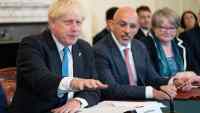
The Bank of England forecasts are out and they make for grim reading. The experts on Threadneedle Street predict that inflation will soar to 13 per cent, with Britain expected to undergo five consecutive quarters of recession. Interest rates are being hiked to 1.75 per cent – the biggest jump in 27 years – and there’s increased fears about what this all means for a looming winter heating crisis. In such circumstances, you might expect it to be all hands to the pump in Westminster to try to calm fears. But over at 10 Downing Street and the Treasury, it seems that there’s a more relaxed approach to Britain’s current economic woes.

Is the Bank of England’s recession warning right?

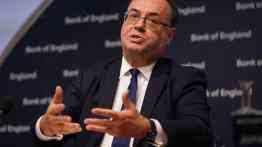
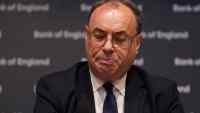
The Bank of England has warned that Britain will fall into a recession this year. Its Monetary Policy Report, released today, predicts that the economy will shrink from October, with the downturn lasting until the end of 2023. The Bank of England also hiked interest rates from 1.25 per cent to 1.75 per cent, the biggest rise for 27 years. The Bank of England’s Monetary Policy Committee has never previously raised the base rate by 0.5 per cent in its 25 years of existence. Previously it has only upped rates in quarter-point stages (and there haven’t been many of those, especially in recent years). The rise will, of course, affect mortgages, but perhaps not to the extent that interest rate rises used to.

Where does Justin Welby stand on same-sex marriage?

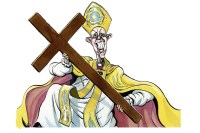
Justin Welby has made a valiant attempt to placate both sides of the Anglican divide. He has insisted that the official conservative teaching on sexuality, agreed at the Lambeth Conference of 1998, is still valid. But he also said that provinces that dissent, and affirm same-sex marriage, should not be disciplined. In effect, he is calling their dissenting view an authentic expression of Anglicanism. At the end of the speech he ducks the question In the crucial passage of his speech that he delivered this week, he asserts that, ‘for the large majority of the Anglican Communion’, to question the traditional teaching is ‘unthinkable, and in many countries would make the church a victim of derision, contempt and even attack.