Politics

Read about the latest political news, views and analysis

Can Truss calm the markets?

12 min listen

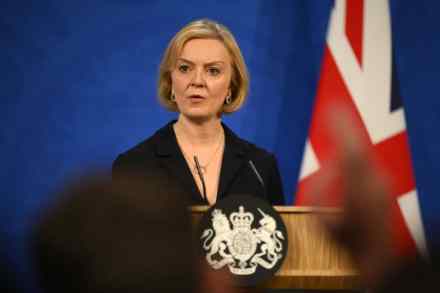
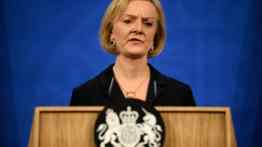
Liz Truss has delivered an 8-minute long press conference confirming the latest corporation tax U-turn and insisting she will stay on as Prime Minister. Did it do enough to reassure voters and calm the markets?Cindy Yu speaks to James Forsyth and Fraser Nelson.Produced by Cindy Yu and Natasha Feroze.

‘She’s just so bad at everything’: Tory MPs turn on Truss

Liz Truss’s Downing Street press conference has made everything worse, as far as Tory MPs are concerned. As soon as it was over, a number of backbenchers who had supported Truss for leader were locked into a call with Thérèse Coffey, the PM’s closest friend in Parliament and the Deputy Prime Minister. Those on the call said it was ‘like a wake,’ with even Coffey sounding ‘broken.’ ‘You could see the loss in her eyes,’ said one. Coffey reiterated the points the Prime Minister had made in No. 10, before taking questions. The ‘wake’ line is one you hear a lot at the moment.

The spectacular fall of Liz Truss

Is Liz Truss the new Theresa May? A fortnight ago that question seemed unduly insulting to the Prime Minister. Now it seems unduly insulting to the Maybot, whose stage-dancing at Tory conference appears a triumph of liquid movement when compared to the curtsying of the Trussborg at royal audiences. Clumsy is as clumsy does, and Truss is now in a class of her own when it comes to political miscalculation. At least it took May a year to get fully found out in that catastrophic general election campaign of 2017. Truss has managed it in little more than a month.

Liz Truss’s painful press conference fails to calm Tory nerves

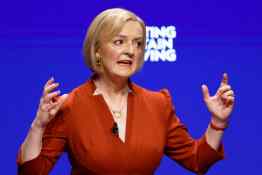
Liz Truss has just confirmed that she is U-turning on another part of her government's not-so-mini Budget. After sacking her chancellor Kwasi Kwarteng this morning, the Prime Minister used a Downing Street press conference to say that she will now keep the increase in corporation tax, despite promising to ditch it. This ought to raise £18 billion in tax. Explaining her decision, Truss said that while she still stuck to her vision for the country of a pro-growth government, it had become clear that her government's fiscal event – which saw a range of unfunded tax cuts announced – 'went further and faster than the markets were expecting'.

Ukraine braces itself for Russia’s cold war

So far this week, 128 Russian missiles have been fired at Ukraine. Half were intercepted by air defences, according to figures from Ukrainian authorities, but all too many of the others hit their target: power stations. This is a new phase in war, an anti-humanitarian campaign to cut supplies of water, electricity and leave the notoriously cold Ukrainian winter to do its worst.  ‘Ukraine is about to face the hardest winter in all the years of independence,’ said Volodymyr Zelensky in one of his nightly addresses to the nation. About a third of Ukraine’s energy infrastructure has been hit by Russian missiles and Iranian kamikaze drones. Kyiv had expected Russia to start shelling Ukraine’s critical infrastructure as soon as the first snow fell.

Truss sacks Kwarteng. What next?

13 min listen

Prime Minister Liz Truss has sacked her Chancellor Kwasi Kwarteng and replaced him with Jeremy Hunt. By removing her closest ideological ally. Can she save herself? Kate Andrews speaks to Katy Balls and James Forsyth.Produced by Natasha Feroze.

Liz Truss is still at the mercy of the Bank of England

Last week, I wrote here that 14 October was the key date in British politics, because the expiry of the Bank of England’s gilt-buying programme would force the Government to act to lower gilt yields. Be in no doubt: the sacking of Kwasi Kwarteng today is a consequence of the Bank’s refusal to go on supporting bond prices and artificially shielding the Government from the credibility-shredding consequences of the September fiscal statement. That’s not to say the Bank planned or engineered this. I don’t think Andrew Bailey, the Governor, is a Machiavellian political strategist. It’s just to say that the nature of the UK’s economic and financial position is that the Bank’s decisions have huge political impact.

Why Truss picked Hunt for Chancellor

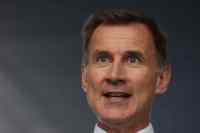
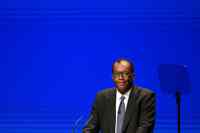
A day is a long time in politics. Just this morning, a No. 10 source told the BBC the Prime Minister believed Kwasi Kwarteng was doing 'an excellent job' as chancellor and the pair were 'in lockstep.’ Only just a few hours on, Liz Truss has sacked her close ally and friend in a bid to salvage her premiership. Now, Truss has appointed Jeremy Hunt to replace Kwarteng. It’s not even 2 p.m. The view in Downing Street is that Hunt is ultimately a low-tax Tory As soon as rumours started to circulate that Hunt was the preferred pick, there were raised eyebrows among Tory MPs. Nadhim Zahawi and Sajid Javid both backed Truss in the leadership contest and were therefore seen as more obvious choices.

Flashback: Hunt demands 15p corporation tax

Kwasi Kwarteng, we hardly knew ye. After 38 days, the Chancellor was unceremoniously axed from his post today as Liz Truss desperately tries to rescue her crumbling premiership. Memorable highlights of his five-week stint include the mini-Budget, firing Tom Scholar and being mistaken for Bernard Mensah. Indeed, the official mourning period appears in retrospect to have been the honeymoon of his tenure. Kwarteng and Truss were elected to parliament on the same day and have been close friends for more than a decade. They were co-authors, co-founders and successive leaders of the Free Enterprise Group, allies through the long years of May and Johnson. And yet that didn't stop her from sacking him as her no 2 and the next-door neighbour.

Will sacking Kwarteng be enough to save Truss’s premiership?

Can sacking Kwasi Kwarteng really save Liz Truss’s premiership? In the past few minutes, the chancellor has had a meeting with the Prime Minister – and he has now left the government. Tory MPs have spent the past week doing a lot of writing. The first thing many of them have been writing is a letter to Sir Graham Brady calling for a vote of no confidence. Even though the rules currently don’t allow one for a year after the election of a new leader, those who’ve sent their missives expect that he will reach a point where he has to tell the Prime Minister there would be a vote if it weren’t for that rule – and that the time has come to do something.

Removing PMs hardly ever ends well

As Tory MPs appear to descend into a panic of buyers' remorse over the election of Liz Truss, they would be well advised to take a deep breath and reflect upon the absurdity of removing a leader after six weeks. As they do so, they might find it instructive to look across the sea to Australia to see the folly of constant leadership turmoil and the ever more lethal poison it injects into the bloodstream of political parties.    Over the past decade and a half, Canberra – whose politics are famously robust – earned the unenviable taunt of having become the ‘coup capital of the South Pacific,’ as both sides of politics butchered their leaders in a fratricidal game of conspiracy, political assassination and payback.

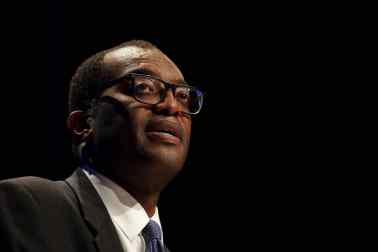
Liz Truss sacks Kwasi Kwarteng

Liz Truss has sacked Kwasi Kwarteng as chancellor. It is a truly remarkable development. Truss and Kwarteng were even more part of a joint political project than David Cameron and George Osborne. The mini-Budget was an expression of their joint beliefs: his dismissal is a sign of how bad things really are. Less than six weeks into her premiership and she has sacrificed her closest ideological ally to try and shore up her position. Truss will hold a press conference at 2 p.m. In it, we can expect a U-turn on freezing corporation tax to be announced – the markets assume it is happening and with the Bank of England’s intervention coming to an end this afternoon, not announcing one would risk sending the markets into a tailspin.

What will Kwasi do?

9 min listen

It's one of those flight tracker days here in Westminster as Chancellor Kwasi Kwarteng is about to land from a trip to the IMF in Washington, cut short last night. Is the government about to U-turn on its three-week-old mini budget? If so, will the Chancellor resign? Cindy Yu talks to James Forsyth and Fraser Nelson.

The sectarian shame of Ireland’s women’s football team

How bad is Irish nationalism’s sectarian problem? In the somewhat Panglossian world occupied by nationalist and republican activists and politicians – boosted by recent census and election results – it doesn’t really feature in the discussion.  At the recent 'Ireland’s Future' conference in Dublin, attended by thousands of people, the grubby stuff – the legacy of the Troubles and all – barely featured amidst the hopeful mood music and good vibes. The sight of the Republic of Ireland’s women’s football team celebrating their World Cup qualification in Glasgow earlier this week with the pro-IRA chant of 'Oh, Ah, Up the ‘RA" – a line taken from a Wolfe Tones song – struck a discordant tone.

Why won’t Graham Norton speak up for JK Rowling?

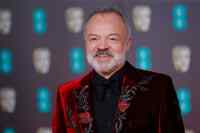
Is silence still violence? I’m just wondering because this week Graham Norton was asked about the deluge of hateful slurs and threats that are frequently fired at JK Rowling and he dodged the issue. Instead he rambled on about how celebs should not comment on difficult topics like transgenderism. So was his silence on the misogynistic monstering of JK Rowling an act of violence? ‘Silence is Violence’ is the radical slogan du jour. It was popularised by Black Lives Matter. There were moments over the past couple of years when you couldn’t browse the internet for five minutes without encountering a post saying that anyone who keeps schtum on hatred and violence is helping to compound that hatred and violence. But it seems this judgment is not equally applied.

Liz Truss’s immigration conundrum

The Conservatives – in office since 2010 – are now into their fourth successive manifesto pledge to bring down immigration, which remains well over 200,000 annually. Naturally, Liz Truss is said to be weighing up increasing it further. Some of those in the Treasury believe that visa liberalisation is the quickest way to growth. From the Treasury’s perspective, and that of the new Chancellor Jeremy Hunt, immigrants represent an excellent deal: you don’t have to pay for their education or childhood, instead simply importing units of homogeneous labour fully formed. What’s not to like? Open the borders and watch the line go up! Home Secretary Suella Braverman disagrees.

What does the 6 January subpoena mean for Trump?

Poor Donald Trump. The 6 January committee has subpoenaed him. The New York attorney general is seeking to put the kibosh on his new Trump II organisation. The Supreme Court has rejected his bid to stymie the Mar-a-Lago investigation. What next? Will it turn out that Jared or even — gasp! — Ivanka has been ratting him out to the feds about his hoarding of secret documents at Mar-a-Lago? Far from ending with his ousting from the White House, the Trump show has become an unending pageant of new plot twists. The central actor remains Trump and Trump alone, intent on hogging the spotlight in one way or another.

In praise of Jacob Rees-Mogg, the secret centrist

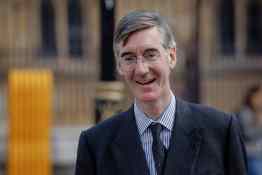
These are hard times for centrists, though we should be used to that by now. My tribe – clever, technocratic, sometimes liberal and sometimes smug – has been losing arguments and elections consistently for several years, often deservingly. We may know all about how policy works, but we haven’t been great at politics. A common centrist lament comes from looking at the current government and despairing at the way libertarian ideologues have taken control, running the country according to the ideas found in Institute for Economic Affairs pamphlets and Allister Heath columns. Is there no one in government who is prepared to take a pragmatic, what-works approach to policy? Well, I have good news for my anguished centrist chums.