Politics

Read about the latest political news, views and analysis

Why the Lib Dems want Boris back

Suddenly, out of the blue, comes a saviour. The Lib Dems have failed to capitalise on the downfall of Liz Truss. As the Tories’ polling hits record lows, all of the gains are going to Labour. This weekend, Ed Davey and his colleagues will be praying for the return of Boris Johnson. Boris was gold dust for the Lib Dems. In Ed Davey’s coveted Blue Wall seats across southern England, Boris was their greatest asset near the end of his premiership. These seats are traditionally Tory but lean Remain and socially liberal. They are also filled with the type of voters who would respond most warmly to Rishi Sunak’s ‘sensible’ calm-the-markets style of leadership.


Liz Truss was a conviction politician

As an erstwhile Brexit-voting academic, I’m used to being at odds with those around me. But in feeling troubled at the news of Liz Truss’s resignation yesterday, it seems I’m now in a minority of one. Truss had to go, of course. Her failings have been so well documented they hardly need repeating. Her lack of political acumen was perhaps most shocking: Truss utterly failed to read the mood of the Conservative party, the nation and the financial markets on every single one of her 44 days in office. But still, I have a pang of regret that she is on her way out. Truss’s stilted performances failed to inspire confidence. So frequently did the word ‘wooden’ prefix Liz, it became difficult to distinguish political commentary from the Ikea catalogue.

Labour MP quits over misconduct claims

Life is pretty good right now for Sir Keir Starmer: his authority is unchallenged, his shadow cabinet is serene and his party is leading by 35 points in the polls. But this morning has seen a (temporary) disruption to all that, following the news that one of his lesser-known backbenches will be quitting parliament after the sleaze watchdog said he should be suspended for 'serious sexual misconduct.' The independent panel on MPs’ conduct recommended Christian Matheson be suspended for four weeks following a report into his behaviour. Two allegations of sexual misconduct were upheld by the Parliamentary Commissioner for Standards against Matheson by a former member of his staff.

Penny reign: how Mordaunt could be kingmaker

Tory MPs will likely have three candidates to vote for in Monday’s leadership race: Boris Johnson, Penny Mordaunt and Rishi Sunak. If Johnson runs, gets to the final two and it goes to the Tory membership, then he’s probably be back in No. 10 within days. Polls of Tory members put Boris ahead by a three-to-two margin in a multi-candidate scenario. To stop Johnson getting in the final two, Tory MPs would need to cast their votes tactically to engineer a Sunak-Mordaunt playoff amongst members, in which Sunak would likely win. Why would she be Sunak’s lobby fodder? But all this assumes Penny Mordaunt plays ball. Why would she be Sunak’s lobby fodder?

Runners and riders for next Tory PM

Well, that's that. The disastrous premiership of Liz Truss will come to an end next week after 52 days in office, the shortest tenure in British political history. Who can replace her? Someone with a strong stomach, a glutton for punishment and a taste for sipping from a poisoned chalice. Below Mr S runs his eye over the likely candidates and a few no hopers... Rishi Sunak – The obvious favourite but there's still a sizeable anti-Sunak caucus in the party. The detractors may call him 'fishy Rishi' but his supporters crow that he got the big calls right. Boris Johnson – Can at least claim some kind of mandate, having won the 2019 election. As Churchill’s biographer, Johnson will be all too keen to encourage talk of a comeback.

Who will Ben Wallace back?

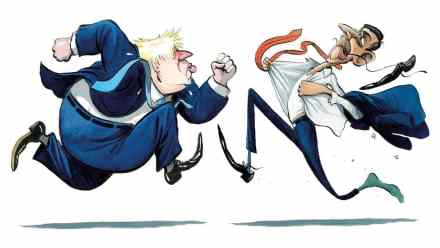
'Who's for the game, the biggest that's played, the red crashing game of a fight?' Jessie Pope's paean to the glories of war might equally be applicable to the internecine slaughter of the Tory party as its MPs gear up for yet another brutal leadership battle. But in war you can only be killed once; in politics many times. And few know that mantra better than the two leading contenders to become PM: Boris Johnson and Rishi Sunak. Both men a thing or two about political mortality: Johnson was forced out in July and Sunak lost to his successor in the subsequent contest. This time though, the leadership contest rules have changed: no whacky racer fringe candidates this time as the threshold for nominations has jumped from 20 to 100.

The tragedy of Truss’s Thatcherite imitation

Thirty two years ago, on a cold November Thursday, Margaret Thatcher resigned as prime minister, pushed out of office following 11 years in government. In 2022, after just 44 days, Liz Truss stood outside Downing Street on another Thursday autumn afternoon, to tender her own resignation to the British public. It had taken a cabal of ministers to topple Thatcher, while Truss’s fate was decided by a single MP, Sir Graham Brady, Chairman of the 1922 Committee. These final differences aside, Liz Truss cosplayed her heroine Margaret Thatcher to the last. Liz Truss’s emulation of Margaret Thatcher always had a whiff of teenage fantasy or fairytale about it. She was the Talented Ms Truss taking on someone else’s identity and living out a dream.

These figures show the enormity of the next PM’s task

Next week we will have a new prime minister (again), but the economic problems facing the country will remain the same. This morning’s update from the Office of National Statistics shows public sector net borrowing was  £20 billion last month: the second-highest borrowing September record and significantly higher than the Office for Budget Responsibility’s last forecast, which put the figure close to £15 billion. It’s this rapid rise in borrowing that the markets have turned on in recent weeks Economists thought borrowing would rise, but even the consensus (roughly £17 billion) was lower than what the government borrowed in practice.

Will Fleet Street back Boris?

As the man who quite literally wrote the book on Churchill, Boris Johnson will be all too keen to encourage talk of a comeback. There's much excited talk in the corridors of power about whether the former premier really can mount a comeback, just four months after leaving in disgrace. Lists of MPs are being circulated, with Johnson needing 100 MPs by Monday to get on the ballot. Can the king of the comebacks do it once more? One place where Johnson certainly has his fans is on Fleet Street, where he's provided more than his fair share of copy over the years.

Lessons have not been learned about child sex abuse

This week, the Independent Inquiry into Child Sexual Abuse (IICSA) published its long-awaited final report. It describes in harrowing detail the experiences of more than 7,300 victims and highlights the systemic failings of institutions in protecting children and addressing child sexual abuse (CSA) and child sexual exploitation (CSE). However, as with other similar inquiries that preceded it, many survivors fear that the findings and recommendations of the IICSA will be swept under the carpet. Child sexual abuse and exploitation takes many forms: from abuse within the family to group-based sexual exploitation or online grooming. The national crisis in child sexual abuse cannot be overstated.

Will Boris get the numbers he needs?

The question on everyone’s lips tonight is whether Boris Johnson can get 100 MP nominations by Monday. This is the bar that the 1922 committee have set. Johnson’s supporters have been coming out tonight at pace: he is up to 20-odd supporters already. But the question of whether he can get to 100 is difficult given the circumstances that led to his departure and the coming privileges committee investigation. Johnson’s advocates, though, think that if he can get that 100 and make it to the member’s round, then he will become the favourite.

The lady vanishes

41 min listen

On this week's podcast: After the markets saw off Kwarteng, Trussonomics and now Truss herself, James Forsyth writes in The Spectator that the markets will be driving British politics for the foreseeable future. He is joined by Britain economics editor at the Economist Soumaya Keynes to discuss the institutions now dictating government policy (00:56).Also this week:Looking ahead to the American midterms next month, are we heading for a 'red wave'? Freddy Gray says in his piece for the magazine that the Democrats could be in for a shellacking come November. He is joined by Washington editor at Spectator World, Amber Athey (13:41).And finally:Should the Parthenon Marbles be returned to Athens?

A bluffer’s guide to (yet another) Tory leadership race

Here we go again – another leadership contest, another round of intense Westminster blather. Lightweight would-be commentators may feel their energy flagging as they prepare to analyse this next phase of high-level political violence. But alpha bluffers do not fret. We know that there is no such thing as a ‘tired talking point’ – although that is a handy phrase in any serious conversation. Try these ten fresh, handy sentences to keep you sounding shrewd as the Tories commit hara-kiri once more and everything falls apart: 1. Whither the one-nation caucus? Oh yes, you know your ‘Tory tribes’. You understand the complexities of the ‘uncivil war’ within the party.

Is this the end of the Conservatives?

Nothing, not even the world’s oldest and most successful political party, lasts forever. So could the current crisis convulsing the Conservative party mean its extinction as a significant force in British life? Only three years ago simply posing this question would have seemed ridiculous. Back in December 2019, it was not the Tories who were staring down the barrel of a gun, but Labour. Boris Johnson, promising to get Brexit done, delivered an 80-seat majority for the triumphant Tories, hoovering up working-class votes and seizing seats that had never elected a Conservative before. After suffering their worst defeat since 1935, it was Labour who looked as though they were on their way to the political graveyard. What a difference three years can make.

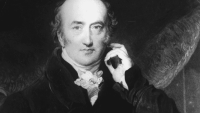
Who was George Canning? (1973)

Until Liz Truss, George Canning was the shortest-serving prime minister. He needn’t be forgotten by pub quizzers, general knowledge collectors and historians alike. In 1973, Richard Luckett reviewed a major biography of Canning’s life for The Spectator.

What happens to the Tory party now?

Liz Truss is not quite the shortest-serving prime minister in history. George Cunning has that prize because he died while he was in office. But for somebody who is still alive, at least, this is the shortest running term. If MPs can whittle the number of candidates down to two by, let's say, Tuesday the question that some of the party officials are currently trying to work out is whether the Conservative party has the ability to run an effective online ballot within a couple of days. That’s pretty much the only way of doing it. That obviously raises the question that there will be some members who don’t necessarily have access to the internet or at least are not very familiar with it – it is a relatively older section of the population.

How Truss’s resignation moved the markets

If anyone was expecting markets to be in jubilant mood after Liz Truss’s resignation, they will be feeling a little disappointed. True, the pound has risen and gilt yields have fallen this afternoon – but not by much. They moved far further on Monday when most of Truss and Kwasi Kwarteng’s mini-Budget was ditched, which is perhaps only to be expected. We could be heading for a general election – and markets may not like it At 3.30 p.m. yields on the UK government’s ten-year gilt stood at 3.85 per cent, down from just below 4 per cent early this morning. This time last week, when Kwarteng was still chancellor, they topped 4.4 per cent. They began Truss’s brief premiership at 3.3 per cent. Rising gilt yields, though, long pre-date Truss.

The Huntonomics trap

I don’t know who will become the next prime minister, and I’m not going to make a guess here. But I do make this prediction: the next leader is going to face a major internal Tory fight over immigration. That prediction is based on the thing that drove Liz Truss from office: the urgent need to reassure gilt markets that Britain has a growth plan that will help repair the public finances.  That need has not gone away. It will define the government whoever leads it. That government seems very, very likely to include Jeremy Hunt as Chancellor since a new PM taking office next Friday and removing him days before his fiscal statement on 31 October would risk panicking the markets again. And we know how that ends.