Politics

Read about the latest political news, views and analysis

Is Taiwan’s support really ebbing away?

Taiwan has lost another friend. Or at least it soon will, according to the president of Honduras, Xiomara Castro. She says her country will formally withdraw its diplomatic recognition of Taiwan, in favour of recognising China. If this happens, it will leave only 13 countries (and the Holy See) who recognise Taiwan as independent and sovereign.  Support for Taiwan appears to be dwindling – just as the Chinese Communist Party would wish. But there is a slight wrinkle here. This toing and froing about diplomatic recognition emerges not from ordinary diplomacy, but instead one of the absurder aspects of international politics. Recognising either China or Taiwan is an old problem, one springing from the ‘one China policy’ of the last Cold War.

The SNP membership’s big gamble

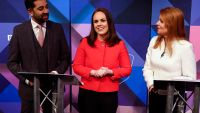
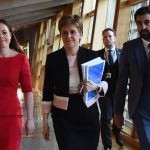
They’re all the same, politicians. How often have we heard this before? We need a real choice, people often say. Well, we have it now; or at least members of the Scottish National party do. If you’ve been watching the televised debates, of which there have now been four, you’d be forgiven for thinking that this is a contest between three members of different political parties, only one of whom belongs to the government of the day. The two front-runners for the crown, health secretary Humza Yousaf and finance secretary Kate Forbes, have adopted polar opposite strategies in this leadership contest, and offer their party and their country an entirely different vision for the way forward on almost every key issue. Yousaf is the party’s chosen one.

Is it curtains for the Conservatives?

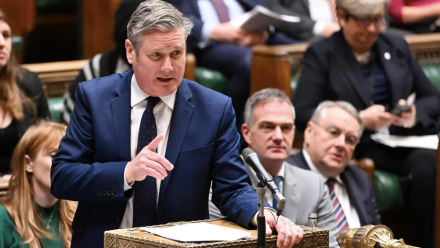
Can the Conservatives do it again? The Tories have won four elections in a row but face a struggle to emulate that success next year. The Budget yesterday offered a taste of the Tories' election pitch. But the government cannot escape some difficult numbers: Labour has led the Conservatives in the polls for more than 480 days. Keir Starmer's party enjoys a current average poll lead of around 21 points. If Rishi Sunak does defy these odds, his would be the first party since 1830 to win a fifth election on the trot. Back then, the Duke of Wellington was prime minister, the Slavery Abolition Act (abolishing slavery across the Empire) was a few years away and Stephenson’s Rocket had just made its debut.

Budget special: what did we learn?

15 min listen

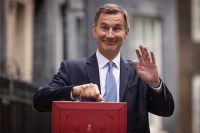
Jeremy Hunt, the Chancellor has unveiled his spring Budget, which was accompanied by forecasts predicting that the UK will avoid recession this year and that inflation will drop to below 3 per cent by the end of the year. But do the measures go far enough? Katy Balls speaks to Kate Andrews and Fraser Nelson.

Jeremy Hunt’s crafty Budget spells trouble for Labour

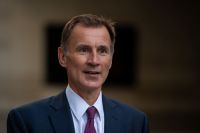
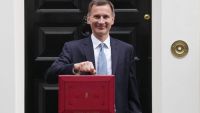
Jeremy Hunt was designed to exclude unnecessary body movements. Tall and gaunt, his demeanour faintly bird-like, he worked through his Budget statement at a steady pace, sipping regularly from a tumbler of water. Or was it vodka? No, it was water, of course. Hunt has the air of someone who always waits for the green man to flash before crossing the road. And every library book he has ever borrowed came back on time. At the despatch box he wore a Davos costume: white shirt, bland tie, midnight blue suit with no badges or political emblems attached. Is there a man alive who can project ‘anonymity’ better than Jeremy Hunt? Probably, but we’ll never know what he’s called.

The Budget in twelve graphs

Jeremy Hunt has just delivered his second Budget as Chancellor. The top message the Chancellor wants to push is that Britain will avoid recession. But the Office for Budget Responsibility’s report suggests immigration may be the real story. Among the policy announcements were an extension to the energy price guarantee, currently at £2,500, to July (effectively scrapping the price hike), committing £5 billion to fund free childcare for one and two year-olds and abolishing the pension Lifetime Allowance. But what else did we learn from today’s Budget? The Chancellor began with good news: no recession. The UK economy will avoid a technical recession this year. The country's economy will shrink by 0.

What do Jeremy Hunt’s welfare reforms add up to?

In his Budget speech, Jeremy Hunt made a great play on how Conservatives value work. Tories love talking about this but in fact they have just presided over a catastrophic increase in benefits. Before the pandemic there were 4.2 million on benefits: at the last count, 5.2 million. Given the mass worker shortage, this is quite a scandal. So what is being done to change this? Hunt referred to tighter conditions in welfare conditionality, but the OBR don’t seem to think it will move the dial, with just 10,000 moving back to work.

Who came out top in the last SNP leadership debate?

The fourth and final debate of the SNP leadership contest aired from Edinburgh last night with a live studio audience ready to pounce on the contenders. So how did the candidates fare in the final debate of the contest, and who came out on top? While Humza Yousaf, Kate Forbes and Ash Regan are now all accustomed to dealing with long Q&A sessions at hustings, the BBC’s mixed voter audience was more hostile than they are used to. Initial questions focused on the NHS and the economy, but the debate really livened up after one audience member lambasted the candidates for their ‘total lack of acceptance of accountability’.

Will the SNP contest be a fair election?

It says a lot for the SNP's commitment to transparency that even its leading lights don't trust its electoral processes. Ash Regan and Kate Forbes have today written to the party's chief executive Peter Murrell asking for information about the party’s membership and the leadership ballot. Regan, in a letter which was sent with the backing of Kate Forbes’s campaign team, said that the information was 'necessary for ensuring a fair' contest. Murrell is, of course, Nicola Sturgeon's better half, with some of Forbes and Regan's supporters fearing that the party machine has resolved to crown Humza Yousaf as her replacement.

The Budget’s real labour market reform? A migration surge

In the Budget we heard plenty about welfare reform and how Conservatives believe in hard work. But in the small print, the OBR reveals it expects just 10,000 to go back to employment because of tighter conditionality on benefits: a tiny sliver of the 5.2 million on out-of-work benefits. A greater number – 75,000 – are expected back to part-time work due to greater childcare support. But the biggest number – 160,000 – are expected from something Jeremy Hunt did not mention at all: migration. This is perhaps the biggest unspoken feature of today’s Budget. Overall, the OBR says it now assumes net migration to settle at 245,000 a year – up from 205,000 it expected only last November and 129,000 in March last year.

The biggest Budget surprise wasn’t one of Jeremy Hunt’s announcements

The biggest surprise from today’s Budget was not an announcement, but the forecasts that gave Jeremy Hunt room for manoeuvre.  The Office for Budget Responsibility has revised its forecasts for economic growth and inflation towards the upside. The OBR no longer expects the UK to enter into a technical recession (two consecutive quarters of negative growth). Overall, it is predicting a small contraction of 0.2 per cent this year, which will be followed by an average of 2 per cent growth (1.8 per cent in 2024, 2.5 per cent in 2025, 2.1 per cent in 2026 and 1.9 per cent in 2027).  Moreover, the OBR predicts a big fall in the headline rate of inflation, from 10.7 per cent at the end of last year, down to 2.

Jeremy Hunt’s Budget speech played it safe

About halfway through his Budget speech, Jeremy Hunt was making a joke about returning from retirement on the backbenches in his fifties to a new career in finance. ‘How’s it going?’ heckled one opposition MP. The Commons erupted into laughter. ‘It’s going well, thank you!’ Hunt replied merrily. The speech itself did go smoothly: Tory MPs were quite quiet for passages of it, while Hunt made few jokes. He themed it around four words beginning with ‘E’. It might have been irresistibly hilarious for most MPs to listen to a less straight-laced Chancellor than Hunt saying ‘moving on to my second E’.

Unemployment and Britain’s missing million

There was plenty of miserable economic news in this week’s Budget: the highest taxes imposed by any peacetime government, the worst post-pandemic recovery in the G7, the most painful cost-of-living squeeze since records began. But there was also a statistic which, on the face of it, seems to herald a remarkable success. The official unemployment rate stands at just 3.7 per cent – less than half the rate of a decade ago, as low as it has been in half a century. In his Budget, Jeremy Hunt boasted that ‘Conservatives believe that work is virtue’. Sadly, as this magazine revealed several months ago, there is rather more to the figures than meets the eye. There may be only 1.

Budget 2023: Restraint now, reward later?

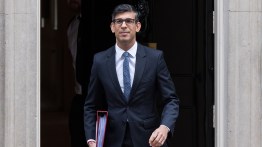
The paradox of Rishi Sunak’s premiership is that even though he became Prime Minister because of the economy, it’s the issue on which many of his party disagree with him the most. He resigned as chancellor not because of partygate but because his fiscal conservatism was ‘fundamentally too different’ to Boris Johnson’s stance on the economy – tax less, borrow more. He lost the leadership contest last summer after he played down the prospect of imminent tax cuts. MPs flocked to his rival Liz Truss and only when her experiment imploded was he asked to clean up the mess.

Portrait of the week: Bank failures, a ‘Budget for growth’ and a new Duke of Edinburgh

Home Jeremy Hunt, the Chancellor of the Exchequer, delivered what he called a ‘Budget for growth’. He abolished the cap on savings for tax-free pensions and promised help with childcare costs. The Office for Budget Responsibility forecast a fall in inflation to 2.9 cent by the end of 2023 and a fall in GDP of 0.2 per cent. Twelve regions for new investment zones were named. Corporation tax would rise to 25 per cent but for small businesses capital expenditure would be tax deductible. Nuclear power and quantum computing would be encouraged; back pain and mental health problems discouraged. The pothole fund would grow. Holyhead Breakwater would benefit. Duty on alcohol went up, but duty on draught products in pubs would be less.

PMQs: Jess Phillips heckles Sunak over modern slavery protections

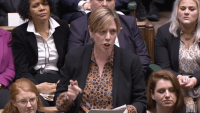
Prime Minister’s Questions was unusually feisty for a pre-Budget session. It covered the two big political rows of the week on the Illegal Migration Bill and Gary Lineker, both of which elicited a tribal response from both Conservative and Labour benches. The session started with a particularly angry question from Labour’s Jess Phillips about a tweet from Rishi Sunak which threatened those who had come to the UK illegally with not being able to use modern slavery protections – even if they are trafficked women being raped repeatedly. Phillips drew from her own experience working in the domestic abuse sector, and told Sunak that his tweet would be shown to victims by people traffickers as evidence that no one would come to help them. https://www.youtube.com/watch?

What Biden gets wrong about women’s rights

If you’ve spent any time on Twitter over the past few years you will almost certainly have met the ‘woke toddler’. This is where progressive parents share the super cute and achingly right-on insights of their tiny charges. Over time, potentially genuine anecdotes have given way to up-front political commentary. A classic of the kind might be the days-old baby who asks granny to name ‘one genuine economic benefit of Brexit’. With more people in on the joke, these tweets slowly died a death. So it was a surprise to see President Biden attempt to revive the genre this week by tweeting his response to ‘Charlotte’. To be fair to Biden, his ‘woke toddler’ had gone to some trouble. This was no mere anecdote but an actual letter.

Budget 2023: the main takeaways

Jeremy Hunt is today unveiling his first Budget. He has told the Commons that his Budget will help deliver on Rishi Sunak's five priorities that the Prime Minister set out in January: namely halving inflation, reducing the national debt and increasing growth. Hunt has reprised much of his Bloomberg speech from January with championing the 'four Es' of 'enterprise, education, employment, everywhere.' The Office of Budget Responsibility predicts the UK to avoid a recession this year, with a contraction of 0.2 per cent. Inflation is expected to fall to 2.9 per cent from 10.7 at the end of 2022. The OBR forecasts growth of 1.8 per cent for next year and then 2.5 per cent the following year. However real living standards are still expected to fall by a cumulative 5.