Politics

Read about the latest political news, views and analysis

Red Wall poster girl Dehenna Davison quits as minister

With the polls pointing to a Tory thrashing, how many of the 2019 Red Wallers will win their seats next time? One who isn’t hanging around to find out is Dehenna Davison, the 30-year-old MP for Bishop Auckland. She announced back in November that she was standing down from parliament and today she has also declared that she is quitting her post as a junior minister for Levelling Up. In her resignation letter, Davison said it was ‘impossible’ to stay in the job while battling chronic migraines and that she wants to spend more time on constituency work. She now intends to focus her efforts on campaigning for one punch assault victims;

Liz Truss is no fiscal hawk

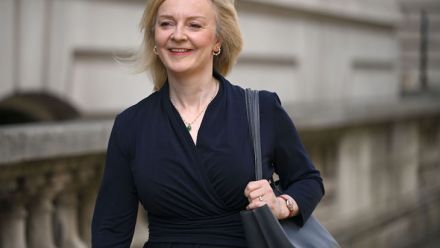
Was Liz Truss a fiscal hawk inside No. 10? That is the rather startling claim made by the former prime minister, speaking today at the Institute for Government about the future of economic growth. She has claimed public spending would be £35 billion lower over the next few years had her plans been followed, due to the real-term spending cuts that would have followed from not reopening the latest Spending Review. Moreover, she insists that her mini-Budget was not just about going for growth, but rather a ‘three-pronged approach’ that included ‘targeted tax freezes and reductions, supply side reform and holding public spending down.’ This is the first time we’ve

Will Germany be the first to ditch its net zero commitments?

Things are not going well in Germany’s bid to reach net zero by 2045, five years earlier even than Britain’s own unrealistic target. For months, the German government has been trying to devise a way to save its heavy industry from high energy prices which are sending production fleeing to Asia. Just last year, chemicals giant BASF announced that it would invest in a new £10 billion plant in China rather than Europe, thanks to the cost of energy. Now, the government seems to have found a way. It is going to raid its £200 billion climate transition fund, which was supposed to invest in green technology. The fund was also

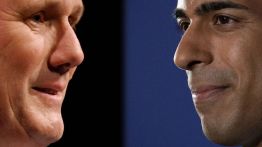
Are we heading for a Sunak and Starmer podcast?

Theresa May always had a camp appeal. The clumsiness, the dancing, the incredible squareness. Mrs Thatcher never took that crown – she had too much of a hard edge – though it was a surprise to me to discover that Australians and Americans saw only the hair and the handbags and made her that most tedious and reductive of things: a gay icon.  Bantering podcasts are now an essential part of public rehabilitation But unlike Thatcher, May had a dissociation from reality not only about trivialities but also about the really important stuff. Her recent declaration that she is ‘woke and proud’ is typical of her. It’s almost gloriously out-of-touch, and her adoption of it surely

Liz Truss takes aim at the BBC, OBR and Mark Carney

She’s back! One year on from the mini-Budget, Liz Truss arrived at the Institute for Government, flashing grins and firing off one-liners. The speech was of the pure Trussite vintage – little humility but much recrimination, with fingers labelled at the Usual Suspects of ‘corporatist social democracy’. Then it was on to the Q&A – the first time she has faced questions in such a format since departing No. 10. And Truss certainly did not disappoint, giving both barrels to her myriad of critics. What did she think about Mark Carney and his claims about ‘Argentina on the Channel?’ A snort and then a dismissal of the ‘finger-pointing’ from those

What Liz Truss’s big speech was really about

14 min listen

Liz Truss took the stage this morning for her first major intervention on the economy since leaving No. 10. Her speech at the Institute for Government comes almost a year to the day since her mini-Budget saw the markets panic and her premiership come to an abrupt end not long after. What did she have to say?   Katy Balls speaks to Fraser Nelson, Kate Andrews and James Heale.  Produced by Oscar Edmondson. 

Who cares if this UCL academic ‘undermined’ Britain’s history?

There’s a long list of academics, some of whom are on the right, who have had their lives made difficult by fellow academics. Now, for a change, a left-wing academic is feeling the heat.  Dr Jenny Bulstrode, a history lecturer at University College London (UCL), has been accused of ‘undermining the history of Britain’ without evidence. The allegation came after Bulstrode claimed in a paper that an English ironware maker, Henry Cort, stole his invention from slaves. Before conservatives engage in too much self-congratulation, however, they should stop and think carefully about whether this attack against Bulstrode is really something to celebrate.  History and Technology, where Bulstrode’s article appeared in June, is a

Why did Sadiq Khan say I was ‘thick’?

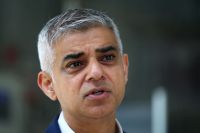
Sadiq Khan thinks that I’m ‘thick’. That, at least, is what he told me during a fractious Mayor’s Question Time last week. The Mayor lashed out after I said he was ‘a bit slippy’. Khan then responded by saying: ‘Honestly chair, for someone who reads a lot, he ain’t half thick is he?’. To be fair to the Mayor, he has since said sorry – and I’ve accepted his apology. But the exchange was a telling one: it reveals that Khan, who has been London’s Mayor since 2016, is rattled. And the backlash over Ulez (Ultra Low Emission Zone) is to blame.  I’ve been digging away on Ulez for months. Khan

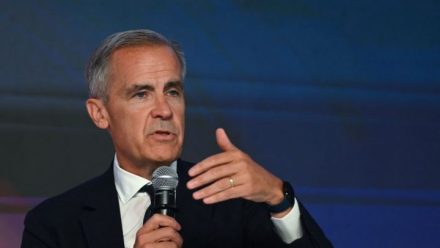
Watch: Mark Carney takes a pop at Liz Truss and Brexiteers

Poor Liz Truss. Today is the day Britain’s shortest-serving prime minister had hoped to launch an impassioned defence of her legacy. In a speech this morning marking the approaching anniversary of her disastrous mini budget, Truss planned to talk up her economic plan and attack her critics among ‘the London dinner party circuit’. But it looks like a member of that particular set has beaten Truss to it. Former Bank of England governor Mark Carney said that Brexiteers wanted to turn Britain into ‘Singapore on Thames’. Instead, he said, Truss and her colleagues, delivered ‘Argentina on the Channel’ because of their misguided views on economics. Carney’s withering verdict was delivered

Russell Brand’s gags are coming back to haunt him

It has now officially all gone wrong for stand-up’s sex god. Ahead of Saturday night’s Channel 4 documentary about Russell Brand, and the newspaper disclosures in the Sunday Times, there was speculation that the witnesses could be opportunistic attention-seekers. The account of the first complainant appears to undermine that idea. On the same day as her alleged encounter with Brand, she apparently visited a rape crisis centre, according to medical records, and accused him of wrongdoing. If the case reaches court, her testimony could be hard for Brand – who strongly denies all the allegations against him, said his relationships have all been consensual and that he has ‘evidence directly

The ‘naive cynicism’ of Russell Brand’s hasty defenders 

I can’t imagine that Channel 4’s investigative slot Dispatches has had such an audience in living memory. On Saturday evening, many thousands of people who seldom if ever watch terrestrial television – I was one of them – will have tuned in at 9pm, just like the old days, to watch a conventional broadcast. Most of these people will already have known the substance of what was in the programme, because it was a joint investigation with a good-old-fashioned newspaper – whose version of the story was published a few hours earlier and was eagerly and widely read online. Quite a moment for the so-called ‘legacy media’. The gist of the

A driver’s case for 20mph limits

Speeding kills, we’re told. But in the right circumstances, exceeding the limit is no bad thing. Take motorways: few drivers seem to stick to 70mph, yet most journeys are perfectly safe. Indeed, when I’m behind the wheel, I like putting my foot down as much as the next driver. Fortunately in the 30 years since I passed my test I’ve been pretty lucky; I’ve clocked up two or three speed awareness courses, but somehow I’ve managed to keep hold of my licence. Yet despite my run ins with the DVLA, I firmly believe there’s a case for 20mph limits in certain areas. This new speed limit has been rolled out on

Poland and Hungary could come to regret their Ukraine grain ban

The row over Ukrainian grain imports shows that politicians in Eastern Europe can be their own worst enemies. Five Eastern European countries – Bulgaria, Romania and Slovakia, led by Poland and Hungary – failed to convince other EU member states that the existing ban on imports of grain from Ukraine, imposed earlier this year, should be extended beyond 15 September. As a result, at least three of them – Poland, Hungary and Slovakia – will now adopt their own restrictions, in defiance of the EU. What is all too clear is that the countries seeking a ban, particularly Poland, have elevated short-term political considerations above their own long-term interest in Ukraine. Their

The decline of the West: America’s Pacific cities face a bleak future

As recently as the early Nineties, when the great cities of the Midwest and East Coast were careening toward what seemed like an inevitable downturn, the urban agglomerations along the Pacific coast offered a demonstrably brighter urban future. From San Diego to the Puget Sound, urban centres along America’s western edge continued to thrive and expand as migrants from other parts of the country, and the world, crowded in. In the process, the Pacific cities seized the economic initiative. The West Coast became home to the country’s premier trade entrepôt and its dominant entertainment and technology centres, and home to five of the world’s six most valuable companies. Yet now

Kamikaze drones are the future of warfare

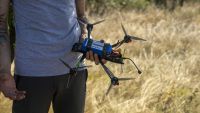
The West is struggling to confront the modern military technologies of Russia, Iran and China. A year and a half of the war in Ukraine has proved it. Iran has exported cheap Shahed-136 kamikaze drones to Russia, and they have been used to terrorise Ukrainians. Putin appears ready to invest further in procuring thousands more. Sir Tony Radakin, chief of the defence staff, said this week that, in response, the British Army wants to create regiments of kamikaze drone pilots. He’s right to do so. Iran’s drones are cheap to make, estimates say around £15,000 each, but the air defences needed to shoot them down are far more expensive. This difference between how western

Does tennis have a doping problem?

Is it more remarkable that Romanian two-time Grand Slam tennis champion Simona Halep took performance enhancing drugs, or that she was caught? I ask only because the sport’s authorities seem to catch vanishingly few dopers, which surely means either they’re very bad at it, or elite players rarely cheat to win enormous sums of money.   Certainly, it’s easy to be cynical about tennis. When in 2017 I interviewed legendary doping chemist Angel ‘Memo’ Hernandez – who during the nineties and 2000s was the world’s leading illicit sports chemist, providing undetectable super-stimulants to a wide range of household name athletes – he burst out laughing when I asked about doping in tennis.   ‘Tennis was paradise for a long time. No testing