Politics

Read about the latest political news, views and analysis

David Cameron and the triumph of fence-sitting politicians

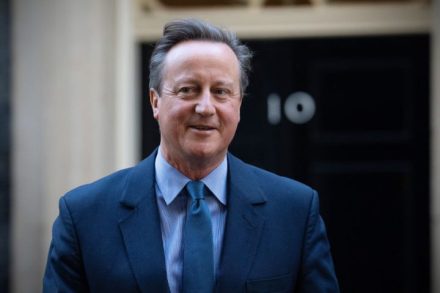
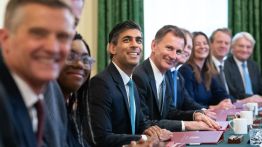
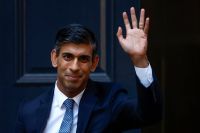
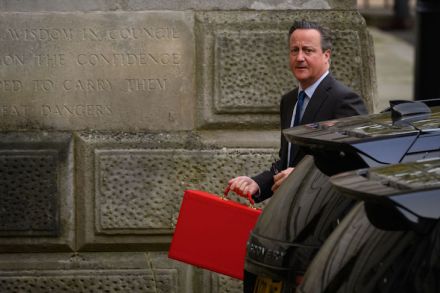
David Cameron is the king of the wishy-washy compromise. Cameron has never looked happier than when he appeared in the Downing Street Rose Garden in 2010 with Nick Clegg. There was something about being in that awkward Conservative-Lib Dem coalition that suited Dave. It was, of course, another attempt at compromising – by striking a desperate last-ditch deal with the EU that no one wanted – that sealed Cameron’s fate. Now, he’s back – but he isn’t the only politician who has made a career out of sitting on the fence. Rishi Sunak’s cabinet reshuffle shows that the current Tory Prime Minister also likes to try and please everyone, only

What’s the truth about Gaza’s al-Shifa hospital?

Last week’s military operation in Gaza’s al-Shifa hospital was mired in controversy. According to the Israeli Defence Forces (IDF), the hospital was a significant target in Israel’s war against Hamas because they believed a command centre was located under the hospital complex. International spectators, including some of Israel’s closest allies, were concerned about the raid and told Israel to act with extreme caution to avoid casualties among hospital staff and patients.   International organisations – including the World Health Organisation (WHO), the United Nation Population Fund, UN officials, media outlets and Middle Eastern countries including Jordan and Turkey – condemned Israel’s operations in the hospital. The WHO described the scene as a ‘death zone’, but without

How to solve Rishi’s Rwanda dilemma

Rishi Sunak has promised to respond to the Supreme Court’s judgment that the Rwanda policy is unlawful by agreeing a new treaty with Rwanda and introducing fast-track legislation to parliament. This has been widely ridiculed, as if the proposal were for parliament simply to ignore findings of fact made by the Supreme Court or, worse, for parliament to authorise refugees being sent back to their persecutors. It is extremely unlikely that this is what will be proposed. Much more reasonable proposals are likely – and should be given a fair hearing. The Supreme Court was able to block the Rwanda plan because the government attempted to implement it without securing express parliamentary authorisation. Ministers gambled on being able to persuade the courts that

Inside David Cameron’s meeting with Tory MPs

David Cameron addressed Tory MPs this evening at a meeting of the 1922 committee following his shock return to government last week as part of Rishi Sunak’s reshuffle. The impromptu meeting saw around 100 MPs gathered in parliament’s Boothroyd room rather than then usual committee corridor room 14. Cameron joked that he was relieved at the location change – as it meant he could avoid his more traumatic memories of addressing the 22’ when he was prime minister. ‘It was nostalgic for a lot of us’, says one attendee. Cameron spoke of his recent trip to meet with President Zelensky As for the purpose of Cameron’s address to MPs, the

Why have Sunak and Hunt suddenly decided they want tax cuts?

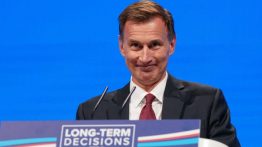
The government’s transition on taxes has taken place at lightning speed. We’ve gone from chancellor Jeremy Hunt hinting at tax cuts yesterday morning on the BBC to Rishi Sunak confirming that not only are tax cuts coming this Wednesday, but they are now a major priority for the government, as laid out in five new promises made today. Arguably the UK economy has been defying the doomsday predictions for a while now But it’s not just the policy that’s changing. It’s the rhetoric too. Hunt has gone from insisting that tax cuts are ‘virtually impossible’ in September – not something to consider right now, he said in October – to ushering them in this November and embracing a

In defence of Ofsted

When it comes to Ofsted, people often like to trot out the old adage that ‘you don’t grow a pig by weighing it.’ Others might rebuttal that you grow the pig by measuring its progress and making necessary adjustments to its diet, hence the need for inspections. However, a new report by Beyond Ofsted, an National Education Union-funded inquiry, is now suggesting that the pig will grow best if we allow it to self-evaluate its weight instead.  There is no doubt that radical reform is needed. Trust between schools and Ofsted has completely broken down; too many schools operate in a culture of fear because inspections have become more punitive

Was Eat Out to Help Out really behind the second wave?

Did Eat Out to Help Out increase Covid? It’s a conclusion the inquiry and lockdown’s cheerleaders seem keen to push. Today they got their wish with Sir Patrick Vallance telling the inquiry it is ‘very difficult to see how it wouldn’t have had an effect on transmission’. Those comments have already been taken out of context with headlines concluding that the link had now been confirmed. But that’s not what the data tells us. Or what Vallance was saying. Eat Out to Help Out came up because of a written statement from Rishi Sunak that was read out to the inquiry. In it the Prime Minister says, ‘I don’t recall

What France gets right about assimilation

Among the crimes of Suella Braverman, the now former Home Secretary, was a speech she gave in Washington at the end of September. Multiculturalism had failed, she told her audience, ‘We are living with the consequence of that failure today’. ‘Uncontrolled immigration, inadequate integration, and a misguided dogma of multiculturalism have proven a toxic combination for Europe over the last few decades… if people are not able to settle in our countries, and start to think of themselves as British, American, French, or German, then something is going badly wrong.’    Her speech was predictably panned by the left – Amnesty International accused her of ‘cynicism and xenophobia’ – but also

SNP MP dismisses the ferries scandal

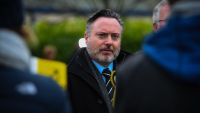
If you can’t fix a problem, pretend it never existed. That seems to be the logic of SNP MP Alyn Smith at least. Speaking at ‘The Breakup of Britain’ conference this weekend, the Stirling MP appeared to suggest to his audience that Scotland’s ferries scandal is, er, not actually a priority for the people of Scotland. Smith told the distinctly silver crowd that: I knocked the best part of 200 doors this morning. Actually talking to people out there in the real world who want some hope, who want to know that politics isn’t all about WhatsApp messages, iPads and ferries. It’s about bigger stuff than that. It’s about dealing

Sunak makes more pledges – but what happened to his last five?

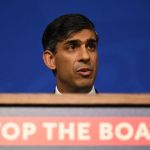
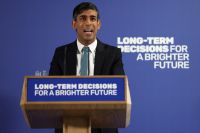
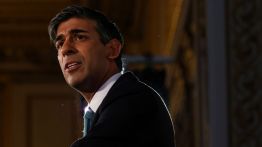
In his speech in north London his morning, the Prime Minister confirmed that tax cuts are coming this Wednesday, as is another attempt by the government to get Britain’s 5.5 million missing workers back into employment. But Rishi Sunak didn’t stop there. Having achieved one of his five pledges for the year last week — the inflation rate halved in the year to October, slowing to 4.6 per cent — the Prime Minister decided this morning to offer up five more. Now in addition to the ‘five promises’ made in January — halving inflation, growing the economy, reducing public debt, cutting NHS waiting lists and ‘stopping the boats’ (a pledge

Sunak changes his tune on tax cuts

Tax cuts are around the corner. That was the message from Rishi Sunak when he addressed hacks this morning in a speech on the economy. Ahead of Wednesday’s Autumn Statement, Sunak said that, after he achieved his target of halving inflation, his government is now able to enter ‘the next phase’ of its plan to grow the economy – and cut taxes. Of course, how much of a role the government really played in bringing down inflation is debatable (it’s largely down to global factors outside of Sunak’s control). But the practical effect of meeting the target is that Sunak now feels able to begin reducing the tax burden. After

Why has Rishi Sunak made five more pledges?

11 min listen

James Heale, Katy Balls and Fraser Nelson look ahead to the Autumn Statement this week. Will Rishi Sunak commit to cutting taxes? And with barely a year to go before the election, would implementing any policies now be felt in time?

The Tories must get serious about welfare reform

You can’t fault Mel Stride for trying. Conscious that our current levels of worklessness are neither sustainable nor likely to win the Tories plaudits at the next general election, the Work and Pensions Secretary has been proposing a range of wild and wacky solutions. In February, it was reported the government would be expanding ‘midlife MOTs’ to get the unemployed under-50s back to work. In July, the Department for Work and Pensions (DWP) policy generator was at it again, encouraging doctors to refer patients to life coaches rather than sign them off sick.  Now we’re getting the stick: new reforms would see people who refuse take on work placements or

Met police swell their social media army

Scarcely a week seems to go by without an incident involving one of the Metropolitan Police’s social media accounts. Recent controversies on Twitter/X including ruling on whether the term ‘jihad’ constitutes hate speech, getting fact-checked by community notes and making demands for further powers in a post explaining their inability to prosecute those who clamber over statues. So Mr S thought he’d do some digging into how much the Met’s online army is now costing the hard-pressed London taxpayer. As is the want of bureaucracies everywhere, the force recently undertook a reorganisation under which its ‘Social Media Team’ was subsumed into ‘a broader Digital Media Communication Team, in an expanded

Tory MPs want a sense of vision from the PM

The Autumn Statement marks the latest in Rishi Sunak’s series of (often contradictory) relaunches Jeremy Hunt has started the week of his Autumn Statement in a rather more upbeat mood than usual. He spent yesterday talking about the importance of bringing the tax burden down and getting the British economy ‘fizzing’: a significant change of language from his previous focus on the importance of getting inflation down. He told me on Times Radio that he saw a clear dividing line with Labour: ‘Conservatives do believe that if we’re going to be a dynamic, thriving, energetic, fizzing economy, we need to have a lower tax burden actually, than we’ve got now.

Can the government be trusted with free speech? 

This summer, horrified by the rising numbers of students no-platforming and harassing visiting speakers whose views they don’t like, the government anointed the Cambridge philosopher Arif Ahmed ‘free speech tsar’. Prof Ahmed said at the time that his new role, at least as he saw it, wasn’t a culture wars stunt: he was interested in protecting free expression across the political spectrum.   There is a culture of systematic no-platforming and double-cucked snowflakery, it turns out, in the supposedly pro-free-speech government We have every reason to think he’s been beavering away since then to ensure our campuses continue to zing with the free and frank exchange of ideas, and good on him. But if

The new chainsaw wielding leader of Argentina

The location was the same – the circumstances starkly different. Almost 12 months ago, hundreds of thousands of people gathered on Buenos Aires’ immense central avenue to celebrate their team’s win in the World Cup. A year on, and hundreds – honking car horns and waving the blue-and-white Argentine flag – were there to celebrate the electoral victory of Javier Milei. The far-right libertarian, who describes himself as an anarcho-capitalist, began the race as a rank outsider, having only entered politics in 2020 and making his name as a bombastic television economist.  The far-right libertarian, who describes himself as an anarcho-capitalist, began the race as a rank outsider In his

Can Israel go on like this?

All generals plan military operations based on the ten principles of war – rules if you like, which, if adhered to, will provide the best chance of success. The most important of these principles is the selection and maintenance of an aim. Even if every Hamas terrorist in Gaza is killed or captured, it is questionable whether that would mean that the group has been truly destroyed The aim should always be a single, unambiguous and easily understood objective – such as destroying the enemy located on Hill X. It then follows that everyone, from the most senior officer to the lowest ranked soldier, knows what needs to be done and can