Politics

Read about the latest political news, views and analysis

Svitlana Morenets, James Heale and Theo Hobson

17 min listen

This week: Svitlana Morenets explains why Ukrainians can’t trust Putin’s hollow promises (00:57), James Heale reads his politics column on Rishi’s January blues (05:42), and Theo Hobson describes the joys of middle-aged football (10:54).  Produced and presented by Oscar Edmondson. 

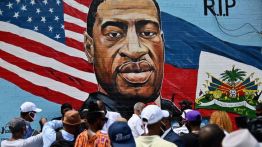
George Floyd was no martyr

To write that George Floyd died is to take a position. The received belief is that he was murdered – a murder bigger, in its consequences, than any other crime for decades. Unlike the relatively muted protests against the Russian invasion of Ukraine, the streets of the world hosted men and women passionate in their denunciation of Minneapolis police officer Derek Chauvin, whose detention in May 2020 of Floyd by, apparently, kneeling on his neck for around ten minutes, had killed him.  Chauvin became a synecdoche for the perceived repressions of the state – any state, from South Africa to Germany, no matter how strongly committed to democratic governance and civil rights. In Melbourne, in

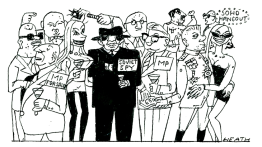
Russia is still very much a security threat inside the UK

At 1.30 p.m. on 7 September 1978, Georgi Markov, a Bulgarian dissident and BBC journalist, approached a bus stop at the south end of Waterloo bridge. As he gazed absent-mindedly across the Thames, office workers jostled him as they streamed past. Suddenly he felt a sharp pain on the back of his right thigh. Turning quickly, he saw a man stoop to pick up an umbrella. ‘I am sorry’, the man mumbled in a gruff foreign accent. Seconds later, a taxi pulled up, the man jumped inside and disappeared.  The pain was excruciating, and Markov was taken to St James’ hospital, Balham. As he lay in bed, the Soviet bloc defector mentioned

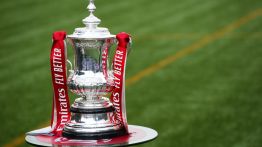
Who cares about the FA Cup?

The third round of the FA Cup, underway this weekend, is one of the highlights of the football calendar – or so we are meant to think. Premier League and Championship clubs finally enter the fray, prompting breathless talk of part-time bricklayers and plumbers getting to test their skills against elite footballers paid millions. The tantalising prospect is held up of an elite manager – think  Pep Guardiola of Manchester City – patrolling the touchline at some tiny lower league ground. This is all part and parcel of the endless  hyperbole and romanticism surrounding this oldest of cup competitions, often accompanied by seemingly endless drooling over previous acts of ‘giant-killing’ in

Chris Skidmore’s hissy-fit by-election

A new year brings with it fresh headaches for Rishi Sunak. Chris Skidmore, a former energy minister, has announced he will stand down as an MP in protest at plans to issue more oil and gas licences. Parliament is expected to vote on Monday on the government’s flagship bill to guarantee annual licensing rounds in the North Sea. Tory strategists had hoped that the legislation would exploit Labour divisions on green issues. But it seems to have prompted the opposite effect, with Skidmore taking the very rare step of not just resigning the party whip but quitting his seat in protest – triggering a contest in his soon-to-be-abolished Kingswood seat.

Why aren’t the Lib Dems doing better?

16 min listen

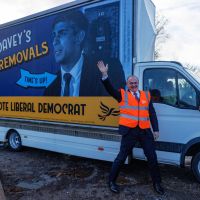
The Liberal Democrats began their 2024 campaigning this week by unveiling a huge poster branding them as ‘Ed Davey’s Tory Removal Service’, but they will have to be more than just the ‘none of the above party’ if they hope to make a difference come the election. What do the Lib Dems stand for? And can they turn by-election success into election success?  Oscar Edmondson speaks to James Heale and Nick Tyrone, author of the This Week in Brexitland substack. Produced by Oscar Edmondson. The Spectator is hiring! We are looking for a new producer to join our broadcast team working across our suite of podcasts – including this one – as
Justice has been served for Rosie Duffield

The year has got off to a good start for Rosie Duffield. Back in November, the MP for Canterbury became the focus of an investigation by the Labour Party’s National Executive Committee (NEC), following allegations of anti-Semitism and transphobia. Now she has been, in her words, ‘completely exonerated’.  Duffield’s mistake, such as it was, had been to like a tweet by comedy writer Graham Linehan – who was himself responding to comedian-turned-parliamentary-wannabe, Eddie Izzard. Izzard has spent the past few years living in ‘girl mode’ and being referred to as ‘she’ or ‘her’. Izzard had told an interviewer: ‘If I’d been in Nazi Germany, I would have been murdered for saying that I was

When will Rory Stewart’s time come?

Can a dose of moral earnestness revive Tory fortunes? This is the question raised by Rory Stewart’s recent memoir, Politics on the Edge: A Memoir From Within, which sits on top of the bestseller charts more than three months after it came out. Another question the book raises is this: is Stewart’s brand of moral earnestness the right one? His politics is rich in old-world honour, like that of a John Buchan hero. The reader half expects him to uncover a plot to sell Britain to China, and then be chased by soulless technocrats through moonlit moorland. On one level, it didn’t work: when he stood for the leadership against

XL bully ban comes back to bite the SNP

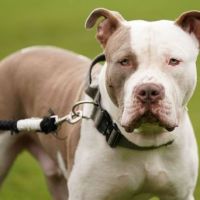
Oh dear. It seems that those strategic geniuses in the SNP have done it again. This week saw the ban on XL bully dogs come into force in England and Wales, following a string of violent attacks by the pugnacious breed. But up in the people’s paradise of Humza Yousaf’s Scotland, ministers there decided that they knew best. In November, the SNP government formally rejected a request from Michael Gove, the levelling up secretary, to introduce similar measures ‘in light of the threat to public safety’, and to avoid the obvious risk of ‘creating a potential dumping ground for dangerous dogs’ in Scotland. Two months on and – quelle surprise! –

Biden’s bogus memorialisation of 6 January

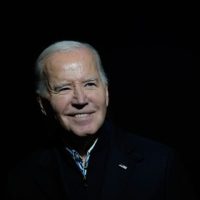
It’s fright month in Joe Biden’s America, folks. Today, 5 January, the US President will travel to Valley Forge, Pennsylvania, to mark the third anniversary of the riot on Capitol Hill in Washington, DC on 6 January 2021. He would have done it on the day but the event had to be rescheduled due to an incoming storm. Biden also likes to rest on the weekends.  Still, near the spot where George Washington and his continental army survived the brutal Revolutionary War winter of 1777-78, the increasingly ethereal 46th president will endeavour to summon the tough ghosts of America’s founding. He will deliver yet another warning about the petrifying threat which

Did Sunak steal Starmer’s thunder?

18 min listen

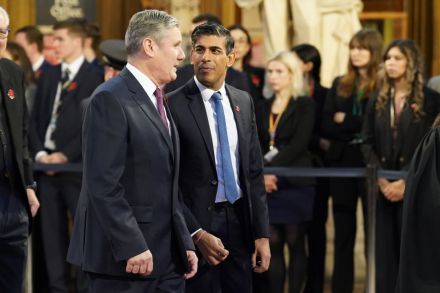
Keir Starmer delivered his new year’s speech, promising ‘Project Hope’ ahead of the general election. Critics claimed the speech was rhetoric heavy, low on policy. Having attacked the Prime Minister for dithering over the May general election, Rishi Sunak later announced it was his ‘working assumption’ to hold the general election in autumn 2024. Was this a communications win for No.10? And can Starmer still garner support by playing it safe? Natasha Feroze speaks to James Heale and former Labour advisor John McTernan.  The Spectator is hiring! We are looking for a new producer to join our broadcast team working across our suite of podcasts – including this one –

In defence of ‘fat cat’ chief executives

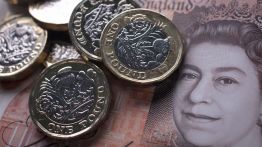
Are chief executives overpaid? The High Pay Centre thinks so. Every January, it releases data showing the huge inequality between top UK CEOs and average workers. The results are startling: ‘Bosses of Britain’s biggest companies will have made more money in 2024 by lunchtime on Thursday than the typical worker will all year,’ according to the BBC, which wrote up the story showing that top bosses’ average reward amounts to £3.81 million a year. But is this disparity with the £34,963 annual median wage for full-time workers really a surprise? The truth is that this pay gap is an obvious feature of a free market where top pay in business

Putin’s ‘peace’ is a partitioned Ukraine

52 min listen

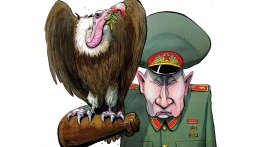
On the podcast: In his new year’s address this year Vladimir Putin made no mention of the war in Ukraine – despite missile strikes over the Christmas period – and now Owen Matthews reports in The Spectator this week rumours that Putin could be looking to broker a land-for-peace deal. Unfortunately – Owen says – this deal would mean freezing the conflict along its current lines and the de facto partition of Ukraine. Owen joins the podcast alongside The Spectator’s Svitlana Morenets who gives her own take on Putin’s ‘peace’ deal in the magazine this week. (01:21) Next: Former Sky News and GB News broadcaster Colin Brazier writes a farmer’s notebook in The Spectator this week about his new life

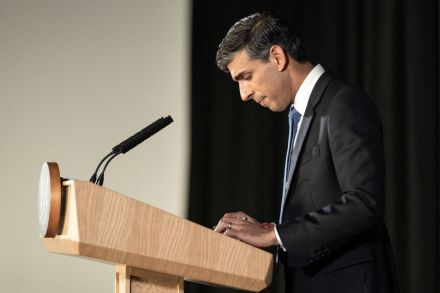
Sunak plays it safe with election announcement

Rishi Sunak is – not unusually – playing it safe by saying his ‘working assumption’ is that the election will be in the second half of this year. The speculation that it would be on 2 May had been building to the point that the Prime Minister was at risk of looking afraid if he didn’t then go for a spring poll. He knows from watching what happened to Gordon Brown’s Election That Never Was the dangers of ramping up speculation without following through. That doesn’t mean he won’t change course and go for the May election in the end anyway, but dampening the chatter about it is a sensible

Starmer returns to old favourites in New Year’s speech

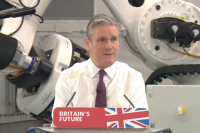
There was a distinctly familiar feel to Keir Starmer’s speech today. Preaching change in front of heavy machinery, it was a near-identical setting to the speech he gave this same week last January. For a New Year’s speech, it was devoid of new policy but there were plenty of old favourites: the Great British Energy and planning reform pledges that underpinned his last two conference addresses, Labour renewal, Tory cronyism and the obligatory reference to Liz Truss (but no named mention of Rishi Sunak). There was enough in it to get decent write-ups, with the Telegraph focusing on his rejection (again) of Jeremy Corbyn’s politics while the Guardian stressing his

When will Nigel Farage get off the fence?

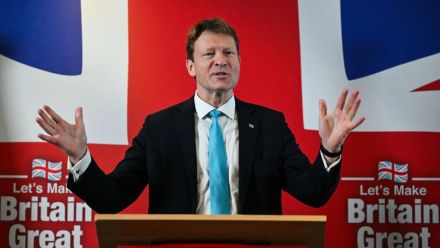
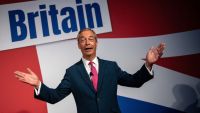
Nigel Farage’s indecision continues. Despite being hyped in advance as a major unveiling of the rebel party’s programme, Reform UK’s press conference yesterday was something of a damp squib, not least because Farage failed to actually show up. Reform leader Richard Tice said the ex Brexit party leader is ‘still assessing’ the ‘extent of the role he wants to play in helping Reform UK’. It’s about time Farage decided whether he’s in or out. Since Reform’s forerunner, the Brexit party, helped bring about Theresa May’s downfall and ultimately catapult Boris Johnson to power, Farage has been performing a political striptease: forever promising (or threatening) to get back on the road

Sunak says his ‘working assumption’ is no spring election

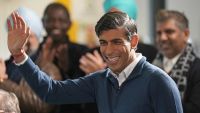
Rishi Sunak has this afternoon given his strongest hint yet that the next general election will be held in the autumn rather than the spring. Speaking to broadcasters on a visit to a youth centre in Mansfield, the Prime Minister said: ‘My working assumption is we’ll have a general election in the second half of this year and in the meantime I’ve got lots that I want to get on with.’ The Conservative leader declined to categorically rule out a May election but repeated his intentions to pick a date later in the year. ‘I want to keep going, managing the economy well and cutting people’s taxes,’ Sunak said. ‘But

Watch: Starmer grilled on Peter Mandelson and Jeffrey Epstein

Sir Keir Starmer was up this morning in Bristol, giving a big speech on the importance of transparency. The Tories, he gravely intoned, had wrecked Britain, with their relentless sleaze and cronyism. So it must have been, er, sub-optimal then for the Labour leader to have his big speech blown off course when Jim Pickard of the Financial Times threw him a curveball in the Q&A. Back in June, the paper published the contents of an internal JP Morgan report which laid bare the extent of Jeffrey Epstein’s contact with Peter Mandelson that describes repeated meetings between the disgraced financier and the politician he knew as ‘Petie’. It suggests that