Politics

Read about the latest political news, views and analysis

Lords hit back at Chagos deal – again

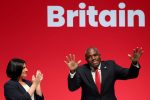
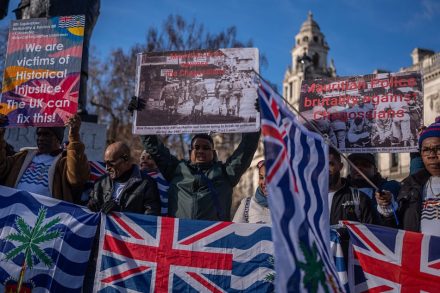
When David Lammy announced that the Chagos Islands were to be handed over to Mauritius, it was greeted as the moment when the sun finally set on the British Empire. But a group of hardy peers are determined to rage, rage against the dying of the light, by doing their damnedest to hold up the Chagos sell-out in the Upper House. Talk about teaching their elected equivalents a thing or two about the merits of proper legislative scrutiny… For a week after passing several critical amendments of the deal, the Lords were tonight at it again. The Upper House issued a rare rebuke of the Chagos Islands deal, passing a motion
Starmer’s team could ban Musk's X

During Covid, it used to be asked what Boris Johnson the journalist would make of Boris Johnson the Prime Minister. The same must be asked of Keir Starmer: what would the onetime civil liberties lawyer make of the incumbent premier? Having halved the number of afternoon lobby briefings in a bid to control the narrative, the beady eye of Downing Street has moved on to fresh targets. Now in the firing line is X, formerly Twitter. Labour MPs are horrified at what the platform’s AI tool, Grok, is producing when asked by users – including images of women involuntarily clad in indecent clothing. But Mr S cannot help but wonder if there

Zahawi defects: are Reform becoming Tories 2.0?

15 min listen

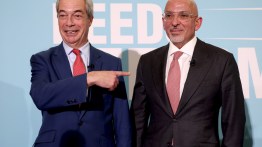
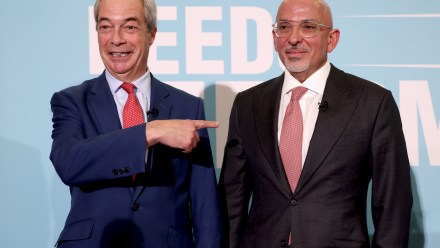
How many Tories is too many? That’s the question Westminster is asking after the unveiling of Reform’s latest defector. Nadhim Zahawi, Boris Johnson’s brief-lived Chancellor of the Exchequer, is Nigel Farage’s latest recruit. He told journalists that the UK had reached a ‘dark and dangerous’ moment, and that the country needed ‘a glorious revolution’. But are Reform just turning into the Tories 2.0? And what will Zahawi’s role be – is he the elusive shadow chancellor Farage has been searching for? Oscar Edmondson speaks to Tim Shipman and James Heale. Produced by Oscar Edmondson.

Nadhim Zahawi’s defection is bad news for Reform

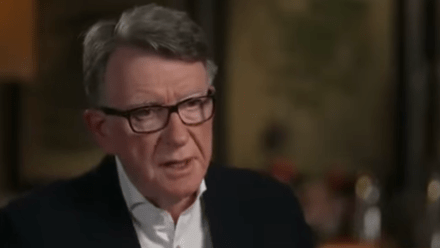
Nadhim Zahawi has become the most senior Conservative to defect to Reform. Nigel Farage looked delighted as he welcomed the former Chancellor into the fold at a Westminster press conference this morning. However, the Reform leader should be careful what he wishes for. In fact, he should not have permitted Zahawi to join at all. Zahawi may have a point, but is he entirely free of blame for the mess we’re in? Since the upstart party’s founding, there has been a steady stream of politicians leaving the Tories to join Reform. Some, no doubt, are doing so out of genuine conviction and despair at the state of the organisation they

The flaw in Labour’s Brexit delusion

The lexicon of Brexit has a new entry: the ‘Farage clause’. As part of Labour’s ‘reset’ talks with Brussels, EU negotiators have reportedly floated a termination provision that would require compensation if a future UK government walked away from a new deal designed to ease post-Brexit checks on food and agricultural trade. In plain English: if Britain signs up to reduce border friction now and then later blows the arrangement up, Brussels wants someone to pay the bill for putting the border back together again. Like lots of things involving Britain and the EU, however, this ‘Farage clause’ is not what it looks like. It isn’t really about the Reform UK leader. It’s

Met chief insists London is getting safer

Ello, ‘ello, ‘ello, what’s all this then? It is a new year but the same old lines from Sir Mark Rowley, the permanently under-fire chief of the Metropolitan Police. Britain’s top bobby has been copping a fair bit of flack recently, amid never-ending questions about the behaviour of London’s bobbies and criticism of the capital’s crime rate. But now, days after Reform UK announced Laila Cunningham as its mayoral candidate, Sir Mark has used an interview with – where else? – the Financial Times, to hit back at his critics. Who needs the ‘thin blue line’ when you’ve got the pink ‘un for cover, eh? Rowley denounced ‘commentators’ and those

Hollywood is all but silent on Iran

It was the Golden Globes last night in Tinseltown and as per usual Hollywood’s finest strutted and peacocked on the red carpet to the click and flash of the massed paparazzi cameras. Images of their 1000-watt smiles and 10,000-dollar couture outfits were beamed around the world to a million Instagram and X feeds. Yet, something was missing. These days a celebrity glamfest is not complete without a healthy dose of woke posturing on the issue du jour, whether it be underrepresentation of black people (‘OscarsSoWhite’ or Black Lives Matter), women’s empowerment, climate change, or most recently of course, the plight of the Palestinians. This time, not so much. As the

Why are teachers so obsessed with the ‘far right’?

Much has been written in recent years, and even recent days, about the threat posed to the mental wellbeing of children by malign external forces, whether it be X generating nude images of women, the misogyny spread by influencers such as Andrew Tate, or the welter of ‘misinformation’ available online. But a story at the weekend reminds us of one of the most formidable actors in this department, one that continues to warp and taint young minds: our education system. This constant drip of revelations and pronouncements merely reflects the dismal state of our education system A state-funded computer game, developed with government backing by councils in East Yorkshire, reminds

When will Iran finally be free?

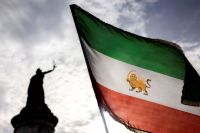
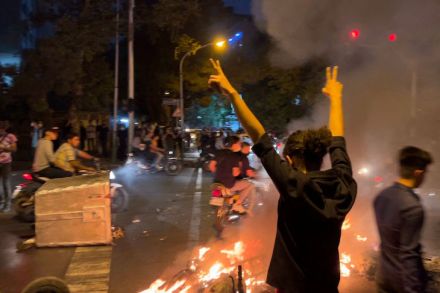
An Iranian friend of mine once told me that ever since fleeing his homeland in the early days of Iran’s Islamic Republic, his grandfather had kept a packed suitcase by his front door, awaiting the day he may return. Alas, in his case, that day never came: the old man was buried before he could ever revisit the places and people he most cherished. As a new wave of protests sweeps through Iran, nearly 47 years since the establishment of the current regime, once more I, and many other lovers of Iran but despisers of the Islamic Republic, find ourselves daring to hope again. Or, at least, hoping to dare

A buyer’s guide to Greenland

I recently wrote a book countenancing the idea that the United States could buy Greenland, and I have received some very interesting responses. Some are perplexed at the utility of an Australian assessment of Greenland geostrategy (I’m from Canberra); others have admonished me personally for ‘willing into reality’ US ownership of Greenland. All I did was offer a buyer’s guide to an alluring piece of real estate – background that anyone laying claim to this land should know. Lesson 1: America and Denmark have history  Greenland has tantalised Washington since at least 1867.  These guys have serious history. Territory between Denmark and the US has changed hands previously – Washington nabbed

Iran’s uprising and the moral bewilderment of Western youth

I’m starting to feel sorry for progressives who are schtum about the revolution in Iran. My contempt for them is giving way to pity. Imagine watching women fling off their hijabs in glorious defiance of the cruel mullahs who rule over them and feeling nothing. Imagine seeing brave youths swarm the streets to confront the tyrants who oppress them and just looking the other way. The extraordinary valour of the young in Iran has exposed the moral bewilderment of the young in the West Imagine seeing that young man in London this weekend scaling the walls of the Iranian Embassy to yank down the flag of a ruthless regime and

What Agatha Christie’s migrants teach us about Britain

Agatha Christie, who died fifty years ago today on 12 January 1976, possessed a genius for making the ordinary strange. In her imagination, the sleepiest lanes of the English countryside could, at any moment, become the setting for murder. Yet alongside the vicars, the colonels and the gossipy spinsters, another set of figures appears again and again: the excitable foreign maid, the prim continental governess, the French girl with a secret, the nervous Polish refugee working in the kitchen. Alongside the vicars and gossipy spinsters, another set of figures appears again and again: the excitable foreign maid, the French girl with a secret Foremost among them is, of course, the

Sunday shows round-up: Heidi Alexander: UK hoping for ‘peaceful transition’ in Iran

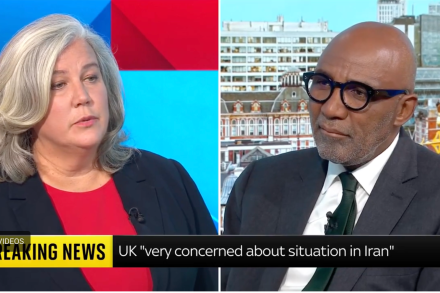
Protests have swept across Iran in the last couple of days, and reports suggest hundreds of people may now have been killed by the regime’s ensuing crackdown. On Sky News this morning, Transport Secretary Heidi Alexander said the UK government has ‘always viewed Iran as a hostile state’, and that the priority is to ‘stem the violence’ against protesters. She told Trevor Phillips that Iran has a ‘destabilising effect on the world’, and said the UK would like to see a peaceful transition where Iranians can enjoy ‘fundamental freedoms’ and ‘proper democratic values’. Kemi Badenoch: ‘Greenland… is a second order issue’ President Trump has suggested the US needs to ‘own’

Labour MP threatens by-election over jury plans

A new year and new headaches for the Labour whips’ office. Karl Turner, the long-serving MP for Hull East, has not taken too well to David Lammy’s plans to curb jury trials. He has been going out and about on the media airwaves, threatening all kinds of terrible trouble if the government don’t drop their plans. Turner has demanded the Justice Secretary resign, castigated the Chief Whip as incompetent and suggested the PM ought to be ‘ashamed’. Why don’t you tell us what you really think… But today Turner has unveiled his greatest threat yet. He has told the Sunday Times that he is willing to resign and trigger a

Trump is playing geopolitical Monopoly with Greenland

Donald Trump is playing hemispheric monopoly. Depending on what day of the week it is, the President’s focus alternates between Venezuela, Canada, the Panama canal – and for the last twelve months or so, Greenland. Given what Trump and his team have said over the past week, their acquisition plans for the island are well advanced. But why exactly does he want Greenland? The world’s largest island is an integral part of the Kingdom of Denmark and is about three times larger than Texas. While the term du jour is geopolitics, perhaps the most plausible reason for why Trump is gunning for Greenland is ego-politics. We have a president eager

The Palestine flag that shames Dublin

A Palestinian flag is currently fluttering from the top of the Spire, Dublin’s tallest landmark, looking down on the Irish flag which flies from the historic General Post Office a few metres away. Pro-Palestinian fanatics dropped the flag – emblazoned with the words ‘Stop Genocide in Gaza’ – onto the Spire from a drone hovering 120 metres above ground, in defiance of aviation laws, in September. More than three months on, the authorities seem powerless to remove it. The Spire, newly adorned with the now familiar green, red, and black Palestinian colours, stands on the same site in O’Connell Street where before Admiral Horatio Nelson had overlooked the street with

Being a bookseller isn’t what it was

Every Christmas, I throw off my doctoral gown, slap the monographs, the Collected Works and the many-volume Letters back onto their library shelves and uncloister my bibliomania for a seasonal stint at the local bookshop. What pulls people like me into bookselling – even if only for a month during the holiday seasons – is not the famously slim pay, but the chance to put their love of books in the service of others. The pleasure of selling a book whose power has been felt in one’s own life – the delight, in other words, of making a present of something good and consequential – more than makes up for

What the Iranian uprising means for the Middle East

The Middle East has long been organised around two competing logics: pragmatic alignment and ideological alignment. Before the 7 October war, these logics produced two regional blocs that structured most political, diplomatic and security behaviour. The Palestinian attack and invasion that triggered the war ruptured both systems. Incentives shifted, alliances frayed, and assumptions collapsed. What followed has not been the emergence of a calmer order, but a reconfiguration in which ideology has returned in new forms and pragmatism has narrowed, and hardened, requiring deliberate encouragement and support to survive. For more than a decade, regional politics moved along these two tracks. Pragmatic alliances rested on interests that could be negotiated,