Politics

Read about the latest political news, views and analysis

France has had enough of Germany’s bullying

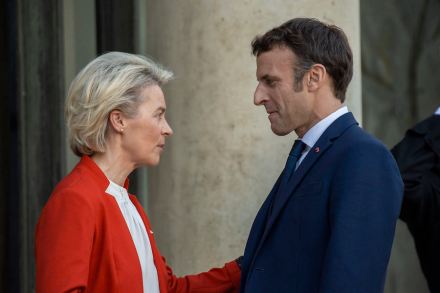
There was one person missing in Paris on Saturday evening as France celebrated the resurrection of Notre Dame cathedral. The original guest list included Ursula von der Leyen – but the president of the EU Commission was a no-show. According to whom one believes, Europe’s most powerful politician didn’t take her place in the pew alongside Emmanuel Macron, Donald Trump et al because of what a spokesman described as an ‘internal miscommunication’. That’s the diplomatic take. The other story is that a ‘furious’ Macron withdrew von der Leyen’s invitation after she signed off the EU Mercosur trade deal with South America on Friday. Struck with Argentina, Brazil, Paraguay, Uruguay and
Revealed: the 53 peers silent for five years

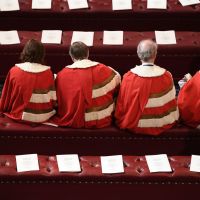
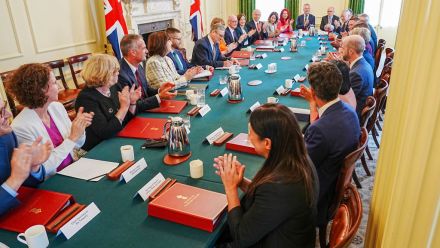
The wind of change is sweeping through the Upper House. What with Labour’s plans to expel the last hereditaries and Gavin Williamson’s effort to boot the bishops too, soon the House of Lords will be devoid of any colour. How will the sketch writers cope eh? Today brings more bad news for traditionalist lovers of the lords and ladies in ermine. For Politico reports that there are growing calls to exclude members of the House of Lords who rarely attend or take part in debates. The convenor of the crossbenchers Lord Kinnoull has suggested that expelling those who attend 10 percent or less of sitting days could cut the size

America is not prepared for Syria after Assad

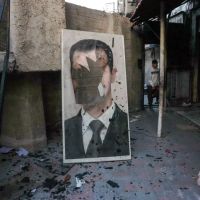
On Saturday afternoon, US intelligence officials leaked an assessment: the Assad regime, which has ruled Syria for over half a century, could very well collapse in a manner of days. As one official told CNN, ‘Probably by next weekend the Assad regime will have lost any semblance of power.’ It turns out that Washington was giving Assad too much credit. Less than eight hours later, a regime that had locked up hundreds of thousands of prisoners in dudgeons across the country, and used chemical weapons against its own people on multiple occasions to keep itself in power, was burning up and heading for the ash heap of history. The Syrian army gave up;

Why men join the manosphere

The obsession with ‘toxic masculinity’ shows no sign of abating. As reported this weekend, Bridget Phillipson, the education secretary, has warned of ‘the misogyny increasingly gripping our schools’. In response to this threat, the government is to issue guidance for teachers to look out for signs in the classroom of ‘incel culture’ stemming from the ‘manosphere’. Teachers of pupils aged over 14 are to be told to look for clues that boys were being drawn into aggressive misogyny, behaviour that could lead to violence and sexual abuse. They are to be on guard for rhetoric indicating teenage boys are being radicalised into ‘hating women’. A preferable route would be to stop

How will HTS rule Syria?

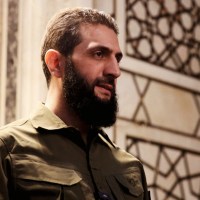
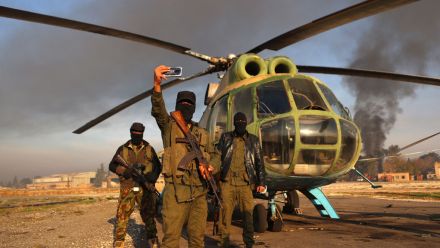
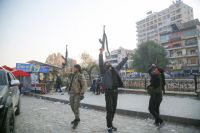
Yesterday we woke to the astonishing news that the rebels from the Syrian opposition had taken Damascus and President Assad had fled. The joy is huge and infectious, even if tempered with trepidation. In 2007, I was assured by a soldier in Damascus that the Ba’athist regime had the solidity of rock. That could be said to be the line Assad repeated throughout the civil war from 2012 onwards. Yet in a few days from 27 November to 8 December this year, opposition forces spearheaded by HTS – Hay’at Tahrir al-Sham (‘the Organisation for the Liberation of the Levant’) – swept out of their bases in rebel-held Idlib and the Turkish controlled

Suella Braverman’s husband joins Reform

Well, well, well. In a rather curious turn of events, it now transpires that Rael Braverman – husband of former Home Secretary Suella Braverman – has started campaigning for Nigel Farage’s Reform UK. How very interesting… Farage took to Twitter to announce that Braverman had not only been canvassing for the party on the streets of Hertfordshire on Sunday, but had actually become a member of the right wing group, noting:  He has received a great reception after joining the fastest growing movement in British politics. Good heavens. It’s certainly a good time to be in Farage’s group after a FindOutNow voting intention survey put Reform in second place, ahead

Assad’s demise, Isis’s rise?

The Iranian-dominated Shia arc has collapsed. The keystone to the arc was Bashar al-Assad’s regime and the partnership that his father Hafiz al-Assad forged with the Iranian regime in the 1980s.  That alliance gave Tehran for decades its only state-level Arab ally, one that shares a border with Israel.   It was also critical in enabling supply of Hezbollah and providing forward bases and freedom of movement for Islamic Revolutionary Guard personnel. In return Assad’s Syria gained strategic depth in the form of an Islamic partner and patron. The survival of Assad’s Syria was a point of strategic convergence between Russia and Tehran. That triangular relationship proved invaluable in 2015. It was the the IRGC-QF Commander Qasim Soleimani who tipped Russia into saving Assad.  But Iran may no longer be the key player in the region.  With the disappearance of Assad, any hope Tehran

Sunday shows: Rayner ‘welcomes’ fall of Assad

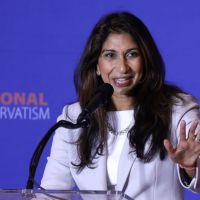
Deputy PM ‘welcomes the news’ that the Assad regime has fallen Rebel forces in Syria have captured Damascus, and Bashar al-Assad has reportedly fled the capital, ending a regime that begin in 2000. On Sky News this morning, Deputy Prime Minister Angela Rayner told Trevor Phillips she ‘welcomes that news’, but stressed that a political resolution is needed that protects civilian lives and infrastructure. Rayner said a plan had been in place to make sure any UK citizens were evacuated from Syria ahead of the weekend’s developments. Priti Patel: ‘The Turkish footprint is relevant here’ Trevor Phillips also asked Shadow Foreign Secretary Priti Patel about Syria, and the wider implications

Putin’s Middle Eastern house of cards

The Kremlin’s involvement in Syria’s civil war was always, first and foremost, about posing as a great multi-regional power rather than actually being one. Vladimir Putin’s deployment of a single squadron of warplanes to Hmemim airbase in Syria in 2015 brought a gun to a knife-fight. The Assad regime had been fighting insurgents with poison gas and infamous ‘barrel bombs’ rolled out of helicopters. Russian Su-24 and Su-35 fighter-bombers and Kamov helicopter gunships were quickly able to turn the tide against the growing rebellion and undoubtedly saved Bashir al-Assad’s regime. Unlike America’s multi-trillion dollar investment in Iraq and Afghanistan, Putin was able to change the fate of a nation by

This is Iran’s annus horribilis

Iran’s Axis of Resistance is falling apart. Israel has significantly degraded Hezbollah’s capabilities and decapitated its leadership. Hamas has been left decimated in Gaza. The regime of Syria’s President Bashar al-Assad has collapsed. Intact for now are the Shiite militias in Iraq and the Houthis in Yemen. Such a situation is not only a product of geopolitical trends but also an indictment of the leadership of the Islamic Revolutionary Guard Corps (IRGC) Quds Force. This will necessitate a reorienting of Iranian strategy. 2024 has been Iran’s Ayatollah Ali Khamenei’s annus horribilis. Tehran began this year in a stronger regional position, with Israel seemingly entrapped in an endless conflict with Hamas

How Assad fell

The astonishing and abrupt fall of Bashar al-Assad’s regime in Damascus is a moment of historic importance for the Middle East, in which the shifting of tectonic plates can be plainly felt. But which plates in particular? And what are the immediate implications? Firstly, it is important just to contemplate the dimensions of what has just taken place. The Assad regime’s beginning is usually dated to 1970.  In that year Hafez Assad, father of the now deposed Bashar, launched a coup to topple his former ally, Salah Jadid, and proclaimed himself president. His family then ruled Syria, uninterruptedly, until this week. But it’s worth remembering that the Ba’ath party, through which both Assad and

Syria is emerging from a nightmare

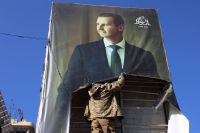
Gradually, and then suddenly, the regime of Bashar al-Assad has collapsed. This century’s most evil tyrant has fled Syria, and Damascus has fallen to the opponents of the regime. Across the country, a new political reality reigns. In towns and cities across Syria, the regime’s torture chambers are being opened, and the prisons liberated. Men whose adulthoods have been stolen from them by the tyrant are emerging into the fires of day. Brothers are being united after being separated for 40 years. They were separated when one was 18 and the other younger, because the elder of them fell foul of a regime patrol and was taken away for torture

The Russian nuclear threat is looming once more

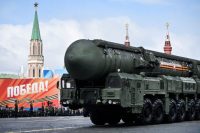
It is 00.40 pm, 26 September 1983. Lieutenant-Colonel Stanislav Petrov, the duty commander in charge of monitoring the Soviet Union’s early warning satellites designed to identify American missile attacks, is carefully checking his panels. Suddenly, the alarms roar into loud action. The word ‘Launch’ flashes onto his screen in large red letters. For the next 15 seconds, one of the satellites reports that five American Minuteman missiles have been launched and are heading towards the Soviet Union. Based in a secret bunker hidden deep beneath the woods just outside Moscow, Petrov is transfixed and stares at the screen in disbelief and shock. The automatic order to launch in retaliation is also sent to Soviet

Olaf Scholz’s dreams of election victory are wishful thinking

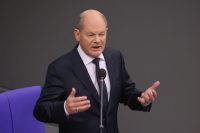
Three years ago today, Olaf Scholz was sworn in as Germany’s chancellor. He had narrowly won the election by presenting himself as Angela Merkel’s natural successor. Appearing as the continuity candidate was good enough to clinch it in 2021, but Scholz is unlikely to pull that off again in Germany’s snap election, expected to be held on 23 February next year. Scholz’s Social Democratic party (SPD) appears to have reached a nadir. Polls give it 15 or 16 per cent of the vote share, third place behind the centre-right CDU/CSU in first place and the far-right Alternative für Deutschland (AfD) in second. You’d have to go back to the 19th century

Will Kemi’s ‘Operation Slow Burn’ help her see off Farage?

It was quite possible that Kemi Badenoch could have proved an instant hit with the British public and taken the Tories straight into a sizeable opinion poll lead. External factors could have fallen in her favour, enabling her not only to capitalise on the unpopularity of Keir Starmer and Labour, but also to win back support from Nigel Farage and Reform. There are several combinations of circumstances which could have led to such an outcome. These versions of the future would have seen Badenoch swiftly become regarded by voters as the obvious Next Big Thing that Britain needs to lift it out of the doldrums, Thatcher-style. But it hasn’t panned

Will Syria’s new rulers show mercy?

The late Henry Kissinger said of the Iraq-Iran war in the 1980s that it was a shame that both sides couldn’t lose. Much the same is true of the current situation in Syria, where the long established regime of the brutal but secular Assad dynasty looks increasingly likely to fall to a sudden Islamist rebel offensive. Syria has been convulsed by a vicious and multi-sided conflict since 2012 when riots against the dictatorship of Bashar al-Assad turned into a full-scale civil war. Assad, a London trained ophthalmologist, had reluctantly become the heir apparent to his iron-fisted father Hafez al-Assad (the surname means ‘the lion’) after the death of his more

How Finland joined the West

Finland’s entry into Nato in 2023 dealt a major blow to Russia in the Baltics. For years, President Putin had warned his Finnish counterparts that a decision to join the alliance would be met with an appropriate response, but the implicit threat has been slow to materialise. In February, Russia reconstituted its Leningrad Military District, a Soviet-era administrative region tasked with defending Russia’s northwestern territories, but otherwise there’s been a palpable quiet in the far north. In recent weeks, this has begun to change. On 18 November, the sole fibre optic cable linking Finland and Germany was severed, and hours after a cable connecting Sweden and Lithuania was also cut.

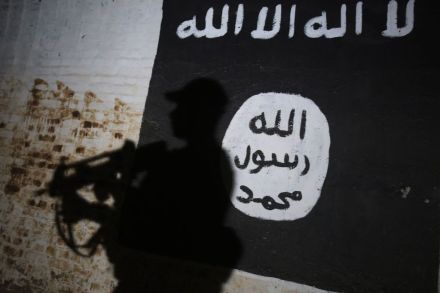
Will the Syrian Civil War create another ISIS?

There are unintended consequences, and then there are unintended consequences. What we are seeing in Syria, as Aleppo and Hama fall (and Homs braces itself) to a coalition of anti-regime forces whose DNA is to be found in al-Qaeda et al, is an unintended consequence of Israel’s bombardment in Syria of Iran-funded pro-Assad groups, and the pulverising of Hezbollah in Lebanon. An unintended consequence of the weakening of Iran and its Axis of Resistance. For the three pillars on which Bashar al-Assad props up (for the time being) his murderous kleptocratic narco-state – Iran, Hezbollah and Russia – are, respectively, on their ‘best’ behaviour in the hope of talks with