Politics

Read about the latest political news, views and analysis

What would Orwell have made of Trump?

As far as we know, George Orwell never visited America. This is a great pity. What a joy it would be for a biographer to find in some provincial attic the long-lost diaries of his travels around the segregated South, or his acid reflections on working as a scriptwriter in late 1930s Hollywood. I think the best indication of how he thought of the United States is to be found in his essay Raffles and Miss Blandish. In this, he contrasts E.W. Hornung’s light-hearted tales of the cricket-playing gentleman thief Arthur Raffles and James Hadley Chase’s No Orchids for Miss Blandish, a violent crime thriller of the late 1930s, set in the USA, which became notorious — and successful — in Britain during world war two. Oddly enough it is technically English.


Ian Lavery’s period of reflection

After Labour's catastrophic showing in the 2019 general election, most sensible people in the party decided that now was the perfect time to reflect on the result, and try to understand why it had lost so many voters in its former heartlands in the North and Midlands. Well, for Ian Lavery, the bellicose Corbynite MP for Wansbeck, that period of reflection is now finally over. And what did the former president of the National Union of Mineworkers learn? Perhaps that campaigning about justice for miners, when you took £165,000 from their union, was a bad idea? Or that your dear leader, as all the polling showed, was deeply unpopular in most of the country? Nope.

Why John Bercow blames Jo Swinson for thwarting the plot to stop Brexit

What’s John Bercow up to these days? The ex-Speaker is enjoying the limelight, of course, but he isn’t necessarily cashing in. Last Friday, he did a solo gig at a community centre in Holland Park where his appearance raised thousands of pounds for a local charity. He charged no fee. And he spent time before and after his speech chatting happily to anyone who approached him. But then Bercow has always liked to talk. His parents, who noticed their son’s verbosity, said: ‘John, generally speaking, is generally speaking.’ He made this joke against himself during his hour-long speech. It wasn’t his only essay in self-mockery: ‘We may be short,’ he said, on behalf of smaller people everywhere, ‘but we’re environmentally friendly.

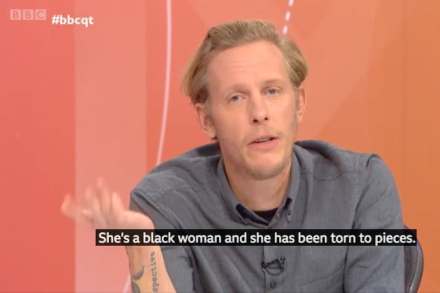
The terrifying parable of Laurence Fox’s Question Time appearance

In what turned out to be the last year of his life, Roger Scruton often mulled on the nature and techniques of twenty-first century denunciation. For Roger, like others who had seen totalitarian societies up close, knew what intimidation and officially-imposed forms of thinking were actually like. Which is not to say, of course, that modern Britain or America are totalitarian societies. Only that we have people among us who act with precisely the same techniques as those did in totalitarian societies. In modern Britain, as in communist Czechoslovakia and elsewhere, the habits are the same. A member of a profession comes into their workplace in the morning to find a letter of denunciation signed by all their colleagues.

Government suffers Lords defeat on Brexit bill

This government has just suffered its first defeat of the parliament in, unsurprisingly, the House of Lords. The Lords voted for the Oates amendment which entitles EU nationals to a physical document attesting to their right to stay in the UK after Brexit. In truth, the government and the Lords aren’t that far apart on this question. The government thinks that a digital database is sufficient while peers want a physical piece of paper. But it is the willingness of the Lords to defeat the government on this question that is most interesting. The word from the House of Lords is that peers will back down once the Commons strips this amendment out. But there was a desire to show that the Lords is still determined to carry out its scrutiny function.

Tory MPs find an issue to fight over

Ever since Boris Johnson won a majority of 80 in the December snap election, the Conservative benches have been a place of unity and happiness. It's far removed from the past year of infighting and blue on blue attacks. However, today cracks began to emerge as an issue came to the fore which divides Conservative opinion: HS2. A leaked copy of the HS2 report the government commissioned has made its way to the Financial Times. The report cautiously paves the way for the project to be green lit when the review ends. However, it also carries numerous warnings about the spiralling costs of the project and raises questions over the value the second stage of the infrastructure would offer.

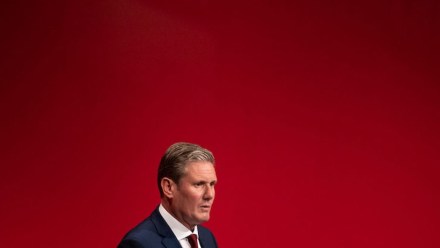
Will Keir Starmer be Labour’s compromised hero?

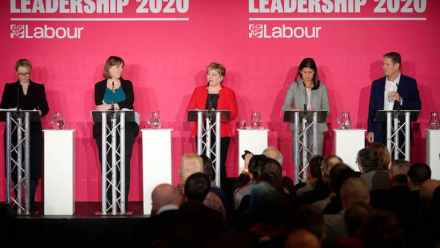
As Soviet communism fell in 1989, the German poet Hans Magnus Enzensberger wrote a defence of the art of possible that deserves to endure. Terrible regimes aren’t always toppled by romantic revolutionaries, who reject everything they stand for, he wrote in The Heroes of the Retreat. ‘In the past few decades, a more significant protagonist has stepped forward: a hero of a new kind, representing not victory, conquest and triumph, but renunciation, reduction and dismantling.’ Only insiders, who are complicit in the regime’s crimes, have the access to power needed to destroy them. Only they had enough credibility with enough of the regime’s supporters to limit resistance from the old guard. Keir Starmer looks as if he will be Labour’s hero of retreat.

The one qualification the next director-general of the BBC needs

There is one qualification which ought to be vital for Tony Hall’s replacement as director-general of the BBC, but you can bet your bottom dollar that the BBC Board, which is charged with making the appointment, will regard it instead as a disqualification. The new director-general needs to accept that the licence fee will disappear when the BBC’s charter next comes up for renewal in seven years’ time and commit to preparing for a fully-commercial future. But don’t hold your breath.

Jess Phillips is wrong to tell men to ‘pass the mic’

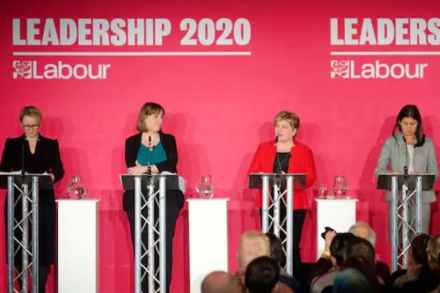
When Labour leadership challenger Jess Phillips urged men to 'pass the mic' to a woman on the top job, telling Sky’s Sophy Ridge it would 'look bad' if Labour failed to elect a woman, she more or less admitted not being up to the job. Surely the weakest argument any leadership candidate could use is demanding a step-up based on their sex? In effect, Phillips is trying to knock out the leading candidate, Keir Starmer, because he’s a man. We heard a similar argument on Question Time last week. When Laurence Fox was asked who he preferred as the Labour leader, he replied 'Keir Starmer – he just looks like he can take Boris on quite well.

Labour’s real women issue

The Labour Party claims to be learning lessons from its crushing defeat in December’s general election. But are they the right ones? While some have been moving through the stages of grief more slowly than others, the party has generally woken up to the reality that something’s gotta give. But it’s not yet obvious that the right lessons have been learned in the upper echelons of Labour - not even by some of the MPs putting themselves forward to be the next leader. Yes, the party faithful are shifting their focus back to northern and rural communities, whose decision to vote blue this time around turned decades’ worth of electoral voting patterns on their head. The first Labour hustings revealed some agreement that the election manifesto was flawed.

Forget moving the Lords – let’s have an elected senate instead

In two weeks’ time, we will finally escape the European Union, freeing ourselves from its monumental waste. Waste, that is, like continually shifting MEPs and their staff between the two seats of the European Parliament in Brussels and Strasbourg – a farce which the European Parliament itself calculated in 2013 was costing it 103 million Euros (£88 million) a year. So why, then, is our own government seeking to recreate this giant folly in Britain? Proposals floated today include relocating the House of Lords to York, while the Commons embarks on a round-Britain tour.

Jess Phillips vows to toughen up her approach to the Labour party

Jess Phillips' campaign slogan is 'speak truth, win power', but in yesterday's party hustings, she seemed to think that the extent of the truth that the Labour Party needs to hear is that it needs to win elections again and it had a few duff ideas in its manifesto that voters didn't believe. The candidate herself didn't appear happy with her performance when she popped up on Pienaar's Politics this morning, confessing: 'I think that maybe I have started to decline in telling people what they don't want to hear a little bit and I decided yesterday after the hustings the I'm going to actually just be myself again.

Sunday shows round-up: James Cleverly – If the Queen is happy, we should be happy

James Cleverly - If the Queen is happy, we should be happy Sophy Ridge began the day by talking to the Conservative party chairman James Cleverly. The interview began with the latest developments in the royal family, which from this spring will see Prince Harry and Meghan Markle step back from their official duties. The couple will no longer receive public funding, nor use the style HRH. Cleverly told Ridge that he supported the Duke and Duchess's decision and the arrangement that had been reached: https://twitter.com/RidgeOnSunday/status/1218814893517955072?ref_src=twsrc%5Etfw JC: Harry didn't choose the life that he was born into...

On Brexit, no one quite knows where Boris is taking us

I am not going to lie: I am bored sick with Brexit. Like so many of you, I have become that frustrated child in the back of the car moaning, 'are we there yet?' Boris Johnson won’t tell us. Or at least not in precise terms. So on this marathon journey, just days before we leave the EU in a legal sense at 11pm on 31 January, the final destination can only be deduced, and certainly not with any precision. What Johnson says he wants, more than anything, is a trading relationship with the EU that returns to the UK a sovereign ability to set its own rules and regulations for business, such as companies’ duties to employees, their environmental obligations, their safety standards and so on.

Why Labour lost

I thought I would take as my starting points what seems to be the internal debate inside the Labour party as to why it ended up where it did in the election. Thesis number one: it was Brexit wot did it. Thesis number two: it was being too left-wing wot did it. I'm going to suggest that neither analysis, on its own, is adequate. Let's start with Brexit. There is no doubt that Brexit played an important role in explaining the change in party support between 2017 and 2019 (and indeed going back to 2015 as well). Those who voted leave were much more likely to vote for the Conservatives or the Brexit Party than they were to vote for the Conservatives or UKIP back in 2017.

The difference a majority is making

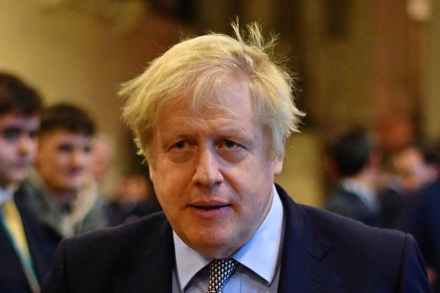
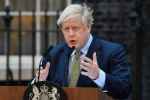
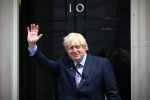
Boris Johnson’s election victory has been the political equivalent of Dyno-Rod, unblocking the drains of Westminster, I say in the Sun this morning. The return of majority government has led to not only Brexit sailing through parliament but being vital to the restoration of power-sharing in Northern Ireland. Moving forward offers a chance to bring the country back together. As Boris Johnson’s great hero Winston Churchill used to say, ‘in victory, magnanimity’. At Prime Minister’s Questions this week, he took a much less confrontational style than usual. With everyone apart from the Labour and Scottish National Party leaders, he went out of his way to be generous and not to try and score party political points.

Why the cabinet reshuffle might not be so radical after all

Prime ministers are never more powerful than just before a cabinet reshuffle. Ministers fall over themselves to be helpful, hoping to secure their position or move up the pecking order. Backbenchers start hailing the Prime Minister’s every decision as an act of firm and enlightened leadership. This spectacle is underway ahead of next month’s well-trailed reshuffle, which has already been dubbed the ‘Valentine’s Day Massacre’ by Whitehall wags. It is not just the reshuffle that is propelling Boris Johnson towards the peak of his political powers. He has an 80-seat majority at his back. And with all the talk of reform, government departments are similarly keen to demonstrate their worth to No. 10.

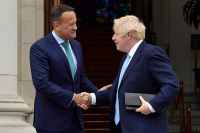
Can Leo Varadkar defy the odds to win another term as Taoiseach?

Back in October, Boris Johnson and the Taoiseach Leo Varadkar met for ‘last-ditch’ Brexit talks at a hotel on the Wirral. After nine years in power and having lost control of parliament, the Tories were in disarray. Few thought Johnson could win concessions on the Irish backstop — that perennial stumbling block, the key to securing a new withdrawal agreement with Brussels. ‘It will be very difficult,’ said Varadkar, as the Merseyside ‘wedding venue’ summit began. Yet Johnson wooed the Irish delegation, got his concessions, struck a fresh EU exit deal — and went on to clinch a dramatic general election victory. Three months on, the tables have turned.