Politics

Read about the latest political news, views and analysis

Is it time to measure Covid differently?

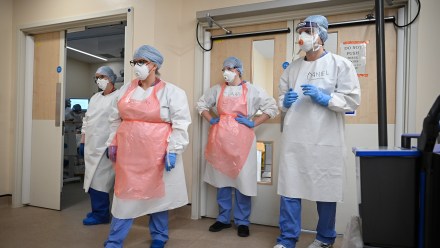
According to government figures the toll of Covid 19 so far has been 124,419 deaths (if you define a Covid death as any death which occurs within 28 days of someone being confirmed as infected with the virus) or 140,062 (if you define a Covid death as one where the word ‘Covid’ is mentioned anywhere on a death certificate – regardless of whether they have produced a positive tests). These are figures which have been compared with Jumbo Jet-loads or matched up against the loss of life in the Somme. But should we really be using raw death figures – which are hugely emotive – to influence decisions as to how to handle the pandemic?
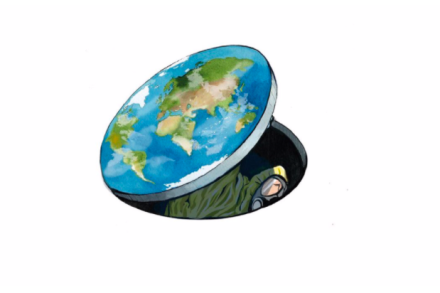

Fake views: the problem with Netflix documentaries

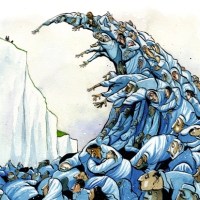
Netflix gets a lot of stick for being woke these days - and not just from this parish. And when you look at the network’s recent signings, it’s not hard to see why. From hiring Michelle Obama to present kids’ shows to splashing out on the Sussexes, Netflix executives don't exactly hide their worldview. But for all the gripes levied against the media empire, there is one section of its content that gets off rather lightly. And that’s a bit of a shame. As not only do Netflix's current affairs documentaries come with a strong agenda, they’re also terrible examples of factual filmmaking. And the latter is the really unforgivable part. If you’re not familiar with Netflix’s documentary output, here's a quick rundown of some recent hits.

Starmer’s Labour is doomed but it’s not his fault

Keir Starmer has caught a lot of flak this week for his response to the Budget. The complaints are that he wasn’t strong enough, his opposition to corporation tax rises was a mistake and that he had nothing to really say that managed to stick with the public. It has added to a sense of Starmer’s leadership of the Labour party being on a downward spiral. Yet Starmer has probably done as well in his opening year as Labour leader as anyone could have. He isn’t the problem – it’s his party. The reality is that Labour couldn't win the next election with anyone in charge. The problem goes well beyond the legacy of the Corbyn era (although his time in charge certainly didn’t help).

Will the SNP finally see sense on its flawed Hate Crime Bill?

The saga of the SNP's Hate Crime Bill is drawing to a conclusion. This week, Holyrood will cast a decisive vote on the embattled bill. Introduced just ten months ago, it seeks to consolidate existing hate crime laws and create new offences on the ‘stirring up of hatred' against certain groups. These proposals would make ‘threatening or abusive’ behaviour which ‘stirs up hatred’ on the grounds of age, disability, religion, sexual orientation, transgender identity and variations in sex characteristics a criminal offence, punishable by up to seven years in prison, an unlimited fine or, for the extremely unfortunate, both. The proposals have proved highly controversial and understandably so. In our society, the term ‘hatred’ is malleable.

What can Laurence Fox hope to achieve with his bid for London mayor?

As if the politics of the Western world wasn't well past parody already, this weekend sees Laurence Fox throwing his hat into the ring to be London’s next mayor. Before I start making fun of this idea, let’s try and give Mr Fox the benefit of the doubt. The London mayoral contest, which should have been put out of its misery last May, has been dragged into 2021 on account of the coronavirus crisis. The extra year hasn’t made the contest any more inviting to those of us who live in the capital. We still have an incumbent Labour mayor who is a disappointment on every possible level, but who is up against such a terrible flock of competitors, re-election is all but in the bag for him. The Tories chose very poorly in Shaun Bailey.

Why is the SNP afraid of issuing its own government bonds?

Rishi Sunak's budget appeared to offer some good news to Scots, not that the SNP saw it that way. An additional £1.2 billion in Barnett funding was handed over to Scotland's government. This is on top of £9.7 billion in extra spending delivered over the past year for pandemic support. But the SNP Scottish government took a different view. 'While I welcome some of the announcements today, it is clear the Chancellor has not matched Scotland’s ambition for economic recovery and supporting households,' said Scottish Finance Secretary Kate Forbes. Forbes and her colleagues often point out that 'Scotland's ambition' includes more borrowing powers.

Will Keir Starmer change tack?

A sign that the political landscape is changing in favour of the Conservatives can be found in a YouGov poll this week stating that the Tories have a 13-point lead over Labour. This comes after a recent uptick in support for the Conservatives that has been put down to a vaccine boost. There now also appears to be a Budget boost – with the latest poll finding that Sunak’s 2021 Budget is seen as the fairest in 12 years, with 55 per cent saying it was fair. However, any celebrations in government have been dampened slightly by the row over its plan to give health workers a 1 per cent pay rise – rather than the 12.5 per cent the Royal College of Nursing (RCN) were calling for.

The Lady I knew: Aung San Suu Kyi’s tragedy

Shakespeare’s tragedies have heroes but they are not heroic. As the plays unfold you witness their crumbling. In fact, they destroy themselves because the flaw is embedded deep in their character. It’s an inevitable and irresistible process. It’s an outcome that cannot be prevented. That’s why it’s tragic. I think that could also be true of Aung San Suu Kyi. I’ve known her since I was five. At the time, her mother was the Burmese Ambassador in India, and Suu, as I have always called her, was an undergraduate at Delhi’s Lady Shri Ram College. Our parents became friends and Suu and my sister Kiran would often drive together to college. Even as a teenager, Suu was drawn to politics.

The ECJ’s air pollution ruling against Britain is hard to swallow

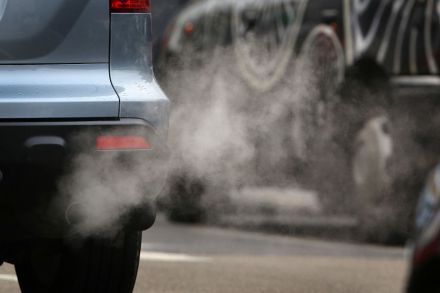
The European Court of Justice (ECJ) has ruled that the UK ‘systematically and persistently' breached EU limits for nitrogen dioxide (NOx) emissions in 16 areas including London, Manchester and Glasgow between 2010 and 2017. It's a judgement that means, despite Brexit, that a multi-million euro fine may be on its way. The UK is leaving the ECJ behind us; but as part of the withdrawal deal, we have agreed to respect its rulings on cases already in progress – and this one started in 2018. I’d be wholly in favour of the UK being fined gazillions for our historically appalling emissions – with one important caveat, which I’ll come to. After all, NOx emissions are estimated to have caused 23,500 deaths in one year in the UK.

Immigration is no longer a political problem

Ask voters what the most important issue facing Britain is and just 2 per cent say immigration. Even when you expand it to the most important issues, the figure only reaches 6 per cent. This is a dramatic turnaround from 2015 when 56 per cent listed immigration as one of the top issues facing the country. In my Times column today, I ask what explains this shift. The end of free movement and the resumption of border control has taken much of the heat out of the issue In part, it is Covid. Before the pandemic, net migration to Britain was running at 313,000. In the past year, though, hundreds of thousands have returned to their home country for lockdown. The Office for Budget Responsibility estimates that the population might have fallen by 1.

Barnier and France fear Brexit Britain’s next moves

Michel Barnier – still officially the EU’s Brexit taskforce leader – gives few interviews. As a Savoyard and keen mountaineer, as he habitually reminds us, he is a cautious man who advances step by step with the long climb firmly in his sights. So it was something of a surprise to see him appear on 16 February before the French Senate Brexit follow-on committee (renamed ‘groupe de suivi de la nouvelle relation euro-britannique’). It is a sign of the importance of how Brexit will play out for the French that the Senate has formed a very senior 20-strong commission to monitor and react to Brexit implementation and next stage negotiations. Of course Barnier and France have an interest in Brexit being implemented as they see fit.

Are loyalists plotting a return to violence?

What are we to make of Loyalist paramilitary groups withdrawing support for the Good Friday Agreement over the invidious trade border that now exists in the Irish sea? The Loyalist Communities Council, a group that represents the Ulster Volunteer Force (UVF), Ulster Defence Association (UDA) and the Red Hand Commando, has written to Boris Johnson and Ireland’s Taoiseach, Micheál Martin, warning of 'permanent destruction' of the 1998 peace agreement unless changes are made to the Brexit agreement.  'If you or the EU is not prepared to honour the entirety of the agreement then you will be responsible for the permanent destruction of the agreement,' David Campbell, the chairman of the LCC, said.

The thinking behind Rishi Sunak’s cash grab

Rishi Sunak’s tax hikes pack a punch: by 2025, over £19bn is estimated to be raised from the freeze to the personal tax threshold, and a staggering £50bn from a new, tiered corporation tax structure. That’s a lot of people out of pocket, and businesses diverting their profits away from workers and consumers and towards the state. Criticisms of the cash grab are splashed across the front pages of the papers today. Across the pond, the Wall Street Journal has lambasted Sunak’s policies: 'Britain’s political class, and especially the governing Conservative party, prides itself on fiscal rectitude. So Mr. Sunak already faces pressure to “pay for” all this relief. We sympathise, but in this instance he would have been better off waiting.

The Rachel Reeves Edition

40 min listen

Rachel Reeves is the Labour MP for Leeds West and the shadow Chancellor of the Duchy of Lancaster. On the podcast, she talks to Katy about being a teen chess champion (pictured playing), going to a school where her mum worked and what Labour needs to do to turn its losing streak.

Rishi’s nightmare: Will inflation crush the recovery?

41 min listen

Could a blip in inflation ruin the UK's economic recovery? (00:50) Why is support for the IRA becoming normalised? (12:20) What makes a great diarist? (31:15) With The Spectator's economics correspondent Kate Andrews; economist Julian Jessop; writer Jenny McCartney; politician Mairia Cahill; satirist Craig Brown; and historian, journalist and author Simon Heffer. Presented by Cindy Yu.  Produced by Max Jeffery, Alex Valizadeh, Alexa Rendell and Matt Taylor.