Politics

Read about the latest political news, views and analysis

Watch: Adonis grilled on UK vaccine scheme

As President of the European Movement during the current Brussels vaccine crisis, Andrew Adonis currently has his work cut out. With polls currently showing that Brits now have a more positive attitude towards the UK’s future outside the EU than negative by a margin of two to one, any bid to get the UK to rejoin the EU will suffer for as long as the trade bloc's jab woes continue. Still, Adonis could make it easier for himself and get round to deleting some of his old tweets on the UK's own vaccine efforts. Appearing last night on Spectator TV the peer was asked by Andrew Neil why he'd tweeted in November that the British vaccine rollout would 'lead to billions of corrupt contracts' and the supply and distribution would be a 'fiasco.'  https://twitter.
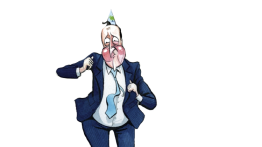
The delightful humiliation of David Cameron

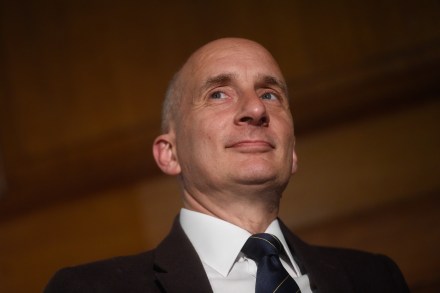
Say what you like about David Cameron, the man never stops trying to exceed expectations. I once thought that he’d never do anything sadder than giving his wife’s stylist an honour then running away from parliament like a child. Then he proved me wrong by publishing his memoirs. And now, demonstrating his unstinting commitment to the cause of his own humiliation, he has reinvented himself as a shoddy lobbyist. When he naffed off after making a horlicks of the referendum, Cameron warbled the usual shiny words about duty to the nation. It turns out he meant it: in these dark times, we all need a laugh, so we should thank him for cheering up a gloomy nation by means of his own embarrassment. Public service takes many forms.

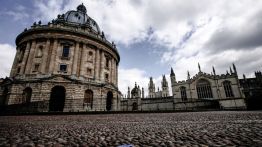
Why is India’s parliament discussing an Oxford free speech row?

As with almost every country around the world, India is busy dealing with the Covid crisis. But its parliament briefly turned its attention away from the pandemic in the last few days to another issue playing out thousands of miles away: a row at Oxford University involving an Indian postgraduate student. This no ordinary campus bust-up: the fallout could have big implications for the relationship between India and Britain. Rashmi Samant, who is the first child in her family to go to university, made history last month when a landslide victory saw her become the first Indian woman to head up the Oxford Student Union (OSU). But her victory was short-lived. Within days she was forced to resign after old Instagram posts were dug up.

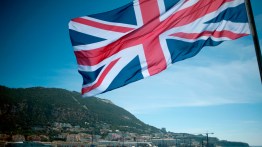
Poll shows Brits rock solid on Gibraltar MP

Gibraltar has intermittently featured in the headlines in recent years amid repeated incursions by Spanish ships into the peninsula’s waters. The future of the Rock – which voted by 96 per cent to stay in the EU in 2016 – was subject to much speculation and briefing during the Brexit negotiations as Spain has long sought to reclaim the tiny territory. But could an even closer relationship with Westminster now be on the cards? A new poll for The Spectator by Redfield and Wilton — with a sample size of 1,500 — shows that the British people back Gibraltar having its own seat in the House of Commons by more than three to one.

Kids will thank us for shortening the school summer holidays

Oh for a normal summer – so close now, but Covid remains capricious, a wave across Europe threatening to wash it all away. But just think: for some schoolchildren, and their parents, the normality of the long six-week summer break may not be such an appealing prospect. Sure, the middle-classes are able to pack it with enriching activities – exciting new skills, friendships and memories. But, for kids in families with stretched budgets, it can be isolating, impoverishing, boring. And, as quite a substantial body of evidence now shows, very bad for their emotional and cognitive development – some studies even conclude that the majority of the attainment gap between rich and poor children can be explained by the cumulative impact of successive summer breaks.

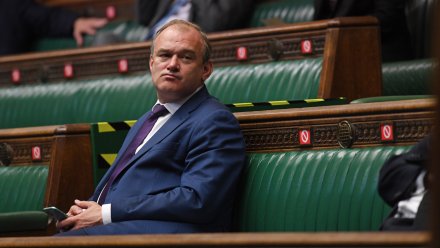
Does the data support renewing Covid emergency powers?

Last night MPs voted by 484 to 76 to renew the Coronavirus Act, which grants the state emergency powers to further control – and shut down – most parts of society. The Liberal Democrats voted against the extension, along with 35 Conservative MPs who rebelled and voted against the government, citing as their main concern the widening gap between these unprecedented powers and the danger Covid-19 presents in the UK. The latest iteration of the bill has been renewed until September – three months after the last date in Boris Johnson’s roadmap – and includes the toughest restrictions on international travel yet.

What Chariots of Fire can teach us about identity politics

Next week marks the 40th anniversary of Hugh Hudson’s Chariots of Fire, the Oscar-winning true tale of Olympic glory which captured the affections of critics and mass audiences alike. Fondly cited by everyone from Maggie Thatcher to Joe Biden, parodied by Mr. Bean, beloved and bemoaned for its Vangelis score and heightened slow-mo cinematography, Chariots reliably jerks tears from most filmgoers of a certain generation. Yet, four decades on, the film has lost none of its vitality, even for the newcomer. Indeed, so far from being a faded relic of its era, it still crackles with a sharp and nuanced screenplay that offers particularly apt food for thought in a news age dominated by debates over discrimination, both racial and ideological.

Europe’s panic: what’s behind their vaccine meltdown?

39 min listen

As the EU threatens a vaccine export ban, is their blind panic a sign of incoming crisis? (1:15) Plus, will a new Instagram account for teenage girls to report sexual assault restart a battle of the sexes? (18:05) And finally, what is it like to be one of the last British babies born under the Raj? (28:30)With Labour peer Andrew Adonis; Spectator contributors Matthew Lynn, Julie Bindel, Melanie McDonagh and Brigid Keenan; and historian Alex von Tunzelmann.Presented by Lara Prendergast.Produced by Cindy Yu, Max Jeffery and Sam Russell.

MPs back extending Covid powers until September

MPs have voted to extend emergency coronavirus powers for another six months by 484 to 76 against. This means the government has retained wide-ranging powers including those given to police and immigration officials when dealing with people suspected of carrying Covid. In the debate ahead of the vote, the Health Secretary insisted that the powers will stay in place 'only as long as necessary'. Discontent is growing in the Tory party over the government's approach However, when pressed, Matt Hancock would not rule out MPs being asked to renew them again in six months' time.

Will Covid restrictions really end in June?

14 min listen

Today Matt Hancock refused to rule out not bringing the government's Covid emergency powers back for another renewal vote in September, while the Prime Minister has been firefighting his comments from yesterday about pubs and vaccine passports. What kind of normality can we actually expect this summer? Cindy Yu talks to Katy Balls and James Forsyth.

Defra keeps it in the family

Who is in charge at Defra? Technically, it's the environment secretary George Eustice. But in recent weeks there have been whisperings of the growing influence of the Goldsmith clan. Zac Goldsmith is a minister in the department as well as a close friend of both Boris Johnson and his fiancé Carrie Symonds. Just this weekend, a No. 10 source came out to deny claims from the farming lobby that Symonds and Goldsmith had teamed up in a bid to tie up farmers in red tape to protect the environment.

Can Priti Patel’s asylum shake-up help Britain take back control?

Every Home Secretary is forced to confront the cold political realities of the office. What they set out to deliver – strengthening countermeasures in the aftermath of a terror attack, say, or taking steps to tackle a spike in violent crime – tends to be supported by swathes of the public at large. But though they can enjoy that currency of quiet public support, Home Secretaries of both major parties must then do battle 'inside the Beltway' with a vociferous legal and human rights establishment – and other vested interests ­– which seek to dilute their policy responses to the challenge of the day. To use a term of art, it is often a 'hostile environment' for holders of that least understood great office of State.

Watch: Charles Walker’s ‘pint of milk’ lockdown speech

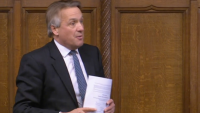
Sir Charles Walker has earned himself the reputation of being one of the most consistent and outspoken critics of the government's lockdown policy. The 1922 Committee stalwart has previously gone viral for passionate clips lambasting Matt Hancock's 10 year imprisonment plan for returning holidaymakers dodging quarantine rules, attacking Boris Johnson for treating MPs like 'dogs' and describing lockdown as 'studied and deliberate cruelty for a nation under pressure.'  Today Walker's ire was directed at what he considers to be Britain's slide into authoritarianism, promising in a four minute speech to carry a pint of milk around London in the next few days as a silent protest: 'That pint will remind me that the act of protest is a freedom and not a right.

Watch: Simon McCoy’s greatest BBC hits

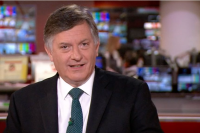
BBC's grumpiest news presenter Simon McCoy today announced he's leaving the corporation, the latest big name hire poached by start up channel GB News. McCoy, 59, leaves after 17 years at the Beeb, signing off this afternoon's News at One with the words: 'From me, it's good afternoon – and goodbye.' Mr S thought it only right to gather a round up of highlights from McCoy's recent career, presenting to you below six of the best and starting with how he greeted Boris Johnson's Talk Radio interview in July 2019 during the Tory leadership race: https://twitter.com/scottygb/status/1375016454031077379?ref_src=twsrc%5Etfw It came weeks after he was forced to read off an autocue for a segment about a dog-show in Scotland: https://twitter.

Watch: Michael Gove’s pub passport evasion

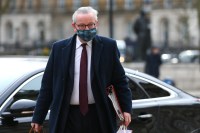
Michael Gove was up this morning in the Commons fielding questions following last night's controversial announcement that vaccine passports could be required for the pub. Amid collective fury at such a prospect by journalists, parliamentarians and policy wonks alike,  William Wragg, the baby faced assassin of moderate Toryism, stepped up to ask the obvious question: Does my right honourable friend, the chancellor of the duchy of lancaster, still agree with himself in his opposition to covid vaccine certification to attend the pub as he expressed on Sky News recently?

Is Boris Johnson a feminist?

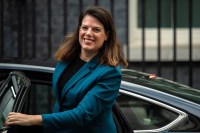
It is the question on everyone's lips: is Boris Johnson a feminist? The Prime Minister's press secretary claimed a fortnight ago that he is; to the Guardian and the usual suspects he is a 'priapic sexist' guilty of the worst sorts of On the Buses smut – including in the Spectator's own august pages.  But now given Johnson's support in November for a gender balanced parliament and his noticeably restrained comments last week about the policing of the Clapham Common vigil, Mr S wonders if absolute power has changed Boris, well, absolutely?  Who better to answer this question than Caroline Nokes, elected unopposed last year as chair of the women and equalities committee in the Commons.

What will it take to tackle long Covid?

With just under 500,000 patients admitted to hospitals in Britain since the start of the pandemic, we need to talk about 'long Covid'. Why? Because while the vaccine rollout is undoubtedly saving many lives, there is going to be a forbidding secondary impact from this virus on the nation’s health, the scale of which is only just becoming apparent.  What does 'long Covid' conjure in your mind? For many, it has become synonymous with fatigue and brain fog, symptoms which are fairly common. But what is less well known is that the impact of Covid-19 on patients can extend far beyond these symptoms alone.

Why can’t other politicians say sorry like Angela Merkel?

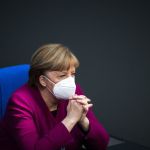
Angela Merkel did something remarkable this week: she said sorry. Having announced an Easter lockdown in Germany, the Chancellor partly reversed her decision. ‘This mistake is my mistake alone,’ she said, urging ‘all citizens to forgive’ her. Was this a particularly groundbreaking speech? Perhaps not. But one thing is clear: it is exceptionally rare to hear a politician admit blame and take responsibility so explicitly, unconditionally and openly. And when it does happen, it is more often than not from a woman. Last summer, Nicola Sturgeon apologised to pupils over the controversial exam results in a similar fashion to Merkel: ‘Despite our best intentions, I do acknowledge that we did not get this right and I'm sorry for that.