Dean Godson

Lord Godson is director of Policy Exchange and the author of Himself Alone: David Trimble and the Ordeal of Unionism (2004)

The Docklands bombing should have been a line in the sand

From our UK edition

This week marked the 30th anniversary of the IRA bombing of Docklands – the blast which dramatically ended the first IRA ceasefire of 1994.  It should have been the moment that placed the Irish Republican movement beyond the pale. Instead, there is a case for arguing that it actually helped them in the long run. ‘It was treated almost as if it was the cri de coeur of a delinquent teenager rather than a full-scale assault on British democracy’ I say this with some feeling since at that time I was working as a leader writer on the Daily Telegraph in the nearby Canary Wharf tower – and was levitated upwards by the force of the blast.

Europe’s leaders are finally waking up on immigration – but is it too late?

From our UK edition

The impressive shift in the terms of trade of the immigration debate in the last 24 hours proves one unlikely proposition: that the British political marketplace actually works. Giorgia Meloni is the only leader of a major European country in these times who seems successfully to have united the grievances of losers and winners in a viable political coalition Nigel Farage was correct this morning to assert that the Home Secretary Shabana Mahmood would not have spoken as she did but for Reform successfully conditioning the terms of trade in this Parliament. However, he in turn was forced to concede that her rhetoric, at least, deserved serious consideration – even as he threw doubts on her capacity to deliver. But will this apparent new consensus yield much policy fruit?

The lethality of ‘Islamophobia’ accusations

From our UK edition

The debate over an official definition of Islamophobia is reaching a crescendo – with Dominic Grieve’s proposed definition in the hands of Communities Secretary Steve Reed. Yet perhaps the most important aspect of this bubbling controversy has been strangely undercooked to date. The chilling effects on free speech of Islamist-inspired ‘cancel culture’ are now well understood. But the potential lethality – literally so – of an accusation of ‘Islamophobia’ has been accorded too little attention.

Is this the man who can defeat France’s Islamists?

From our UK edition

When France played Algeria in their national stadium, the Stade de France, in 2001, the French player Thierry Henry said afterwards he felt – disturbingly – as if he were playing away. The game had to be abandoned after dozens of Algerian fans, furious at being 4-1 down, invaded the pitch.  Bruno Retailleau, the interior minister of France since September last year and a key figure in the small boats crisis, has been known to cite Henry’s comment. Retailleau is carving out a distinct role for himself in government as the tribune of the growing number of his compatriots who share the same sense that they, too, are ‘playing away’. In other words, the millions who believe that they have become strangers in their own country.

A tribute to Blair Wallace, a hero of the Troubles

From our UK edition

The names of leading republicans like Gerry Adams, Martin McGuinness and Bobby Sands are well known, but how many in Great Britain can identify a Chief Constable of the Royal Ulster Constabulary – or, indeed, a single security force hero of the Troubles? Blair Wallace, who has died aged 87 and will be buried tomorrow, was just such a hero. He was the last of the “big beasts” of the RUC Chief Officers from the height of the conflict, rising to the post of Deputy Chief Constable – until he lost out on the top job in 1996. Wallace led from the front and was injured five times during the Troubles He was a walking history book, serving 42 years, a stint unimaginable in any force nowadays.

The rise and fall of Leo Varadkar

From our UK edition

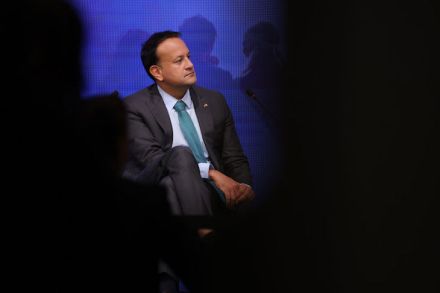
Leo Varadkar, who resigned yesterday, has certainly earned his place in the history of Anglo-Irish relations as one of the most consequential taoiseachs of all time. His role in Anglo-Irish relations was defined by Brexit, and Ireland’s remarkable role in shaping its outcome. The marked contrast with John Bruton – a previous Fine Gael taoiseach of the 1990s, who died last month – could not be greater. Bruton was also a militant Europhile, but he rarely sought to fan the flames of Anglophobia in the Irish Republic. Varadkar, by contrast, sought to ride that tiger relentlessly.  The UK caved to the EU/Irish demands. Dublin could hardly believe it Varadkar became taoiseach just as the Brexit negotiations began, in June 2017.

The Met have allowed pro-Palestine protestors to run riot in Westminster

From our UK edition

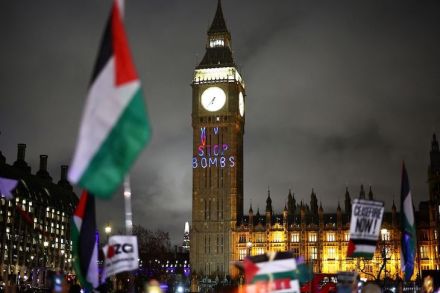
The Metropolitan Police is more frightened of the Palestine Solidarity Campaign than the Palestine Solidarity Campaign is of the Metropolitan Police. This is the central fact of life in the public order debate today – and does much to explain the context of Sir Lindsay Hoyle’s decision to break with long established Parliamentary convention in order to avert large scale threats to MPs.  The Speaker’s reasoning should puncture the Panglossian narrative of the Met and of other forces that the Palestine protests are largely peaceful. The truth is that these outwardly orderly marches are based on a discourse of threat – to which the Met responds by effectively ‘taking the knee’.

Why does the Met prioritise Palestine marchers over Londoners?

From our UK edition

If you want an illustration of one of the things that is wrong with the Metropolitan Police, you need only look at how some of the best known streets in central London were yet again handed over to protestors this past weekend – including allies and apologists of Hamas. This is the price which the Met’s leadership seems to be willing to pay to keep things quiet in the capital.   Over recent months, these supposedly peaceful demonstrations have included a range of individuals throwing flares, shouting antisemitic chants ‘from the river to the sea’ and calling for there to be a ‘Jihad’. Despite these incidents, there’s a lot of satisfaction with this outcome in the senior command levels at New Scotland Yard. But is their self-confidence justified?

The post-Brexit crisis in Northern Ireland is finally over

From our UK edition

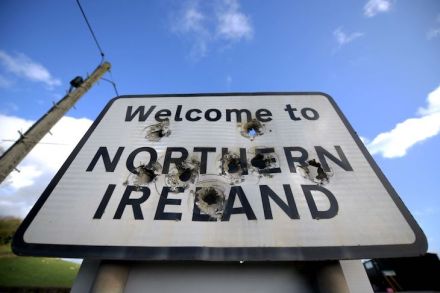
Rishi Sunak, with almost daily input from Sir Jeffrey Donaldson, the Democratic Unionist Party leader, has just delivered a deal on the Windsor Framework that is notably pro-Unionist. He has managed to do so in the face of EU intransigence, an unhelpful White House, the ‘resistible rise’ of Sinn Fein in the Republic of Ireland, hard-line Loyalist rejectionism, and purist Brexiteer scepticism.  All this is the antithesis of the Anglo-Irish Agreement of November 1985 – the 40th anniversary of which falls next year – both in the substance of what has been negotiated and also how it was negotiated. To restore the devolved institutions on these terms represents a memorable achievement, considering the demographic and political decline of Unionism in the intervening period.

Ireland’s security freeloading is a threat to the West

From our UK edition

Today marks the thirtieth anniversary of the Downing Street Declaration – one of the key building blocks of the Northern Irish peace process which led to the Belfast Agreement of 1998. That accord, forged between prime minister John Major and the taoiseach Albert Reynolds, is widely held to be a masterpiece of calculated ambiguity. In a memorable turn of phrase, the British government acknowledged that it had 'no selfish strategic or economic interest' in Northern Ireland – a formula first employed in Ulster secretary Peter Brooke’s Whitbread lecture of 9 November 1990. To much of Nationalist Ireland, the Green-sounding language was enticing: the British were saying that they had no 'imperialistic' reason of State to remain in Northern Ireland.

Biden can no longer afford to indulge Irish nationalism

From our UK edition

For the British government, the Biden visit to Belfast posed one major exam question: would the pageantry of a pan-nationalist juggernaut rolling into town, led by the most tribally Irish-American President of all time, make it appreciably harder for the DUP to accept the Windsor Framework and so to re-establish the Stormont Executive as the cornerstone of the Good Friday Agreement? For as it stands, Rishi Sunak’s mission to stabilise the Union in all its constituent parts is not yet complete. Put simply, the UK is an infinitely more important partner for the US in maintaining world stability than the still neutral Republic of Ireland Every moment of the US President’s brief time in the province had to be evaluated according to that exacting yardstick.

Why Prevent failed – and how to fix it

From our UK edition

William Shawcross's long-awaited review of Prevent – the Government’s counter-radicalisation programme – is one of the boldest official documents of recent times. As such, it constitutes a radical reappraisal of a key state policy which has gone seriously off-piste and is in urgent need of rebalancing. Much of the critique of Prevent has historically come from Islamists – who contend that it singles out Muslims for particular obloquy. For a programme that cost the Home Office a little less than £50 million per annum in 2020-1, Prevent commands a lot of attention.

Why David Trimble mattered

From our UK edition

David Trimble, who died yesterday afternoon at the age of 77, played a seminal role in forging the Good Friday Agreement of 1998 – becoming the first leader of Northern Ireland’s unionists to share power with Irish republicans. Trimble and John Hume of the SDLP, the then leader of northern constitutional nationalism, duly received the Nobel Peace Prize; Trimble thus became the last British politician to win that accolade. With his demise (and the deaths of Ian Paisley of the DUP in 2014 and John Hume in 2020), Gerry Adams of Sinn Fein/ IRA now becomes the last surviving leader of the Province’s major political parties from that period – not an outcome that anyone would have bet on at the height of the Troubles.

Can Priti Patel’s asylum shake-up help Britain take back control?

From our UK edition

Every Home Secretary is forced to confront the cold political realities of the office. What they set out to deliver – strengthening countermeasures in the aftermath of a terror attack, say, or taking steps to tackle a spike in violent crime – tends to be supported by swathes of the public at large. But though they can enjoy that currency of quiet public support, Home Secretaries of both major parties must then do battle 'inside the Beltway' with a vociferous legal and human rights establishment – and other vested interests ­– which seek to dilute their policy responses to the challenge of the day. To use a term of art, it is often a 'hostile environment' for holders of that least understood great office of State.

Why is Corbyn cosying up to Northern Ireland’s unionists?

From our UK edition

How serious are Jeremy Corbyn and the Corbynites about winning power? Deadly serious, if the remarkable tactical flexibility he displayed on his first official visit to Belfast as leader of the Labour Party is anything to go by. Corbyn took care to genuflect not just to nationalist idols such as Gerry Adams, Martin McGuinness and John Hume, but also to three Unionist big beasts – Arlene Foster, Ian Paisley Sr and David Trimble. The Labour leader has not suddenly become a “revisionist” in the affairs of Northern Ireland, which to this day remains one of his longest-lasting and deepest ideological commitments.

A new Unionism could be the answer to Tory prayers

From our UK edition

With four years until the next general election, British politics is in a bloody stalemate. The main parties are stuck at 40 per cent in the polls, reflected in the inconclusive local elections this month. The possibility of a 1997-style landslide has faded and even over-confident strategists (on both left and right) have learnt the meaning of hubris. It's true that the current divisions in our politics run deep. There is a clearer left-right split than there has been since the 1980s, with new sources of division amplified by the EU referendum: old vs young, city vs country, the so-called Somewheres vs Anywheres. These exist alongside other regional and national anomalies – including the dominance of London’s economy.

The meaning of Sean O’Callaghan

From our UK edition

Sean O’Callaghan, one of the most important defectors from the Provisional IRA , successfully evaded the republican movement in death as in life – by dying yesterday of natural causes. Much will written in the obituaries tomorrow about the amazing details of O’Callaghan’s journey  – from the precocious, murderous,  republican  'boy soldier' of the 1970s to the double agent extraordinaire who saved the life of the Prince and Princess of Wales from an IRA bomb which was due to be planted in a lavatory next to the Royal Box at the Dominion Theatre in 1983. What, though, was the wider significance of his career?

We are not ready for an escalation of violence in Ulster

From our UK edition

Dean Godson says that this week’s murders have yielded impressive displays of cross-party unity. But they also draw attention to Northern Ireland’s vulnerability to terrorist attack, and the risks that were always inherent in the dismantling of the Province’s security structure ‘After they die, they will be forgotten, just as the policemen and soldiers who died are forgotten after a while, except by those who loved them.’ So said Florence Cobb, widow of RUC Inspector Harry Cobb, murdered in Lurgan by the Provisional IRA in 1977. I recalled those simple but powerful words when I heard that Constable Stephen Paul Carroll had been murdered by dissident Republicans on Monday night — just five miles away in Craigavon, Co. Armagh.

Paying the price of peace

From our UK edition

Jonathan Powell was the most durable of Tony Blair’s inner circle — and, in the affairs of Northern Ireland, much the most influential. Jonathan Powell was the most durable of Tony Blair’s inner circle — and, in the affairs of Northern Ireland, much the most influential. He remained in post long after the other Blairites de la première heure such as Alastair Campbell, Anji Hunter and Peter Mandelson had departed the scene. The most important career civil servants, such as Sir John Holmes and Sir David Manning, did their stints and rotated out. Powell thus became ‘last man standing’ and was a key player in the triumphant denouement of May 2007, as Martin McGuinness finally lay down with Ian Paisley.

‘They know the extent of our reach’

From our UK edition

John Grieve, the long-time head of the Metropolitan Police’s Anti-Terrorist Squad, observed shortly after the conviction of the IRA men who bombed South Quay in 1996: ‘It’s great — but every time we have one of these long trials, we give the men of violence a free masterclass on how we go about protecting the public and how they can try to get around us next time.’ On the day after the triumphant conclusion to the ‘Crevice’ trial, I asked Peter Clarke — Grieve’s lineal successor — about this in his 15th-floor office at New Scotland Yard. Clarke takes the point. But the pluses of taking this case through the courts still massively outweigh the minuses.