Politics

Read about the latest political news, views and analysis

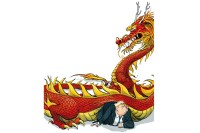
Why the West should stop investing in China

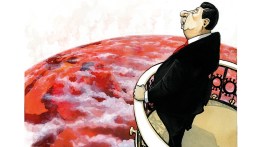
The Prime Minister has called for an international coalition of free countries to oppose the growing influence of China’s authoritarian dictatorship. But it needs to be a lot bolder. The wheels of international diplomacy turn slowly and the government should make full and immediate use of the powers it already has. Three decisive steps are already possible. Companies from Western liberal democracies are bolstering an authoritarian dictatorship First, we should stop entities under the control or influence of the Chinese Communist Party (CCP) from buying up our companies, especially infrastructure firms. A Chinese company, for example, controls about 25 per cent of North Sea oil and other companies own gas, water and electricity suppliers in the UK.

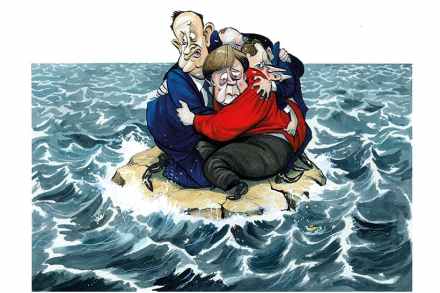
The EU’s decline is self-inflicted

In 1991, at the height of the first Gulf War, the EU demonstrated to the world its divisions and helplessness, as Belgium infamously blocked the export of munitions to the UK, then at war in the Gulf. They quickly came to regret it. The Belgian Foreign Minister subsequently remarked tellingly: ‘Europe is an economic giant, a political dwarf and a military worm’. It seems these days that little has changed, save that even the EU’s claim to be an ‘economic giant’ is eroding with the loss of the world’s fifth largest economy, a dwindling share of world trade and a catatonic growth rate, even before the pandemic. Worse still, much of its relative economic decline is self-inflicted.

Sunday shows round-up: ‘every confidence’ future lockdowns can be avoided, says Dowden

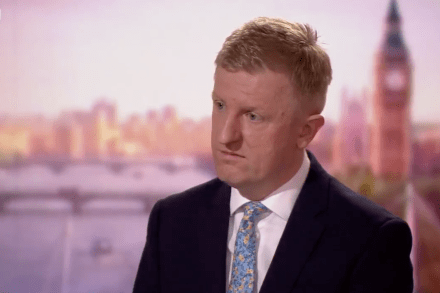
Oliver Dowden – We have ‘every confidence’ there will not be future lockdowns The Culture Secretary Oliver Dowden was in the hot seat this morning amid reports that a third wave of Covid-19 is engulfing much of continental Europe. Many of the UK’s close neighbours, including France, Germany and the Netherlands, are re-introducing or extending measures to combat the so-called ‘Kent variant’ of the disease. Andrew Marr sought to get reassurance from Dowden that the government would not end up plunging England back into a fourth nationwide lockdown: https://twitter.com/BBCPolitics/status/1376097151437135876?

Is Britain turning into a ‘bio-security state’?

30 min listen

After ruling out vaccine passports for most of this year, the government seems to be moving the goalposts with little discussion. Fraser Nelson writes in his Telegraph column this week that Britain could be moving to a bio-security state - and discusses with James Forsyth and Katy Balls on this episode.

Why Gen-Z is turning its back on the BBC

Do 16-34 year olds still watch terrestrial TV? More importantly, will they still be watching in a year's time when BBC 3 re-launches as a linear station? Six years ago, the youth orientated channel switched to digital-only as part of a £100 million cost cutting measure. Since then they have produced a couple of runaway successes such as the all-conquering Fleabag, hence the decision to have another crack at broadening their appeal to a rapidly dwindling youth market where TV sets are a rarity and scheduling anathema.   Once it is up and running again in January will the channel be able to fulfil its remit by appealing to a broad spectrum of younger viewers most of whom have already switched to subscription platforms?

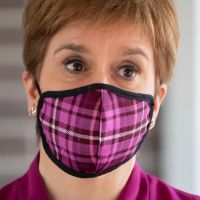
Who’s paying the price for Sturgeon’s pandemic politics?

Don't worry if you missed the press release announcing which Scottish taxes are going up to pay for Nicola Sturgeon's headline grabbing four per cent minimum pay rise offer for certain front-line healthcare workers, including nurses. You missed it because there wasn't one. In characteristically hubristic form, the Scottish Government made the announcement just a few hours before the pre-election 'purdah' period began, with Sturgeon immediately taking to Twitter to declare:  'Our NHS staff deserve more than applause and one per cent is not enough'.  It was a thinly-veiled dig at the offer Boris Johnson's administration has put forward in England. Normally when a government makes an announcement like this the immediate question is: where is the money coming from?

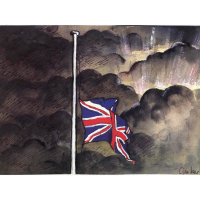
Is the United Kingdom still one nation?

Is Britain a nation? If you’re trying to maintain the United Kingdom — or destroy it for that matter — this is surely a very important question. It may seem obvious at first, of course the United Kingdom is a nation. Yet Unionists too often seem reluctant to address the question. Devolutionaries, often non-separatist nationalists, are keen to talk about Britain as if it were merely an arrangement between states — like some kind of federal ‘United Kingdoms’ plural, rather than a singular polity made up of constituent parts.

When will the National Trust realise its big mistake?

The National Trust still doesn’t get it. It still doesn’t understand why so many of its members hate the politicisation and catastrophic dumbing-down of an institution they once revered. Hilary McGrady, the Trust’s Director-General, has just defended the Trust’s report on colonialism and slavery. The report, released last September, looked into the colonial or slavery links of its properties, including Winston Churchill’s Chartwell home and William Wordsworth’s house. McGrady said the Trust should 'make sure we tell all of the stories about all of our properties'. That’s the problem. The Trust isn’t telling all of the stories these days.

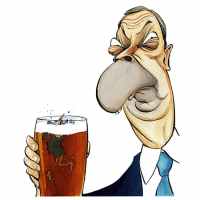
Nigel Farage is destroying his own legacy

How's this for a terrible confession? There has always been a small part of me that admires Nigel Farage. As a Remainer liberal, it's hard to admit. I disagree with Farage on many things. And my (partial) admiration doesn't mean I forgive him for some of the low points of his political career, not least the disgraceful ‘Breaking Point’ poster unveiled in the lead-up to the EU referendum, nor his earlier comments about migrants with HIV. Yet I have a soft spot for outsiders, particularly ones like Farage who beat the odds.  What Farage achieved, all from outside a two-party system pitted against him, is unprecedented in the history of British politics.

Salmond’s comeback is a pitiful sight

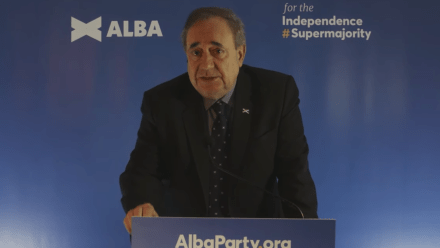
When Alex Salmond lost his seat at the 2017 general election, he finished his concession speech with a quotation from Sir Walter Scott’s poem, 'Bonnie Dundee':  'And tremble false Whigs, in the midst of your glee/You have not seen the last of my bonnet and me.'  Well, it is true that we have heard far too much from Alex Salmond in the years since but all roads, I suppose, led to the wholly unsurprising announcement this afternoon that Salmond is getting back into the game. Hell hath no fury like an ego ignored. The Alba party – Salmond’s new venture – will contest seats on the list portion of May’s Holyrood election.

Why does China think it can bully backbench MPs like me?

Does the Chinese Communist Party understand how our parliamentary democracy works? The evidence from the last 24 hours suggests not. Along with some of my Conservative colleagues in the House of Commons – Sir Iain Duncan Smith, Tim Loughton, Tom Tugendhat and Neil O’Brien – as well as two peers, a QC and an academic, I have been banned from entering China, had any assets in China frozen (not that I have any there) and have had Chinese citizens and institutions prohibited from doing business with me. All because I have voiced well-evidenced concerns about the persecution of the Uyghur Muslim minority by the Chinese government.

Why ministers are worried about foreign holidays this summer

On 5 April, the government will publish its framework for deciding what foreign travel will be allowed this summer. As I say in the Times today, there is very little optimism in Whitehall about European holidays this summer. This might seem odd given that every adult will have been offered at least their first dose by then. Surely the vaccine should allow us to go abroad even to places where there is Covid in circulation? But not if the worry is about a vaccine-evading variant being imported into the country. As one of those involved in devising the way out of lockdown puts it:  The nightmare scenario is a vaccine-evading variant emerges and rips through the population ‘Variants of concern are the one big threat to the whole programme.

Can Rishi Sunak get people back into the office?

To what extent do workers want to return to the office? It’s a question on everyone’s mind – none more so than Rishi Sunak. If Covid working habits stick post-lockdown, with a majority of people continuing to work from their living room, it’s not just the working day that will be fundamentally altered, but the wider economy too. The economic implications for the shops and services designed to cater to the office worker will be drastic: large parts of city centres and high streets may find themselves without customers, or enough business to turn a profit. But these were not the main points the Chancellor made in his interview with the Daily Telegraph and the Sun, as part of a Conservative fringe event hosted by iNHouse Communications.

Are we ready for Britain’s looming cancer crisis?

Cancer, cardiac and countless other patients are crying out for help – but are ministers listening?  Over the last year, politicians have been adopting untried and untested policies, the consequences of which none of us can yet fully grasp. The main aim, of course, of these extraordinary lockdown measures has been to suppress Covid-19 in order to reduce pressure on our hospitals. That has been the metric on which Government approval has been judged. Whether or not you agree with every restriction, it is clear that this focus has sucked the oxygen away from other pressing health issues. Covid-19 required a response unlike anything we have seen in modern times.

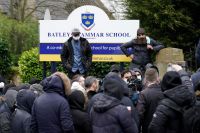
Batley Grammar’s shameful capitulation

The capitulation of Batley Grammar School has been a truly dispiriting sight. In response to protests by angry Muslims it has suspended a teacher for the supposed offence of showing a caricature of Muhammad to his pupils. This is an extraordinary act of moral cowardice. Batley Grammar has buckled to religious extremists, cravenly begging for forgiveness for something that ought to be perfectly acceptable in an institution of learning — encouraging young people to engage with and discuss controversial issues. Everything about the Batley Grammar controversy stinks. It began when a teacher at the prestigious West Yorkshire school, as part of a religious education class, showed his pupils an image of Muhammad.

MPs facing Chinese sanctions deserve our solidarity

The sanctions that China is imposing on various politicians, academics and think tanks in the democratic world are designed to intimidate. Their aim is to make people, and particularly firms, think twice about criticising China over its human rights record and in particular its treatment of the Uighurs. Last night, China slapped sanctions on a bunch of British parliamentarians, and some academics, in retaliation for Britain putting sanctions on four Chinese officials working on the Xinjiang internment policy. It is imperative that this country stands behind these individuals and groups. We cannot allow a situation where China can determine the contours of debate in this country.

Watch: Adonis grilled on UK vaccine scheme

As President of the European Movement during the current Brussels vaccine crisis, Andrew Adonis currently has his work cut out. With polls currently showing that Brits now have a more positive attitude towards the UK’s future outside the EU than negative by a margin of two to one, any bid to get the UK to rejoin the EU will suffer for as long as the trade bloc's jab woes continue. Still, Adonis could make it easier for himself and get round to deleting some of his old tweets on the UK's own vaccine efforts. Appearing last night on Spectator TV the peer was asked by Andrew Neil why he'd tweeted in November that the British vaccine rollout would 'lead to billions of corrupt contracts' and the supply and distribution would be a 'fiasco.'  https://twitter.