Politics

Read about the latest political news, views and analysis

Johnson takes the next step out of lockdown

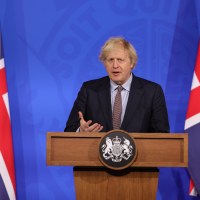
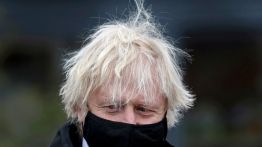
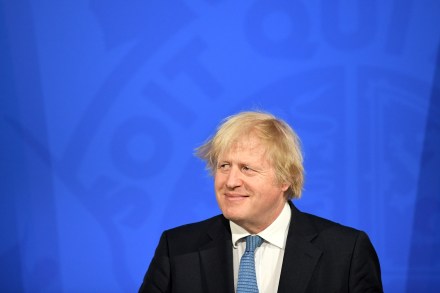
When Boris Johnson first unveiled his roadmap out of lockdown, there was a promise of an end to restrictions by 21 June. That date was quickly dubbed 'freedom day' online and in the press. However, many of the tricky decisions on social distancing, travel abroad and IDs were pushed later down the line into various government reviews. Today, the Prime Minister offered an update. Johnson had some good news — confirming that phase two of the roadmap would go ahead on 12 April. But his address also pointed to how there is unlikely to be a quick bounce back to normal come 21 June.
Full text: First Roadmap Review

Introduction 1. The Government's overriding goal is to protect the lives and livelihoods of citizens across Scotland, Wales, Northern Ireland and England. The COVID-19 Response - Spring 2021 (the roadmap) set out how the Government would continue to protect and support citizens across the UK and provided a roadmap out of the restrictions in place across England. 2. The Government committed to taking a cautious approach to easing those restrictions, guided by data instead of dates, to avoid another surge in infections that could put unsustainable pressure on the NHS. The roadmap set out “no earlier than” dates for these steps, which are five weeks apart.

Does vaccinated Britain need mass-testing?

13 min listen

Brits will be offered two lateral flow tests a week, it was announced last night. The expansion of testing, the government says, will allow those who haven't been vaccinated to continue life as normal. But is it really necessary? Cindy Yu speaks to Fraser Nelson and Kate Andrews.

Has Starmer already missed his chance?

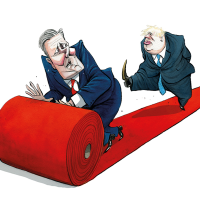
Hindsight is the easiest weapon to employ in politics — as Keir Starmer of all people should know. When you have witnessed events unfold already, it is simple to point out what politicians should have done. Yet when it comes to post-Corbyn Labour, some mistakes have been made that may just have been avoided — and hindsight is not required to reach that conclusion. The clues were there this time last year. Starmer has moved too slowly and has made the error that many unsuccessful Labour leaders tend to make: assuming that the party requires less mending than is actually the case. Sir Keir has employed the same logic that Gaitskell, Miliband and Brown did, thinking that with a few minor tweaks here and there Labour could win again.

Has the SNP failed to learn from its ‘snoopers’ charter’ debacle?

In the run-up to the French vote on the European Constitution in 2005, Jean-Claude Juncker said ‘If it’s a Yes, we will say ‘on we go’, and if it’s a No we will say ‘we continue’’. Nicola Sturgeon and her SNP government are clearly of a similar mind. Not perturbed by the backlash that greeted the party's most notorious rejected policy, the Named Person Scheme, the SNP appears to be attempting its luck again, albeit in a subtly disguised and rebadged form. The Named Person Scheme was originally introduced as part of the Children and Young People Act (2014). It proposed that a ‘named person’ would be appointed for every child in Scotland up to the age of 18.

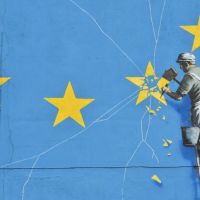
What should go in the Brexit museum?

Have you ever wondered what happened to Boris Johnson’s Brexit bus? One might think such a large, controversial item would be too conspicuous to vanish into the ether, but for the life of me, I have no idea where it is. Yes, I know, red buses aren’t exactly a novelty in the UK, being the favoured mode of transport of Liverpool footballers, the loud actor fellow who was in Lewis, and most of the city of London. Perhaps it’s decided to leave its infamy behind and hide in plain sight, and is currently ferrying people from Hammersmith to Chiswick. But that particular bus shouldn’t be left to a quiet, mundane life out of the spotlight.

Barry Gardiner’s holy day howler

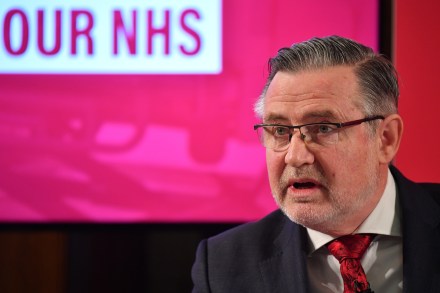
As a young man, Barry Gardiner planned to become an Episcopal priest, serving as secretary of the Scottish Christian Movement. Fortunately for the country however, Gardiner decided that first academia and then politics were his true calling, rising eventually to the giddy heights in government of being Gordon Brown's special representative on forestry and then Jeremy Corbyn's shadow trade secretary in opposition.  Having stunned Westminster with a one day wonder bid to be Labour leader, he returned to the backbenches last April where he has largely remained a dutifully loyal presence in spite of some social distancing rule breaking.

Macron’s Napoleon complex

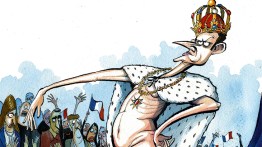
May 5th this year will be the two hundredth anniversary of Napoleon’s death on Saint Helena, the tiny island in the south Atlantic where the British confined the Emperor to Longwood House after defeat at Waterloo in 1815. After much hesitation, Emmanuel Macron has decided that France will commemorate the Emperor’s place in French history. Though the most recognisable historical figure in all surveys of the French, almost no public spaces or institutions bear his name. Monarchy and Republic cancelled him. Bonaparte divides. He is at once the figure who tamed the Revolution, drastically reformed France and yet the dictator who overran Europe and reinstated slavery.

Starmer needs to call time on his boring top team

At the start of 2021, Labour and the Tories were neck and neck in the polls. Only three months later, a YouGov poll out this week has the Conservatives ten points up on Starmer’s party. This popularity dive comes at the worst possible time for Labour, with a crucial set of local elections, mayoral contests, Scottish parliament elections and the Hartlepool by-election to consider. Starmer is powerless to control some of the forces causing Labour's slump. But there is one big thing he could do that would help: clear out the dead wood from his shadow cabinet. Rumours about Starmer opting for a reshuffle have been so ubiquitous lately that the leader of the opposition had to openly defend his top team while on the campaign trail this week.

Sadiq Khan’s victory could be bad news for Labour

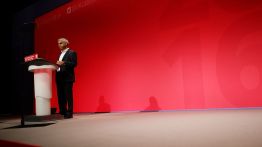
Let’s take a look into a political crystal ball: it is Friday 7 May and a beaming Sadiq Khan is being held aloft by delighted Labour supporters celebrating his remarkable achievement of being re-elected Mayor of London on the first ballot. For the first time ever the second preference votes do not need to be counted because of the diminutive Khan’s round one landslide. Most of Britain’s London-based political media decides that this is the big story to focus on. Labour party activists are happy to believe their party is on the way back and that Khan’s brand of chippy identity politics points the way ahead. The trouble is that such a reading is precisely wrong.

Femi Oluwole’s Labour ultimatum

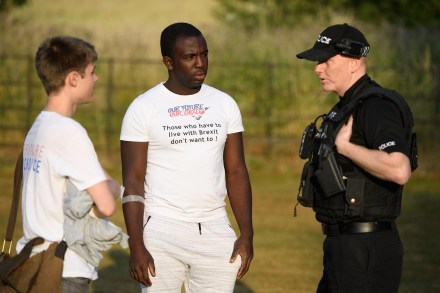
It has been a difficult few years for Remainer campaigner Femi Oluwole. Having failed to stop Brexit, secure a second referendum or prevent the Tories winning a majority in 2019, you might have thought the last four years would have chastened the 'Our Future Our Choice' founder. Not a bit of it. Oluwole, 31, is now turning his hand to journalism with the same aplomb that he brought to political campaigning. In a series of bizarre tweets this afternoon that sounded like outtakes from a Liam Neeson Taken sequel, Oluwole told Labour's team that he was 'currently writing an article which it's in your interest to stop' and added 'You have my number. You've got a few days to use it.

Keir Starmer’s church trip backfires

Monday will officially mark a 'Year of Keir' as Starmer celebrates the first anniversary of his election as Labour leader. It's been 12 months of frequent clashes with the party's once powerful left faction including the sacking of Rebecca Long-Bailey, the suspension of Jeremy Corbyn and the decision to abstain on the 'spy cops' bill. Moderates meanwhile grumble about Starmer's decision to attack the government on competence rather than values – a decision that backfired once vaccines arrived in December. Surely then an Easter trip to a church offered Starmer a chance to have his party singing for once from the same hymn sheet? Alas not. It seems the Leader's Office managed to choose the wrong church, judging by the reaction on social media.

What the race report reveals about Boris’s brand of conservatism

The recent report of the commission on race and ethnic disparities has given the clearest indication yet of the guiding philosophy animating the Conservatives under Boris Johnson. It is rooted in the traditional commitment of conservatives to national unity. The calculative political positioning of the Cameron and May regimes seems to be long gone. Since the nineteenth century the platforms of political parties can be understood by measuring the relative weight they attach to the ideals of liberty, equality and fraternity. Labour puts equality above the other two ideals and, when we had a Liberal party, it put liberty above everything else.  Today’s Liberal Democrats are closer to Labour than the old Liberal party.

Carlo Rovelli, David Abulafia and Laura Freeman

26 min listen

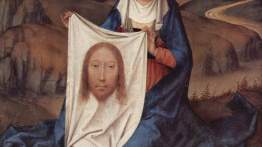
On this episode, writer and physicist Carlo Rovelli, ponder time and space in a world were the meaning of both has shifted. (01:00) Then, David Abulafia talks about the need for conservatives at universities. (07:29) Finally, Laura Freeman gets us ready for easter with the stories and the art depicting St Veronica.

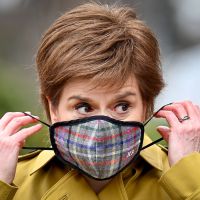
Has Salmond just shattered Sturgeon’s currency delusion?

The war of the Salmondites versus the Sturgeonites is just getting started. Who knows how nasty it will get or what the longer term ramifications will be? Already apparent though is how Salmond's pantomime villain shimmy back into the political arena is forcing Nicola Sturgeon onto ground she would rather avoid during an election campaign. The usual SNP tactic around elections is to downplay separation talk and reach out to risk averse moderate voters, safe in the knowledge the party's most zealous supporters will stay in line. But with Salmond on the scene demanding to know how exactly Sturgeon will achieve independence, that is not an option. Sturgeon will have to make another referendum and her commitment to leaving the UK a central part of her campaign.

Lockdown and cancer: are we getting the full story?

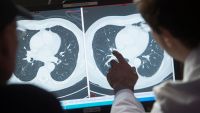
The 10 Downing Street press conferences on Covid-19 tend not to show graphs about cancer care. We see various charts by statisticians and epidemiologists, but the impact of lockdown on patients with time critical conditions such as cancer has been largely ignored. The disruption of cancer services is a global phenomenon, but the suspension of screening services and failure to protect cancer services in the UK has resulted in 40,000 less cancers being diagnosed last year, compared to 2019. The true scale of the cancer backlog has yet to be acknowledged by the UK government, far less prioritised with specific additional funding. Denial could cost lives.

A brief history of ‘lived experience’

All experiences are lived, of course, but it seems some experiences are more 'lived' than others. Truth has become a moveable feast. This may seem like a contradiction. But this is where we find ourselves. How you define the notion of truthfulness is yet another signifier of where you stand in the increasingly wearisome culture war. Whether you see the subjectivity of lived experience as a progressive force for good or just another postmodern mash-up will depend on your age and political persuasion. Those who view experience through the lens of victimhood - mostly the activist young - tend to see objectivity as a tool of oppression.

BBC Four and the dumbing down of British television

The announcement this week that BBC Four is to stop making new programmes and become a largely repeats-only channel – which they are cheekily calling ‘archive’ to make it sound better – is a depressing reminder to viewers of a very long-term trend. When BBC Four was launched amidst much fanfare in 2002, its slogan was 'Everybody Needs a Place to Think'. Has the BBC decided that they no longer do? Or perhaps the corporation – in focusing on ‘youth programming’ like BBC Three – thinks it isn't its job to provide one. Oh dear. Whatever happened to television? And in particular, the area that BBC Four was particularly supposed to promote: factual and arts television.