Life

Explore the intellectual side of the Renaissance’s softest boi at The Met

There can be resistance to Raphael. A bit unfair, really. Just as Renoir is considered the soft-edged Impressionist, Raphael (1483-1520), indisputably one of the three great artists of the Renaissance, is often eclipsed by his near contemporaries, Leonardo and Michelangelo. Is it because his works are just too beautiful, too ethereal, too perfect? This view is a relatively new phenomenon. In the 19th century, Raphael had pole position because his paintings were so otherworldly. His romance with La Fornarina (the baker’s daughter, sitter for one of Raphael’s greatest portraits) only boosted his reputation further. However, it turns out the 21st century is more inured to love’s dream. We prefer artists to be tortured souls.

This luxury Italian menswear house has a new not-so-fancy man

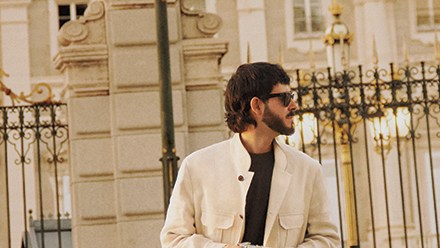
The decision by Italian clothing brand Corneliani to use American psychedelic folk musician and artist Devendra Banhart as its “face” for this season is a telling one. This firm from Mantua, which has been making sartorial Italian menswear for nearly a century now, made its name creating traditional style for professionals. But times change, and style with it. So, wisely, Corneliani has been developing modern menswear that uses its traditional tailoring and fabric knowledge but applies it to more casual designs. Style director Stefano Gaudioso Tramonte says, “Today’s Corneliani man is no less interested in quality, but the life he lives is less constrained by formal conventions. He still wants elegance, but not in an uptight way.

Delight in the discord of Cora Sheibani’s ‘unpredictable and contrarian’ (and very wearable) designs

Jewelry designer Cora Sheibani’s eye for detail and form was refined from a young age, having been brought up immersed in what sounds like an exciting epicenter of the art and design world during the 1980s and ’90s. Her father, the Swiss-based international art dealer Bruno Bischofberger, and her mother Christina, both collectors, invited guests – often well-known artists and designers – into a home full of intriguing art, furniture, and objects, be it a kitchen chair or walls hung with works by Warhol and Basquiat. Early on, Sheibani had an interest in collecting Roman bronze rings, attracted by their deceptively simple mechanics, and the way they aged through wear would later inform her interest in engineering as design.

These Italian-American jackets’ signature hardware will have you hooked

Firefighters are universally loved, right? Of course they are – heroic lifesavers rushing into danger in those big red engines… what’s not to like? Back in the 1980s Andrea Della Valle, a young Italian, was certainly fascinated when he encountered a bunch of ex firefighters who were wearing the garments of their former trade. “I met these guys when I was living in New York and they were all in these amazing jackets,” remembers Della Valle. “They looked so cool, I thought this could really work back in Italy.” At the time, the Italian casual wardrobe was still pretty formal, he says. What if he could introduce something that was really different. A jacket with hook-and-eye fastenings, for example?

A playwright who went from stage to screen, then set aside scripts to pen a novel. Its themes? Escape and reinvention

Lila Raicek likes a big swing. Just last year the New York-based playwright and screenwriter debuted My Master Builder in London’s West End – only a matter of months after the first draft landed on director Michael Grandage’s desk. Most writers wait a lifetime to catch even a whiff of a Broadway or central London staging (especially one starring Ewan McGregor and Elizabeth Debicki). But for Raicek, this warp-speed ascension is something of a pattern. “I wrote a play at Columbia,” says Raicek of her college days. “It was my senior graduate school thesis. And that play was seen by a couple of people in Hollywood.” Bang, that script gets optioned for the screen and lands Raicek in a Los Angeles writers’ room.

A cup of gas station coffee that’s worth traveling for

In the early days of the motor car, if you wanted to cross the high-altitude Upper Engadin in Switzerland, your vehicle had to be pulled by horses. Because up to 1925, the townsfolk of St. Moritz had a ban on driving. When it was lifted, Shell opened a petrol station. It also funded the paving of the straight road between this and a sister Shell stop at Samedan. The head of the company, Henri Deterding lived at Suvretta, just outside St. Moritz, and staged speed trials along this three-to-four-kilometer stretch. There is still a Shell petrol station on the St. Moritz site. It functioned for years before slipping into disrepair.

Reflections on the Moon

We Americans have been instructed to burst our buttons with pride over Artemis II’s drive-by of the Moon. But out here in cratering America, far from Mission Control, we remain buttoned-up. This is not due to our skinflint nature or lack of imagination; nah, it’s just that Big Science – “corporate socialism,” as the late parsimonious populist Democratic senator William Proxmire of Wisconsin termed the space program – is spiritless, mechanical and inhuman.

How the movies improve your mental health

If you subscribe to The Spectator, there’s a fair chance you are a committed reader. Of books, I mean. Books are your friends, they don’t frighten you. Even long books. But here’s a behavioral oddity that I’ve noticed in others, and in myself. We tend not to read many books twice, but we do often watch movies twice, even more than twice. Of course, length may have a lot to do with it; movies are rarely more than two hours long; books can often take days to finish. But is there something more to it, something deeper? Down here on the beaches in Florida we now recognize something the psychologists are calling “cinematherapy.

oil

How far would I go for oil?

The oil delivery man had way too much swagger and, as he waved his nozzle about, I realized that he might be expecting a little something. Oh dear, I thought, as he pushed the nozzle into my oil tank, pressed the button on his truck and spent less than ten seconds giving me the amount of oil I could afford. Oh dear, what if the oil crisis is now at such fever pitch that desperate housewives in remote places are offering a little something on the side to get more oil? I had two French cyclists who ran the shower in the en-suite for so long I thought they had fallen asleep Ten seconds’ worth of oil did feel like the end of the world. Usually, I can afford to let the truck fill the entire tank and it comes to about a grand.

The cattle rustlers have returned

Kenya When a mob of Somali cattle I bought in Kenya’s far north arrived on the farm in February, we quarantined them in a remote corner. To protect them against lions they slept in a boma with high drystone walls topped with treacherous thorns, guarded by a fierce police-licensed guard named Joseph. The Somalis are great stockmen, though these beautiful beasts, known as Awai, are more long-legged and rangy than our traditional ranch Borans. My truckload of cattle had survived a two-year drought on rocks and dust and they could walk hundreds of miles to water, yet they were randy and highly fertile. These are ancient cattle, of the sort that you see in petroglyphs and ochre painted on rock faces across Africa. I have fallen in love with them.

The banality of Meghan the Martyr

The great Dolly Parton once quipped “get down off your cross, honey, someone needs the wood.” This remark, aimed at attention-seeking self-described martyrs, could almost have been dreamt up for the Duchess of Sussex. Meghan, along with her ever-subservient husband Prince Harry, is currently bringing the gospel according to Meghan to Australia. During her quasi-royal tour to promote a wellness weekend that she is the keynote speaker at, Meghan has invented a new catchphrase – “Call me Meg” – and has been photographed smiling and looking appropriately radiant. The Netflix cash might be drying up, but enough has been banked for her to look a million dollars in the various Instagram-friendly outfits she has been sporting.

Meghan

The great soccer World Cup swindle

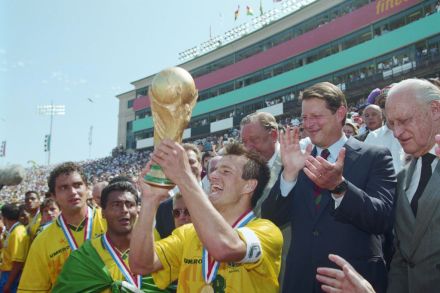
Tickets for this summer’s soccer World Cup are the most expensive in the tournament’s history. Or the history of any sporting event for that matter, with the possible exception of one-off extravaganzas like the Mayweather-Pacquiao showdown in 2015. The face value of tickets at this American tournament are a staggering five times higher that of the previous World Cup in Qatar. The most expensive seats for the final match have reached wallet-busting levels, affordable only to plutocrats and corporate boondogglers. And that’s just face value. What about the quaintly named secondary market? I occasionally peruse Fifa’s resale site, where the custodians of the game double dip from the buyer and seller to act as an official tout.

The soccer World Cup trophy sits in front of President Donald Trump

No one in the DC political class is cool

No one in the DC political class is cool. For all our American spirit of independence, democracy still defers to the majority, and power compels even the most singular, Machiavellian mind to mold itself in the image of the people. Politics drains the blood out of the individual, replacing him or her with a bland and legible product, flattened into the image of at least 50 percent of the population. Prediction markets are a perfect example of this effect, shining the brightest lights into the caverns of cool, calcifying opinions into trends, trends into probabilities, and probabilities into certainties. There is nothing that poses more of a threat to cool than this, and no market hungrier for it than the politicos of Washington, DC.

Road-tripping across blockaded Cuba

My wife Camila doesn’t drive, but she does direct. Studying the map, she’ll say, “This road!”, and before I know it, we’re off down some track, startling locals who haven’t seen a “yuma” – technically an American but really any foreigner – for years. Cuba is a country that lends itself to country road adventure. Besides drinking daiquiris, it’s perhaps my favorite thing to do. And it’s what I miss most now that it’s impossible: the US oil blockade that began in January means there is no gasoline. ‘Is this ceviche the red snapper or the snook?’ I asked. The waiter shrugged, ‘Once it’s ceviche it’s hard to tell’ Few others seem to do it.

My search for the perfect New York therapist ended badly

Before moving to New York City, I had a particular vision of what my life as a writer in this fabled land of opportunity would look like. I’d wear sleek, black turtlenecks and skinny jeans. I’d go to diners and eat bagels. I’d defy the caloric calculus and stay svelte. I’d write at my window like Carrie Bradshaw, getting paid at least $2.50 per word. I’d go to book parties and stroll through the West Village, occasionally bumping into a semi-famous friend. We’d spontaneously drink wine. Perhaps most importantly, I’d have an excellent therapist – someone who had many leather-bound books, a calm and reassuring presence that could effortlessly calibrate my mental state. He’d look a bit like Wallace Shawn or maybe Barbra Streisand.

Is ‘international law’ practical?

The acceleration of history and the increasingly rapid advancement of the postmodern project, aimed at the transcendence of humanity by itself, makes consideration of the fundamentals of the progressive project necessary, but also inevitable. Among them is its dedication to the hectic search for hitherto unsuspected “human rights” and their instant realization in the name of “natural law,” a subject the French historian and political philosopher Pierre Manent has studied in depth and brilliantly illuminated in a number of works, most recently Natural Law and Human Rights: Toward a Recovery of Practical Reason.

Palm Beach gets a European twist

In these parts, it is always said that the most disappointing aspect of Palm Beach life is… well, the beach itself. Yes, it has sand, sea, minimal surf (and, as often as not, “dangerous marine life,” as the deep purple flags flown at the lifeguard stations indicate). But that is all. There is nothing like what you get, for example, in the north shore of the Mediterranean where, from Gibraltar in the west to Bodrum in Turkey, thousands of miles to the east, every few hundred yards you have a chic café or a ritzy restaurant, or boutiques selling everything from bikes to bikinis. No, the beaches of Palm Beach are socially inept, empty of entertainment, where the most exciting thing I have seen (twice) is a seven-foot shark caught on a line, which is a touch off putting for bathers.

My barn dog is a Chow Chow

Even if you’re not a dog expert, you probably know enough to laugh at the breed of my resident barn dog. Chow Chows are not exactly cooperative, and while they are bred as territorial guard dogs, their cat-like laziness makes them, at best, capriciously protective of their owner. These little balls of fur are, however, pretty damn cute. My three-year-old, Winnie, embodies all of these traits – or at least she did as a puppy, with the occasional tendency to regress. But growing up around horses on an unfenced property shaped her more than any innate breed characteristics. Having owned pretty much all the conventional breeds, I can safely say she’s now more or less exactly what you look for in a farm dog.