Life

Southern Africa is full of surprises

Picture yourself lying in bed in a restored vintage railroad car parked on a bridge overlooking the Lower Sabie River in South Africa’s Kruger National Park. Outside your window, there’s a gigantic herd of elephants, ranging in size from pint-sized babies to Brobdingnagian behemoths marching purposefully by as though auditioning for a National Geographic documentary. The first herd has perhaps a dozen members, but more of them, attracted by the riparian setting, will stomp by until you can see perhaps 50 of them from the comfort of your bed – or, if you prefer, the bathtub. It’s almost time for afternoon tea and cakes. Later, during your drive, a leopard will amble so close to your vehicle that you could grab his tail.

The trouble with muzzled liberals

Liberalism has always considered itself a noble creed, as liberals have conceived themselves its knights in shining armor. Perhaps – once upon a time – it was so. But that was in the 18th and 19th centuries, and we are now living in an era when liberals have many fears: climate change, fascism, malefactors of great wealth (as Theodore Roosevelt called them), nativists, white men, Republicans, Donald Trump. Indeed, they are frightened of so many things that I have written a book ennumerating them – a book that so far remains unpublished, perhaps because the liberal publishers fear its argument, too. Still, having observed them for so many years, I am convinced that what liberals fear above all else is one another.

How to eat in Cuba

My apartment in Havana is on a rooftop overlooking the sea, which sounds grand and penthousey, but it’s not – it’s the former caretaker’s hut. It also sits above my parents-in-law’s place, which offers challenges, but does mean that most days I wander down for lunch. When I first moved in, I didn’t speak Spanish and so would enjoy these meals in ignorant bliss, smiling winningly as I guzzled down pork, rice and beans. I tried not to ask my now-wife to translate because I didn’t want to interrupt what I imagined were hugely erudite discussions; she’s a literary professor and her parents are both philosophers. Slowly, though, I began to understand, Spanish revealing itself like a song on the wind.

Reflections on the Winter Solstice

According to the handy timeanddate.com website, the Sun rose over our patch of Long Island Sound today at 7:18 this morning. It will set this afternoon at 4:28. From beginning to end, we will enjoy 9 hours, 12 minutes and 53 seconds of full daylight (not counting the prefatory and subsequent periods of twilight) in this bit of New England today. That may seem like a gyp. In high summer, we get more than 15 hours of daylight. But look on the bright side. Yesterday was the Winter Solstice, the shortest day of the year. We had just 9 hours, 12 minutes and 50 seconds of daylight. So you see today is fully three seconds longer than yesterday. Gutta cavat lapidem. I can’t quite see it yet, but today the Sun began its leisurely trek back north.

winter solstice

The no-fly zone over Mar-a-Lago annoys locals

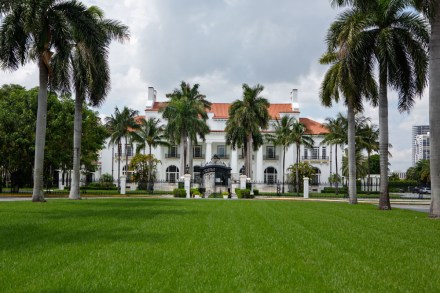
Whether President Trump really has solved six, seven or even eight wars, one conflict he can’t do anything about, for now at least, is the one in his hometown, Palm Beach, where he is partly responsible for tempers that are beginning to fray. This is all down not so much to Trump himself but to the Secret Service. Following their embarrassing failure to stop the assassination attempt in Butler, Pennsylvania, in July 2024, when Thomas Matthew Crooks managed to nick the President’s right ear with a bullet, the Secret Service has doubled down on security and established a one-nautical-mile flight-free exclusion zone around Mar-a-Lago, Trump’s mansion to the south of Palm Beach.

mar-a-lago
herd

A herd is like a high school

When you own a horse farm, the same question canters repeatedly through your mind: should I buy another horse? Rationally, you know the answer is no, but you inevitably wind up doing it anyway. Because in the grand scheme of things, it’s just one more head in the herd. The day-to-day of farm management doesn’t change much between 15 horses and 16. It takes some time to acclimate a new arrival, of course. A herd is like a high school: popular kids run the show, and the new blood always faces some bullying. But once he finds his place in the hierarchy, the routine proceeds as usual. And consistency is key with horses. The herd mostly gets to roam freely through about 40 acres of pasture.

rockettes

Hold on to your peppermint mochaccinos – the Rockettes are not from New York City

In some ways, it feels like I stepped off the plane at JFK from London mere days ago – wide-eyed, naive and still convinced that “winter” would be charming and cozy rather than a six-month endurance test in avoiding frostbite. Yet here I am, somehow entering my sixth year of participating in the annual pageant that is the New York holiday season: that weeks-long spectacle beginning with the first delicate whiff of PSL-something and ending in the far-too-slowly receding hangover on an insultingly arctic New Year’s Day. The first year, Covid-tinted and therefore emotionally reminiscent of a half-deflated Macy’s parade balloon, was not what one might call festive. But things have really picked up since.

inca Llullaillaco

Inside the Inca ritual of child sacrifice

The children of Llullaillaco don’t look too different from the living children I’ve seen around Salta. They’ve got the same diamond-shaped faces, pecan-colored skin and straight, pitch-dark hair. Of course, the children of Llullaillaco are smaller, as people five centuries ago were wont to be – and dead. I’m talking about three Incan child-sacrifice mummies, estimated ages five, six and 15. As of about 25 years ago, they’re permanent residents of Salta, Argentina, the capital of a province of the same name in the country’s northwest. As the crow flies, the city isn’t that much closer to Buenos Aires than to Lima. Due west of Salta, in the Andes, is the peak of the volcano Llullaillaco.

The diner test

Some people say you become a real New Yorker when you’ve lived in this city for ten years – when you’ve complained your way through ten Arctic winters, ten swamp-thick summers, ten Halloweens that made you question the human psyche and ten consecutive mornings trapped behind barricades courtesy of Marathon Sunday. Respectfully, I disagree. In my opinion, you become a real New Yorker when you’ve mastered the delicate, near-mystical art of going to a diner. I know what you’re thinking: she’s doing that painfully American thing where everything’s hyperbole.

diner test

Hurricane season in Cuba

A cold front blew in off the Florida Straits, sending waves over Havana’s famous corniche, the Malecón, and announcing what has traditionally been the end of the hurricane season. After 13 named storms, it seems as if the 2025 season finale was Hurricane Melissa, a humdinger. She paused south of Jamaica, getting herself into a lather, before killing 32 on that lovely island and causing at least $7 billion of damage. Fortunately for Cuba to the north, Jamaica’s mountains plucked the murder from Melissa’s eye – but she still cut a devastating trail through this bigger island’s eastern reaches a day or so later.

Hurricane Melissa

The rural reality

I was never a “real” rider. My parents were serious riders. My sister was too – she showed at national level. But by the time I came along, the youngest child by 20 years, no one had the energy for proper lessons, let alone the time it takes to seriously compete. Yet somehow, I’m the one who wound up with the family horse farm in New York’s Hudson Valley. My family’s involvement with horses goes back almost 80 years. My dad, a Bronx boy raised on Bonanza and Lone Ranger, grew up riding on summer vacation at a Borscht Belt resort. His love of horses shifted him from Jewish cowboy to showjumper and he eventually took over the equestrian center he learned to ride at. For more than 30 years, he bought, sold, boarded and trained horses in every discipline.

Family Business

What’s so fresh about ‘fresh hell?’

“What fresh hell can this be?” Dorothy Parker would ask if the doorbell rang. Now fresh hell has been freshly added to the Oxford English Dictionary. But was Parker the onlie begetter of the phrase? The hunt has been on to find earlier examples. The OED quotes a ghostly story within The Pickwick Papers (1837) for a parallel: “He started on the entrance of the stranger, and rose feebly to his feet. ‘What now, what now?’ said the old man – “What fresh misery is this? What do you want here?’” I’ve been doing what counts, for me, as research. In The Pickwick Papers, Charles Dickens uses fresh twice as frequently as he does in Great Expectations 24 years later.

Gossip is good for you… so I’m told

The late Pope Francis hated gossip. In his Christmas message to his Vatican advisors last year, he warned that it is “an evil that destroys social life.” It wasn’t the first time he’d attacked rumor-spreading. He once compared gossips to terrorists because “he or she throws a bomb and leaves.” His condemnations are of particular concern for me because I was recently accused of being a “notorious gossip.” I vehemently reject the charge, but if it were true, at least I’d be following a proud journalistic tradition. In fact, if it were not for gossip, this very magazine might not exist. The original Spectator’s founders, Joseph Addison and Richard Steele, filled the 1711 incarnation by hovering around coffee-houses, picking up gossip for stories.

gossip

The pace is quickening in DC

September in DC is the real new year. The heat hasn’t broken, but the air feels heavier. Congress regroups, summer travelers return to the city and the Hill drones descend on the cafés in their blazers and button-ups, sweating through 80-degree weather. A distinct tension hangs in the air, a carryover from late summer. Donald Trump’s declaration of a crime emergency last month transferred control of the local police to federal authorities, and now, as I make my way down 14th Street, I regularly shoulder past protesters and pass clusters of National Guard soldiers milling beside the wine bars and coffee shops where my friends and I still meet. Couples walk past without breaking stride, avoiding eye contact. I, too, avert my gaze.

DC

I made the Epstein cookies

Is it wrong to bake cookies from a recipe addressed to a pedophile and sex trafficker? When I found the recipe for chocolate chip cookies on page 169 of Jeffrey Epstein’s birthday book, I read and re-read it expecting there to be some sinister inside joke, perhaps a hidden dash of adrenochrome or instructions to “massage” the dough. The surrounding page contains a woman’s redacted photograph and references Epstein’s “mentorship,” while the other 237 feel like a cross between various expressions of human depravity: part ransom letter, part porn magazine and part teenage girl’s diary. Where does an innocent cookie recipe fit in among this?

epstein cookies

Trump goes tilting at windmills

Donald Trump hates windmills. He’s ranted against them consistently over the last decade. They’re as constant a member of his mental rogues’ gallery as "Gavin Newscum" or "George Slopodapolous." And never is the President’s windmill-hatred more fervent than when he visits Europe, which has been the windmill center of the world since the age of the Quixote. Immediately upon stepping on the tarmac at Glasgow Airport yesterday, Trump said, “Stop the windmills! They’re ruining your countries. I really mean it. It’s so sad. You fly over and you see these windmills all over the place. Ruining your beautiful fields and valleys and killing your birds. If they’re stuck in your oceans, they’re ruining your oceans.” But Trump wasn’t done on this topic.

Wind Turbine

Who’s buying up Palm Beach?

Donald Trump continues to make news in his hometown. This is what you would expect, but it’s not all plain sailing. For a start, since he won the election, and the local police started declaring his Mar-a-Lago Club a security zone – which stretches for seven blocks, north to south, and from the Atlantic Ocean to the Intracoastal Waterway – no fewer than seven properties in the zone have changed hands. And the big question is: are these people moving in, or moving out? It is impossible to be certain, of course, but we do know that the latest property sold for $16.99 million, down from an asking price of $24 million when it first came on the market.

Palm

On holiday with Goya

When I’m first invited to a sojourn in Madrid to learn about the life and work of Francisco Goya and the conservation work of Factum Arte, I’m thrilled but also a little apprehensive. While art-themed travel is right up my street and I live a mere train trip from the Spanish capital, Goya’s work is known for being a little, well, dark – particularly during his later years. As a fan of the Botticellis of this world, spending a few days with the artist famous for his "black paintings" was not something I was sure I’d enjoy.  And yet, three days later, as I stand in front of Goya’s grave in La Ermita de San Antonio de la Florida, I find myself moved in a way I never could’ve anticipated.

Goya

The rise of millionaires, valet parking and facelifts in Palm Beach

The two favored topics of conversation in Palm Beach are money and the place itself, so the latest survey by Henley & Partners, a specialist service which advises wealthy clients where to live, is doubly welcome. It shows that Palm Beach County is among the top five fastest-growing “wealth hubs” in the world, outpacing even Dubai and Silicon Valley. This latest report shows that Palm Beach County cities (that is, Palm Beach, the island off the mainland, and West Palm Beach, on the mainland, separated only by three drawbridges) experienced a 112 percent increase in millionaire residents between 2014 and 2024.

Palm