Caleb Quinley

Caleb Quinley is an investigative journalist based in Thailand

On the road with a Myanmar revolutionary leader

From our UK edition

When Khu Reedu first joined the resistance following the 2021 Myanmar coup, it was like a prophecy had been fulfilled. There is an old belief that one day a young man of Karenni descent would rise to free his people from nearly a century of oppression and violence. Today, many see that prophecy beginning to take shape as Reedu leads one of the most effective and influential revolutionary forces in the country.  Reedu tells me that in Karenni, it’s not possible for freedom to occur without armed revolution. Liberation must be taken, not achieved through dialogue In March, I found myself riding alongside him on motorcycles, racing through rough terrain somewhere between Karenni state’s Shadaw township and the town of Demoso.
Myanmar’s junta has stooped to a new low

From our UK edition

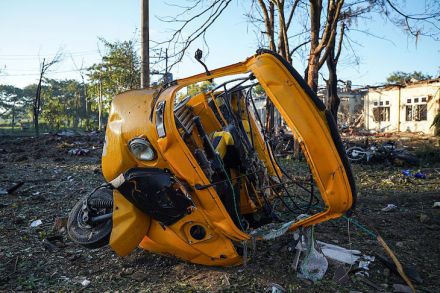
Myanmar’s junta has once again shown its true self: calculated, despicable, and violently unrestrained. Last night, warplanes dropped two 500-pound bombs onto a crowded hospital in Rakhine State. The blast tore through the building with surgical cruelty, sending glass and metal through wards where patients slept. Dozens were killed instantly; others bled out in the darkness as the hospital collapsed around them. Many of the victims were children and infants. This wasn’t a tragic misfire Many of the victims were children and infants. This wasn’t a tragic misfire, nor a reaction to combat nearby. It was a targeted strike: planned, ordered, and executed in the dead of night. The generals in Naypyidaw chose their moment with perverse intent.

Myanmar’s junta is lashing out

Myanmar’s junta has once again shown its true self: calculated, despicable, and violently unrestrained. Last night, warplanes dropped two 500-pound bombs onto a crowded hospital in Rakhine State. The blast tore through the building with surgical cruelty, sending glass and metal through wards where patients slept. Dozens were killed instantly; others bled out in the darkness as the hospital collapsed around them. Many of the victims were children and infants. This wasn’t a tragic misfire, nor a reaction to combat nearby. It was a targeted strike: planned, ordered, and executed in the dead of night. The generals in Naypyidaw chose their moment with perverse intent.

Myanmar’s junta is losing its grip on power

From our UK edition

A Myanmar military jet continued to fly sorties just over our hidden frontline hospital. Every time it screamed low over the tree line, the entire clinic would crouch down and pray that this wouldn't be the strike that hit us. These hospitals are prime targets; the military has no qualms about bombing groups of wounded fighters and civilians alike. Myanmar’s civil war has reached its most volatile and fragmented stage since the coup I was on the frontlines in Karenni State, at the township of Bawlakhe, where the resistance was launching a large, multi-pronged offensive to seize one of the most strategically important towns in the region.

Hundreds feared dead in Myanmar earthquake

From our UK edition

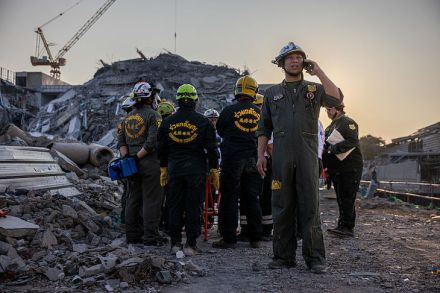
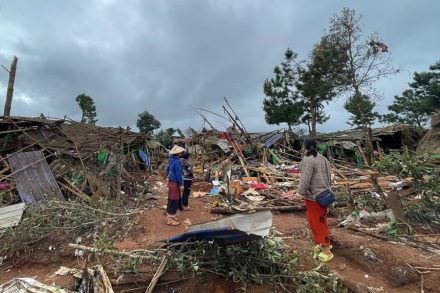
Hundreds of people are feared dead after a 7.7-magnitude quake struck Myanmar. Tremors from the quake, which had its epicentre near Mandalay, caused devastation across Southeast Asia, including in Bangkok. Over 80 construction workers are missing in the Thai capital after a 30-storey building that was under construction collapsed. Search and rescue teams are scrambling to locate those who are trapped under the rubble. Over 80 construction workers are missing in the Thai capital In Myanmar, a country already facing a brutal civil war that has claimed thousands of lives, buildings have collapsed and hundreds of people are missing. The junta has declared a state of emergency in six regions, including in the capital Naypyidaw.

Is this the end for the Philippines’ Duterte family?

From our UK edition

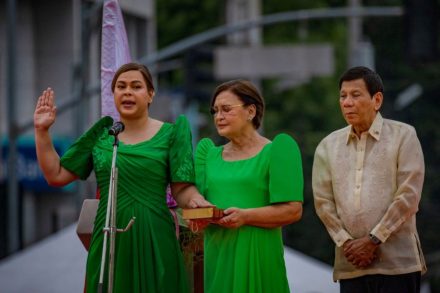
For the last decade, the Duterte family has been known throughout the Philippines as almost untouchable – respected, feared, and seen by many as above the law. Take Rodrigo Duterte's brutal war on drugs when he was president of the Philippines. Despite a bloody crackdown, Duterte remained largely unchallenged both domestically and internationally during his presidency. His son, Paolo, has enjoyed similar immunity: several years ago, he was implicated in a multi-billion peso drug-smuggling operation, but got off easy – with rumours that the judicial system was rigged to protect the family.The Duterte family has remained a powerful political dynasty in the Philippines, even after President Rodrigo Duterte left office two years ago.

The Myanmar junta’s desperate campaign of terror

From our UK edition

It was about 9:15pm on 5 September when the roaring sound of a warplane began to hum across the hills. Tucked away in a valley in Pekon Township in Myanmar, on the border with Karenni and Shan states, a community of some thousand people were about to go to sleep. Illuminated only by small solar-powered lights and campfires, mothers and fathers were putting their children to bed. But the junta jet fighter didn’t need light. It had already been given direct coordinates, and it was about to drop its payload directly on the camp. The violence which has plagued Myanmar for over three years had once again come to Pekon. The warplane released two large bombs right into the heart of the settlement where hundreds of displaced families were living.

Thailand’s democracy is a sham

From our UK edition

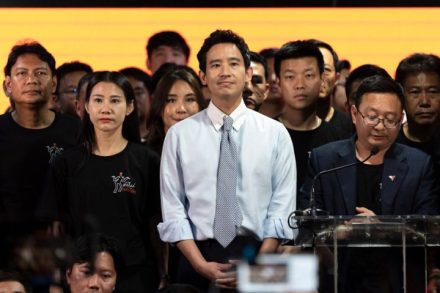
Democracy is dying in Thailand, or perhaps it's already dead. Thailand's constitutional court this week ordered the dissolution of the country's most dynamic and popular political party. This ruling is a decisive blow to an already wounded Thai democracy. The Move Forward party's (MFP) 'crime', according to the court, was to call for the country's strict ‘lèse-majesté’ laws to be reformed. The judges imposed ten-year political bans on all of its leading party members, including former leader Pita Limjaroenrat. Thailand has always been able to present the illusion that it is a democratic country Human rights groups and huge swathes of the voting population view the allegations as politically motivated and unfounded in evidence.