Middle East

The Iran war is just what Putin’s depleted coffers need

Of all the parties watching the chaos in the Middle East unfold, one should be rubbing its hands together with particular satisfaction. Russia has not fired a shot in this conflict, lost no allies it cannot afford to lose and has so far gained rather a lot, with more to come. A cynic might call it the perfect war for Vladimir Putin. Moscow’s public reaction has been characteristically theatrical. The Foreign Ministry denounced American and Israeli actions as a “reckless step” and a “dangerous adventure.” Things have gone no further. There has been no announcement of political or military support for Iran from the Kremlin – nor is there likely

putin

The Iran war has exacerbated the failure of European energy policies

The history of the global trading system is a story of narrow and vulnerable waterways: the Suez and Panama Canals, the St. Lawrence Seaway, the Straits of Dover and the Skagerrak, which defends the entrance to the Baltic. But none has the power to seize up the global economy as much as the Strait of Hormuz. Barely 30 miles wide at the narrowest point and bounded on one side by the state of Iran, this passage is used for a quarter of the world’s oil supplies and a fifth of its liquified natural gas (LNG). As we have now discovered, the consequences of disruption are severe: on the day that

energy
dubai

Won’t someone please think of Dubai’s influencers?

The human spirit is incredibly resilient really. Even in the depth of our concern over the Israeli-American war against Iran, the worry about what might come next, we can still find time to feel a warm and comforting sense of schadenfreude over the large number of British women with stapled-on lips who are cowering in their Dubai apartments as the Iranian shells come raining down. The name under which these women collectively labor is “influencer,” a term which, like “content creator” is close to meaningless and both could be usefully replaced by “shitgibbon” or “unemployable.” We laugh at their sense of entitlement, their shock that the real world has intruded

Why Iran marks the end of neoconservatism

45 min listen

Spectator columnist and Heritage Foundation fellow Daniel McCarthy joins Freddy to explain how Trump’s war with Iran could mark the end of an era, that of neoconservatism. For Daniel, there is no contradiction between Trump’s “America First” policy and its overseas interventions: Trump is pursuing a version of hegemony that will reduce the need for future interventions. If all goes to plan, this could mark an ideological watershed that stretches back to the first Gulf War in the early 1990s – but it’s a big “if.” What if the conflict spirals out of control? To what extent was this driven by Trump, or by Netanyahu? And what are the dynamics

iran

Does Trump really have ‘whatever it takes’ to win in Iran?

With Operation Epic Fury in its sixth day, it is hard to tell how long the current United States military campaign against Iran will last. It may not be swift; yesterday, the Senate rejected a resolution to halt further action. Meanwhile, President Trump has been alarmingly indifferent to the question: Whatever the time is, it’s OK, whatever it takes. Right from the beginning we projected four to five weeks, but we have the capability to go far longer than that. We’ll do it. Secretary of Defense Pete Hegseth struck a different note with reporters: “This is not Iraq, this is not endless.” Yet he has refused to rule out deploying

Why Iran is not Iraq

At the moment, a lot of people – notably including the British Prime Minister, Sir Keir Starmer – are comparing the current war with Iran with the Iraq invasion of 2003. Do they have a point? There are several common claims of comparison, some good, some bad. When Saddam fell, there was little appetite in Iraq for a western-aligned replacement The principal claim, in Starmer’s case, is that what happened in Iraq means the UK should steer well clear of any further involvement anywhere. It reminds me of the final scene in that magnificent film, Chinatown. A private detective moves to intervene to stop a horror unfolding but one of

The Gulf states have a big decision to make about Iran

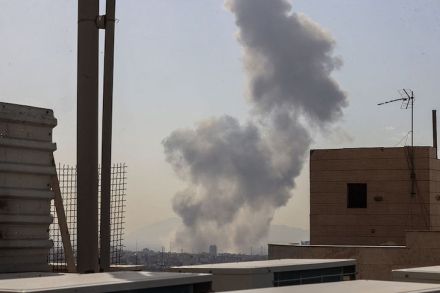
Iran threatened harsh retaliation in the wake of the American-Israeli attacks that killed the country’s supreme leader and many of its senior commanders. Its response consisted of a barrage of missiles aimed at Israel. So far, so predictable. Yet, at the same time, Tehran chose to direct its firepower at neighboring Gulf states, countries that have been encouraging diplomacy and warning against war. Iran’s actions are an object lesson in how to alienate your friends and neighbors. So far, they have continued to employ the rhetoric of de-escalation. But that’s untenable if Iran continues to target their territory The Iranians targeted Saudi Arabia, the United Arab Emirates, Qatar, Bahrain, Kuwait,

gulf

Chaos in Iran spells trouble for the Taliban

The US-Israeli attack on Iran presents an opportunity to get rid of the Taliban in Afghanistan. If there is a collapse of central authority in Iran, tens of thousands of Afghan former soldiers living in exile there could use the power vacuum to mobilize, return home and fight against the Taliban. There are several resistance groups who have advanced plans to fight but need a reliable haven outside the country to launch attacks inside Afghanistan. Iran, which has a 600-mile border with the country, could be the launchpad they need. This represents a unique opportunity for Afghanistan, as for the first time the country faces conflict on both sides. While

Did Israel bounce the US into war?

Operation Epic Fury has developed from a war to deprive Iran of nuclear weapons into a political war of blame. “We knew that there was going to be an Israeli action,” Marco Rubio told reporters at the Capitol last night. “We knew that that would precipitate an attack against American forces. And we knew that if we didn’t pre-emptively go after them [Iran] before they launched those attacks, we would suffer higher casualties.” The rationale came as a surprise to lawmakers. It sounded as though Israel had effectively bounced America into military action. Trump had told the American people from the outset that the war was to defang Iran of

The Middle East’s Muslims are cheering Khamenei’s death

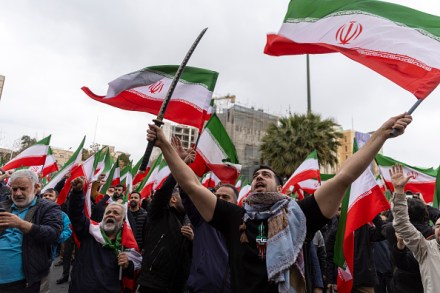
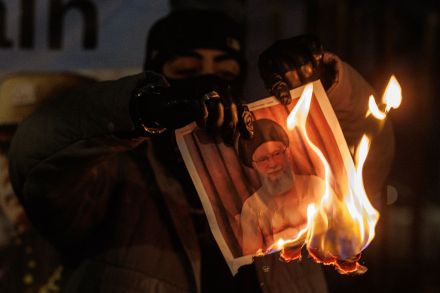
The killing of ayatollah Ali Khamenei in US-Israeli strikes on Saturday was cheered by many Iranians who have suffered innumerable atrocities under his ruthless Islamist rule of the country. While the diaspora were vociferous in their jubilation over the death of Iran’s supreme leader, many in the country also braved violent crackdowns to rejoice in the streets. These Iranians chanted the slogan that has become a common anti-Khamenei refrain over the past four decades: “Death to the Islamic Republic.” The chant has echoed alongside others: “death to the dictator… death to Khamenei” of the 1999 student marches; the 2009 election protests; the 2019 agitation against economic policies; the 2022 demonstrations over

What Iran means for the world

The Israeli-American air campaign against Iran will have profound global repercussions. What those repercussions will be depends on two crucial factors. First, will the bombing campaign remove the Shi’ite Islamist regime from power? We do not yet know if the campaign can accomplish that ambitious goal without foreign troops on the ground. If the US and Israel can do that, it would be an unprecedented achievement. Second, if the Islamists are removed, will the successor regime be stable and effective? Will it be able to control the streets and countryside, prevent successful breakaway regional movements, and begin the arduous process of rebuilding the country? Can the factions currently opposing the

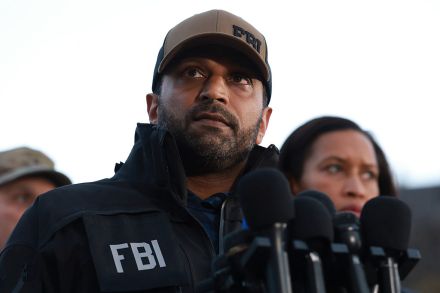
When will Kash Patel unleash epic fury on the FBI?

As I write, the Washington Post is carrying an obituary about the Ayatollah Ali Khamenei – or maybe it is about Santa Claus? You tell me. “With his bushy white beard and easy smile,” the Democracy Dies in Darkness paper told its readers,  “Ayatollah Khamenei cut a more avuncular figure in public than his perpetually scowling but much more revered mentor [Khomenei], and he was known to be fond of Persian poetry and classic western novels, especially Victor Hugo’s Les Misérables… Some Iranians who knew Ayatollah Khamenei before he became supreme leader described him as a ‘closet moderate.’” Did they now? Many other Iranians, some say about 250,000, did not have a chance

Could Iran descend into civil war?

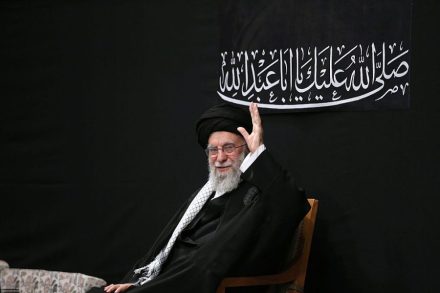
Ayatollah Ali Khamenei, a man whose life has been defined by the harshness of his rhetoric against the West (specifically, the US and Israel) and his ruthless rule, has died a martyr’s death under the rubble of his compound in Pasteur, Tehran.  It was always going to end this way. Khamenei came to prominence as a revolutionary first and then second as a wartime leader when he assumed the role of President of Iran during the Iran-Iraq war. What is needed is a clear plan that can unite Iranians behind a shared, inclusive vision of their country The Islamic Republic is facing its most serious crisis since January, when it

It’s unclear what threat Iran actually poses

Donald Trump has urged Iranians to “take over” their government after the United States and Israel struck targets across the country. A multitude of Iranian military and government targets were hit by missiles in what is turning out to be a joint operation far more comprehensive than the 12-day air campaign last June. Back then, Trump’s objectives were limited: degrade Iran’s three largest nuclear facilities. This time, Trump’s eyes are on a bigger prize – a full-scale decapitation of the Iranian leadership and a degradation of Tehran’s military power. Trump has just rolled the dice and plunged the United States into yet another war in the Middle East “We are

iran

Trump launches a remote-control regime-change war on Iran

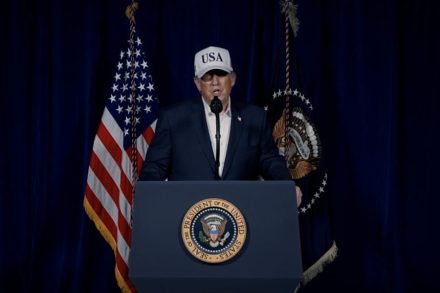
“We’re going to destroy their missiles and raze their missile industry to the ground,” said Donald Trump, as he stood at the lectern in his white USA cap and announced the launch of a “massive and ongoing” military operation against Iran.  “It will be totally, again, obliterated.” He had to say “again” because he has insisted over and over that Iran’s nuclear facilities had been “utterly obliterated” last summer, after Operation Midnight Hammer.  But the objective of these latest midnight or very early morning strikes, conducted again by US and Israeli forces working together, is already far broader than the wiping out of weapons of mass destruction – whether that

Iran is ready for war – is America?

In 2001, Iran’s Supreme Leader Ayatollah Ali Khamenei met privately with Spain’s then-prime minister Jose Maria Aznar. Aznar recounted how Khamenei dubbed Israel a “cancer condemned to disappear” and said that an open confrontation with Israel and the United States was inevitable. Iran, the Supreme Leader insisted, would prevail. Fast forward to 2026, and the war that Khamenei prophesied is getting closer by the day. The Islamic Republic is already operating under the assumption of a US military operation For decades, durable diplomacy between America and Iran has failed because of the ideological nature of the Islamic Republic. It makes its decisions based on a mix of ideology and a desire for

Iran cannot afford to call Trump’s bluff

The talks are still alive. Just. Iranian and US diplomats, engaging indirectly through Omani intermediaries, have yet to make any substantive progress toward a framework of understanding that governs further talks – as Kafkaesque as that might sound – but they are talking, and that is the best that the diplomats can hope for right now.  What separates Iran and America is a vast chasm between their respective red lines, and beyond that, the very substance of the talks themselves. The US is not willing to countenance an Iran that enriches uranium, has a ballistic missile program and arms proxies throughout the region.  Iran, for its part, perhaps unwisely – as

US troops finally leave Syria

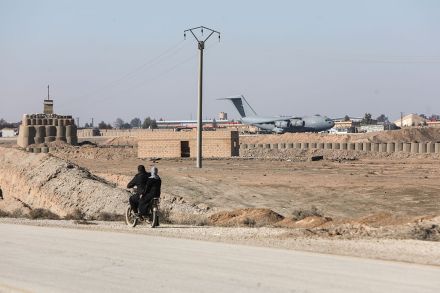
In December 2018, to the shock of pretty much everybody in the US national security establishment at the time, President Donald Trump publicly ordered the withdrawal of all US troops from Syria. The announcement caused a panic within the Defense Department, State Department and National Security Council, whose officials teamed up to dissuade Trump from going through with it. A similar story unfolded ten months later, in October 2019. Again, the bureaucracy pushed back; in October 2019, the House went so far as to pass a resolution opposing a US withdrawal, with senior Republican lawmakers signing onto the measure. Fast-forward more than six years later, and the US troop withdrawal

Syria

Why can’t Democrats speak frankly about Iran?

The manicured grounds of Harvard University are tranquil. Ditto the expensive quads of Yale, Princeton, Columbia and Stanford. All across the fruited plain, the self-denominated paragons of virtue who just yesterday sported “Free Palestine” buttons and joined in “No Kings” rallies are greeting today’s greatest enormity – the slaughter of tens of thousands of Iranian citizens by their insane Islamicist government – with the repetition of that hit by Simon and Garfunkel: “The Sounds of Silence.” Or, as the headline of a story in National Review put it: “Iranian Civilians Are Being Massacred to the Sound of Progressive Silence.” Accurate numbers are hard to come by since the murderous Islamic regime in Iran has shut down

iranians

What’s really going on in Iran?

24 min listen

Spectator contributor and author Charlie Gammell and Freddy discuss what is really happening as protests play out on the streets of Iran. They discuss imams turning on the Shah, whether Trump could actually be seeking talks rather than war, what the Middle East wants from a fractured Iran, and what issues could arise from replacing the regime with Reza Pahlavi.