Europe

Trump’s revolution is coming to the UK

In May, Charlie Kirk, who died today from a gunshot wound, visited the United Kingdom to debate the students of Oxford and Cambridge, Britain’s two most prestigious universities. The Spectator asked him to write about the experience. The result was this well-observed, funny and now strangely prophetic-sounding piece about the condition of England. Charlie Kirk believed in free speech. He died speaking freely. RIP. Oxford and Cambridge When I was growing up, people often said British politics were where America’s would be in five, ten or 20 years. What this meant was that Britain was more to the left of America: more secular, more socially liberal, more environmentalist, more globalized.

Cambridge charlie kirk

The real battle for Europe

Donald Trump hates Europe – that suspicion had grown so widespread by mid-April that J.D. Vance was moved to declare in an interview: “I love Europe.” Even its people, he claims. Of course, Americans have taken sides in European rivalries from the outset: Thomas Jefferson was a France man after the French Revolution, while John Adams preferred England. FDR preferred Pétain, while Eisenhower preferred de Gaulle. But hate Europe outright? The idea is absurd. Though our ancestors are not 100 percent European, our country is. You can imagine President Trump calling for a Wienerschnitzel and a tub of mayonnaise more easily than you can imagine him calling for a bowl of hủ tiều nam vang and a bottle of nưởc mắm.

Europe

How Liberation Day rocked Switzerland

When President Donald Trump gathered the world’s media to the White House Rose Garden to unveil America’s “Liberation Day,” Swiss viewers were cautious but optimistic.  Administration insiders had assured us that we had nothing to fear. During Trump’s first term in office, Switzerland had been the port in the storm of European opinion. As outsiders to the European Union, we were able to forge our own relationship with the American superpower. Our small alpine nation, with its population of 9 million, rose from the eighth largest foreign direct investor in the United States to the sixth. Swiss companies, like Nestle, Stadler and Novartis, ramped up their American operations, generating profits and jobs for both countries.

switzerland

No, Joy Reid: Rome didn’t fall due to a lack of ‘diversity’

Former MSNBC host Joy Reid recently delivered a peculiar history lesson to her social media audience. In her mind a reproach to Donald Trump, Reid warned that the Roman Empire “died because it wasn’t diverse enough,” implying that sticking with “just white folks” leads to inevitable civilizational decline. If history were written by cable news soundbites, we might soon learn that Napoleon lost Waterloo because he lacked a DEI department.In reality, Rome didn’t fall because of a lack of diversity. Nor is Europe today crumbling because of too many white people. Societies fail for many reasons, but skin color has never been one of them.

Joy Reid

J.D. Vance is wrong about Britain and America’s relationship

J.D. Vance told UnHerd yesterday that the United States has a “much more reciprocal relationship” with the UK than it does with countries such as Germany. This is a highly selective assertion.  What is more accurate to say is that the US has taken over and squeezed the UK economy. American politicians never allude to the vast number of American enterprises with large, high-margin UK operations steadily extracting profits. Such firms include Starbucks of Seattle, Costa Coffee (owned by Coca-Cola of Atlanta, Georgia) and Boots the Chemist (owned by Walgreens Boots Alliance of Illinois).

britain

Europe is its own worst enemy

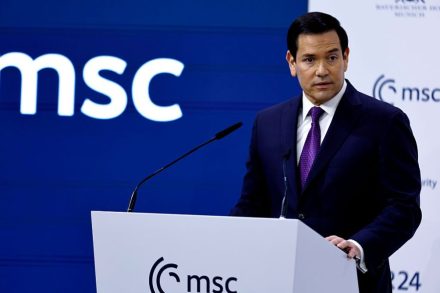
Vice President J.D. Vance’s speech condemning Europe’s abandonment of basic western values was a seminal moment in US-European relations. It provoked immediate praise from American conservatives and disparagement from European leaders, including German Chancellor Olaf Scholz. Critics and admirers both recognized the significance of Vance’s message. The February 14 speech, which Mr. Vance gave on his first trip abroad as vice president, yielded millions of views on X and spawned dozens of op-eds in response. At the Munich Security Conference – typically a venue to discuss defense spending and the like – Mr Vance told the entire European leadership class that they themselves are the biggest threat to European security.

Trump, le Pen and the legal war on politics

A few days ago, Raphaël Glucksmann, a French Member of the European Parliament and co-president of the left-wing Place Publique party, proposed that the United States return the Statue of Liberty to France.  In a speech on March 16, he argued that the US, under the Trump administration, no longer embodies the values of democracy and freedom that the statue represents.  Glucksmann said, “We’re going to say to the Americans who have chosen to side with the tyrants, ‘Give us back the Statue of Liberty.’ We gave it to you as a gift, but apparently you despise it. So it will be just fine here at home.” Be careful what you wish for.

Le Pen

The problem with putting US nukes in Poland

Nuclear weapons are becoming a major issue for Poland. One way or another, both the Polish president and prime minister want their country to host tactical nuclear weapons as a deterrent against President Putin’s Russia. In the latest — but by no means the first — statement on this issue, President Andrzej Duda revealed that he recently discussed stationing American tactical nuclear weapons in Poland with Keith Kellogg, the US special envoy for Ukraine. In an interview with the Financial Times, Duda said: “I think it’s not only that the time has come, but that it would be safer if those weapons were already here.

Europe

Trump’s war on Europe should not surprise anyone

Has there been a more cataclysmic year for US-Europe relations than 2025? It began with J.D. Vance’s “sermon” to EU leaders at the Munich Security Conference last month, in which he berated Western Europe for its policies on immigration and free speech. This year has also seen the growing threat of NATO falling apart after 76 years of peace in Western Europe, with the White House seemingly tilting toward Russia and Trump demanding that alliance members such as Germany, France, and the U.K. dramatically increase their defense spending. This week, as the Trump administration imposes tariffs on Europe and Europe retaliates, there are even signs of a full-scale trade war.

Why Greenland’s election might not have been so bad for Trump

“We strongly support your right to determine your own future. And if you choose, we welcome you into the United States of America,” President Donald Trump told Greenlanders from a joint session of Congress earlier this month. And determine their future they did, as Greenland voted in a parliamentary election Tuesday. The results might not be as bad for Trump as NBC’s headlines imply. That's the takeaway of Tom Dans, a man Greenlandic media calls Trump’s sande mand — true man — in the island-nation.  Dans, who is in Washington, DC after spending weeks traveling across the icy Danish protectorate, previously served in Trump’s first administration’s Arctic Research Commission and the Treasury Department. He currently heads American Daybreak, a nonprofit organization.

greenland
europe museum america

How America enfeebled Europe

Fighting to “rebalance” NATO, American leaders now look on the old continent with dismay. Europe cannot seem to muster the physical resources — and, still more, the cultural ones — to provide for its own defense. Even American liberals now mark this down to a late social democratic decadence, or civilizational ennui. To a certain kind of Elon Musk outrider, “Europe is cooked,” or, “Europe is a museum.” The go-to explanation is that America has spoiled these countries rotten for too long. Sheltering under Article 5 of NATO, European nations were able to run down military budgets and use the dividend to pay for generous welfare states. US overspending had allowed Europe to live in a post-historical dreamworld, but reality would have to intervene sooner or later.

Has Ukraine called Putin’s bluff?

Has Vladimir Putin’s bluff been called? It certainly looks that way. As long as the Ukrainians refused to consider a ceasefire, Moscow could portray them as the obstacle to the kind of quick deal Donald Trump appears eager to secure. Previously, Kyiv had floated the idea — after another unhelpful intervention from French President Emmanuel Macron — of a limited ceasefire covering only long-range drone attacks on each other’s cities, critical infrastructure, and operations in the Black Sea. But that was a non-starter, too transparently a trap for Putin, designed to make him look like the intransigent party if he rejected it. That certainly seemed to be Kyiv’s plan as of last night, when an unprecedented attack on Moscow involving some 140 drones killed three civilians.

Kyiv

Romania’s democracy has descended into farce

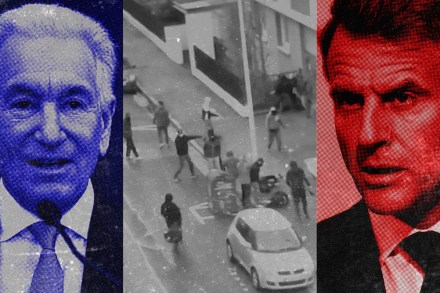
Violence broke out in Bucharest on Sunday evening after Romania’s Central Electoral Bureau disqualified Cǎlin Georgescu from running in May’s re-run presidential election. In a statement, the bureau justified its decision to exclude Georgescu on the grounds that his candidacy “doesn’t meet the conditions of legality” because he “violated the very obligation to defend democracy.” Supporters of Georgescu, whom the BBC has described as a “far-right, pro-Russia candidate,” gathered outside the Central Electoral Bureau to express their outrage and soon clashed with police. Until six months ago, Georgescu’s name was virtually unknown outside Romania.

Freedom of speech in the UK is very, very under threat

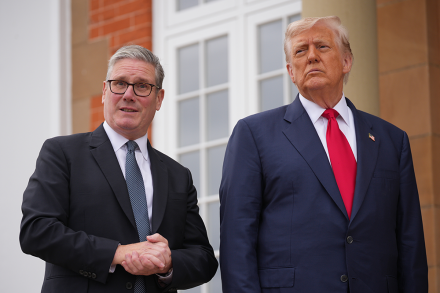
With all the transatlantic back-and-forth over Ukraine, and J.D. Vance’s contentious remarks on Fox News about some “random country that hasn’t fought a war in thirty or forty years,” it’s easy to forget that just three weeks ago, the vice president gave a landmark address about free speech in Europe and Britain, in particular. Last week, when Keir Starmer visited Washington, DC, Vance raised his concerns more directly with the prime minister about “infringements on free speech … that affect American technology companies and by extension American citizens.

Will Trump’s pause of Ukrainian military aid force Zelensky to the negotiating table?

The decision couldn’t have come as a surprise to Ukrainian president Volodymyr Zelensky. And if it did, then his capacity to read the room is even worse than imagined. Last night, the Trump administration paused all US military aid to Ukraine. The move came after an extremely tumultuous few weeks, which started on February 19 when Zelensky claimed that Trump was living in a Kremlin-orchestrated disinformation bubble. Trump wasted no time howling back by calling Zelensky a dictator because he canceled elections during a time of war. The spat accelerated on Friday, when the two men, egged on by Vice President J.D.

ukraine military aid pause

Zelensky goes to town

If the president of Ukraine, Volodymyr Zelensky, were on my Christmas list, I think I might give him a copy of Thucydides’ history of the Peloponnesian War. I’d mark that bit in book five we call “The Melian Dialogue.”  It tells the story of how Athens confronts the tiny island of Melos, a neutral ally of Sparta. Athens demands that the island surrender its neutrality. The leaders of Melos resist. Athens delivers an ultimatum: surrender or be destroyed.   The Melians offer a number of arguments about why they should not be forced to capitulate. Athens is not being fair, the Melians have right on their side, et cetera.

zelensky
ukraine zelensky white house

Zelensky’s White House visit goes off the rails

An astonishing flare-up in the White House between President Donald Trump, Vice President J.D. Vance and Ukrainian president Volodymyr Zelensky appears to have thrown any Russia-Ukraine peace deal — or US-Ukraine mineral deal — into jeopardy. Trump met Zelensky at the door of the White House where he gave reporters a thumbs up ahead of his arrival. However, the mood quickly turned sour when they sat down for initial remarks ahead of talks and a press conference where the pair were expected to sign the US-proposed minerals deal with Ukraine. Sat in the Oval Office, Trump was accompanied by key members of his team including J.D. Vance and Marco Rubio.

Europe learns the facts of MAGA life

Panic, even hysteria, has swept Europe. Its leaders realize that in their case Trump should be taken literally as well as seriously, and he seems prepared to trade the transatlantic alliance for détente with Russia. Eight decades of good times for the continent might be coming to a dramatic end. Trump demonstrated contempt for Europe during his first term; however, his top aides moderated his antagonism, carrying on policy as normal. While out of office he evidently decided never again. Today he is firmly driving American foreign policy. As ever, Trump’s tactics are often dubious, even counterproductive. However, only shock treatment is likely to cause Europe to take its own defense seriously.

europe

Were Trump’s comments about Ukraine a gambit to bring about peace?

If you have a pot that needs stirring, call Donald Trump.  A couple of days ago Trump made heads explode when he claimed (among other things) that Volodymyr Zelensky was “a dictator without elections” who started the war with Russia. “Oh my God, can you believe it? Trump doesn’t know Russia was the aggressor in the war. What an idiot.” The BBC, CNN and many other news sites ran little “fact-checking” stories. Politicians dusted off their most serious faces to deplore Trump’s lies/exaggerations (the US hasn’t given $350 billion to Ukraine, it was “only” $180 billion or whatever)/historical ignorance. “Ukraine did not start the war,” CNN intoned. “Russia started the war by invading Ukraine in 2022.

trump ukraine

Donald Trump speaks his ‘Truth’ about Ukraine in attack on Zelensky

Negotiating peace can be delicate business. Often it requires a steady hand, a strong sense of compassion and inexhaustible patience. As Senator George J. Mitchell, a leading architect of the Northern Ireland peace process, once wrote, "In order to understand what another person is saying, you must assume it is true and try to imagine what it might be true of." Cockburn was reminded of Mitchell's sage words when he read the president's Truth Social post about Volodymyr Zelensky on Wednesday afternoon, which he republishes in full below: Think of it, a modestly successful comedian, Volodymyr Zelenskyy, talked the United States of America into spending $350 Billion Dollars, to go into a War that couldn’t be won, that never had to start, but a War that he, without the U.S.

donald trump zelensky