Europe

Help, I've become a news junkie!

I’ve always been something of a news addict, but recent events in America and Ukraine have turned me into the kind of junkie films get made about. ‘Trump Derangement Syndrome,’ an affliction you once sniggered at in others, is now sweeping the world faster than Covid-19, and is oddly easy, at the moment, to fall into. Speaking of the White House’s pivot to Russia and apparent abandonment of Europe, a friend said it was like ‘sitting in an articulated lorry being driven by someone who’s just downed an entire quart of bourbon.’ Another remarked: ‘There’s this complete, jaw-dropping disbelief at what’s happening. Each time I turn on the TV for

Will the EU ever get tough on defence?

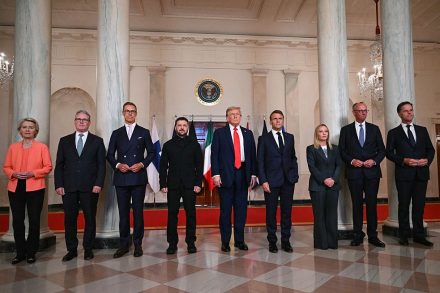
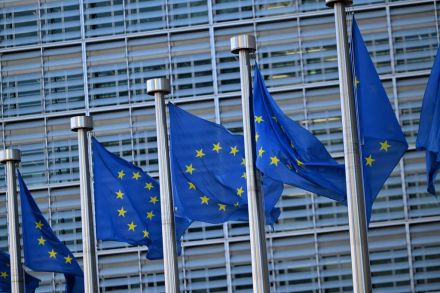
European leaders are in Brussels today for an emergency summit on defence, and the future of both Ukraine and the continent. In a further attempt to hash out a peace plan for Ukraine, the 27 EU heads of state are joined by Volodymyr Zelensky. Arriving this morning, Zelensky declared, ‘It’s great we are not alone’. As part of today’s agenda, members of the bloc are expected to endorse Ursula von der Leyen’s ReArm Europe plan – which will make €150 billion (£125 billion) available in loans for members to boost defence spending. The summit will also likely discuss French President Emmanuel Macron’s proposal to extend his country’s ‘nuclear umbrella’ to its

Macron's late-night address will infuriate Trump and Vance

Emmanuel Macron spoke to his people last night in a television address and told them that the future of Ukraine cannot be decided by America and Russia alone. It can, and it probably will, after Ukraine’s leader Volodymyr Zelensky signalled his intention to sign Donald Trump’s minerals deal, the first step in the peace plan drawn up by the USA. One of the curiosities of Macron’s speech was that he spent most of it warning about war, as America, Russia and Ukraine talk about peace. Putin’s bellicosity ‘knows no borders’, declared the French president, adding: ‘Who can believe today that Russia would stop at Ukraine?’. The martial tone of Macron’s

Europe's rearmament is off to a feeble start

If there is one silver lining to Donald Trump’s Oval Office bust-up with Volodymyr Zelensky last Friday, it is that Europe is finally getting serious on rearmament and defence. Or is it? On Tuesday, Ursula von der Leyen, president of the European Commission (EC), announced a package of measures designed to encourage EU member states to up their defence spending. If they make full use of the new proposals, von der Leyen said, it would amount to an increase of up to €800 billion (£661 billion) spent on defence across the bloc. Announcing the package, she declared: ‘We are in an era of rearmament. And Europe is ready to massively

Is Macron a ‘danger for peace’ in Ukraine?

Keir Starmer and Emmanuel Macron are in competition to be the de facto leader of the European response to the diplomatic crisis between Donald Trump and Ukraine’s president Zelensky. The cynic might wonder if Macron isn’t perhaps making the most of the fallout to boost his standing after a calamitous few months. The French president’s reputation has not recovered from his decision last June to call a snap election; the result was political chaos and three prime ministers in six months. Few French have confidence in their president to handle the situation Ukraine effectively Domestically, France is a disaster zone. Lawlessness, immigration and an ailing economy are just three reasons

Keir Starmer has had his best week since becoming Prime Minister

Even Keir Starmer’s fiercest detractors (and there are a fair few) must concede that he has had a very good week on the international stage: the best by a long chalk since he entered Downing Street. The Prime Minister, derided by critics as a political plodder, lacking in ideas and charisma-free, is a leader transformed. The new Starmer is a man with a mission, imbued with the confidence to lead. This was very much in evidence when he met US President Donald Trump for talks in Washington earlier this week. Starmer approached the discussions in the manner of the barrister he used to be, carefully mastering his brief and solely focused on

Is the Kurdish PKK about to lay down its arms?

On Thursday, the jailed leader of the Kurdistan Workers’ party (PKK) called on his organisation to lay down their arms and dissolve themselves. If they comply, this would put an end to a decades-long conflict with the Turkish state that has claimed the lives of over 40,000 people. The statement was delivered in a crowded press conference in Istanbul by members of the pro-Kurdish Peoples’ Equality and Democracy party (DEM). The call appeared to be more or less unconditional. One of the speakers at the end of the conference added that ‘in practice, of course, the laying down of arms and the PKK’s self-dissolution require the recognition of democratic politics

Merz is caught in a defence spending trap of his own making

It’s not just in Britain that defence spending is top of the agenda. In Germany, too, the debate has turned to how the government can resurrect the country’s hollowed-out armed forces. Friedrich Merz, leader of the CDU and the man pipped to become the next chancellor, is driving the discussion. But unlike the grudgingly positive response Prime Minister Keir Starmer has received for pledging to increase UK defence spending to 2.5 per cent of GDP over the next two years, Merz is blundering his way into an almighty row – and possibly a constitutional crisis.  The final vote in Sunday’s federal election had not been fully counted before Merz, whose

Russia is the big winner in Germany's election

The real winners of Germany’s election are sitting in Moscow. Despite Friedrich Merz’s Christian Democrats (CDU) technically claiming victory with a meagre 28 per cent showing, the truly remarkable surge belongs to the openly pro-Russian forces that now dominate the political landscape. The far-right Alternative for Germany (AfD) and the far-left party Die Linke (successor to East Germany’s communist SED) have emerged from this record 85 per cent turnout election with unprecedented strength: both unapologetically aligned with Vladimir Putin’s interests and fundamentally opposed to Germany’s Western orientation. That this Russification of German politics coincides with the third anniversary of Russia’s invasion of Ukraine feels less like coincidence and more like

What Europe gets wrong about the far right

The head of America’s ‘Department of Government Efficiency’ (Doge) has written to all federal workers in the US asking them to explain in a brief email what they did last week. The exercise is intended to take no more than five minutes but has already lead to howls from many employees. How could anyone expect them to perform such a task? How can one explain the intricacies of supporting transgender opera among the Inuit in such short order? Happily, the new editor is not putting those of us on The Spectator’s payroll through any similar exercise. Nevertheless, something in the global vibe-shift perhaps impels me to mention a little of

Why Macron is offering France’s nukes to Europe

President Emmanuel Macron has raised the nuclear card. He has offered to provide nuclear cover for Europe as fears intensify that President Trump is moving further away from Nato and from America’s historic obligations towards European allies. The idea of France, the fourth largest nuclear weapons power in the world, extending its nuclear deterrence is not new. Macron is just one of many French presidents who have contemplated providing a European dimension to France’s force de frappe. However, today the context is dramatically different. For the first time in Nato’s history, the US sided with Russia and not its European allies when the Trump administration refused to condemn Moscow for the

Europe can’t silence its working class forever

Last December the European Commission published its ‘priorities’ for the next five years. All the bases were covered, from defence to sustainable prosperity to social fairness. And of course, the most important priority of all, democracy. ‘Europe’s future in a fractured world will depend on having a strong democracy and on defending the values that give Europeans the freedoms and rights that they cherish,’ proclaimed the Commission, which pledged it was committed to ‘putting citizens at the heart of our democracy’. December was the same month that a Romanian court cancelled the presidential election, after the surprise first round victory of the Eurosceptic and anti-progressive Călin Georgescu. It was claimed the election had been

Conclave – what really happens when a pope dies?

54 min listen

The film Conclave has picked up a host of awards across all the major ceremonies so far, including at the Screen Actors Guild, the Golden Globes, and winning Best Picture at the BAFTAs. Adapted from the novel by Robert Harris, it also has eight nominations at the upcoming 2025 Academy Awards. Full of intrigue, the film has viewers wondering how true to life the process depicted on the big screen is. And, with Pope Francis hospitalised, amidst the award season, this has only heightened interest in Papal conclaves and the election process.  Dr Kurt Martens, Professor of Canon Law at the Catholic University of America, joins Damian Thompson to unpack the process.

How Macron beat Starmer to Trump

Emmanuel Macron’s lightning visit to the White House was a tour de force of French diplomatic energy, skill and bravado. Whether Macron has managed to convince Donald Trump of the need to involve Kyiv and Europe in US-Russian negotiations on the war in Ukraine will become clear in the next fortnight. But what it demonstrated forcefully was the striking humiliation of the British Prime Minister Keir Starmer and the slothful incompetence of diplomacy in London and Washington. It is a stark warning of how President Macron and the EU will run rings round the Labour government and its ‘reset’ with Brussels. The Labour government announced some two weeks ago a Keir Starmer visit

France's National Rally has lost its way

Jordan Bardella flew to America last week on a trip he had long boasted about. The president of the National Rally – and all his party – had been a little put out that the only French politicians invited to Donald Trump’s inauguration were Eric Zemmour and Sarah Knafo of the right-wing Reconquest. It was with relish, then, that Bardella boarded a flight to Washington to attend the annual Conservative Political Action Conference (CPAC). Here was his party’s chance to announce itself to America, while rubbing shoulders with the representatives of the new zeitgeist: JD Vance, Slovakian Prime Minister Robert Fico, Giorgia Meloni, Argentine President Javier Milei, Blighty’s own Nigel

The AfD will be a thorn in Merz's side

Alice Weidel, the leader of the Alternative for Germany (AfD) party, didn’t mince her words. Speaking immediately after the German federal election on national television in Berlin on what’s known as ‘the leaders round’, she claimed that the mainstream conservative Christian Democrats (CDU) merely won a ‘pyrrhic victory’. Its head, Friedrich Merz, had no real choice, Weidel said, but to form a coalition with her radical right party (which scored over 20 per cent of the vote). A three- party coalition, she added, would be ‘a millstone around Merz’s neck’. The AfD will enjoy the luxury of being able to criticise any new government at will Merz was having none

Friedrich Merz on track to win German federal election

After two torturous months of campaigning, the wait is over. Friedrich Merz, leader of the conservative CDU party, is on track to win Germany’s federal election. According to the official exit poll, published at 5pm UK time, his party has won 28.9 per cent of the vote. This means they are set to become the largest party in Berlin’s new parliament. Hot on the heels of the CDU is the far-right Alternative für Deutschland (AfD) party, which has achieved 19.7 per cent of the vote. While it is its highest ever result in a federal election, their projected vote share suggests the far-right party will be just shy of the

Will Macron get tough on Algeria over the French knife attack?

Emmanuel Macron will hold talks with Donald Trump on Monday at which the President of France will attempt to ‘make Europe’s voice heard’. Still seething about being excluded from America’s peace negotiations with Russia, Macron wants to reassert the continent’s authority Stateside.  It will be a forlorn exercise. One of the reasons America – not just Trump’s administration but the one that preceded it – no longer attaches much importance to the EU is because they can see how weak it’s become. The world understands that Macron talks the talk but never walks the walk It’s timidity towards Algeria is a prime example. On Saturday, an Algerian man was arrested

What to look out for in Germany's federal election

After two long months of campaigning, Germany heads to the polls today for its federal election. Approximately 60 million voters across the country’s 16 states will elect the new government. Will incumbent SPD chancellor Olaf Scholz’s party be punished for his three years in power? Will the far-right Alternative für Deutschland (AfD) cruise to its highest ever federal result? Will Friedrich Merz’s conservative CDU do well enough to only need one partner to form a coalition? This is what to watch out for tonight. To enter the Bundestag, the parties need to win at least 5 per cent of the national vote. The German proportional representation system means that everyone gets