Economy

  • AAPL

    213.43 (+0.29%)

  • BARC-LN

    1205.7 (-1.46%)

  • NKE

    94.05 (+0.39%)

  • CVX

    152.67 (-1.00%)

  • CRM

    230.27 (-2.34%)

  • INTC

    30.5 (-0.87%)

  • DIS

    100.16 (-0.67%)

  • DOW

    55.79 (-0.82%)

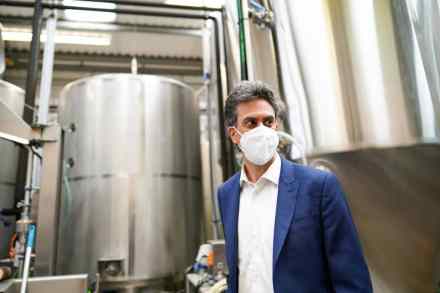
Miliband’s fight against North Sea drilling is far from over

What have North Sea oil and gas production and grammar school education got in common? Both are subject to a fiddle by which they can be expanded while the government pretends they are not expanding. After David Cameron changed his mind on grammar schools and said he wouldn’t allow new ones to be created, a deal was done whereby existing schools could open a ‘satellite’ on another site in another town. Hence Tunbridge Wells Grammar School opened a new site in Sevenoaks – a separate school in all but name, and yet the government could claim that it had stuck to its promise of no new grammars. The cabinet battle

Spotlight

Featured economics news and data.

Cutting Britain’s giant welfare bill would be an act of kindness

Does having money really matter that much? There are those, usually with quite a bit of it, who want us to care less about materialism. But, unequivocally, money really does matter – not because of any status it supposedly brings, but for the freedom it buys: freedom to choose how we live and how we look after others. Considering this, it seems that the deep disillusionment with mainstream politicians in recent years stems from a protracted and ongoing period of stagnant living standards over which they have presided. But the truth is that the average person has not got poorer since the global financial crisis. They have got a little

How much did the Covid crisis cost?

The true cost of Covid cannot be quantified only in death rates or GDP figures. Though it could have been far worse, the pandemic nonetheless inflicted a deeper wound on our society than any productivity calculus can measure. But as legal domestic restrictions end, and the economic fallout from months of stringent controls is increasingly felt by households, it’s worth exploring how the nation’s balance sheet could have looked had this virus never appeared. It was former US Senator Everett McKinley Dirksen who observed, ‘a billion here, a billion there, and pretty soon you’re talking real money,’ but the extent of public sector spending over the course of this pandemic

Cracks are already showing in the EU’s Russia response

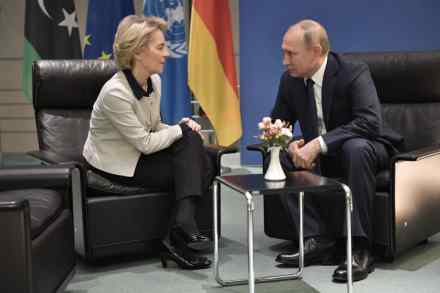
‘The EU is united and acting fast,’ said Ursula von der Leyen, the president of the European Commission, as she condemned Russia’s invasion of Ukraine. A new package of sanctions, swiftly agreed upon by EU member states, appeared to show von der Leyen was right. Yet in reality, the measures were disappointing: a number of Russian officials had their assets frozen, but even Putin himself avoided punishment. Given the different attitudes and interests of EU members, from here on unity will be even more difficult to obtain. While the EU has vowed to ‘hurt Russia’, it seems unlikely it will agree upon how. Vladimir Putin’s recognition of the Russian-backed Ukrainian regions of Donetsk and Luhansk

Are the lights about to go out across Europe?

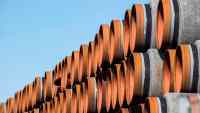
Impact-Site-Verification: de2f122d-4b66-49e8-911d-d4d5628b0063 Today’s snap decision by German Chancellor Olaf Scholz to halt Nord Stream 2 — the new pipeline intended to export vast amounts of Russian gas into the EU — will make precisely no difference to European energy security, at least in the short to medium term. It could force a rethink of Berlin’s longer-term energy strategy, but the bigger question facing energy markets is whether Russia will curtail existing gas flows into Europe. Scholz on Tuesday instructed Germany’s Federal Ministry for Economic Affairs and Climate Action not to allow the Baltic Sea pipeline to start pumping gas ‘for now’. Halting the certification process puts the project on hold

It’s too late to break Europe’s gas reliance on Russia

So, Nord Stream 2 will not be plugged into Germany’s gas grid. A little surprisingly, Chancellor Olaf Scholz has been first out of the blocks this morning in the western economic response to Putin’s recognition of breakaway states in eastern Ukraine. The block is not total: what Scholz says is that the certification process for the pipeline will be halted — leaving open the possibility that it might, after all, be connected if Putin starts to behave himself, or Germany becomes especially desperate for gas. Nevertheless, it is a significant move which will have an economic impact on Russia. But it is astonishing that the project was ever allowed to come

Germany’s canning of Nord Stream 2 will hit Putin hard

Vladimir Putin’s threats towards Ukraine have, in part, been an operation in stoking divisions throughout the West. As James Forsyth explains in the magazine’s latest cover piece, it was just weeks ago that Germany was not on the same page as the US and the UK about what actions from Putin might classify as an invasion – and how such actions might trigger western countries to respond. The obvious sticking point for Berlin has been Nord Stream 2: the now-completed gas pipeline running under the Baltics, built to transfer 110 billion cubic metres of gas supplies from Russia to Germany each year and bypass the current pipeline which runs through

Sanctions won’t stop Putin

The Lithuanian prime minister, Ingrida Šimonyte, put it well yesterday: ‘the way we respond will define us for the generations to come’. The invasion of Ukraine started last night with Vladimir Putin’s order to send troops into eastern Ukraine. He had earlier recognised the breakaway provinces of Donetsk and Luhansk, which together constitute the Donbas region, as independent republics. The two self-proclaimed states declared their independence — something neither Kiev nor any other third country save Russia has yet recognised — following 2014 following the Maidan revolution. The US, UK and EU say they will announce fresh sanctions as early as today. What we know is that the technicalities have been

Britain is trapped in a Boomerocracy

‘If young Americans knew what was good for them’ the historian Niall Ferguson once remarked, ‘they would all be in the Tea party’. In his first Reith Lecture, Ferguson argued that austerity would be a boon for the young; public debt merely allowed ‘the current generation of voters to live at the expense of those as yet too young to vote or as yet unborn.’ It is certainly true that successive generations in Britain have run up an almighty tab while assuming the next group along will be able to foot the bill. The problem Ferguson neglected to account for was which voters would end up delivering a pro-austerity government into

Macron’s energy intervention has seriously backfired

He intervened decisively. He showed the ability of the state to make a difference. And he demonstrated that greedy, self-interested corporations should not be allowed to exploit ordinary consumers. Only a few weeks ago, the French President Emmanuel Macron was being celebrated by left-leaning economists and pundits for forcing the French energy giant EDF to slash the cost of power. But hold on. Now, the government has had to bail-out the company from the inevitable financial hit. It turns out that the government can’t dictate the price of energy after all – and it just creates a bigger mess when it tries to. Even by the standards of French industrial

Bad news, Governor: the wage-rise spiral is already raging

I’ve had the opportunity recently to take part in wage-rise discussions for several small entities in which I’m involved. The conversation has been much the same everywhere. ‘How about we offer them 3 per cent?’ ‘But that’s less than current inflation and they didn’t have a rise when they were on furlough last year.’ ‘So how about 5 per cent?’ ‘Safer to say 7, but they’d still be worse off than before the pandemic. And they’ll get 10 per cent or better if they move anywhere else.’ All of which was perfectly confirmed by official figures this week: annual pay settlements running at 3.7 per cent but (because so many

The looming monetary apocalypse

OK, I finally watched Netflix’s Don’t Look Up. Surprisingly, I enjoyed it — especially before its effective subtitle for us thickos, THIS IS A METAPHOR FOR CLIMATE CHANGE, YOU F-ING MORONS. Otherwise, the film might have playfully dramatised the more general phenom of fiddling with celebrity bodices while Rome burns. The comet at which I’m looking up could arrive far more immediately than perilous global warming. Money is in trouble. I’m not only referring to a cost-of-living crisis. Money itself is in trouble. Let’s contemplate, to coin a phrase, a basket of deplorables. US inflation just hit 7.5 per cent, the highest in 40 years. UK inflation, now 5.5 per

Why ‘Ukraine carnage’ in the markets won’t last

Oil will shoot up to $130 a barrel. The prices of natural gas will double in a few hours, tipping a few more energy companies into bankruptcy. The tech stocks will crash, currency traders will panic, and the bond markets will crater. If Russian tanks do start to roll across the Ukrainian border this week then we can expect carnage in the financial markets. Indeed, they have already fallen sharply in anticipation of a possible war. And yet, the important point is surely this: it won’t last. True, the most serious armed conflict on European soil since the end of world war two is a serious matter. But geopolitical events

Who’s in charge of the NHS?

Who runs the NHS? With a £136 billion budget for NHS England and NHS Improvement eating up 17.5 per cent of tax revenue, there should be a clear answer to this. But ministers were left wondering when the time came to announce what the health service would achieve with its extra £12 billion from the tax rise. I write in this week’s magazine about the row over waiting lists and how ministers thought the extra cash would cut it to 5.5 million — only to be told it could possibly hit close to 11 million. But there was a row over another point too: the timeline for cancer care. It’s

It’s time for Rishi Sunak to become a low-tax Tory

This week marks two years since Rishi Sunak was thrust from relative obscurity into the political spotlight as Chancellor of the Exchequer. After less than a month in post, he delivered his first Budget. Weeks later, Britain was in lockdown. How has the ‘Covid Chancellor’ fared in the intervening period? When he was splashing taxpayer cash early on in the pandemic, he was cheered to the rafters. Now, he faces criticism both for holding the line against big spending colleagues, and for presiding over the highest tax burden in several decades. If Sunak were a speech, his opening paragraph would be full of promises. He’s a low-tax Thatcherite who believes

Britain’s remarkable economic recovery in 2021

With prices soaring, interest rates rising and the cost of living crisis growing more acute by the day, we could do with some more positive news: and this morning’s GDP update has played a small part in providing it. Despite suffering the largest economic contraction in 300 years in 2020 – and taking the biggest economic hit in the G7 – Britain had the fastest growing economy in the G7 last year, boosting its GDP by 7.5 per cent. It’s still a mixed story: looking at where the UK economy is now compared with pre-pandemic levels, it ranks average within the G7. But with one of the steepest hills to

How high could interest rates go?

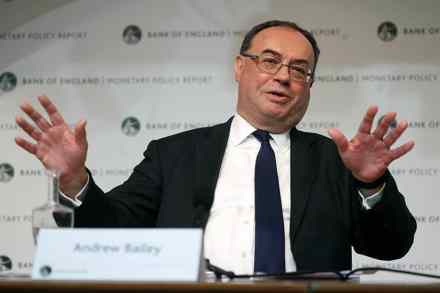
The last time that US inflation hit 7.5 per cent, Ronald Reagan was a recently-elected president. And he, older readers might recall, partly owed his election to inflation. He memorably said during his campaign: ‘inflation is as violent as a mugger, as frightening as an armed robber and as deadly as a hitman.’ But what of Britain? Bank of England chief economist Huw Pill gave a speech this morning in which he revealed that the Monetary Policy Committee (MPC) very nearly raised the bank’s base rate to 0.75 per cent this month rather than to 0.5 per cent — there was only one vote in it. Should this, along with the news from

Why windfall taxes are a rotten idea

Annual profits of £9.5 billion at BP this week followed a £20 billion jackpot at Shell last week, thanks to soaring global wholesale energy prices that BP boss Bernard Looney recently said had turned his company into a ‘cash machine’. For the very same reason, Ofgem has announced a 54 per cent (roughly £700) increase in the energy price cap for 22 million UK customers, while the Chancellor is scrabbling to keep at least some of those households out of ‘fuel poverty’ by offsetting half the rise with a £200 energy discount, to be recouped over five years, plus a £150 council tax rebate. As investors in the oil giants

Exclusive: Leaked NHS report shows waiting list hitting 9.2 million

Before the pandemic hit, NHS England waiting lists were at a record high of 4.4 million. Three lockdowns later, they’ve risen to six million: an unacceptable figure for a Tory government that has spent years trying to rebrand itself as the ‘party of the NHS’. Boris Johnson’s decision to break his manifesto pledge and raise taxes was directly linked to the idea that the money would first be funnelled into the health service to fix the backlog. So can he now deliver for patients? When Health Secretary Sajid Javid announced his ‘elective recovery plan’ in the House of Commons on Tuesday, he said that the waiting list would start shrinking

Lock them up? Not in Sturgeon’s Scotland

One of the great disappointments of devolution has been the failure of the Scottish parliament to pursue novel ways of fixing political problems. Whether on educational attainment, health indicators, waiting times or economic development, it’s difficult to argue that Scotland under devolution is fundamentally different from how it would have looked had the country voted no in 1997. But one area where that observation is becoming harder to sustain is criminal justice: the SNP has grown in confidence in recent years and a more liberal — or at least a more nuanced — policy is taking shape. The SNP’s justice secretary Keith Brown set out the latest iteration of this

A windfall tax on oil giants would harm – not help – pensioners

Look up this year’s performance of the shares and bonds which make up your pension fund and you will see that BP and Shell are the rare chinks of light. BP is up 15 per cent and Shell up 20 per cent, with both enjoying bumper profits on the back of high oil and gas prices. Cue, then, for Labour and the Lib Dems to demand a windfall tax in order to confiscate some of these profits. The money ought to be used, Eds Miliband and Davey have said this morning, to help people pay their heating bills. In both their minds ‘dividends’ and ‘shareholders’ are rude words – whereas in