Economy

  • AAPL

    213.43 (+0.29%)

  • BARC-LN

    1205.7 (-1.46%)

  • NKE

    94.05 (+0.39%)

  • CVX

    152.67 (-1.00%)

  • CRM

    230.27 (-2.34%)

  • INTC

    30.5 (-0.87%)

  • DIS

    100.16 (-0.67%)

  • DOW

    55.79 (-0.82%)

Why Xi thinks he has the upper hand

Taiwan is “the most important issue,” Xi Jinping warned Donald Trump. “If mishandled, the two nations could collide or even come into conflict, pushing the entire China-US relationship into a highly perilous situation,” according to Chinese state media. The contrast with Trump’s comments was striking. Trump had earlier named trade as the most important issue. In opening remarks, the American President stuck to bland flattery, saying he and Xi had a “fantastic relationship,” that Xi was a “great leader” and that “it is an honor to be your friend.” “The relationship between China and the USA is going to be better than ever before,” he insisted.

Spotlight

Featured economics news and data.

Cutting Britain’s giant welfare bill would be an act of kindness

Does having money really matter that much? There are those, usually with quite a bit of it, who want us to care less about materialism. But, unequivocally, money really does matter – not because of any status it supposedly brings, but for the freedom it buys: freedom to choose how we live and how we look after others. Considering this, it seems that the deep disillusionment with mainstream politicians in recent years stems from a protracted and ongoing period of stagnant living standards over which they have presided. But the truth is that the average person has not got poorer since the global financial crisis. They have got a little bit richer. Employment levels are still exceptionally high. And, both historically and internationally, we are a very rich country.

How Big Philanthropy became Big Grift

In 1889, Andrew Carnegie, one of the most ruthless industrialists in American history, wrote an essay entitled “The Gospel of Wealth,” which became the moral playbook for the oligarchs of his time on what to do with their fortunes. Carnegie was determined to overcome his reputation as a “robber baron” by becoming one of the greatest philanthropists who ever lived. The “man of wealth,” Carnegie wrote, should “consider all surplus revenues which come to him simply as trust funds, which he is called upon to administer... in the manner which, in his judgment, is best calculated to produce the most beneficial results for the community.

philanthropy
esg woke

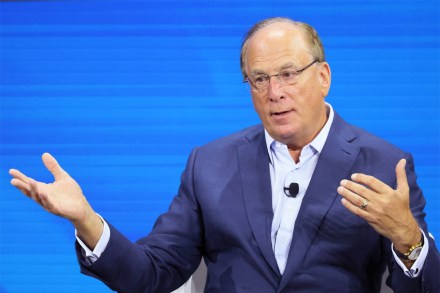
The great anti-ESG backlash

For more than thirty years, Scott Adams has captured the absurdity and humor of office life in his popular syndicated newspaper cartoon strip “Dilbert.” The title character, an oblong-headed, cubicle-dwelling everyman, is one of the most familiar cartoon characters in America, but last September he vanished from more than seventy newspapers. Shortly before Dilbert’s partial disappearance, his opinionated creator had set his sights on ESG. Adams’s views on the vogue for “Ethical, Social and Corporate Governance” investment strategies weren’t exactly difficult to discern. In one strip, for example, Dilbert asks, “What is this ‘ESG’ thing I keep hearing about?

Semafor’s Justin Smith is going global

On January 4, Justin Smith announced that he was stepping down as CEO of Bloomberg Media to found a startup. He would pursue a “new kind of global news media company,” one that would serve “unbiased journalism to a truly global audience.” Ben Smith, the New York Times media columnist, resigned on the same day. The two Smiths were joining together to work on what was known at the time only as “Project Coda.” In the flurry of press coverage that followed, some hubristic claims were bandied about. The era of the foreign correspondent was over, Justin insisted. Throughout the world, there were 200 million college-educated, English-speaking professionals who were underserved by current news media, Ben maintained.

Justin Smith

Why the Biden stock market is even worse than you think

If you’re the sort who rarely checks your 401K and other investment accounts, you may be blissfully unaware of what a dismal year (plus) its been for the stock market. Many prominent media personalities, particularly ones on CNBC, promised us that Biden would be a boon to the stock market because Trump was too erratic. But while the market started hot in 2021, it's mostly been ice cold ever since, with a few fake rallies thrown in to tease us. How bad has the Biden era been for stocks? Consider some numbers I crunched prior to the market opening on December 12.

Nikole Hannah-Jones to join NYT walkout

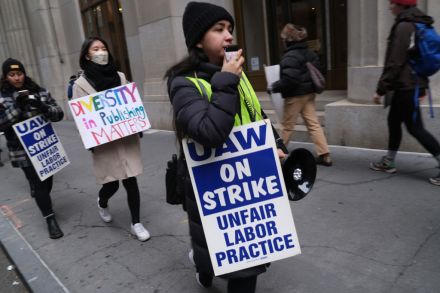
The New York Times Guild announced on Friday that about 1,000 of its members would walk out if their demands regarding raises and pensions, among other issues, were not addressed by December 8, this coming Thursday. And Nikole Hannah-Jones, the 1619 Project essayist, has since announced her intention to join the walkout. Do you hear the people sing? Singing a song of angry men?... Cockburn is somewhat perplexed, because to participate in a walkout, you would presumably have to be an active employee doing some form of work for the New York Times. Hannah-Jones tweeted on December 3 that, “I will be joining my NYTimesGuild colleagues in walking out if [the New York Times] doesn’t agree to a fair contract by December 8.

nikole hannah-jones

Farewell to Chris Cillizza, king of the Twitter ratios

Twitter Ratio King Chris Cillizza joined his friends Chris Cuomo, Brian Stelter and former boss Jeff Zucker in the long line of dismissed CNN employees on Thursday. While Cillizza may still offer up heaped dishes of bad takes on social media, he will no longer be doing so under the banner of the supposed new direction of CNN under CEO Chris Licht. What exactly do people like me mean when we call Cillizza the "Ratio King”? The ratio is what happens on Twitter when the number of comments on a tweet vastly outweighs its likes, retweets and quote tweets, meaning people are criticizing the tweet far more than endorsing it. And Cillizza, who may have accidentally even given birth to this unit of measurement, has owned the mantle for years now.

Free markets are part of the American tradition

Election aftermaths are always an opportunity for taking stock. Since the 2022 midterms, we’ve heard prominent Republicans stressing the need to revisit questions ranging from electoral strategy to how to engage the culture wars. What desperately needs discussion on the American right, however, is conservatism’s approach to economic policy. Since 2015, American conservatives have been deeply divided over economics. Conservative skepticism about markets predates Donald Trump, but there’s little question that Trump shattered the favorable views of free markets that had prevailed since Ronald Reagan’s presidency.

Dave Portnoy still believes in America

When the media gives coverage to Barstool Sports founder Dave Portnoy, it’s generally unfavorable. Business Insider attempted to smear "El Presidente" over his sexual predilections, then he brought the receipts. The New York Times outed him as being who he says he is — a degenerate sports gambler — only to reap the same results. What gets much less coverage is Portnoy’s love for America, American workers and American businesses. During the pandemic, when he used his stature to keep multiple small businesses afloat via the Barstool Fund, there were no glossy covers, despite the fund raising almost $42 million and supporting 443 businesses. In the mainstream press, only Fox News took note.

dave portnoy

The coming turbulent times in the oil market

When the Wall Street Journal reported on November 21 that OPEC, the oil cartel dominated by Saudi Arabia, was planning to increase production by 500,000 barrels per day in December, the crude market immediately reacted. Oil prices plunged by 6 percent, bringing the Brent benchmark close to $80 a barrel. Saudi energy minister Prince Abdulaziz bin Salman, the older brother of king-in-waiting Mohammed bin Salman, immediately went to work disputing the report. No decisions at OPEC had been made, he said, and it was possible the cartel could even proceed with further production cuts if needed to maintain balance in the market (for the Saudis, "balance" is usually defined as padding the kingdom’s balance sheet). Abdulaziz’s intervention helped make up most of those earlier losses.

oil

Revealed: which industries have lost the most workers this year?

The Great Resignation continues, with a new study revealing that employees in many industries are quitting at higher rates than 2021. Accommodation and food services lost 5.8 percent of its workforce — 773,600 workers — in 2022, an increase of about 128,000 over the same period in 2021. Retail lost 3.82 percent, or about 600,000 workers, though this is 109,000 fewer than the same period in 2021. In third is the entertainment sector at 3.58 percent, accounting for 82,200 jobs, rising 7,000 compared to 2021. These industries happen to be where employees are in closest contact with customers — which would probably cause Cockburn to quit too, given how rude folks can be. Manufacturing and mining, by contrast, saw 2.42 and 2.3 percent respectively.

quitting

Can Twitter still be saved?

A philosopher once famously said that Hell is other people. What the world has learned from Twitter is that Hell is other people’s opinions. It’s no wonder, then, that when Elon Musk came bounding into Twitter headquarters in late October — after changing his Twitter bio to “Chief Twit” — a popular response, on Twitter and off, was, “welcome to Hell.” When Musk, in an open letter to Twitter advertisers, wrote that he doesn’t want the site to become a “free-for-all hellscape,” he touched a debate concerning a much larger issue — balancing free speech against the need to keep hate, propaganda and manipulation out of public forums, particularly digital ones that can spread malicious content around the world instantly.

twitter
playbook

How Politico’s Playbook went from must-read to spam

Imagine one day you walk into your local watering hole and find out that all of your favorite bartenders have been hired away. In their place are new “cocktail specialists,” who are too busy flirting with one another to actually help customers. When they finally pour you a drink, they are awfully stingy with the booze. You briefly grieve over an overpriced vodka soda and then vow to never go back to that awful place. That’s more or less how I feel about Politico’s Playbook, the newsletter that was once the go-to morning read for Washingtonians. Reporters, lobbyists, government employees and politicians used to consume the daily newsletter before their first cup of coffee.

levi's

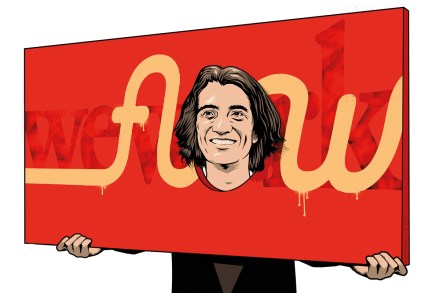
How I went from woke capitalist to victim of the woke mob

In February 2022 I walked away from my job as the first female global brand president of Levi’s after close to twenty-three years at the company. I’d given the better part of my adult life to Levi’s because of the product itself — I do love my 501s. (I have always preferred the button-fly on my jeans, rather than the zipper.) But while I may have chosen to work there in the beginning because of the product, I stayed because of the company culture. I believed in their mantras: “profits through principles,” “harder right over easier wrong,” “use your voice.” These refrains were rooted in the company’s heritage of rugged individualism, corporate philanthropy and populist inclusiveness.

dave portnoy

Dave Portnoy is the degenerate gambling king

Why do people in the media keep trying to make a story out of Barstool Sports head honcho Dave Portnoy being exactly the person he claims to be? It just keeps happening. Most recently comes a pathetic attempt at a New York Times exposé that does little more than expose Portnoy for being everything his listeners, readers and fans know him to be: a mouthy, opinionated, over-the-top degenerate gambler and the court jester of a sports and gambling conglomerate that has become a dominating cultural force under his leadership. The Times apparently thinks their readership is unaware of all of this, and deems it noteworthy that he has had to climb out of the pit of gambling-fueled bankruptcy in the past. I'm only surprised that his losses were only $30,000, not ten times that.

Sam Bankman-Fried and the scam of woke capitalism

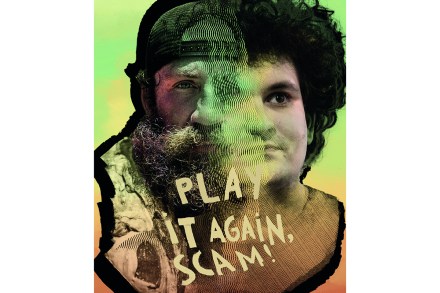
For anyone seeking direct proof that woke capitalism is nothing but a scam, look no further than Sam Bankman-Fried, founder and former CEO of the now bankrupt crypto exchange FTX, who says as much in a direct message exchange with Vox reporter Kelsey Piper. He calls “ethics” a “dumb game we woke Westerners play” — presumably to avoid any scrutiny from journalists, employees, investors and consumers. I’ve worked for and with these people for decades. They want to convince you and the employees in their company that they are in it out of the goodness of their philanthropic hearts. They are just trying to make the world a better place, you see.

bankman-fried

Sam Bankman-Fried’s media outlets must come clean

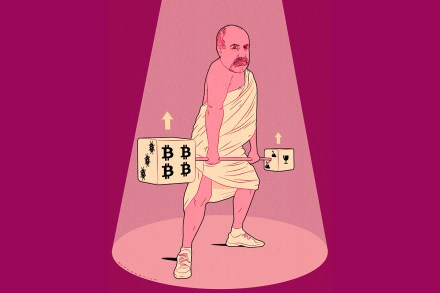
Bankrupted crypto billionaire Sam Bankman-Fried is the talk of the town thanks to the implosion of his heavily celebrity- and lawmaker-endorsed digital currency platform, FTX. SBF cleverly disguised his shaky financial schemes behind an awkward personality and philosophy labeled as “Effective Altruism,” meaning giving away massive amounts of wealth in the name of simply doing good. It’s a popular philosophical fad that has caught on among progressive global elites in the philanthropy arena and seems to be quite popular among media elites as well. Amazon and Washington Post owner Jeff Bezos announced a plan to donate most of his wealth, on the same day that 10,000 jobs were to be eliminated at Amazon.

sam bankman-fried

Meet Sam Bankman-Fried’s crypto-enablers

Things aren’t going well for Tom Brady. His team, the Tampa Bay Buccaneers, has a losing record. He is getting divorced, and FTX, the crypto exchange he was touting a year ago — and in which he was invested — has gone bust. He isn’t the only sports star with egg on his face after the collapse of FTX. Stephen Curry, Shohei Ohtani and Naomi Osaka, to name just three, also got greedy and believed the vision of Sam Bankman-Fried. Overnight, Sam Bankman-Fried has gone from crypto wunderkind to infamous huckster. The celebrities, influencers and traditional media outlets that helped make him a star shouldn’t be allowed to absolve themselves as quickly.

Tom Brady Sam Bankman-Fried

Why Murdoch dumped Trump

“He’s done.” That was the general consensus when I asked around about Donald Trump’s future in politics this week. And in the search for signs that Trump is in trouble, Rupert Murdoch’s newspapers are a good place to start. In the days since the disappointing midterm results, the New York Post, has already labeled the former president “Trumpty Dumpty” and praised his Republican rival Ron DeSantis as “DeFuture.” Trump's 2024 bid was relegated to page 26 on Tuesday, teased on the cover as "Florida man makes announcement." Things aren’t much better for the former president over at the Wall Street Journal. It has been crammed with anti-Trump op-eds since last Tuesday. One headline summed things up neatly: “Trump is the Republican Party’s Biggest Loser.

Rupert Murdoch

Saying goodbye to the crypto nerd utopia

It’s been a great year for those of us who didn’t have the nerve to invest in crypto. The value of Bitcoin, Ethereum and Luna crashed in May. Now, crypto giant FTX has gone bankrupt amid serious allegations of criminal misconduct. At last! For years, we kicked ourselves for not investing in Bitcoin, ETH, et cetera, when we had the chance. We heard tales of people who went from bums to millionaires, while we grinded in our offices and fretted about debts. Suddenly, we can reframe our risk aversion as foresight! Of course we knew that this would happen! Of course we did! Really, I shouldn’t joke about this crypto craziness. A lot of people have lost a lot of money. People will lose businesses, homes, and families. Some might even commit suicide.