Books

The Exchange will delight anyone seeking an impossible story made possible

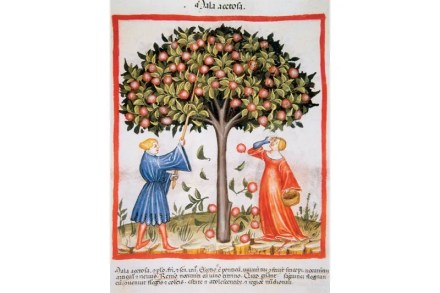
“I have been instructed to tell you that what you are proposing is entirely impossible. Nevertheless, in Iran, even the totally impossible becomes possible at times.” Such was the mysterious riddle that confronted the English art dealer Oliver Hoare as he sat across from an Iranian contact in Paris in 1992. He had just presented a madcap plan: to reunite the state of Iran with one of its most prized but long-lost manuscripts.   The Shahnameh of Shah Tahmasp is an illustrated epic poem comprising 50,000 rhyming couplets. Completed in the mid-sixteenth century, this “book of Kings” is one of the most exquisite examples of Islamic art and poetry ever to have been produced.

Harkaway

John le Carre’s son resurrects George Smiley

Anyone reading this review will know a few fundamentals of the Smileyverse: spymaster George Smiley is podgy, spectacled, middle-aged, soft-spoken, wears ill-fitting clothes, can vanish in a crowd and is routinely cuckolded by his wife over the course of all “his” novels. Thanks to the success of John le Carré’s novels about him, the Smiley canon is now (we might assume) unchangeable: so, making a virtue of necessity, novelist Nick Harkaway has gone back to his Golden Age. Karla’s Choice opens in 1963, the year after the Cuban Missile Crisis, the era when the Berlin Wall went up, the aftermath of Suez, the “candle-end days” of Empire. In East Berlin, a charismatic young man is carted away by the Stasi.

kosinski

Reassessing Jerzy Kosinski

At the conclusion of Hal Ashby’s remarkable Being There, which celebrates its forty-fifth anniversary this month, comes a scene that has only acquired greater resonance and relevance since it first appeared. At the funeral of the plutocrat Ben Rand (Melvyn Douglas), the US president (Jack Warden) is delivering a heartfelt but somehow trite eulogy. As the pallbearers march away with Rand’s casket, which will be buried in the family mausoleum, talk turns to who should replace the president; the film has already suggested that he is suffering from erectile dysfunction and, wickedly, equates this with his falling popularity ratings.

Gallant

The life and legacy of Mavis Gallant, an American in Paris

"God help the English if she ever starts on us,” remarked Jonathan Keates in a blurb for Mavis Gallant’s Paris Notebooks. Far from being the ubiquitous “love letter” to a city, the essays and reviews within revealed people and their lives as they were, not as ideals. What Keates didn’t realize was that in Gallant’s short stories, everyone, regardless of nationality or gender, was fair game for her sometimes vicious, often dryly funny, always unblinking gaze. When she died in 2014, aged ninety-one, an obituary noted her profound irritation at her critics’ focus on The Collected Stories of Mavis Gallant: “Everyone who has reviewed it so far mentions exile.

culture

This month in culture: December 2024

Star Wars: Skeleton Crew Disney+, December 3 Of the making of Star Wars, there appears to be no end. This one, though, looks different. The characters are a group of children on an Amblin Entertainment-style adventure, a coming-of-age story as they try to make their way back home across the universe after something goes wrong on their home planet. The trailer gives strong Spielberg/E.T./Goonies vibes. Taking place around the same time as The Mandalorian, it rounds out its cast with Jude Law as a “new kind of Jedi,” according to the creators. — Zack Christenson Nightbitch In theaters December 6 Based on Rachel Yoder’s hit horror-comedy novel of the same title: Amy Adams stars as an artist turned stay-at-home mom who learns that domesticity contains multitudes.

Bored of the rings: ‘wokery’ takes on Tolkien

"Woke” is a term much overused by those on both sides of the culture war but — a little like pornography — while it may be difficult to define, you absolutely know it when you see it. The capture of the entertainment industry by an ideology — perhaps more accurately described as a group of roughly consanguineous ideas that seem, superficially, to be the Right, Kind and Thoughtful beliefs to hold — seems now to be absolute. Fiction of all kinds has been affected, but heroic narratives have proved especially vulnerable, perhaps because of the size and dedication of their audiences. You will doubtless know the kind of thing I mean.

Rings
Rebel

How music can be weaponized

A noise booms from a downtown district of Kyiv. It’s not the screech of a piercing siren or a building collapsing into rubble but the pumping beat of electronica. Throughout the deafening clamor of the Russia-Ukraine war, Gasoline Radio has kept broadcasting, mixing contemporary electronic music with traditional folk to fortify Ukrainian national identity. Whether pumped out by electronica DJs, violinists playing for families in shelters or singers performing in the shelled-out carcasses of cities, all is far from quiet on the cultural front of Ukraine. Wherever there is oppression, there is resistance, and music has long been a weapon for these war-weary civilians.

Levy

The Position of Spoons is flawed but fascinating

"When you take a flower in your hand and really look at it, it’s your world for the moment. I want to give that world to someone else.” The final installment of Deborah Levy’s “Living” biographies, Real Estate, begins with this quote from the artist Georgia O’Keefe. It would be neat — oh, so neat! — for me to remark that if her memoirs were each a single flower — the world of the writer unfurling between its papery leaves — her latest book, The Position of Spoons, is a bouquet: a collection of variously published and unpublished letters, essays, short stories and poems spanning her entire life as a writer. But The Position of Spoons is not neat. Instead, reading it feels rather like rummaging through Levy’s desk.

Shakespeare

Why Shakespeare remains the great playwright

William Shakespeare’s tragedies stand apart. Their impact is profound and lasting, in cultural, artistic, emotional and psychological terms. Who could forget the ghost’s first appearance in Hamlet, or Lear bearing the dead Cordelia? No other dramatist has achieved what Shakespeare did: in subject matter, emotional heft, innovative usage of source material, character development and startling deployment of language Shakespeare is (and there is no other word for it) extraordinary. He surpasses both his predecessors (sorry, Thomas Kyd!) and those that came after him. He built on the foundations the classical playwrights established, and then, almost casually, bettered them, too.

Kennedy

The real Kennedy men

Long before the #MeToo movement shattered the careers and reputations of people like Harvey Weinstein and Kevin Spacey; long before Jeffrey Epstein and R. Kelly were locked up for committing heinous sex crimes; and long before we’d become familiar with names like Monica Lewinsky and Virginia Roberts Giuffre, there were the Kennedys. In very basic terms, that’s the premise of Maureen Callahan’s book Ask Not — a title that riffs on JFK’s inaugural address — which salaciously chronicles how men from three generations of one of America’s most exalted families spent their lives perpetrating violent misogyny and psychological abuse without suffering so much as a polite slap on the wrist.

Culture

This month in culture: November 2024

Here In theaters November 1 What happens when the director, writer and stars of Forrest Gump get together in 2024? A goosebump-inducing story of family, time, space, home and the enduring nature of love. The “Here” in question is taken from the graphic novel by Richard McGuire, which tells the story of a location through generations and eras, transcending time. Director Robert Zemeckis plays on the panel-frames of graphic literature by employing a fixed camera angle throughout the film. AI de-aging technology is used to depict the actors from teenagerhood through their eighties. Tom Hanks, Robin Wright, Paul Bettany, Kelly Reilly and Michelle Dockery star.

Catherine Nixey’s Heresy is a joy to read

What people tend to forget about Jesus Christ is that he killed children. As a five-year-old, Jesus was toddling through a village when a small boy ran past, knocking his shoulder. Taking it like any five-year-old would, Jesus shouted after him "you shall not go further on your way," at which point the boy fell down dead. Later, when the boy’s parents admonished Joseph and Mary for failing to raise their son properly, Jesus blinded them. Something to bear in mind next time you ask yourself: "What would Jesus do?" If this story is unfamiliar, that is because it doesn’t appear in any of the Bible’s traditional Gospels.

Heresy

Michael Richards’s memoir is heavier on introspection than laughs

An unusual disclaimer greets the reader on the title page of this memoir of an actor chiefly known for starring as the lovable goofball Cosmo Kramer on the hit TV sitcom Seinfeld. “Neither the US Army nor any other component of the Department of Defense has approved, endorsed, or authorized this book,” it notes. But in the event the Pentagon probably needn’t have worried. Drafted into the army in 1970, the actor in question, Michael Richards, seems to have avoided any Sergeant Bilko-like shenanigans and instead separated from the service with a heightened appreciation for the punctuality, discipline and meticulous preparation that characterized his later career.

Richards
Self

Will Self’s impressive paean to his mother’s frustrating life in the US

Will Self’s recent, exceptional fictional trilogy, comprising Umbrella, Shark and Phone, displays a deep preoccupation with the ways that time, memory, family, psychosis and history interact. The novels are complex, multigenerational narratives, composed in a late modernist style as engaging as it is experimental. Formal playfulness, with the prose switching between its characters’ consciousnesses, sometimes even midsentence, is married to solidly satisfying plots. Having already excavated his own life in a memoir, Will, Self has now turned to his mother in a novel, Elaine. Self has written about Elaine Rosenbloom before (in the short story “North London Book of the Dead”); she also appears as the narrator, Lily Bloom, in How the Dead Live.

Greenwich

Back to the birth of the Greenwich Village music scene

In 1961, the folk guitarist Barry Kornfeld moved back to Manhattan after spending a year in Boston. The Greenwich Village folk musicians he called friends, who before his trip to Boston had been enduring a hand-to-mouth existence, were now making a living playing their music in clubs along MacDougal Street — not necessarily “a good living,” Kornfeld noted, but certainly enough to get by. Kornfeld spotted another difference, too. Audiences at clubs weren’t merely clapping; they were snapping their fingers in appreciation, which felt like the hippest thing ever. Rolling Stone writer David Browne’s latest book, chronicling the history of Greenwich Village music, pivots around 1961.

Culture

This month in culture: October 2024

Joker: Folie à Deux In theaters October 4 Set in the aftermath of the first Joker film, Folie à Deux returns to Joaquin Phoenix’s Arthur Fleck in the Arkham State Hospital as he faces trial for five murders. While under treatment, he meets and falls in love with fellow patient Harleen “Lee” Quinzel, a woman obsessed with his Joker alter ego. The sequel is a smudgy Seventies crime noir deviation from the canonical material of DC Comics characters Joker and Harley Quinn; this Joker does not become the Clown Prince of Crime. With no Batman in sight, Joaquin Phoenix engages in a chaotic pas de deux with Lady Gaga as he stops taking his medication and descends into an MGM dreamscape of musical fantasia.

The chameleonic life of Claire Clairmont

Commentary on the young Romantics can be curiously puritanical. Not on saintly John Keats, who died too young to cause any trouble. But Byron and Shelley? Beastly to women, negligent as parents, destructive as friends, oblivious to their own privilege. Feminist observers tend to resemble the English visitors to Geneva in 1816 who borrowed telescopes to spy on the renegade inhabitants of the Villa Diodati across the lake, hoping to be scandalized. A central character in the summer that saw the birth of Frankenstein was the only non-writer of the villa’s gathering, Byron’s young lover and Mary Shelley’s stepsister, Claire Clairmont.

Clairmont