Books

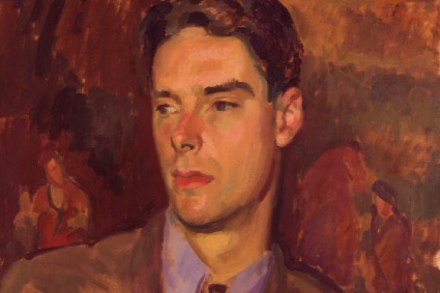
A melancholy talent with a genius for send-up – Flann O’Brien was his own worst enemy

It is tempting to compare two highly intelligent, learned and gifted young Dublin writers, suffering under the burdensome, Oedipal influence of James Joyce, struggling to have their first novels published in the late 1930s. Samuel Beckett’s Murphy, whose central character is an extremely idiosyncratic young man in the grip of profound indolence, was published in 1938; Flann O’Brien’s At Swim-Two-Birds, whose central character is an extremely idiosyncratic young man etc., in 1939.

Kyoto is all that is left of Japan – more’s the pity

‘Much of what I say may turn out not to be true.’ Hardly the ideal beginning to a guided tour. But Alex Kerr is not your typical tour guide, briskly selling a place to a time-pressed group via a few must-snap essentials — the glint of the sun off Kyoto’s Golden Temple and its still waters; the demure shuffle of geisha; winter rays radiating through a bamboo grove. Kerr is more the lone local you’re not entirely sure you should trust, sidling up and engaging you in conversation. Why do temples have gates without doors? Are they entrances — or exits? Ever thought about that? No? Come on, I’ll show you.

Meet Michiko Kakutani, the conservative

Michiko Kakutani used to be an important person in the world of people who cared about book reviews in the New York Times. This was not a world at all, so much as a small village whose borders could be seen from any tall building in Manhattan. Still, her opinion was considered important. Kakutani was notorious for actually reading the books she reviewed, and for not thinking of the reviewer’s desk as an outpost of the publisher’s press office. So, though book reviews are generally not worth reading, hers sometimes were. When Kakutani left the Times in 2017, it was rumored that she had jumped before being pushed by the downward-dumbing of the Times’ arts’ content.

Chopin’s Piano is an eclectic trip through 19th-century romanticism

It is easier to say what this book is not than to describe what it is. It is not a biography, nor a work of musicology. As an extended historical essay it is patchy and selective. It is partly about pianos and pianism, but would disappoint serious students of that genre. It is not quite a detective story — though there are, towards the end, elements of a hunter on the track of his prey. It is probably best to begin the book with no expectations of where it will lead. It starts in the Palma workshop of one Juan Bauza in the 1830s as he fashioned an upright piano — crude, even by the standards of the day — from local softwood, felt, pig iron and copper.

Cease to strive! Now!

There is a long and noble history of books about doing nothing. In the 5th century bc the sage Lao Tzu argued that the wise man should refrain from action, and Christ’s Sermon on the Mount also told us not to bother ourselves overmuch: ‘Consider the lilies of the field, they toil not.’ For Christ, idling was a spiritual and political position: he taught us to live in the moment and reject riches and status as a source of enlightenment or happiness. Now the self-help industry has taken idling and converted it into, paradoxically, a tool for productivity, i.e. getting ahead and making money, which is not what Christ had in mind.

‘President Pussy Grabber’ has his way with the GOP

As I write this, the Trump reality show is about to touch down in Britain. President Trump will meet the Queen at Windsor, visit the Prime Minister’s country home, Chequers, and go to a black tie dinner in Blenheim Palace, where he will be welcomed with military pageantry by the combined bands of the Scots, Irish and Welsh Guards. There will also be two days’ golfing in Scotland. If Rick Wilson had his way, none of this would be happening, apart from the golf. Wilson is a founder member of the Republican Never Trump movement.

Why the Romanovs were doomed

The true tragedy of the last Romanovs was a failure of imagination. Both during his last disastrous months in office and throughout the slowly unfolding catastrophe of his imprisonment, Nicholas II failed to conceive of how quickly the world around him could change, or just how desperate and ruthless the revolutionaries could be. A similar naivety was shown by his would-be rescuers. Helen Rappaport’s frank and brilliant study of the various efforts to save the Romanovs begins, intelligently, with the race to save them from themselves. Their downfall began in 1916 as the course of the first world war began to run against Russia.

The spying game: when has espionage changed the course of history?

Espionage, Christopher Andrew reminds us, is the second oldest profession. The two converged when Moses’s successor Joshua sent a couple of agents to spy out ancient Jericho. There they were sheltered by the madam of the local brothel. All three are heroes in Israel today. Generals and politicians have always needed secret information to track and outmanoeuvre their foreign and domestic enemies. So they place spies, suborn traitors, eavesdrop, decipher other people’s messages, subvert their governments, assassinate their servants and sabotage their property. The technology has changed massively over the centuries; the aims and the basic methods have not.

Has Tibet finally lost out to China?

Blessings from Beijing will inform readers who know little about Tibet, and those who know a great deal will discover more. Both groups will be surprised. The newcomers especially will be disabused of any belief that Tibetans were always non-violent, deeply spiritual and unworldly. Tibetanists and advanced students will learn that, decades after the Chinese conquest of Tibet in 1950 and the escape of the Dalai Lama in 1959, the diaspora of about 130,000 Tibetan refugees, battered by decades of Chinese oppression and ‘soft’ propaganda, is riven by confusion. Some cling to their hope that Tibet will again be sovereign and they will be able to return to their homeland.

The electrifying genius of Nikola Tesla

Nikola Tesla, the man who made alternating current work, wrote to J. Pierpont Morgan, the industrialist and banker. It was 1902 and Tesla was broke. ‘Am I backed by the greatest financier of all time? And shall I lose great triumphs and an immense fortune because I need a sum of money? Are you going to leave me in a hole?!! Financially, I am in a dreadful fix.’ This was not perhaps the best way of approaching a millionaire who had made his fortune in the very industry Tesla was setting out to transform. It was a time of scientific entrepreneurs and robber barons. Morgan was a man of many concerns. He did not reply. Begging letters continued to be sent, and duly ignored.

A reply to my critics: Don’t fight racism with racism

Dear 2016 WriteNow mentees, Thanks so much for your open letter to me. It seems only good manners for me to write back. You’re rightly proud of having been admitted to a challenging programme at Penguin Random House that mentors gifted young minority authors and helps to cultivate their talents. My own publisher, HarperCollins, runs a similar programme, which enjoys my full support. Such proactive outreach is exactly the approach I endorse for helping to vary the voices on our bookshelves. That is why my column of a fortnight ago said not one discouraging word about WriteNow. Indeed, I made no reference to your programme whatsoever.

A Shout in the Ruins is a panorama of the Civil War and beyond

We’re in Virginia, in the 1850s. A girl called Emily is tormenting her dog, Champion, and her father’s teenage slave, Rawls. Seeing this, Emily’s father, Bob, beats her with his belt and kicks the dog. Of Rawls, Bob says: ‘Now leave him be so he can get about my business!’ A girl, a dog, a slave, and a slave-owner.The owner addresses the girl with words and violence, and abuses the dog. He helps the slave get down from the fencepost he’s standing on. But he does not talk to the slave. He talks about the slave. Thinking this over, Rawls looks at Emily,‘sprawled out and wailing in the grass’, and envies her. Her pain is temporary; his is permanent.

From Don Quixote to My Struggle — a survey of the novel in 160 pages

I wonder what your idea of a good novel is. Does it embody the attributes of solid plotting, characterisation and an impermeable membrane between invention and reality — the novel, that is, being a box from which nothing can leap out, and into which nothing, except what the author has chosen to put there, can leap in? And does it conform to the conventions laid down by the great writers of the 19th century? That’s what I assumed, during my schooldays; and the little that had filtered down to me of Don Quixote, which is claimed by many to be the ‘first’ novel, did not alert me to the fact that it was anything more than a story. As opposed to — to put it very simply indeed — a story about stories.

Death-defying acts and the dark side of the circus

In 2013 Tessa Fontaine joined up with the World of Wonders, a circus sideshow that travels around the United States each year displaying sword-swallowers, human-headed spiders, snake-charmers and fire-eaters to a marvelling/cynical public. Sideshows, as Fontaine writes, ‘are where people come to see public displays of their private fears’, and to probe their disgust reflexes and their yearnings. Here, too, they come to tread the line between relinquishing themselves to magic and uncovering, once and for all, the trick. Yet as Fontaine discovers in her first flame-eating lesson, the trick is simply that there is no trick. Flame-eaters get burnt; sword-swallowers die of wounds inflicted by carelessly inserted blades.

The short step from good manners to lofty imperialism

In the gap between what we feel ourselves to be and what we imagine we might in different circumstances become, lies civility. Keith Thomas’s marvellous new book addresses the subject of ideal behaviour. It shows the way that early modern England formed notions of civilisation and proper conduct, in contrast to what was termed ‘the Other’. These alternative people were labelled ‘barbarians’ or ‘savages’ when found abroad or on the Celtic fringe. If the unacceptable was found within England, rural or impoverished, they would be called ‘clowns’ or ‘clodhoppers’.

The comic masterpiece of Donald J. Trump

For pure, unadulterated comedy nothing has emerged from the carnival of broadcast entertainment, print-media and online badinage of the past two years to beat the quotidian exhilarations of the saga of Donald J. Trump. Each day accelerated demands for stimulation are amply satisfied by the President’s actions and reactions as they trigger his detractors (‘losers and haters’) into ever more preposterous and self-righteous rage. In the short time since the proofs of Conrad Black’s lively new chronicle landed on my doormat, Trump has attended a ‘very, very successful’ G7 summit in Quebec at which he declared a ‘10 out of 10’ relationship with other leaders including Justin Trudeau who ‘did a really good job’.

Trump

It’s the wreckage of alcoholism, not the road to recovery, that makes for enthralling reading

The Recovering by Leslie Jamison, novelist, columnist, bestselling essayist and assistant professor at Columbia University, makes for bracing reading. Clever, bold, earnest and sometimes maddening, it is chiefly an account of the author’s alcohol addiction and the various stages of her recovery. It is also an examination of the lives and works, in so far as they pertain to drugs and alcohol, of ‘addicts of extraordinary talent’, such as Jean Rhys, John Berryman, Billie Holliday and David Foster Wallace. The book is an investigation of how Alcoholics Anonymous operates, its strengths and challenges, the leanings of its founders and a roll call of some of its members who’ve touched the author’s life.

The story of the last living survivor of the Atlantic slave trade is a high adventure

Zora Neale Hurston, the African-American novelist-ethnographer, was a luminary of the New Negro Movement, later renamed by American scholars the Harlem Renaissance. ‘Harlemania’ took off in jazz-age New York, as white thrill-seekers danced to Duke Ellington hothouse stomps and enthused over so-called primitive art. Hurston made a ‘black splash’ of her own in 1920s Harlem. Among her admirers was the dance critic and photographer Carl Van Vechten, whose deliciously Firbankian 1926 account of life uptown, Nigger Heaven, gloried in blackamoor jungle dances and other Uncle Tom minstrelsy. (‘Period piece’ would be the most charitable description.

Lionel Shriver and the rigging of the book market

Should the arts reflect the demographic make-up of their society, and be subject to quotas and affirmative action, in the name of diversity? Or should they be exempt from the imposition of quotas, as a meritocracy in which the only affirmative action is the one that recognises talent? This, I reckon, is the question at the heart of this week’s media case, The People (on Twitter) versus Lionel Shriver. Shriver, born in Gastonia, North Carolina, is a American export to Britain, and much appreciated over there for her novels and journalism. This week, she was persecuted by a less welcome American export, the modern Salem that is trial by Twitter mob. Her crime was to have ridiculed a ridiculous letter that Penguin Random House has sent to literary agents.

American Histories, by John Edgar Wideman, reviewed

This new collection of John Edgar Wideman’s short stories comes across the pond as one of four handsomely packaged volumes from Canongate. Little known in this country, he towers large in his native States; a MacArthur Genius fellow, a PEN/Faulkner Award winner twice, winner of the Prix Femina Etranger last year, endorsed by Richard Ford and Caryl Phillips…. Old now, he has a lengthy list of publications behind him, and, on this latest evidence, carries a flame of rage against American injustice and prejudice that yet burns magma-hot.