Books

Around the world in 49 days

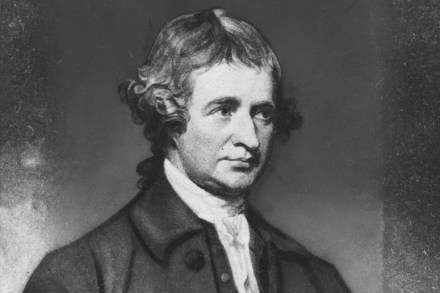
This article is in The Spectator’s March 2020 US edition. Subscribe here. No one remembers Wendell Willkie. If you don’t believe me, mention him as a man worth looking up at your next cocktail hour. Then watch as even well-informed acquaintances wonder when, exactly, you started taking an interest in adult-entertainment performers or bothered to locate the inspiration for Arrested Development’s hit ‘Mr Wendal’. Even the learned (and let’s throw in friends who subscribe to the New Yorker to even things out), will struggle to recall that Willkie was not only referred to as ‘Private Citizen Number One’ by FDR.

wendell willkie

Charlie Kirk’s about-turn

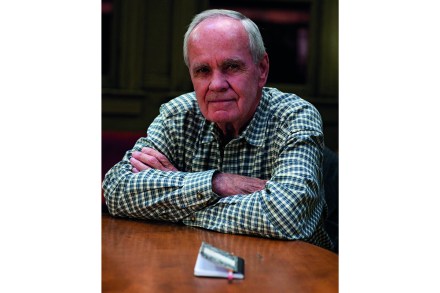
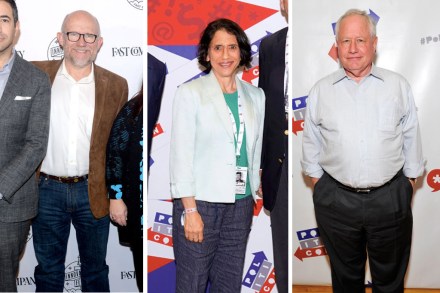
'Sometimes the most vicious opposition to me,' writes Charlie Kirk in his new book The MAGA Doctrine, 'has come from the right, not the left.' Kirk thinks this is because 'older, established “conservative” publications' think his 'Turning Point' organization is 'a nuisance, an upstart'. Another explanation is that he is a hack. To be fair, The MAGA Doctrine contains some cheering passages. Kirk is right, in his introduction, that Trump has shattered the complacent Republican paradigm of Wall Street and foreign wars. He is right to bash the reckless adventurism of neoconservatives (he rightly details American military and financial losses, though he does not spare a mention for dead Afghans and Iraqis).

charlie kirk

Uniform beats

This article is in The Spectator’s March 2020 US edition. Subscribe here. Right from the beginning, everything about Kraftwerk was odd. They had no frontman, they seemed to play no instruments and their strange, electronic music owed nothing to blues, soul or any of the other forms of music that underpinned 20th-century pop. Instead, a Kraftwerk gig consisted of four gauche-looking fellows from Düsseldorf standing in a row, each poking at a synthesizer while strange, apparently unconnected images appeared on screens behind them. A Kraftwerk album could be just as confounding. The cover of 1977’s TransEurope Express featured the band in suits and ties, looking more like the partners at an accounting firm than a pioneering electronica band.

kraftwerk

Finding the Lost Girls

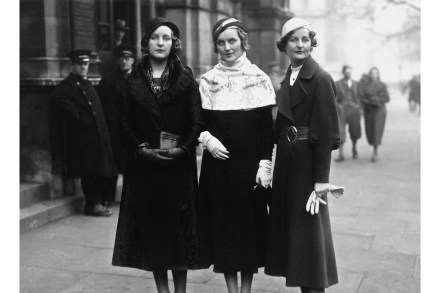
This article is in The Spectator’s February 2020 US edition. Subscribe here. Encapsulations of a particular art-world demographic nearly always fall wide of the mark. Just as there were plenty of people on hand in the 1950s to protest that the Angry Young Men were neither especially angry nor exclusively male, so countless chroniclers of interwar social life complained that the Bright Young People were neither bright nor young. But the critic Peter Quennell’s phrase ‘Lost Girls’ to describe the gang of female twenty-somethings who worked on the magazines and populated the parties of Blitz-era literary London carries an unmistakable tang of conviction.

lost girls

The prophetic Raymond Chandler

This article is in The Spectator’s February 2020 US edition. Subscribe here.Laramie, Wyoming In an age of extreme individualism complicated by racial sensitivity and class resentment, ancestry is an uncomfortable subject. But it remains a fact that a man’s ancestors are never irrelevant to who and what he is, though of course they determine neither. Raymond Chandler (1888–1959) said that he was conceived here in Laramie, before being delivered in Chicago following the usual interval of nine months. His American father deserted the family and his Anglo-Irish mother took her son to England, to be educated at Dulwich College.

raymond chandler

Birth of a nation

This article is in The Spectator’s March 2020 US edition. Subscribe here. The 20th century was a crowded century. Event piled upon world-historical event to produce a mass of history so heavy with the prospect of annihilation and so alive with the possibilities of individual emancipation that one of humanity’s most extraordinary accomplishments, the constitution of a liberal democratic republic on the Indian subcontinent, went largely unnoticed in the West. The significance of India’s birth was, however, not lost on a colonial world clamoring for freedom, or African Americans striving to unlock the full promise of America. India’s founding on August 15, 1947, W.E.B. DuBois rhapsodized, would be ‘remembered as the greatest historical date of the 19th and 20th centuries’.

india

The way we read now

For almost 300 years, the novel was a major art form, perhaps the major art form, of the modern world — the device by which we tried to explain ourselves to ourselves. Something new came into art during the transition out of the Middle Ages, through the Renaissance and the Reformation, and into the modern age. We might call it the turn to the interior — an increasing agreement that domestic life and drama are real, not merely minor activities necessary to keep body and soul together while we play out our real lives on the world’s stage. Think how rare domestic drama was before the novel.

novel bottum

‘Literary Blackface’ is woke as hell

In order to cash in on celebrate Black History Month, Penguin Random House and Barnes & Noble planned a collaboration to achieve an amazing feat of wokeness. They were set to perform what I like to term as ‘positive blackface’ on a number of literary classics in order to show their support of diversity. Very much in the spirit of Justin Trudeau, they redesigned the covers of classic novels such as The Secret Garden and The Wonderful Wizard of Oz so that the main characters are more representative of ethnic minorities. Now, the more cynically-minded among those less in tune with what people of color want might see this promotion as a horrendously clumsy and lazy attempt at earning virtue points. Well, to that I say a resounding, ‘NO!’.

literary blackface

How to write 2020’s Great American Novel

So I sat down to write the Great American Novel. And like with all improbable tasks, it’s helpful to map out potential issues to spare yourself from a career-ending catastrophe (and to provide excuses to wax poetic to your friends when you ultimately leave a manuscript incomplete). First, it’s helpful to take a cursory survey of the current literary landscape: writing about my time in China, Thailand, or Taiwan will launch the entire Berkeley creative writing class into chants of 'exoticism' and cause a Slate writer to prematurely return from a gulag LARPing weekend to pen a 1,200-word thinkpiece on literature as colonialism. Reading the room, I’m going to stay close to home.

great american novel

Jessica Stern’s denial of evil

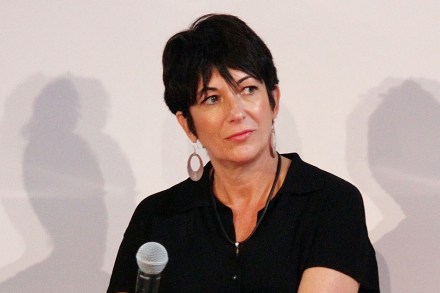
My War Criminal: Personal Encounters with an Architect of Genocide has caused a stir in Bosnia-Herzegovina and especially among the Bosnian community in the United States. Jessica Stern, who has previously written on the psychology of terrorists, attempts to get inside the mind of convicted war criminal Radovan Karadzic, who has been convicted of orchestrating the genocide of Bosnian Muslims during the Yugoslavian wars (1991-2001). The recent excerpt in the New York Times — an excerpt which Stern, bizarrely, has disavowed — turns out to be representative of not only Stern’s methodology in interviewing Karadzic, but also the seductive spell under which she has fallen.

stern

Oh Nancy, Nancy!

When I was four, I fell in love for the first time. The object of my affections was Jemima the rag-doll from preschool. That was a trial run. I was seven or eight when I got my first serious crush. She was an older woman: red-haired, wholesome, adventurous and intelligent. She was 16. She was always 16. Her name was Nancy. My love for her — like the young Julian Barnes’s love for an older woman — did a great deal to shape my life.The Nancy Drew mysteries (I didn’t know, then, that ‘mystery’ is what Americans call a detective story) were the first series of books to which I became completely addicted.

nancy drew

Jeanine Cummins is guilty — of writing a bad book

Flatiron Books has canceled the promotional tour for Jeanine Cummins’s new novel American Dirt due to ‘safety concerns’. Cummins’s novel, which follows a Mexican mother and her young son as they flee cartel violence and seek asylum in the United States, is intended to spur readers’ sympathy at a time when Americans are increasingly indifferent to the plight of refugees. Instead she is the target of rancor and her book the target of censorship.‘I’ve never in my life seen this kind of public flogging,’ said novelist Ann Patchett, defending Cummins even as other writers signed an open letter asking Oprah Winfrey to rescind her endorsement.The outrage is following a familiar script.

american dirt jeanine cummins

Novel inspirations: H.L. Mencken, the bad boy of Baltimore

This article is in The Spectator’s January 2020 US edition. Subscribe here. In this age of dim digitized media in which E.J. Dionne and David Brooks are honored as distinguished columnists, the byline Henry Louis Mencken is virtually forgotten. Mencken, who died in his sleep 64 years ago this week after listening to Die Meistersinger on the Saturday afternoon broadcast from the Metropolitan Opera, is unlikely to be remembered by the mediacrats who abhor everything the man stood for. Yet Mencken in the 1920s was one of the most celebrated figures in America, and even the western world.

mencken

Why did the New York Times minimize the Bosnian genocide?

‘Why Did I Let a Convicted War Criminal Practice Energy Healing on Me?’ wonders Jessica Stern in a New York Times excerpt from her forthcoming book. The war criminal in question is Radovan Karadžić, a Bosnian Serb leader responsible for the energetic orchestration and execution of genocide against Bosnian Muslims during the 1990s war. His most notorious crime against humanity includes the murder of over 8,000 Muslim men and boys over a few days in Srebrenica. The book in question is My War Criminal: Personal Encounters with an Architect of Genocide, a memoir of Stern’s interviews with Karadžić.

bosnian
caldwell lockdown

‘A system at odds with the Constitution’

This article is in The Spectator’s February 2020 US edition. Subscribe here.How did America’s house divide for a second time in the 1960s? By a tragedy of good intentions and bad-faith actions, Christopher Caldwell argues in his new book, The Age of Entitlement: America Since the Sixties. He talks to our Life & Arts editor about how we got here from there, and how activism inside and outside the courts has refounded American politics on an undemocratic basis. DG: The Age of Entitlement argues that the Civil Rights Act divided the country by establishing what you call a ‘second constitution’. CC: That is a big part of it. The book is about the evolution of American society since the Kennedy assassination.

Jung love

This article is in The Spectator’s January 2020 US edition. Subscribe here. If Jim Proser’s goal in writing Savage Messiah was to convince people to take Jordan Peterson seriously, I am afraid he has failed miserably. Peterson, for those without an internet connection, is a Canadian psychologist who rose suddenly to fame after he posted a video on YouTube criticizing a bill that proposed criminalizing speech against transgenderism. In 2018 he published 12 Rules for Life: An Antidote to Chaos, which has sold several million copies. He has confounded undemanding television hosts like Cathy Newman, but he has also debated Sam Harris and Slavoj Žižek, all while keeping up his popular podcasts and lectures.

peterson

In the shadow of Vesuvius

AD 79: Pliny the Elder, admiral of the Roman fleet and author of an encyclopedia of Natural History, sails towards Mount Vesuvius as it erupts.For several hours, the fleet held course across the Bay of Naples. Despite heading in the very direction whence others were now fleeing, Pliny the Elder was said to have been so fearless that ‘he described and noted down every movement, every shape of that evil thing, as it appeared before his eyes’. To any sailors who survived to tell the tale of their admiral’s fortitude, the chance of reaching land in safety must have seemed increasingly remote as they proceeded across the water. First ash rained down on them, then pumice, then ‘even black stones, burned and broken by fire’. This was no hail storm.

vesuvius

Kingdoms of the wicked

This article is in The Spectator’s January 2020 US edition. Subscribe here. Frank Dikötter has written a lively and concise analysis of the techniques and personalities of eight 20th-century dictators: Mussolini, Hitler, Stalin, Mao Zedong, Kim Il-sung (North Korea), François ‘Papa Doc’ Duvalier (Haiti), Nicolae Ceausescu (Romania) and Mengistu Haile Mariam (Ethiopia). As a comparative study of those individuals, it is enlightening and a good read. The title and parts of the foreword indicate that it aspires also to be a guidebook of dictator tactics. There are some weaknesses in this broader ambition. These eight men were not altogether uniform in their methods of obtaining, retaining or losing power, and certainly not in their abilities.

dictator
Johnson

The audacity of verse

This article is in The Spectator’s January 2020 US edition. Subscribe here. Shelley famously and optimistically proclaimed that poets were the unacknowledged legislators of the world. Adorno famously and pessimistically declared that poetry was impossible after Auschwitz. In The Music of Time, his new study of poetry in the 20th century, John Burnside makes a rather more modest claim: that to write a poem at all is an act of hope. By any standards, Burnside’s own career seems cause for hope in poetry’s capacity to transform at least one individual life.

The boy on the hillside

The boy, Seth, stirred in his sleep. ‘Cold…’ He had pushed the blanket off, with his tossing and turning about. ‘Here, here.’ The man seated on the ground nearest to him rearranged Seth’s covering, pulling it up and tucking it under him until he was swaddled like a baby. His head rested on an old fleece. https://audioboom.com/posts/1816403-susan-hill-reads-the-boy-on-the-hillside There were five men and the boy out on this first night of bitter weather. Until now it had been wild winds and huge clouds gray as boulders rolling across the sky and the sheep huddled wherever they could shelter from the gale, but later that day the clouds had shredded into skeins, becoming thinner and paler until they vanished and the sky was quite clear.

star dreamer