Books

The Stepford Wives and today’s empty feminism

When you think of 1972, what comes to mind? Corduroy flares, President Nixon and the first installment of The Godfather? Or bra-burning, feminist “consciousness-raising” meetings and debates about abortion and birth control? America in the early 1970s was not just a nation of Vietnam War vets and oil crises, but one of significant feminist liberation. Betty Friedan published The Feminine Mystique in 1963 and helped found the National Organization for Women in 1966, and the decade after saw a whole host of similar organizations, such as the Women’s Radical Action Project (WRAP) and the catchily named Women’s International Terrorist Conspiracy from Hell (WITCH).

Waugh in Hollywood

The English author and curmudgeon Evelyn Waugh (1903-66) is today best known for his 1945 novel Brideshead Revisited. A luxuriant evocation of the beauties of pre-World War Two Oxford, coupled with a cautionary narrative about the destructive power of Catholic guilt, it has remained a constant favorite with everyone from college students to literature scholars. It was memorably filmed for British television in 1981, and it launched the careers of Jeremy Irons and Anthony Andrews as, respectively, the novel’s narrator Charles Ryder and the flamboyant aesthete Sebastian Flyte.

waugh
mounk

Diversifying democracy

In 1790, George Washington wrote that “the establishment of our new Government seemed to be the last great experiment, for promoting human happiness, by reasonable compact, in civil Society.” Today, Yascha Mounk has reassessed Washington’s words. He proposes in his new book The Great Experiment that many Western nations are now conducting their own experiments. Never have so many nations tried to establish such diverse democracies, regimes that grant citizens of so many colors and creeds the same freedoms, opportunities and responsibilities. Mounk, a professor at Johns Hopkins University and the founder of the Substack publication Persuasion, is both hopeful and pragmatic about the experiment’s outcomes.

psychopath

Femmes fatales in fiction and life

In her memoir written from a prison in New York, Dorothy Daniels gives readers a whistle-stop tour of “flashy female psychopaths” who have existed throughout history. Daniels is a food critic and a cannibal, a woman who exhibits an acute awareness of her own commercial value as a true-crime story. Before being caught by police, she considered the most humiliating moment in her life to be when she was fired from the masthead of a popular food-and-drink magazine: an experience, she bemoans, that belongs to “ordinary people.” Dorothy Daniels is, of course, fictional.

wittgenstein

A private life

When Ludwig Wittgenstein died in 1951, he had only published one book — the Tractatus Logico-Philosophicus, which was first translated into English in 1922 (with an introduction by Wittgenstein’s former professor and mentor Bertrand Russell, to which Wittgenstein strongly objected). Philosophical Investigations, which Wittgenstein was working on at the time of his death, was published in 1953. His wartime notebooks, which he kept between 1914 and 1916, appeared in 1961. These are important. The Tractatus is famously dense, being composed of a series of statements on the relationship between words and objects and the nature of knowledge. The notebooks provide a clearer sense of the problem Wittgenstein was trying to solve and the progression of his thought.

astrid

Beautiful and damned

Natalie Standiford’s latest novel, Astrid Sees All, captures the bohemian world of New York in the late 1970s and early 1980s in acutely elegant prose. It charts the fortunes of a young suburban girl, Phoebe Hayes, in elegiac but unsentimental fashion. Phoebe longs to live in the “golden world,” as she sees it, of parties and socialites, where John-John Kennedy rubs monied shoulders with the Shah of Iran’s niece, and cocktails, champagne and cocaine flow undimmed until morning. There are hints of Gilbert Adair’s Parisian youths in The Dreamers and Jonathan Dee’s novel about the effects of great generational wealth, The Privileges.

realists

Dirty realists

I recently finished yet another predictable novel about Brooklyn neurotics and needed a gritty palate cleanser. Raymond Carver’s Where I’m Calling From: Selected Stories seemed ideal. Carver, a master of the short-story form, has long been one of my go-to writers, but, in recent years, he has increasingly lost literary relevance. Twenty years ago, Carver’s terse, minimalistic style was all the rage. Like Hemingway and Bukowski, Carver birthed a sea of mediocre imitators onto the American literary scene. In most US short-story collections published in the Eighties or Nineties, Carver’s stylistic and thematic influence is evident from the first page.

Against Hope

Hope is seen as “an unqualified good” today, Adam Potkay writes in his excellent history of the idea. We hope that things will get better in the world — that peace will come to Ukraine, that religious violence will stop in Burkina Faso, that fat-cat sexual predators in Hollywood will be brought to justice. For members of the world’s three monotheistic religions, it is a virtue to hope in life after death. This hasn’t always been the case. For ancient Greeks and Romans, Potkay observes, hope was mostly a vice.

hope adam potkay

Time for Jack Kerouac to hit the road

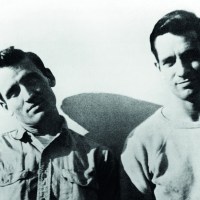
I saw the best minds of my generation destroyed by madness, starving hysterical naked, dragging themselves through the last pages of Naked Lunch at dawn looking for an angry fix of good literature, angelheaded hipsters burning for the ancient heavenly connection between plot and prose, who poverty and tatters and hollow-eyed and high sat up reading Kaddish, who bared their brains to the delights of On the Road in the pursuit of just a fraction of the “angels staggering on tenement roofs illuminated.” Everyone knows the Beats: from Jack Kerouac to William Burroughs to Allen Ginsberg, their influence has been undeniable, if not always delightful. And on March 12, their lodestar, Jack Kerouac would have been 100 years old.

kerouac

Imagining Rimbaud

The life of poète maudit and gunrunner Arthur Rimbaud is a puzzle to nearly everyone who knows it. A precocious student who won a regional concours académique for a poem in Latin, Rimbaud left school at fifteen, shortly after the start of the Franco-German War. After two attempts to escape home for Paris, he finally moved in with the poet Paul Verlaine in the fall of 1871, where he succeeded in insulting all the literary lights of Paris in three months. The two men began an affair, which ruined what was left of Verlaine’s marriage to Mathilde Mauté (whom Verlaine regularly beat). They made two debauched trips to London and eventually fell out in Belgium, where Verlaine shot Rimbaud in the wrist.

rimbaud noguez

A gay fandango

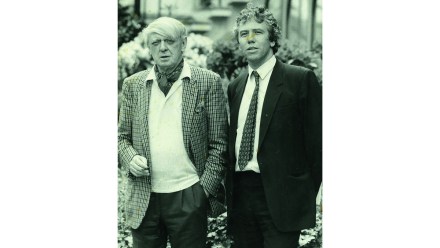
Usually, it’s poets who chance their arm with a novel. Rare is the established novelist who switches to verse. This could be because, while poetry is technically daunting with its rhyme and meter, the novel is apparently the easiest of all forms, without even the conventions and directions of the most basic screenplay. In the nineteenth century, Thomas Love Peacock was the most successful poet to turn to fiction, but in our own times poet-novelists rank among the most talented: Sylvia Plath, Ben Lerner, Vikram Seth, Craig Raine, Grace Nichols. Now, after half a century of writing superb novels, the English author Paul Bailey, well into his eighties, is publishing his second book of poems.

Bailey
fugitives

Our enemy’s enemy

After Nazi Germany attacked the USSR, Winston Churchill had no qualms about entering into an alliance with Stalin, whose regime he understood all too well: “If Hitler invaded Hell, I would make at least a favorable reference to the Devil in the House of Commons.” Similar thinking does much to explain the enlistment of former (and not so former) Nazis by the Western allies in intelligence work against the Soviets after 1945. With the Red Army in the heart of Europe, co-opting suitably qualified veterans of the fallen Reich — some of whom had very dirty hands indeed — made some sense, according to that Churchillian logic, but mainly when those selected were anti-Communist and now aligned with a democratic Germany.

hemingway

For whom the bell tolls

Close your eyes and imagine you’re married to Ernest Hemingway. Now, imagine it twice as bad, and you’ll be approaching the life story of Mary Welsh Hemingway. Hemingway was married four times: to Hadley Richardson in 1921, to Pauline Pfeiffer in 1927, to Martha Gellhorn in 1940 and to Mary Welsh in 1946. In every swap, he divorced his current wife for her successor. Mary wrote her own memoir, How It Was, after Hemingway’s death in 1961. Now Timothy Christian has written a well-researched and intensely detailed look at the life of a fascinating woman who became the steward of Hemingway’s literary estate and reputation long before he died. Mary Welsh was born in 1908 and raised in rural Minnesota.

poc

I’m a Latinx person of letters

A development has reshaped the world of letters. The literary universe is no longer a boys’ club but the playground of woke Brooklyn ladies who’ve swallowed up editorships and literary-agent gigs. The results continue to be predictable: a constant bombardment of books from elite white women about the travails of neurotic Brooklyn ladies, and victim narratives about brown suffering. The fetishization of people of color has come to define the woke relationship with so-called marginalized communities. Virtually every literary book — except for those based in Brooklyn — details the struggles of a victimized minority. The Booker Prize longlist or the National Book Award finalists will annually bombard you with weepy tales of generational POC suffering.

P.J. O’Rourke, a conservative of enjoyment

The politics of the moment are pompous, bilious, unforgiving, over-stuffed, hypocritical beyond the normal standards for political hypocrisy: in other words, designed — as if by divine ordinance — for the gifts of P.J. O’Rourke. I must add, I’m afraid, the late P.J. Rourke. He died the day after Valentine’s Day due to complications from cancer, at age seventy-four. RIP. The world hadn’t heard a great deal about him in a while, likely because he was ailing. This was rotten timing. The current Washington DC sideshow reflects and confirms what Patrick Jake O’Rourke had been saying about politics for some long while. Such as: “I believe in original sin, and politics may be its name.

p.j. o’rourke
p.j. o’rourke

P.J. O’Rourke mastered the art of teasing

I first encountered P.J. O’Rourke’s writings as a teenager in a copy of Modern Manners my father encouraged me to buy while we were browsing the secondhand offerings of an offbeat little bookstore (looking back, I can’t imagine who in their right mind would part with such a book). “You should get that, he’s funny,” dad said. That evening, I read some G-rated excerpts to my traditionalist parents, who laughed out loud. For me, it was love at first quip. I finished the rest of Modern Manners in one sitting, completely taken by a style of writing I found blended the best qualities of a person. It was smart, perceptive, clever, sensitive and, of course, good-humored. Reading P.J. O’Rourke inspired me to want to write in a way that informs and entertains.

We don’t need more literary magazines

At CNN, Leah Asmelash laments the demise of many “long-standing” literary magazines. “The Believer,” she writes, which was started in 2003, “was once at the top of the literary magazine game. A leading journal of art and culture, the Believer published the work of icons like Leslie Jamison, Nick Hornby and Anne Carson. It won awards, it launched careers.” But the University of Nevada, which has housed the magazine since 2017, announced that it was shutting it down: “In a statement explaining the decision, the dean of the school's College of Liberal Arts called print publications like the Believer ‘a financially challenging endeavor.’” Oh, boy. Leslie Jamison, an icon? The Believer, a publication that “launched careers”?

The deep conservatism of Agatha Christie

Some fiction, regardless of how intimately tethered to a time and place, is timeless. And the work of Agatha Christie certainly seems that way. Christie's novel Death on the Nile is now receiving renewed cinematic treatment under the expert hand of Kenneth Branagh, with the film scheduled for release on February 11. This follows the success of Branagh’s 2017 adaption of Murder on the Orient Express, which grossed $351 million against a production budget of $55 million. “Rest assured," says Belgian detective Hercule Poirot in Christie’s novel Five Little Pigs. "I am the best!” The same might be said of Christie herself, the world’s all-time bestselling fiction author.